Church of St Mary in Stafford: A Medieval Collegiate and Parish Church
Site at a Glance
- Rating
- 4.7
- Popularity
- Medium
- Country
- United Kingdom
- Primary era
- Medieval
- Eras represented
- Medieval, Early Modern, Modern
- Civilizations
- British, English
- Site type
- Religious
- Remains
- Church
On this page8 sections
History
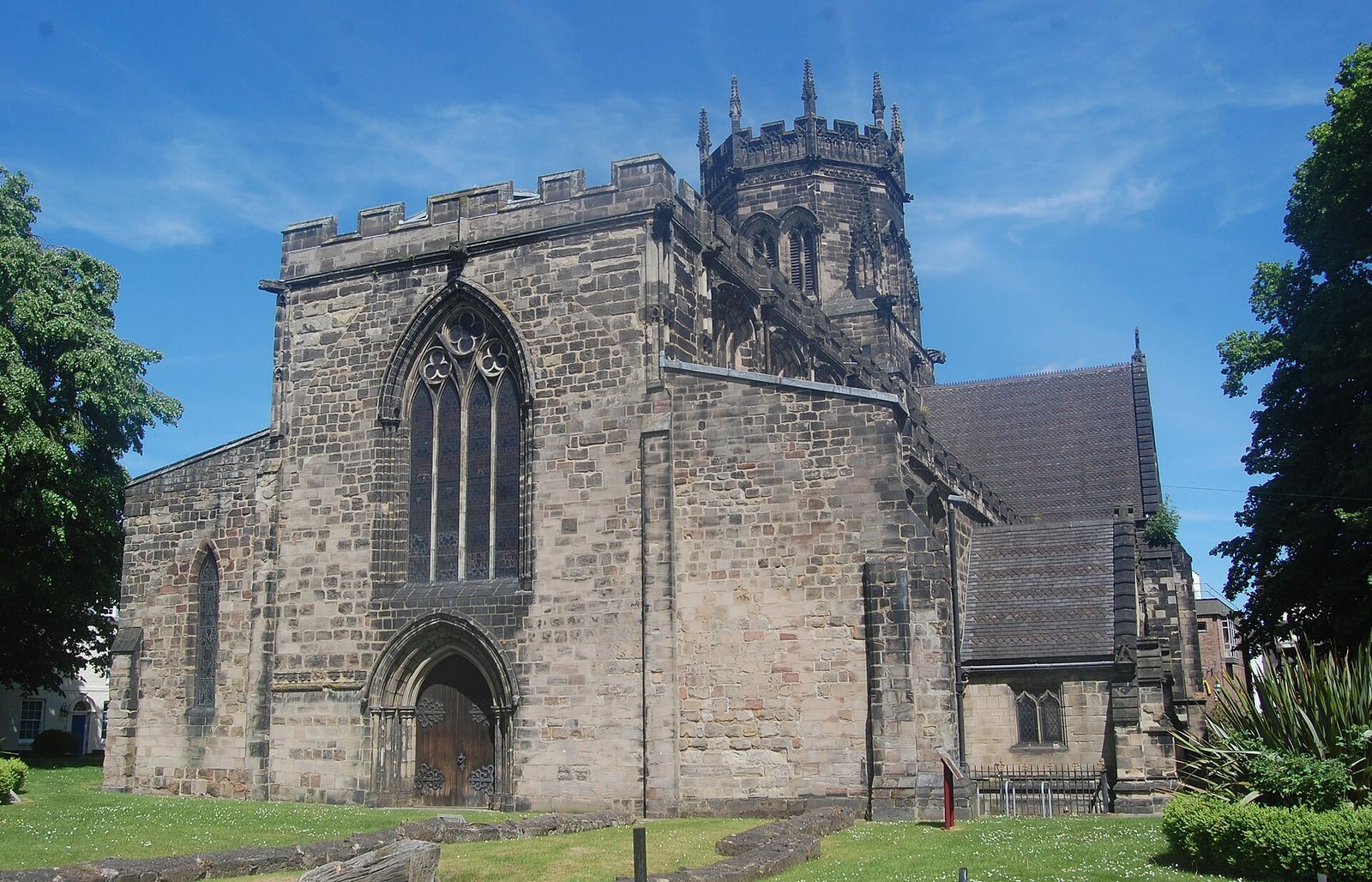
The Church of St Mary in Stafford is a Church of England parish church in Stafford, United Kingdom, whose present building dates to the early 13th century. Its collegiate community, a group of clergy serving a church together, is recorded in the Domesday Book, William I’s survey of England completed in 1086, with 13 prebendary canons, clergy who held endowed positions.
Collegiate church and royal exemption
Around the 13th century, St Mary became a Royal Peculiar, a church exempt from the authority of its diocesan bishop. The arrangement led to a violent dispute in December 1258. Roger de Meyland, the new bishop of Coventry and Lichfield, came to Stafford with armed men, forced entry, and assaulted the church’s canons, chaplains, and clerks.
Reformation and Aston patronage
The church remained collegiate until 1548, when colleges and chantries were dissolved. For several generations after the Reformation, the Aston family served as its patrons. The family became Roman Catholic in the 1620s. When Walter Aston, 2nd Lord Aston of Forfar, died in 1678, hundreds of local Protestants attended his burial at St Mary, knowing that he was Catholic.
Restoration and present church
Sir George Gilbert Scott carried out a major restoration between 1841 and 1844. St Mary was listed at Grade I on 16 January 1951, England’s highest category of listed-building protection, for buildings of exceptional interest. It is now an Anglo-Catholic parish church, following a Church of England tradition that emphasizes Catholic liturgy and sacramental practice. The parish belongs to the Diocese of Lichfield, the Archdeaconry of Stoke-on-Trent, and the Deanery of Stafford.
Remains
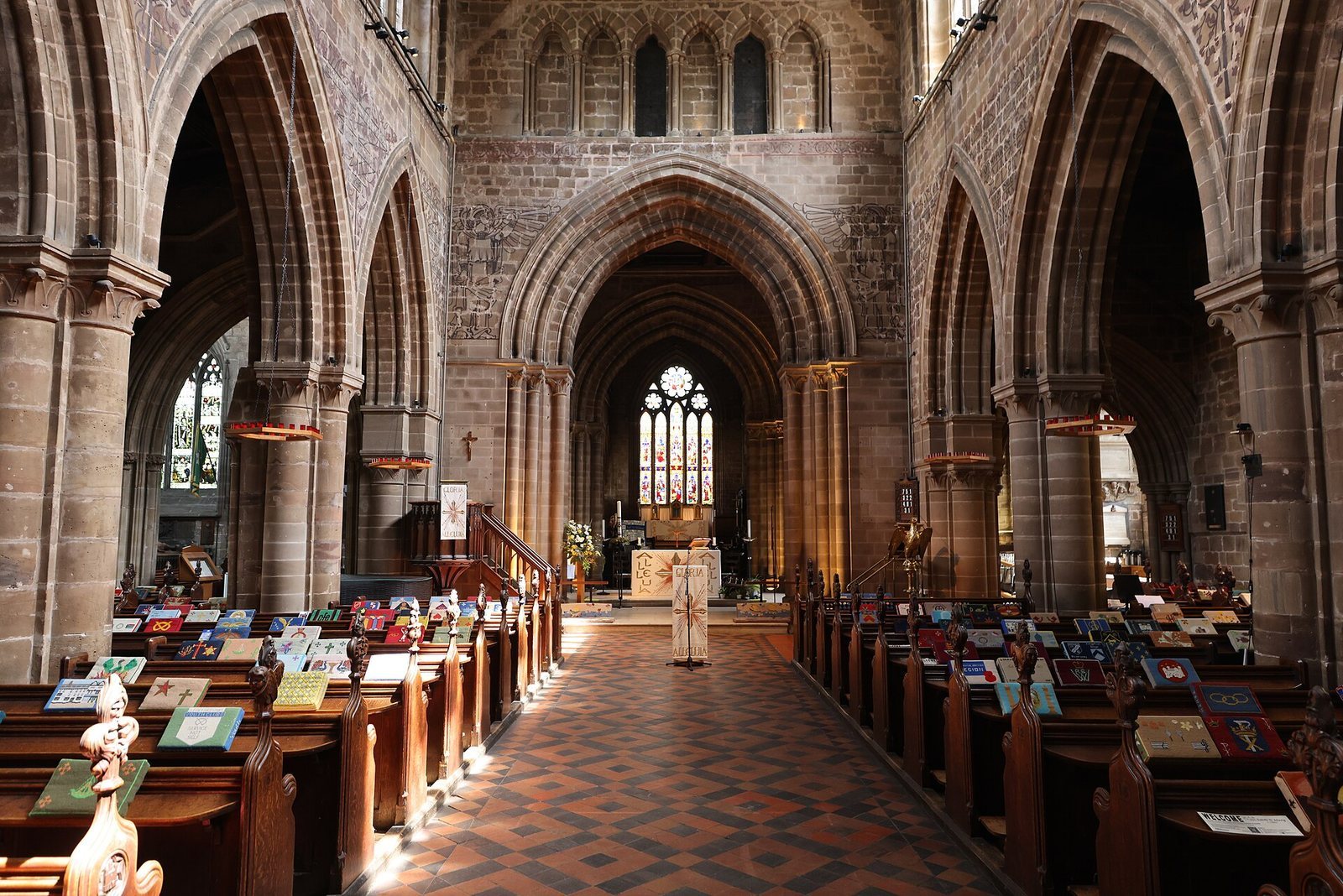
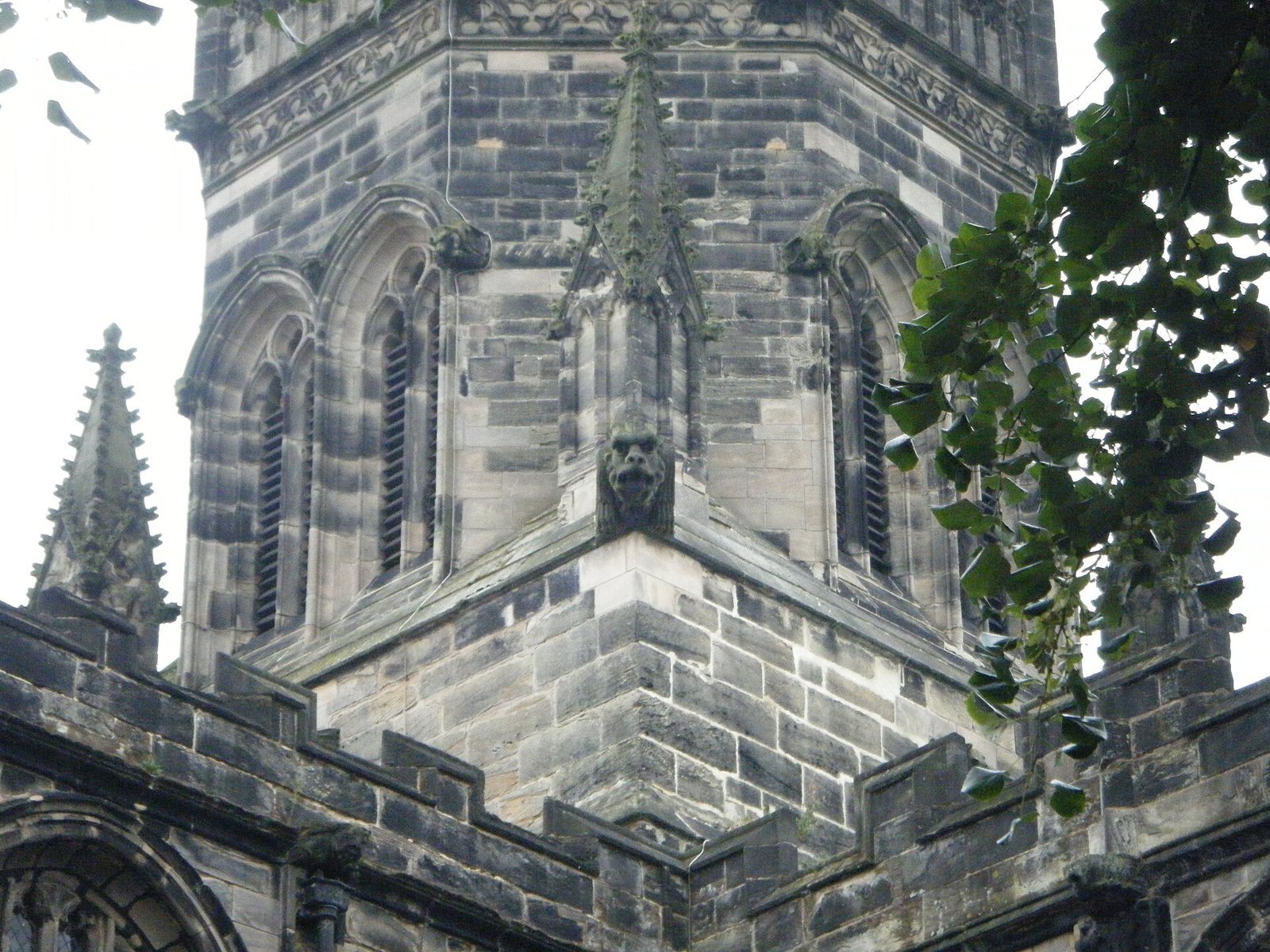
The church’s present form reflects building work from the early 13th through the 15th centuries. Its transepts, arms projecting at right angles from the main body, date to the 14th century. The clerestories, upper walls rising above adjoining roofs, and the crossing tower above the junction of the main body and transepts date to the 15th century.
Earlier church
Excavations in 1954 identified an adjacent church dedicated to St Bertelin, dating to the late Anglo-Saxon period, before the Norman Conquest of 1066.
Tombs and memorials
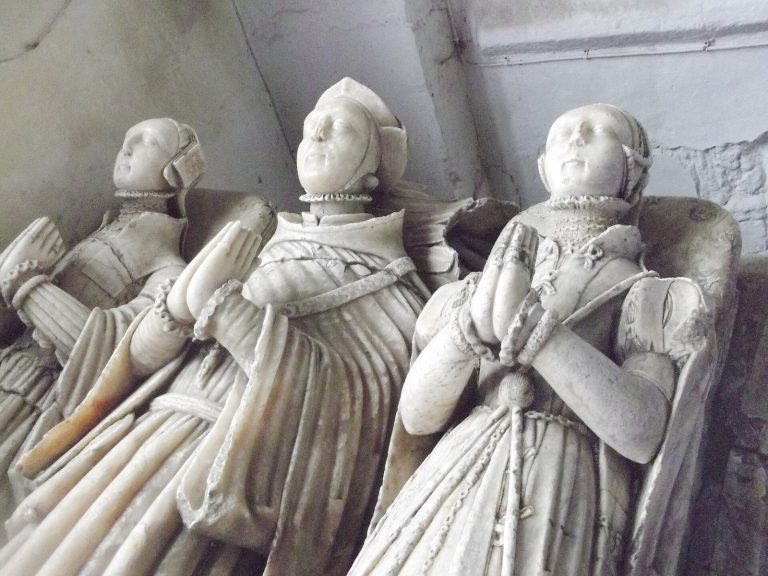
A chest tomb commemorates Sir Edward Aston, who died in 1568. A wall tablet made by John Francis Moore remembers Thomas Clifford, who died in 1787, and Barbara Clifford, who died in 1786. Other tablets commemorate Humphrey Hodgetts, who died in 1730, and the writer Izaak Walton, who died in 1683. Edward Stafford, 3rd Baron Stafford, was also buried at the church.
Organs
John Geib installed an organ in 1790; John Banfield rebuilt it in 1844, and Hill, Norman & Beard rebuilt it again in 1974. A large four-manual organ, with four keyboards played by hand, was made by Harrison and Harrison in 1909. It received a Grade I Historic Organ Certificate from the British Institute of Organ Studies.