Church of St. Martin in Lelów: A Parish Church and Marian Sanctuary in Poland
Site at a Glance
- Popularity
- Low
- Country
- Poland
- Primary era
- Medieval
- Eras represented
- Medieval
- Civilizations
- Kingdom of Poland
- Site type
- Religious
- Remains
- Church
On this page7 sections
History
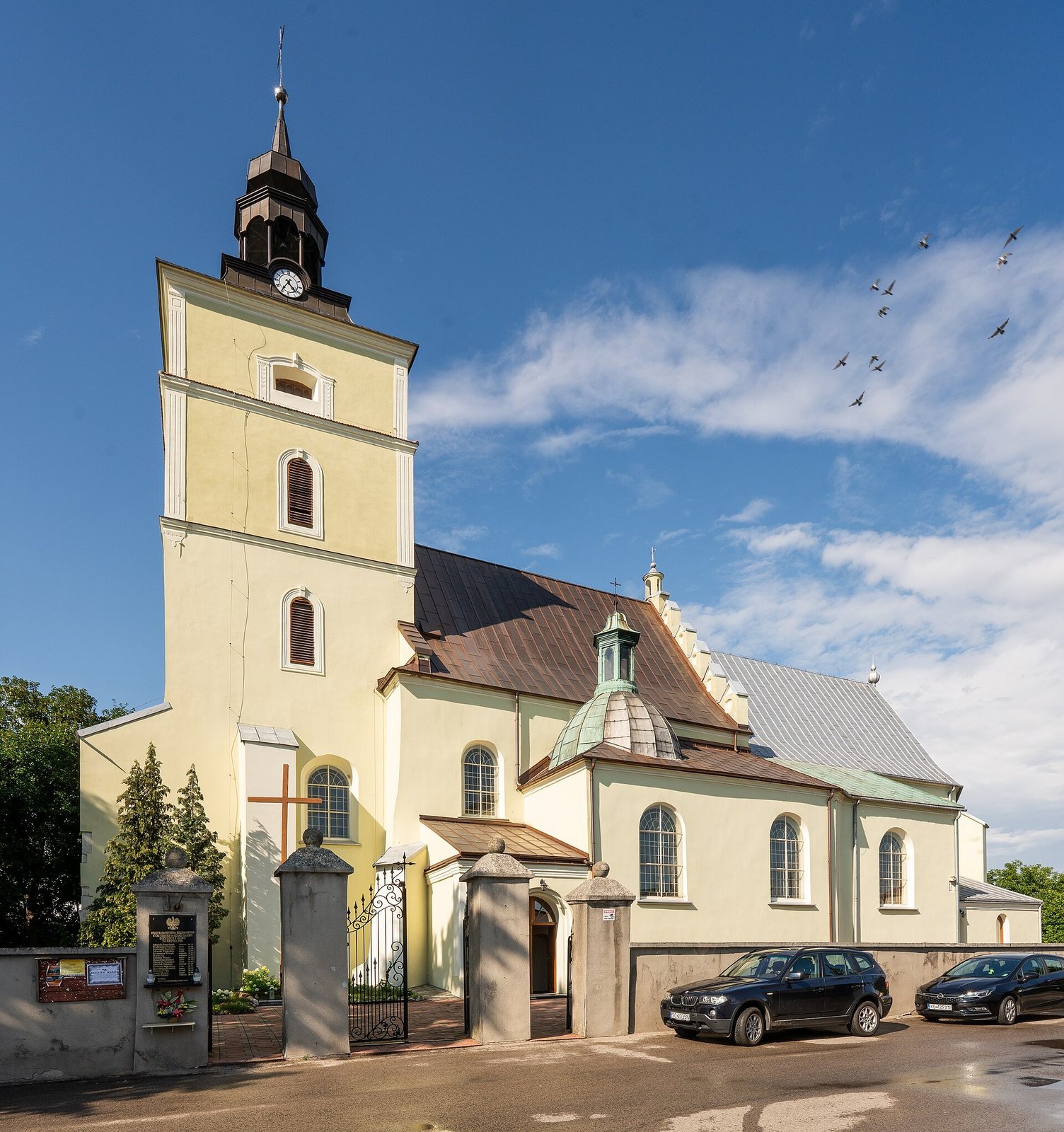
The Church of St. Martin in Lelów is a Roman Catholic parish church in Poland. It belongs to the Lelów deanery, a grouping of parishes within the Diocese of Kielce, and serves as the Sanctuary of Our Lady, the Comforter of Lelów. Dedicated to St. Martin, commonly identified as Martin of Tours, a fourth-century bishop, the church observes his feast on 11 November.
Foundation and early rebuilding
King Casimir III the Great, who ruled Poland from 1333 to 1370, built the church in the fourteenth century. A fire destroyed it in 1638, and it was rebuilt that same year.
Marian devotion and wartime destruction
Around 1831, an altar containing the miraculous image of Our Lady of Consolation was brought to the parish church from a former Franciscan church. Officials of the tsarist state had demolished that church. The Franciscan order is a Catholic religious community founded by Francis of Assisi.
On the evening of 4 September 1939, German occupiers set fire to the historic church. They aimed to destroy what had not been evacuated, including the Marian image, and also set fire to an eighteenth-century crucifix. Four residents who refused to set the crucifix alight, Ignacy Trenda, Jan Ilczuk, Władysław Filewski, and Stanisław Brodziński, were murdered. Trenda is recognized by the Catholic Church as a Servant of God, a title for someone whose cause for canonization has begun.
Rebuilding and sanctuary status
The church was rebuilt in 1946–47. In 1948, a newly painted image of Our Lady of Consolation was blessed at a Franciscan church in Kraków by Michał Godlewski, an auxiliary bishop who assisted a diocesan bishop. It was then carried to Lelów in a solemn procession. The following year, pilgrims from Kraków donated gilded crowns for the image. Cardinal Adam Sapieha and Bishop Czesław Kaczmarek blessed them, and Kaczmarek crowned the image on 24 June.
On 16 June 1960, Bishop Kaczmarek recognized the church as a Catholic sanctuary, a sacred place with particular devotional importance. The church is listed in Poland’s register of historic monuments, with its current entry dating to 2021.
Remains
Plan and construction
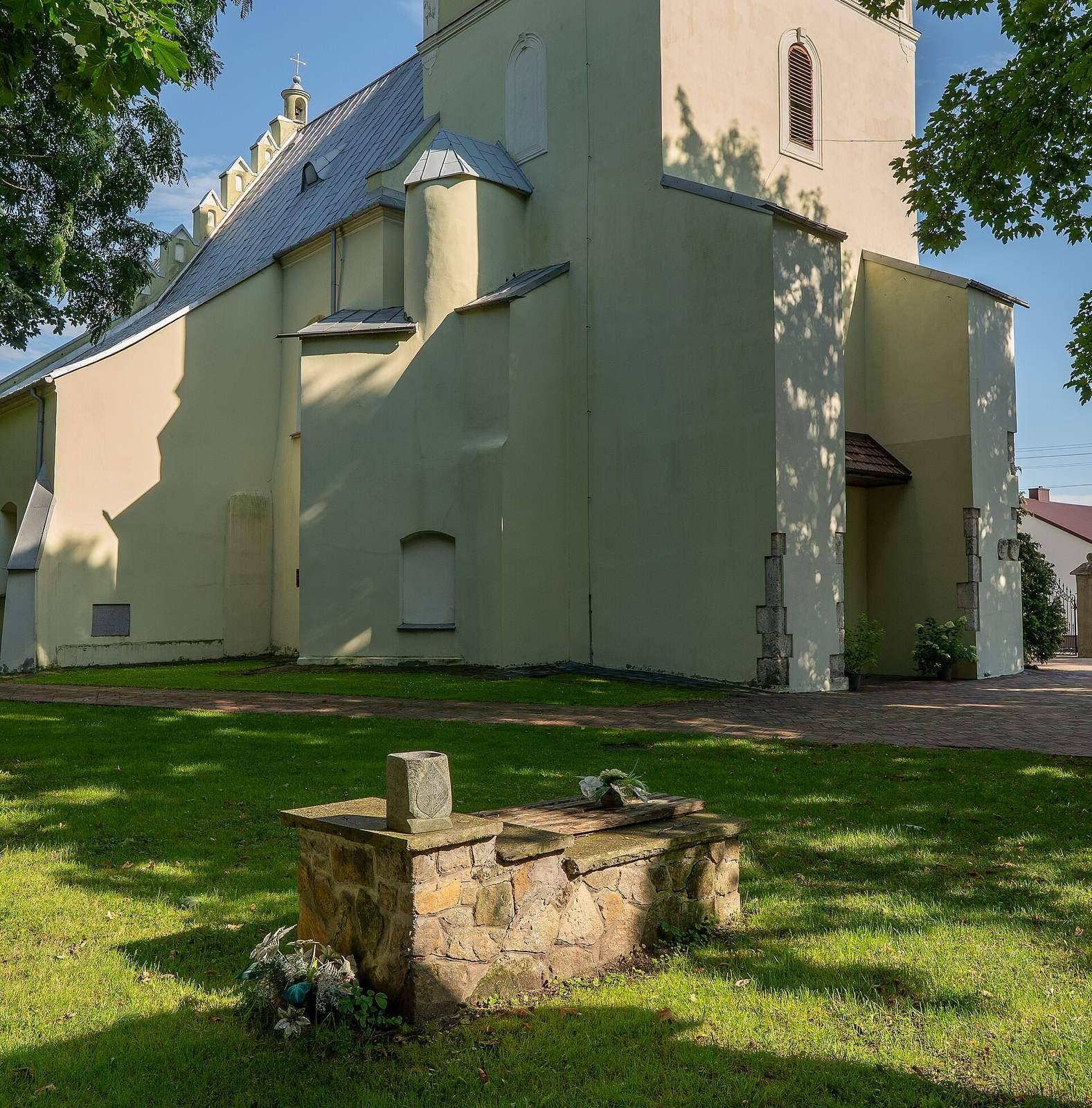
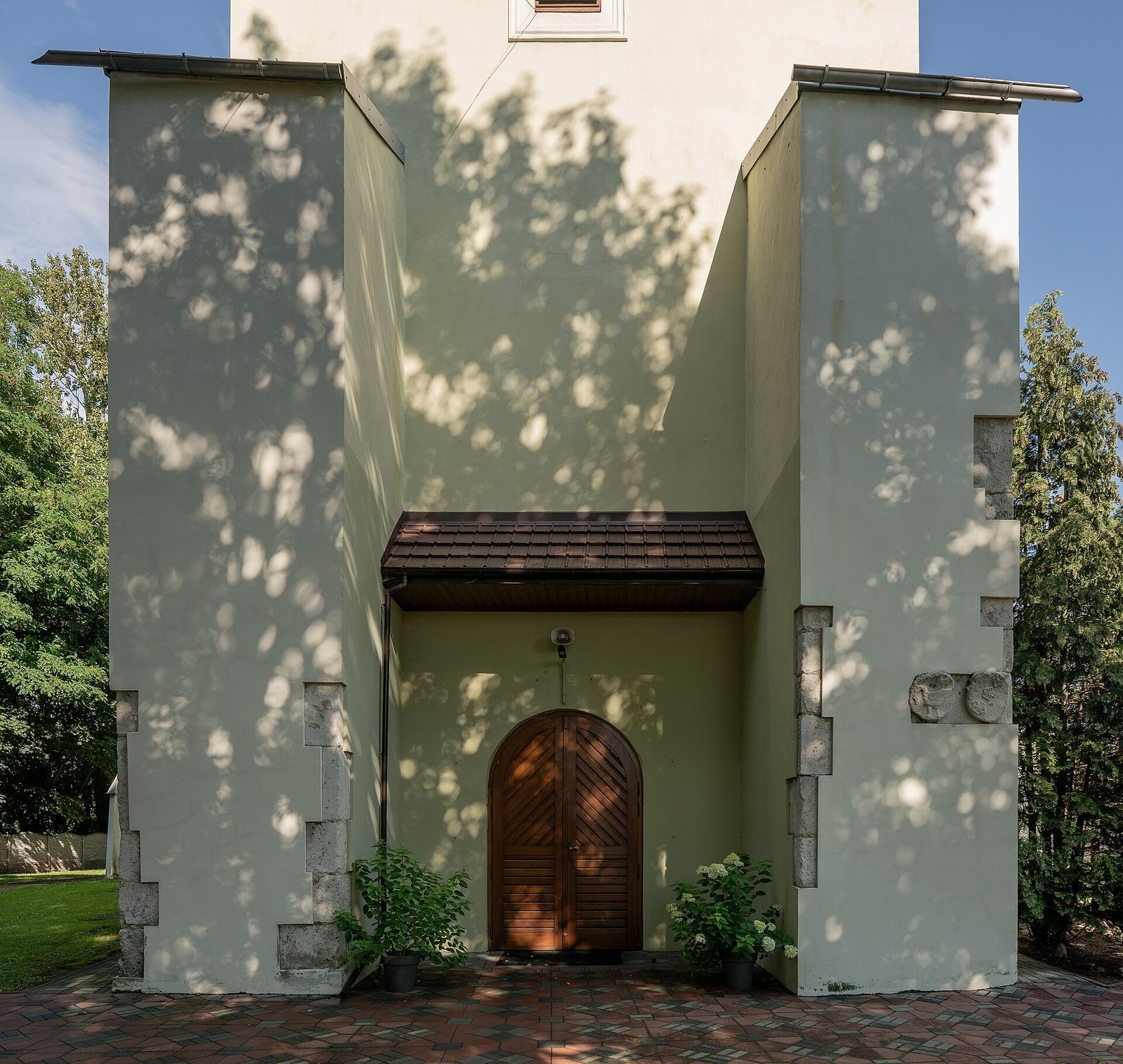
The brick church has a three-aisled plan, with a central nave flanked by two side aisles, one tower, and three altars. Its architecture is described as both Gothic, a style associated with pointed forms and verticality, and Baroque, known for elaborate ornament and dramatic effects.
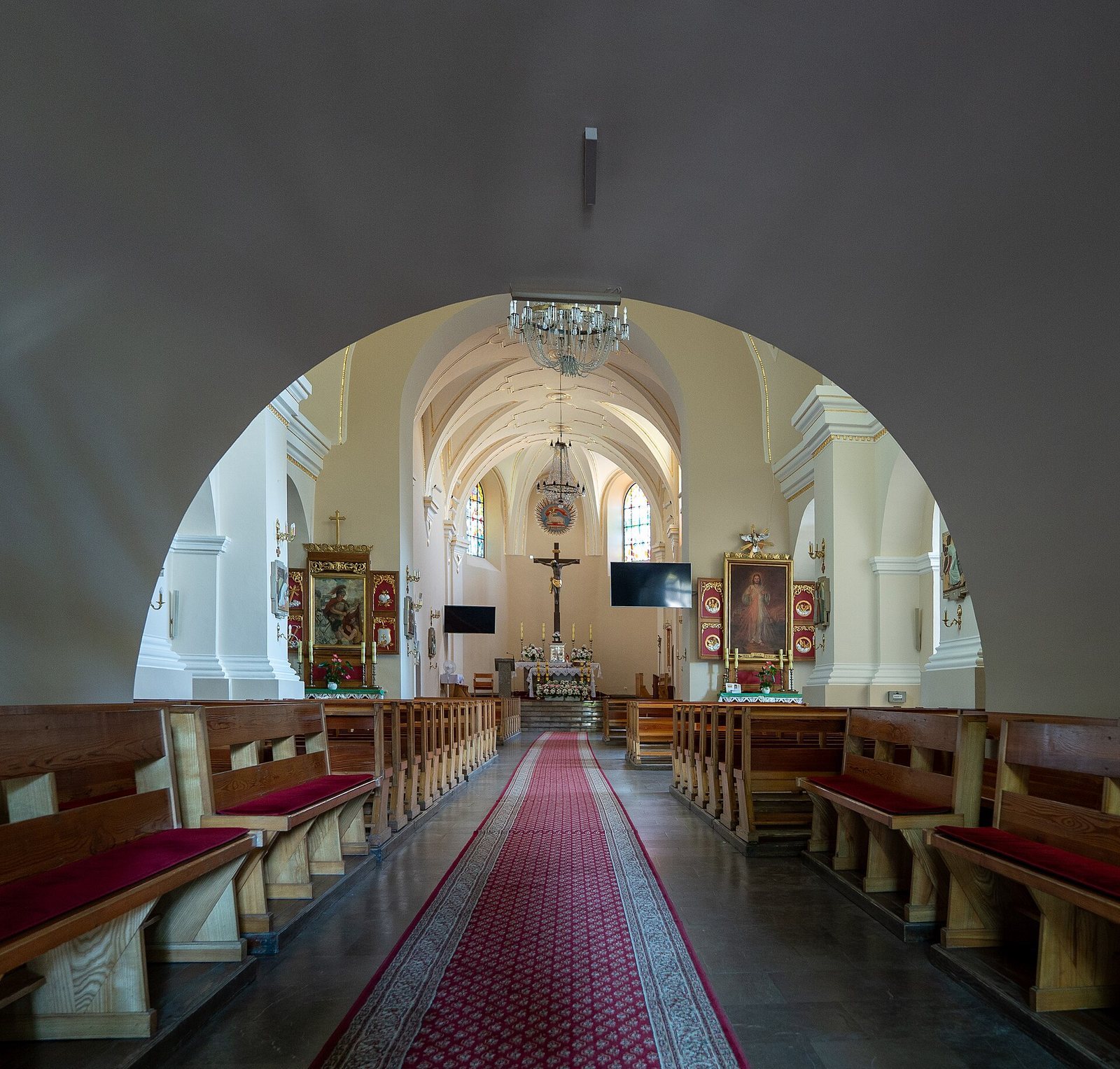
Altars and crucifix
An altar associated with the devotion to Our Lady of Consolation forms part of the church’s three-altars arrangement. The eighteenth-century crucifix is now in the chancel, the area around the main altar traditionally reserved for clergy. Although the crucifix was set alight in 1939, its sculpture of Christ survived.