Church of St. Ladislaus in Nitra: A Piarist Monastery Church
Site at a Glance
- Popularity
- Low
- Country
- Slovakia
- Primary era
- Early Modern
- Eras represented
- Early Modern, Modern
- Civilizations
- Habsburg, Hungarian
- Site type
- Religious
- Remains
- Church
On this page10 sections
History
The Piarist complex
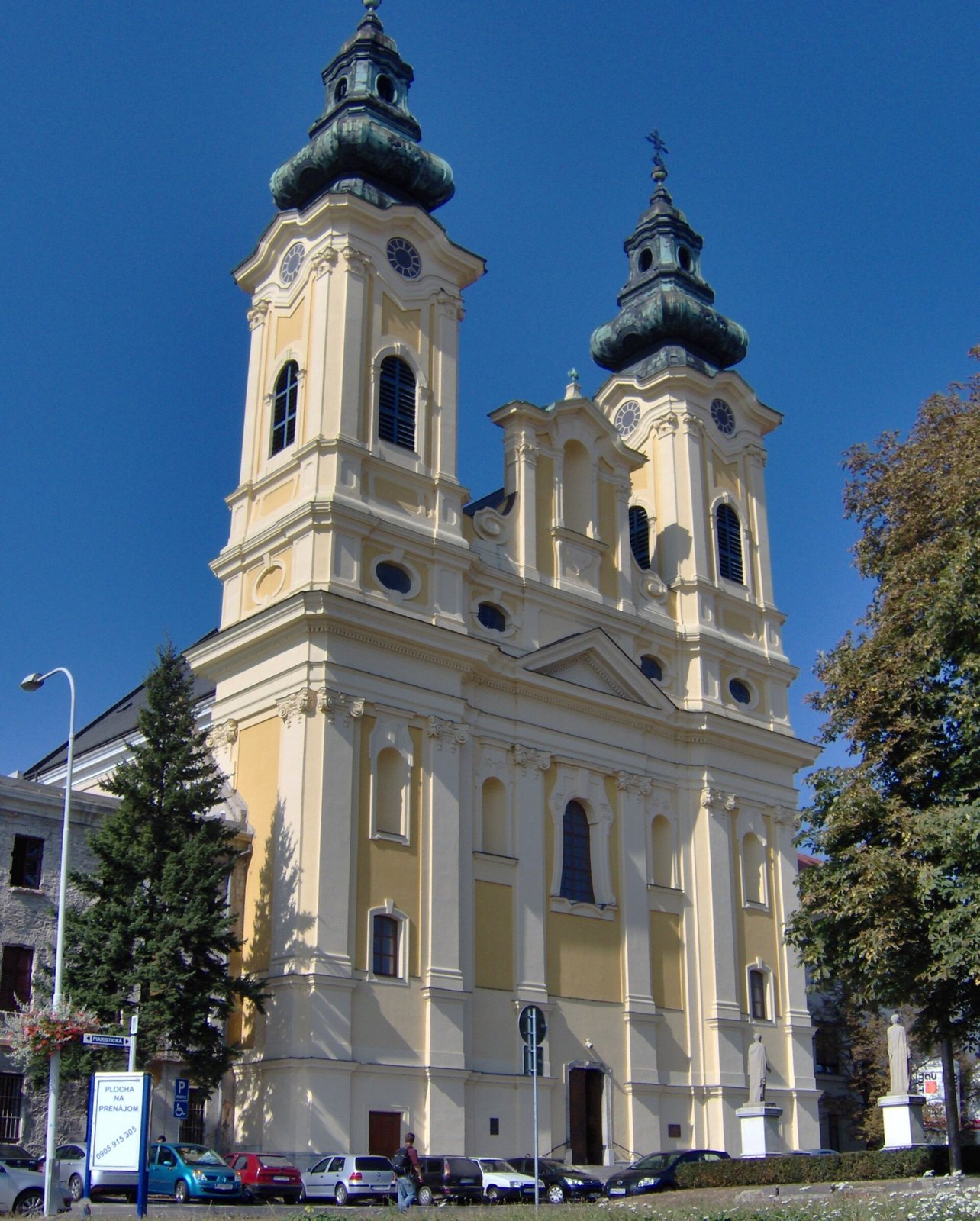
The Church of St. Ladislaus is a Roman Catholic Piarist monastery church in Nitra, Slovakia. The Piarists, a Catholic religious order particularly associated with education, began building their complex there in 1701. The church’s early Baroque design, part of an elaborate European architectural style, dates to a later building campaign. Dedicated to Ladislaus I, king of Hungary from 1077 to 1095 and later recognized as a saint, the church is the largest in Nitra and its surrounding area.
The cornerstone of the complex was laid on June 9, 1701. Building work advanced slowly during the uprising led by Francis II Rákóczi, a Hungarian nobleman who opposed Habsburg rule, and was also interrupted by fires. The residential section was completed by 1714. A nearly finished monastic church was destroyed in a fire in 1716.
Rebuilding and consecration
Work on a new church began in 1742 and continued through 1748. A fire in 1759 then destroyed both the church and monastery buildings, prompting further construction. The church’s towers were built between 1759 and 1763, and the church was consecrated on September 20, 1789. It later became the site of the consecration of Slovakia’s first three bishops.
The church was designated a National Cultural Monument of Slovakia on October 2, 1963.
Remains
Layout and exterior
The stone church stands in the courtyard of a complex on Piaristická Street that also contains monastery buildings and a gymnasium. Its façade faces the street, while the nave divides the courtyard into two parts. The single-nave building measures 38.45 metres in overall length; the nave is stated to measure 25.45 by 22 metres. Two towers rise from the façade, with the tallest reaching 52.5 metres. Both are topped by copper-clad spires. Ionic pilasters, flattened columns with Ionic-style capitals, along with cornices and framed windows, enrich the exterior.
Interior and furnishings
Painted decoration
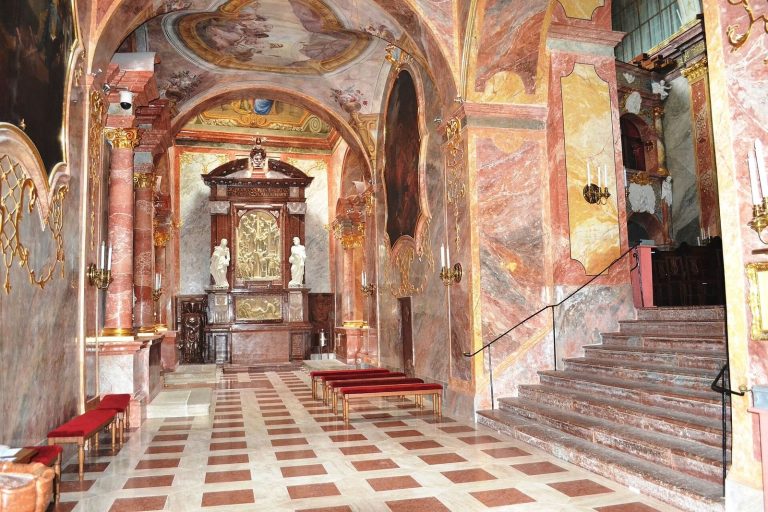
Chapels open into the nave, whose Prussian vaults are shallow vaults formed between supporting beams. The walls were first painted with scenes from Hungarian history and the lives of St. Stephen, Hungary’s first Christian king, his son St. Emeric, and St. Elizabeth and St. Margaret, medieval Hungarian royal women venerated as saints. Later wall paintings include the arrival of the ninth-century missionaries Cyril and Methodius in Great Moravia, a medieval Slavic polity, and Pribina’s church. Nitra painter Edmund Massányi repainted the interior in 1940–1941 with scenes on the history of Christianity in Nitra. The Stations of the Cross, a Catholic devotion recalling events of Jesus’s Passion, date to 1942.
Altars and pulpit
The main altar, made in 1750 with funding from Hungarian nobleman and statesman Count Antal Grassalkovich I, has a canopy above its principal structure and includes a painting of St. Ladislaus. Martin Vögerl created its sculptural decoration, including figures of St. Joseph, husband of Mary in Christian tradition, and St. Ignatius of Loyola, founder of the Jesuits. The church also has a wooden side altar dedicated to the Sacred Heart and six pairs of side altars in the nave. Its pulpit dates to the seventeenth century.
Organ and bells
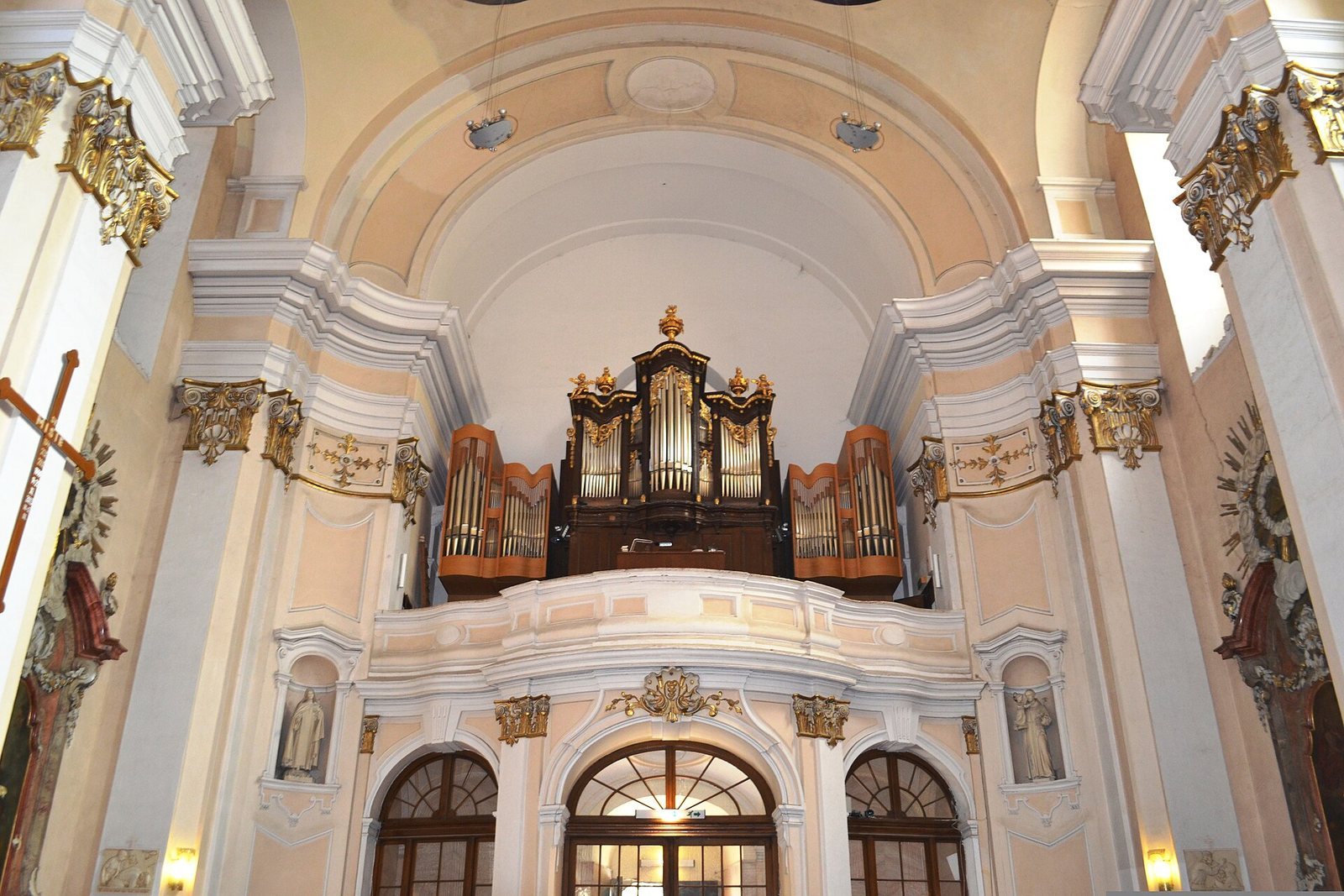
Valentín Arnold, an organist from Trnava, made the gilded organ around 1800. It has three keyboards and 39 stops, controls for groups of pipes. Four bells hang in the south tower. Three, dated 1928, are dedicated to St. Ladislaus, St. Charles Borromeo, a sixteenth-century Catholic archbishop and reformer, and St. Joseph. The fourth, dated 2011, is dedicated to the archangel St. Michael.
Sacristy, oratory, and crypt
A sacristy occupies the church’s south side, with an oratory above it that now serves as a library. Beneath the church, a crypt provided a burial place for Piarist monks and prominent residents of Nitra.