Church of Saint Nicetas: A Russian Orthodox Parish Church on Shvivaya Hill
Site at a Glance
- Popularity
- Medium
- Country
- Russia
- Primary era
- Early Modern
- Eras represented
- Early Modern, Modern
- Civilizations
- Russian
- Site type
- Religious
- Remains
- Church
On this page10 sections
History
The Church of Saint Nicetas is a Russian Orthodox parish church on Shvivaya Hill in Russia, near the confluence of the Moskva and Yauza rivers. Dedicated to Saint Nicetas, an early Christian martyr, it is counted among Moscow’s oldest parish churches. A donor inscription dates the rebuilding of its stone church to 1595, while surviving older fabric indicates that the work incorporated an earlier stone building. Later changes gave the church a more Baroque appearance.
Settlement and the early church
People lived on Shvivaya Hill by the 10th century. The wider Tagansky Hill became more densely settled around the turn of the 15th and 16th centuries. Among those moved there from elsewhere in Moscow were potters and blacksmiths, including armorers and cauldron-makers, whose work posed fire risks.
The church is first mentioned in 1476. A chronicle entry for 1533 describes lightning piercing a wall and knocking gold from the Deesis, an icon grouping centered on Christ and flanked by Mary and John the Baptist. Since the entry says nothing about a fire, the church was probably already built of stone. In 1595, Moscow merchant Savva Yemelyanov, son of Vagin, rebuilt the existing stone church, rather than constructing it entirely anew.
Expansion and changing use
Building campaigns in 1684–1685 and the 1740s expanded and renewed the church. The later work included a new chapel and the installation of the main screen of icons. Eighteenth-century rebuilding gave the church a more Baroque character. A further restoration took place in the late 19th century.
Archpriest Nikolai Vinogradov served at the church from 1918 until it closed in 1936. The gates and fence were demolished, but public intervention prevented the church building from being completely destroyed. In the 1950s, architect Lev David restored the structure to a medieval appearance. It was then used as a warehouse by the Diafilm film studio until 1990.
Return to worship
The church was returned to the Russian Orthodox Church in 1991, and services resumed in 1992. It became a Moscow metochion, a dependent establishment outside its main monastery, of the Monastery of Saint Panteleimon on Mount Athos. Mount Athos, in northeastern Greece, is a major center of Orthodox monasticism. Candidates preparing to join the Athonite monastic community live at the metochion.
The metochion’s successive superiors were Peter (Pigol), an igumen or monastery superior, from 1991 to 1992; Feoktist (Doroshko), an archimandrite or senior monastic cleric, from 1992 to 1994; Nikon (Smirnov), an igumen, from 1994 until 14 January 2018; and Nikita (Smernyagin), a hieromonk or monk who is also a priest, from that date. The church belongs to the Moscow Diocese and Pokrovsky Deanery, a local grouping of parishes within a diocese. Its worship follows the Athonite liturgical rule, the order of services associated with Mount Athos. Sunday services begin at 22:30, with the liturgy following an all-night vigil, and the church remains active.
Aleksandr Solzhenitsyn wrote about the church in chapter 25 of his novel In the First Circle, titled The Church of the Martyr Nicetas. The building is protected as a federal-level cultural heritage monument in Russia.
Remains
Layout and surviving fabric
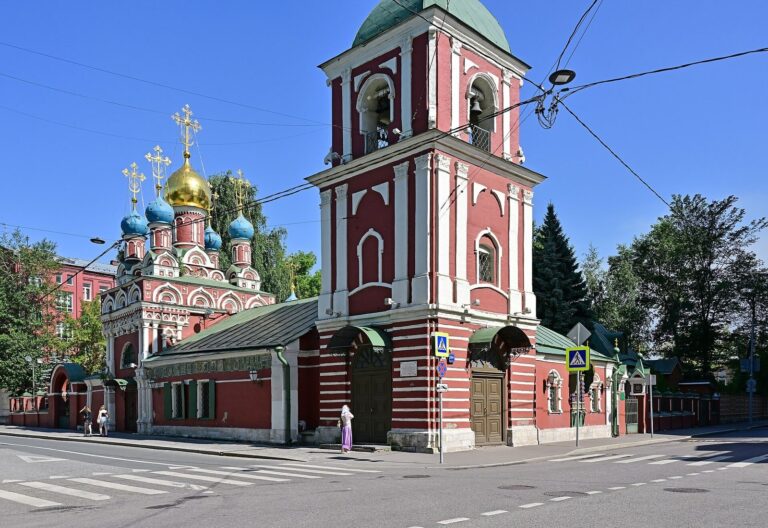
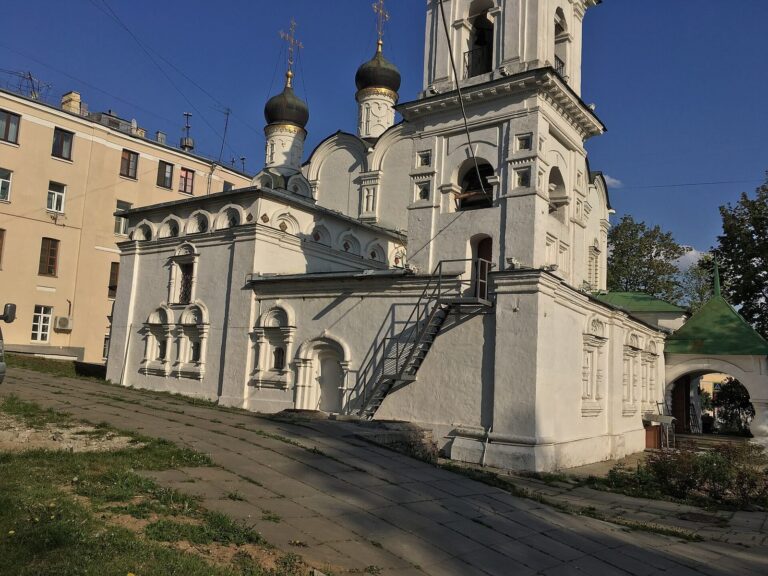
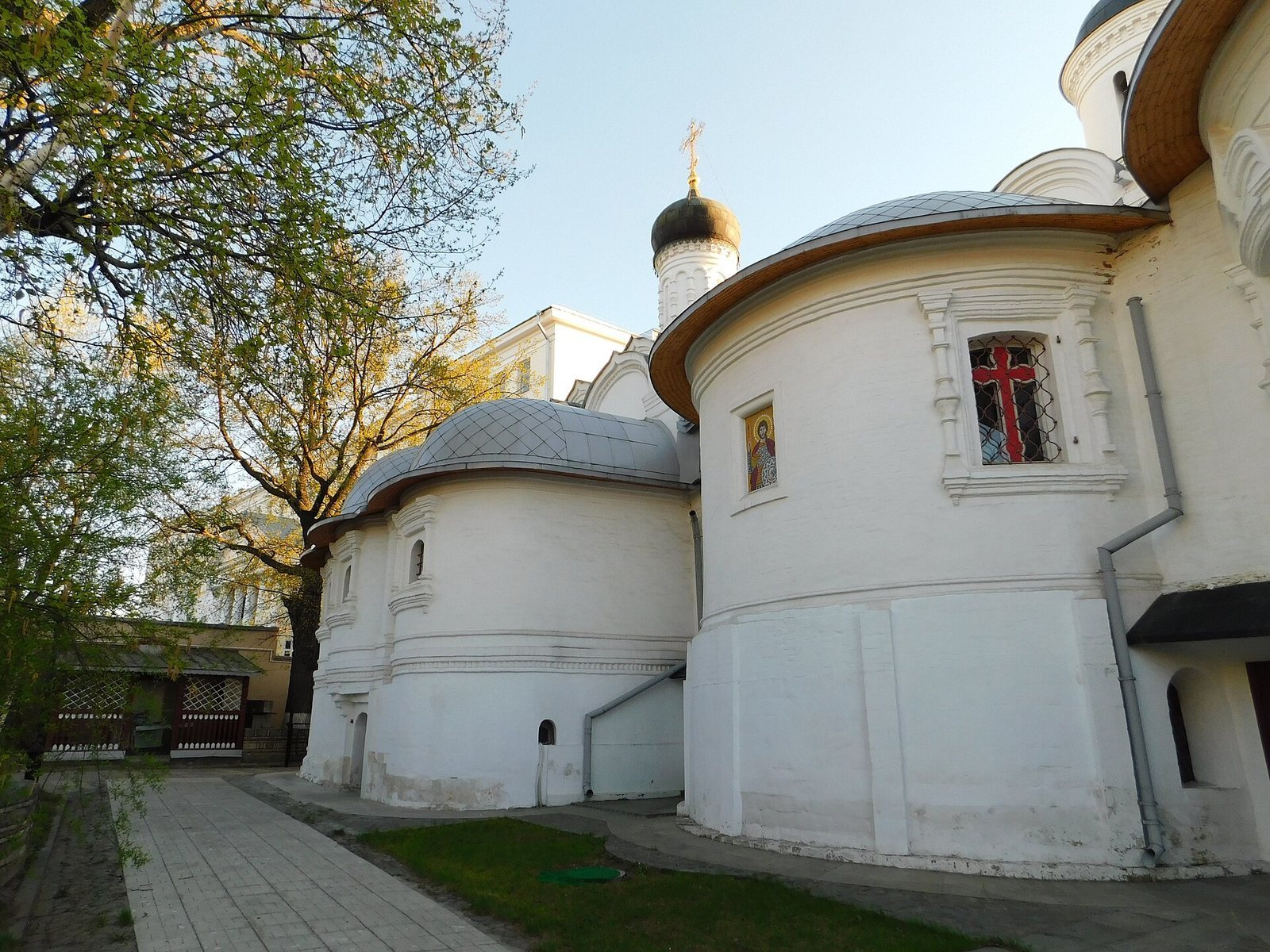
The small, single-dome church stands on the summit of Shvivaya Hill, which forms part of Tagansky Hill. Its position is near the meeting of the Moskva and Yauza rivers. The building’s surviving features reflect its growth through successive additions.
Early fabric and inscription
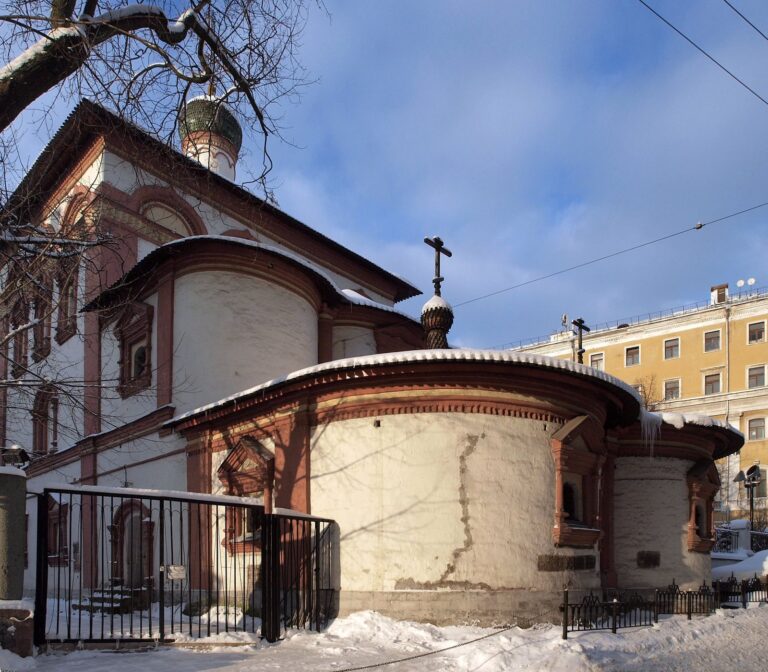
The oldest part is a lower chamber supported by a single pillar. Its masonry includes small-format bricks of a type used from the early 16th century. A slab bearing a building inscription is set into the church wall.
Bell tower and southern additions
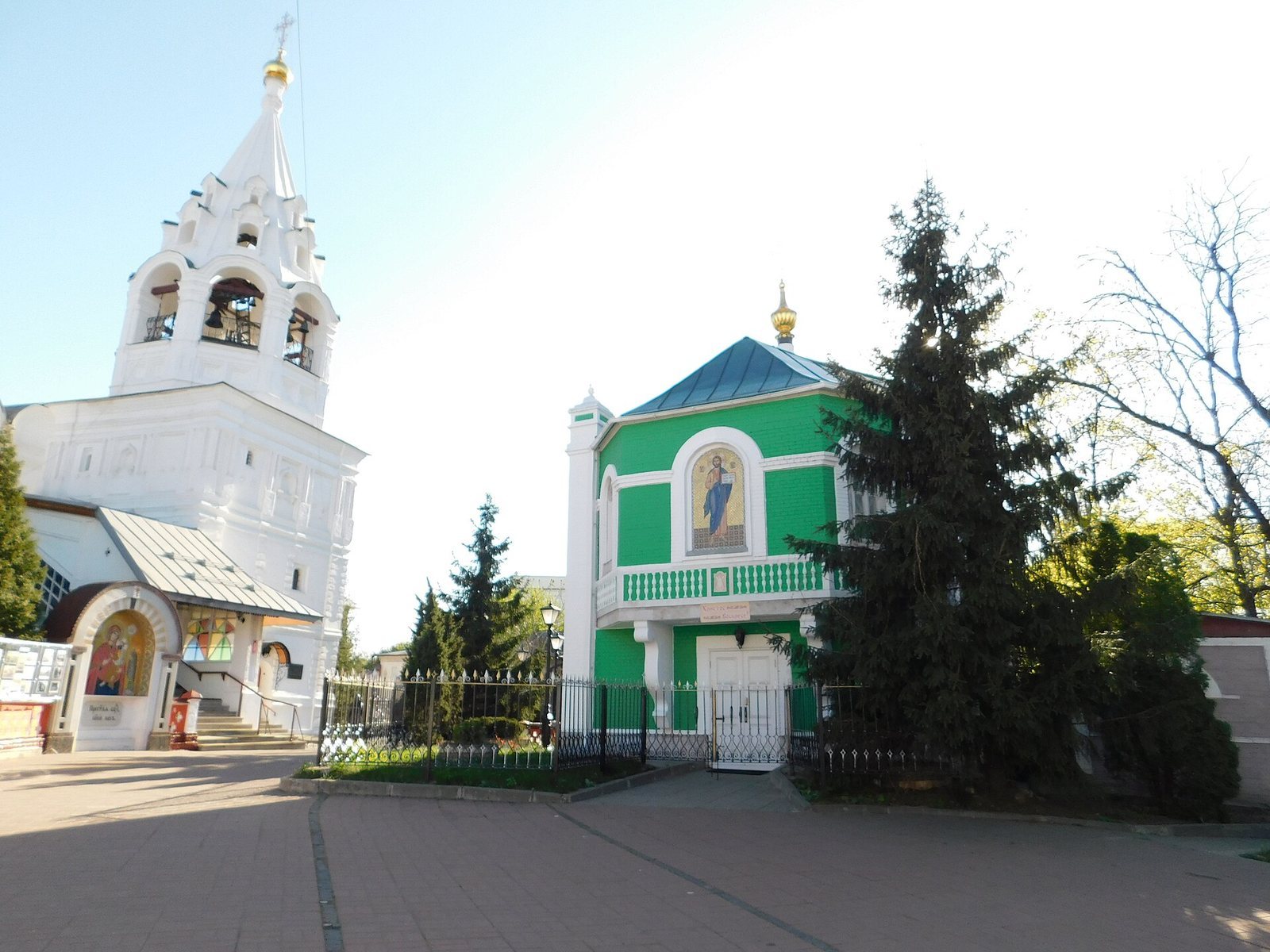
A bell tower with a tent-shaped roof is attached to the northwest side of the church. It dates to 1684–1685, the period when the Annunciation chapel was added on the south side, with a refectory adjoining it. The north portal also dates from this campaign.
Interior, gallery, and Saint Olga chapel
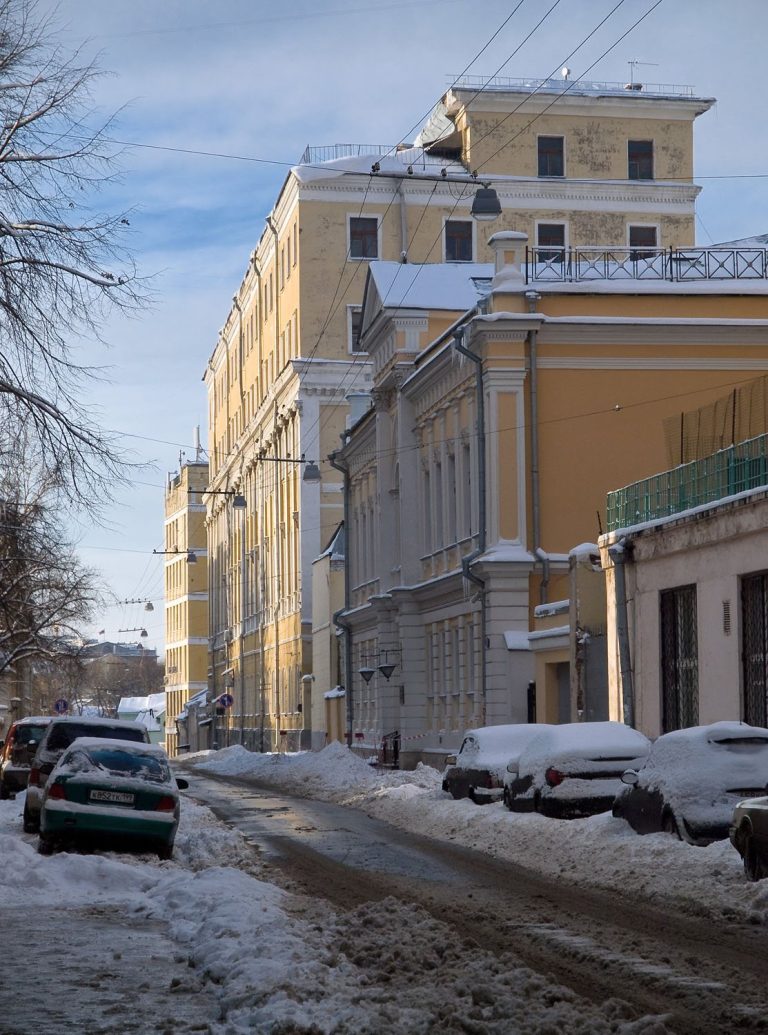
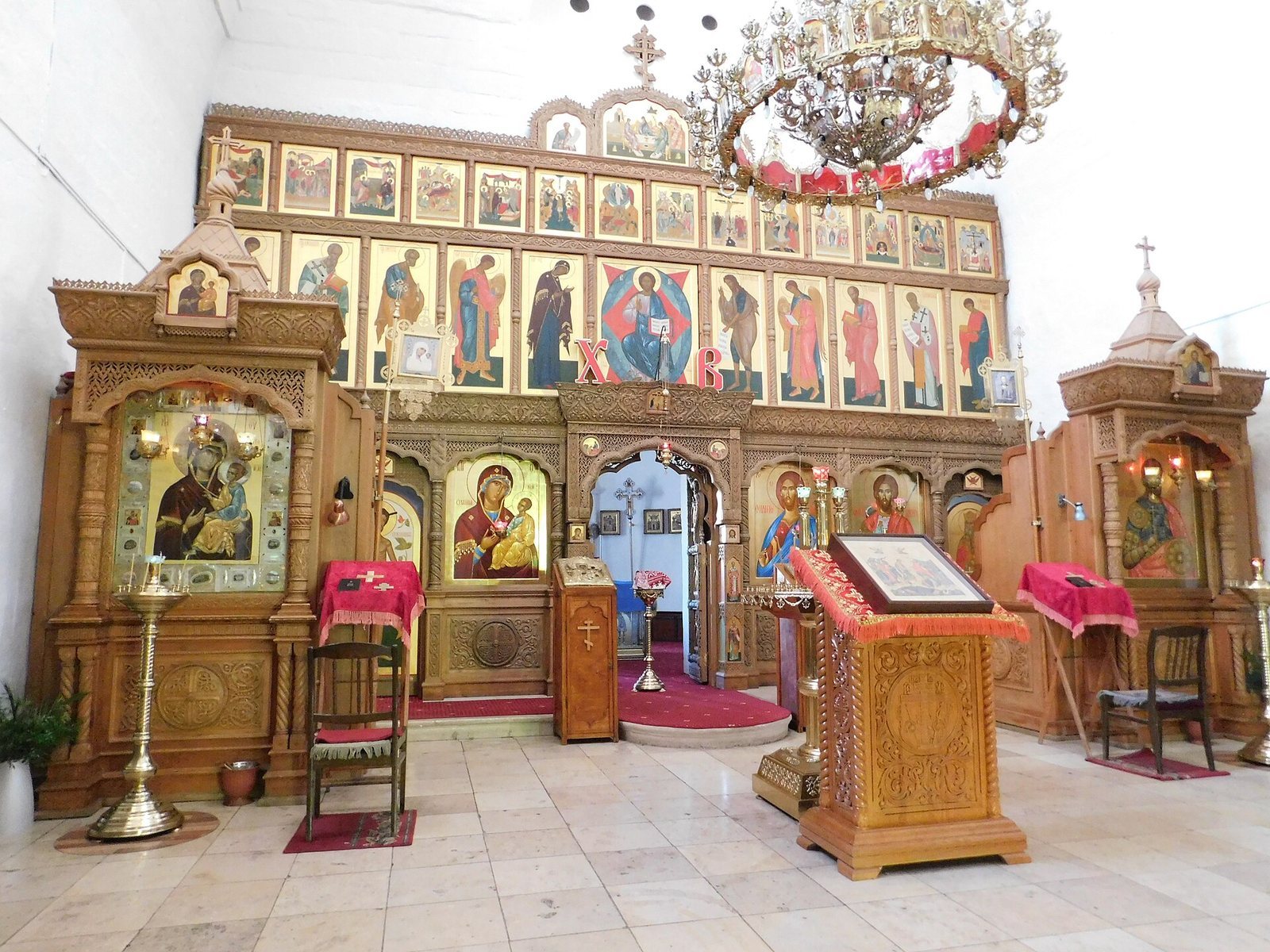
The main iconostasis, a screen of icons separating the sanctuary from the main body of the church, dates from the 1740s. An open gallery once offered views toward the Moskva River and the Kremlin; the Kotelnicheskaya Embankment Building now partly blocks that view. On the northwest side, the chapel dedicated to Saint Olga has a separate entrance. Architect Alexander Popov designed it during the restoration of 1878–1880.
Entrance chapels and boundary
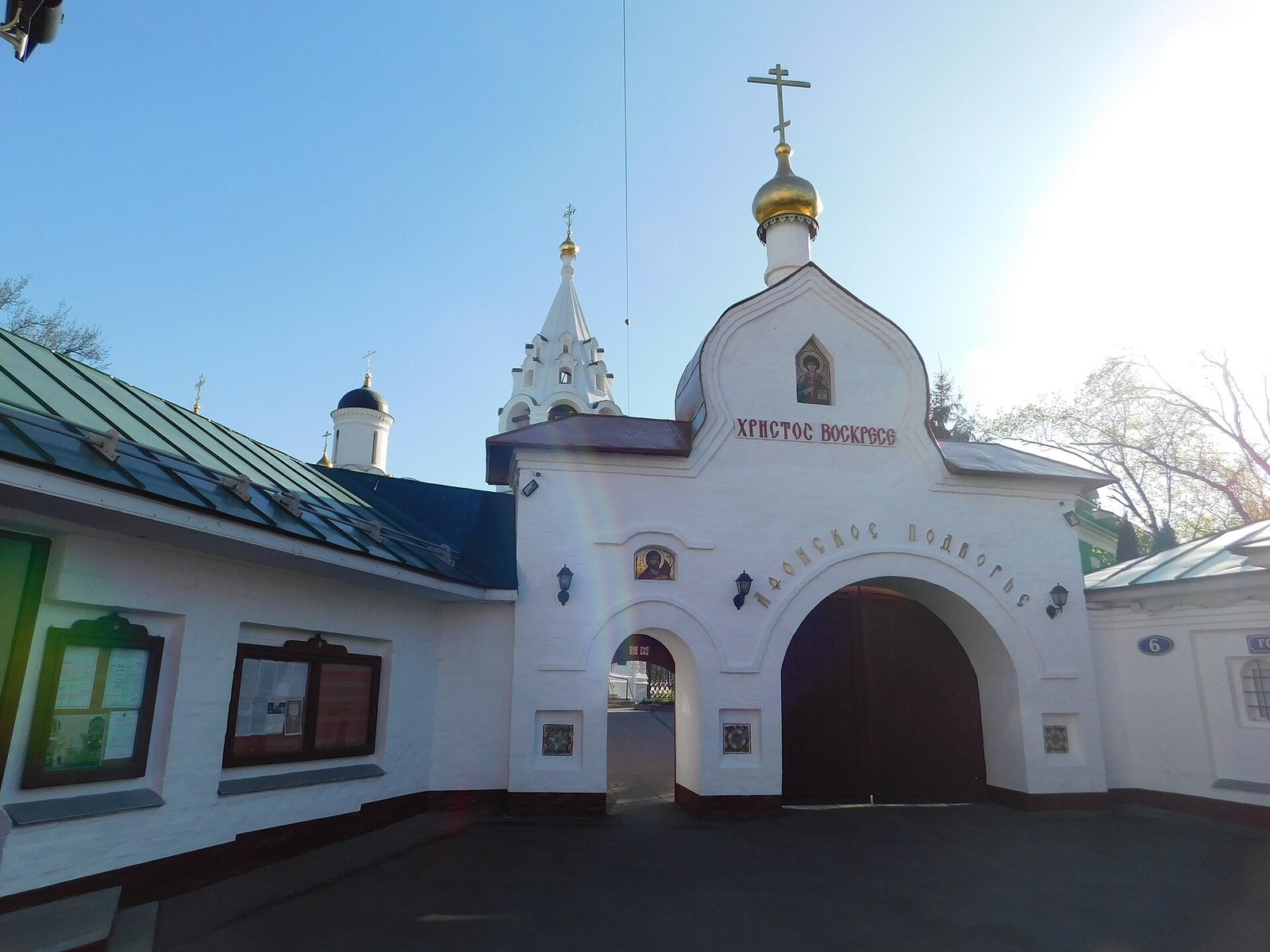
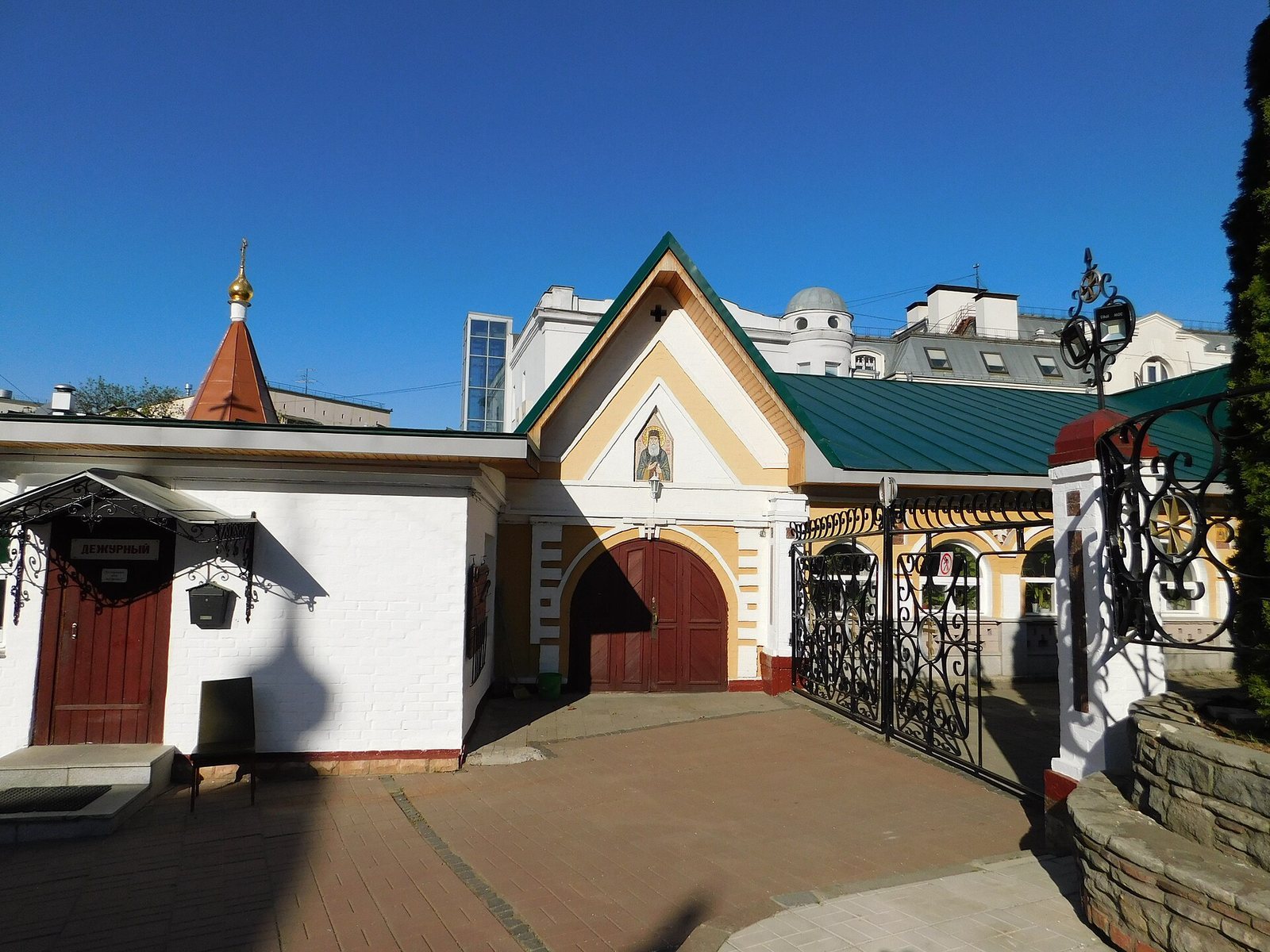
Two tower-like chapels flank the entrance. They are dedicated to Saint Panteleimon, a Christian martyr and healer, and Saint Silouan of Athos, a Russian Orthodox monk. The gates and fence were rebuilt in 1996.