Selitrennoye Archaeological Site: A Golden Horde Capital and Craft Center
Site at a Glance
- Popularity
- High
- Country
- Russia
- Primary era
- Medieval
- Eras represented
- Medieval
- Civilizations
- Golden Horde
- Site type
- City
On this page10 sections
History
Golden Horde capital
The Selitrennoye archaeological site, in Russia’s Lower Volga steppe, was a major capital of the Golden Horde during the 14th and 15th centuries. The Golden Horde was a Mongol successor state that ruled much of Eurasia from the 13th to the 15th centuries. Selitrennoye was also a large craft center and had a mint, where coin production declined sharply during the 1370s.
In 1395, Timur, a Central Asian conqueror and military ruler, destroyed the city, though it was not entirely ruined. In 1438, it was still recognizable as a center of international trade. The date when it was finally abandoned is unknown.
Debate over the city’s identity
From the late 19th century, Selitrennoye was widely identified with Saray, also known as Saray-Batu or Saray al-Mahrusa, the Golden Horde’s first capital. This interpretation became dominant in 20th-century scholarship. In the early 21st century, archaeologist Alexander Pachkalov proposed that the site was New Saray, which emerged during the rule of Khan Uzbek in the 1330s. The site’s coin evidence supports this interpretation.
Archaeological study and protection
Franz Ballod carried out small-scale investigations in the 1920s. Research resumed in 1965 with the Volga Archaeological Expedition, led by archaeologist German Fedorov-Davydov. Systematic excavations during the 1960s to 1980s covered more than 25,000 square metres. Selitrennoye is a federally significant archaeological monument and a cultural heritage property of Russia.
Remains
Extent and setting
The ruins lie within Selitrennoye village and extend northwest into the steppe for several kilometres along an arm of the Akhtuba River. Historian Vadim Egorov estimated the site’s area at about 10 by 2 kilometres. He considered it the largest city in the Golden Horde and one of the largest in medieval Europe.
Excavated areas
Residential compounds
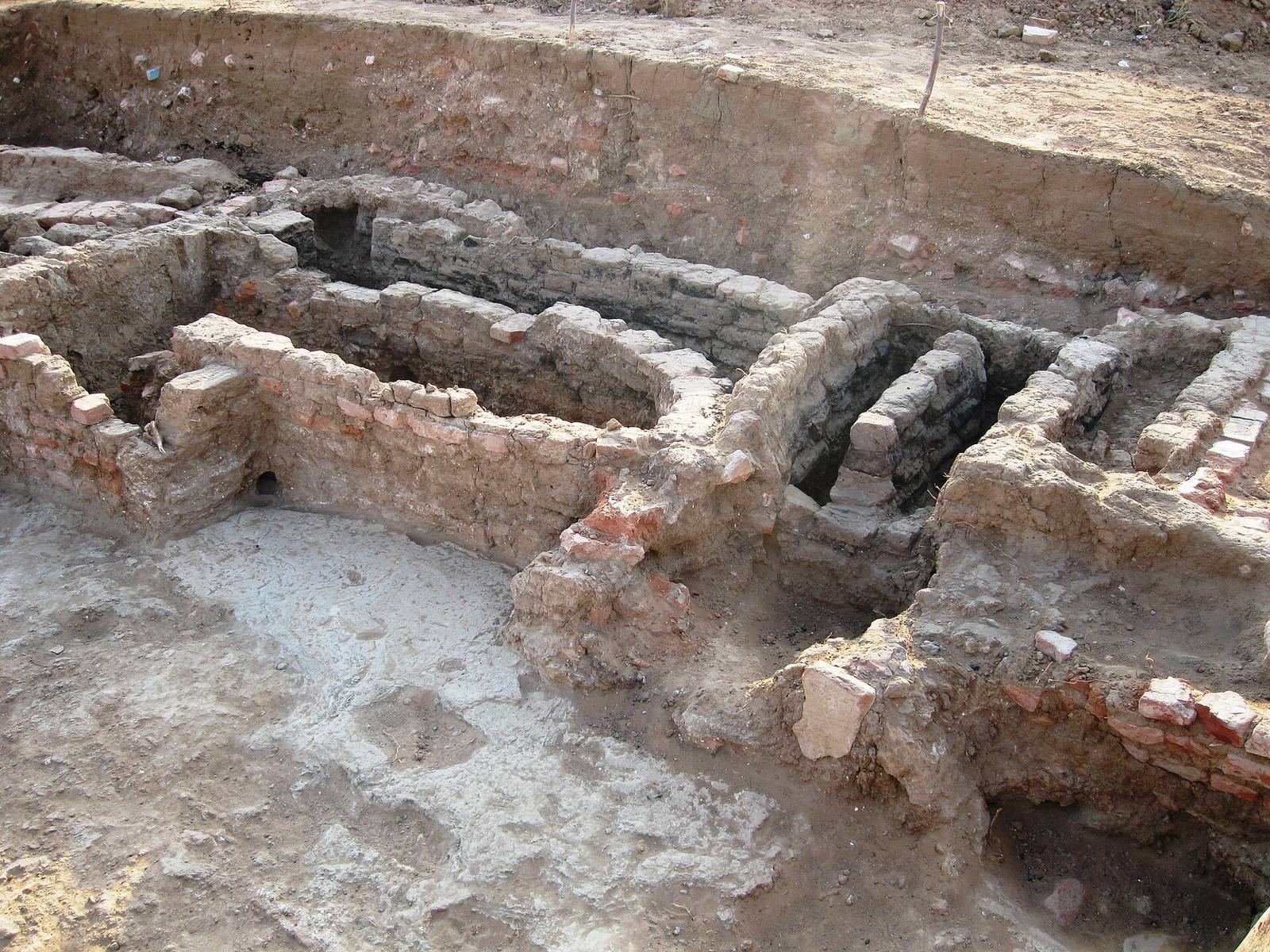
Excavations have examined residential compounds within the city. These remains form part of the broad area investigated at Selitrennoye.
Mosque and necropolis
A mosque and a large necropolis, or burial ground, are among the excavated features. Together with the residential remains, they represent distinct parts of the city’s built and burial landscape.
Craft quarters and kiln
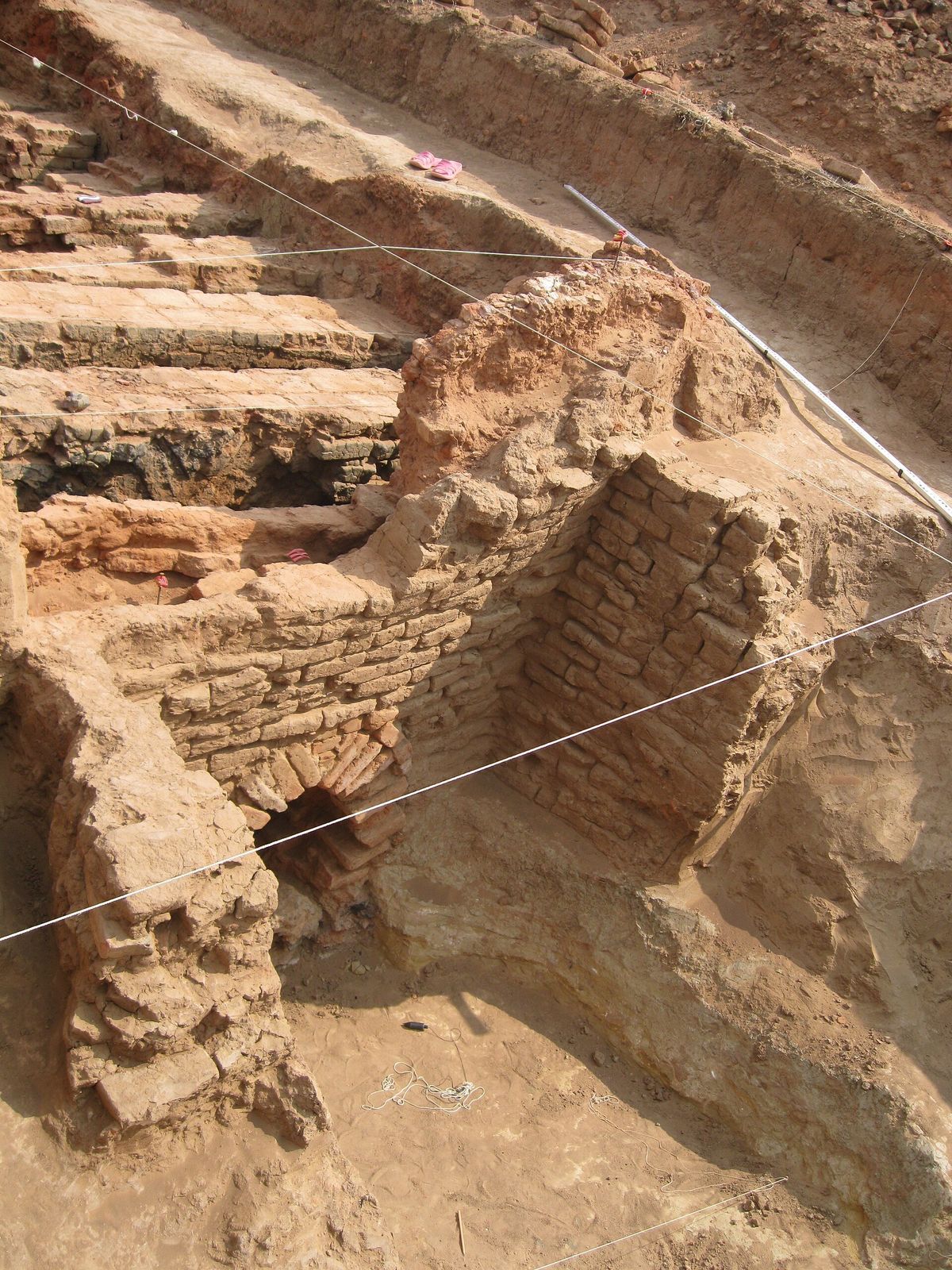
Metalworkers’ and potters’ quarters are known at the site, and workshops for jewelers and bone carvers have also been investigated. A brick-firing kiln survives among the remains.