Church of Saint James the Greater in Chvojen: A Romanesque Hilltop Church
Site at a Glance
- Popularity
- Medium
- Country
- Czechia
- Primary era
- Medieval
- Eras represented
- Medieval, Early Modern, Modern
- Civilizations
- Austria-Hungary, Duchy of Bohemia, Habsburg, Holy Roman Empire, Kingdom of Bohemia
- Site type
- Religious
- Remains
- Church
On this page8 sections
History
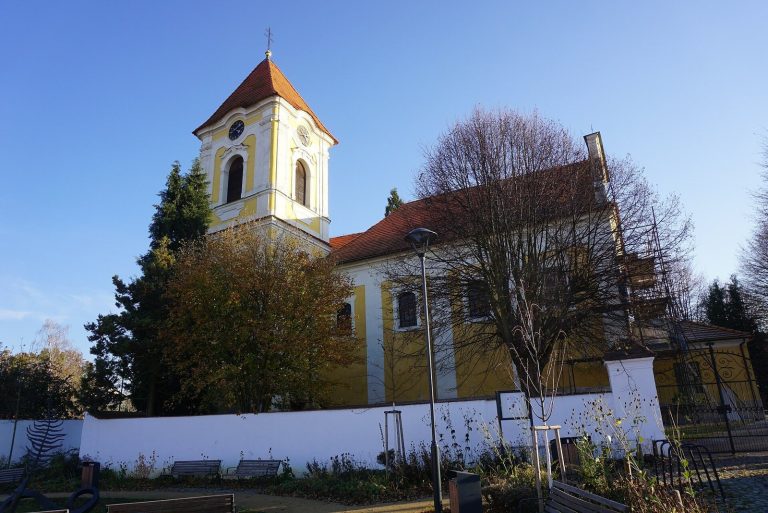
The Church of Saint James the Greater in Chvojen is an isolated Roman Catholic church in the cadastral area of Benešov, Czechia, dedicated to James the Elder. It belongs to the Diocese of Prague and the Benešov vicariate and parish, serving as a filial church dependent on the parish. A Romanesque church, in a medieval style characterized by rounded arches and heavy masonry, was built here probably in the mid-13th century. It had a tribune, an internal gallery, and is also known as the Church of Saint James and Philip.
Hilltop settlement and fortification
The hill’s settlement history includes a Slavic hillfort and, later, a village that disappeared. During the final phase of the Early Middle Ages, the hill was fortified, probably in the second half of the 11th century. A magnate, a member of the high nobility, later established a residence within part of the fortified area. Information panels at the church also associate the hill with a Celtic fortification, though that proposed identification remains uncertain.
Later alterations and protection
The church was altered in 1872 and again in 1904, when the work followed a design by Josef Mocker. It is protected as a cultural monument of the Czech Republic.
Remains
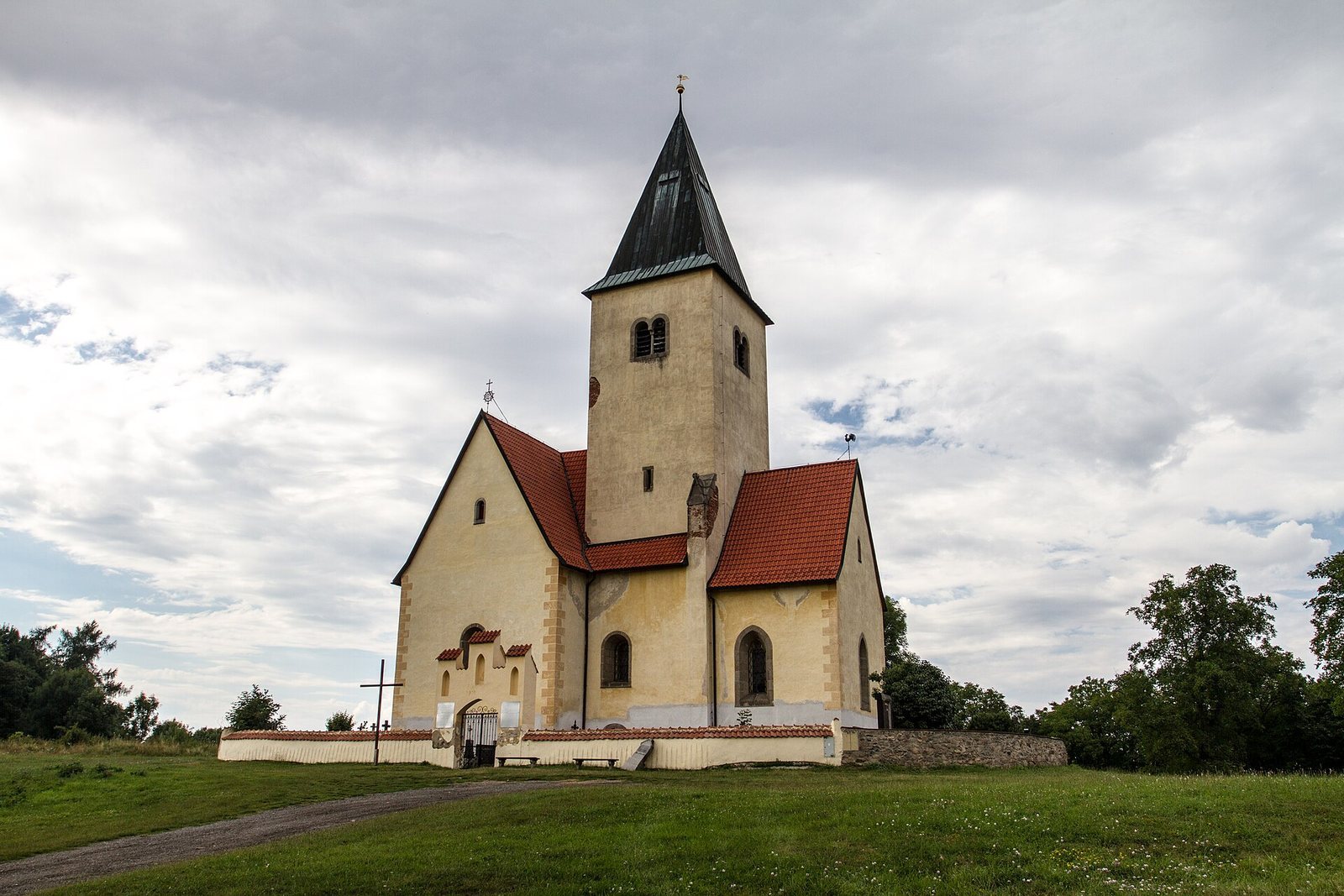
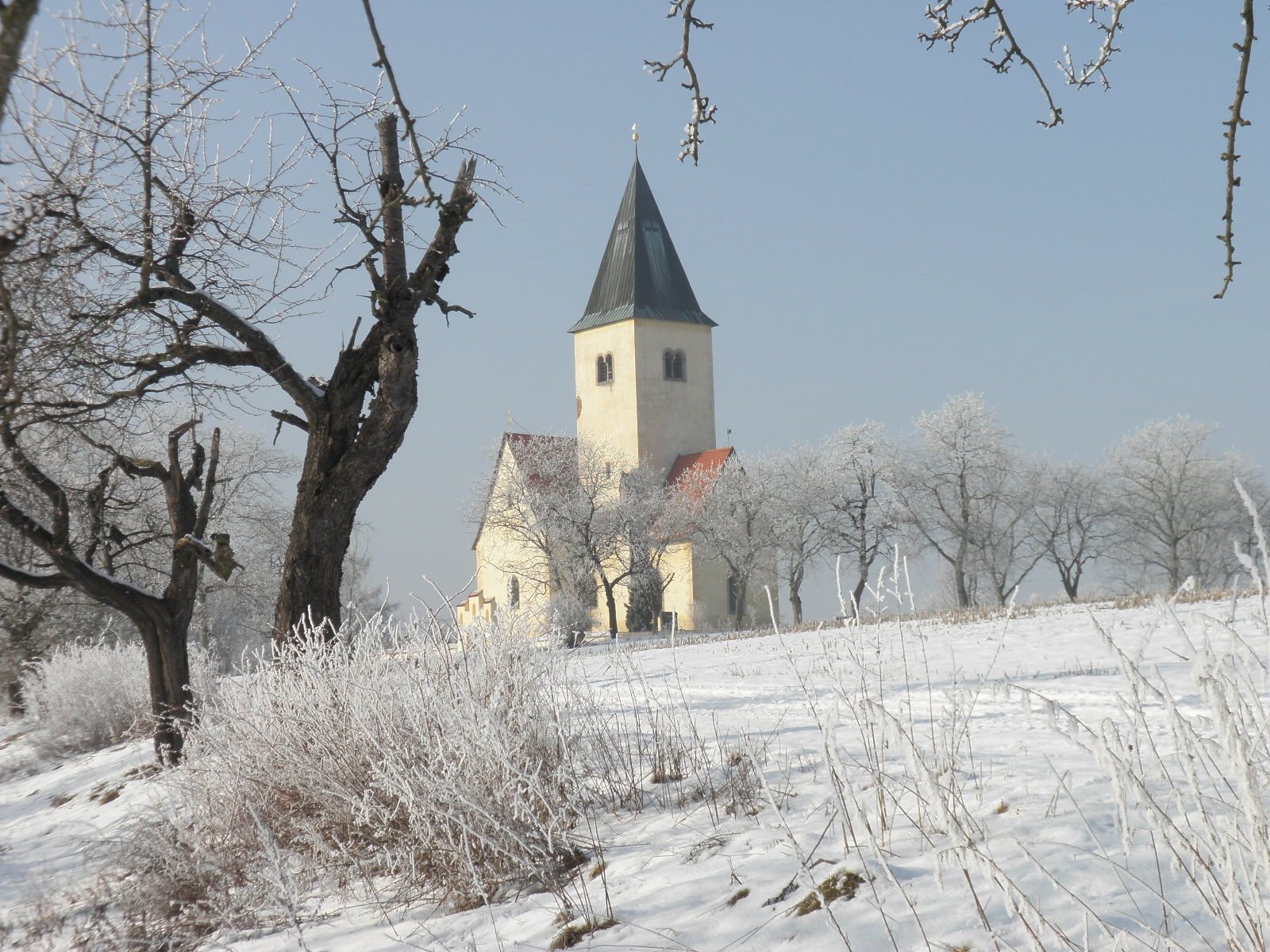
The church stands alone on a rise above the Baroque Chvojen farmstead, with a cemetery surrounding it. Its compact layout combines a broad, short nave, a tower, and a square sanctuary at the eastern end. The surrounding hill also preserves traces of an earlier fortified site.
Church structure
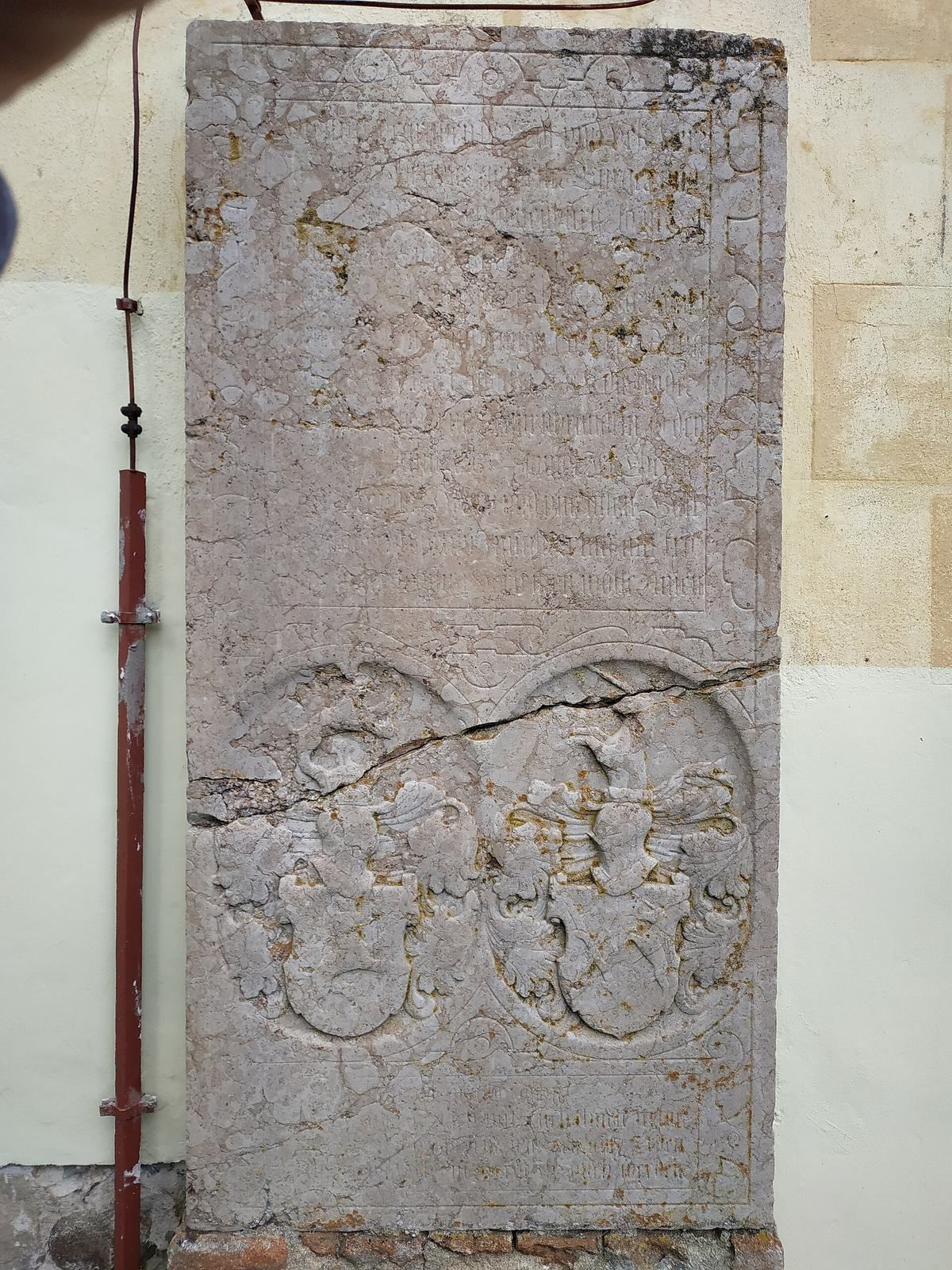
The nave measures 20 by 8 metres and is joined to a square presbytery, the sanctuary at the east end. A transverse barrel vault, a curved ceiling spanning across the space, covers the nave; the presbytery has a cross vault formed by intersecting barrel vaults. The nave and the tower’s lower section are the oldest parts of the church. A stairway runs within the tower’s thick masonry. The tower was raised in the modern period and substantially heightened in 1904, when paired Neo-Romanesque windows were added. Most of the stone patterning in the windows dates from later alterations. Renaissance epitaphs are set into the walls, and the floor retains 14th-century paving.
Hilltop defences
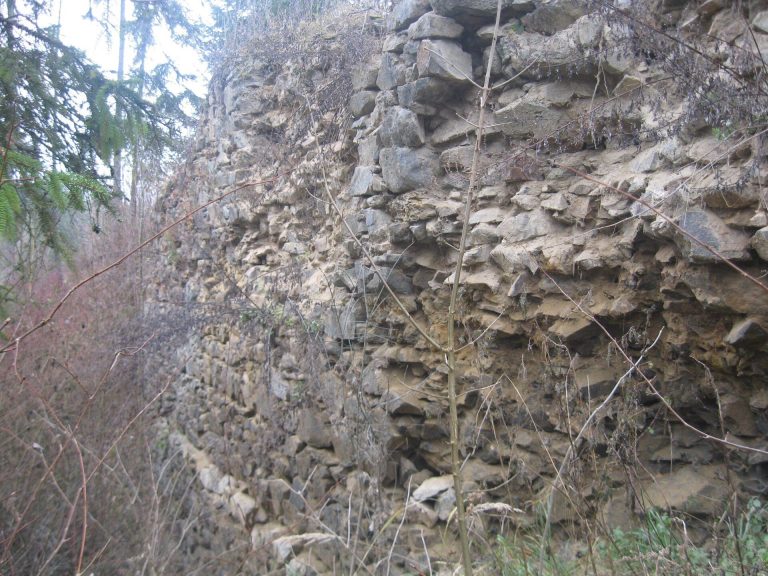
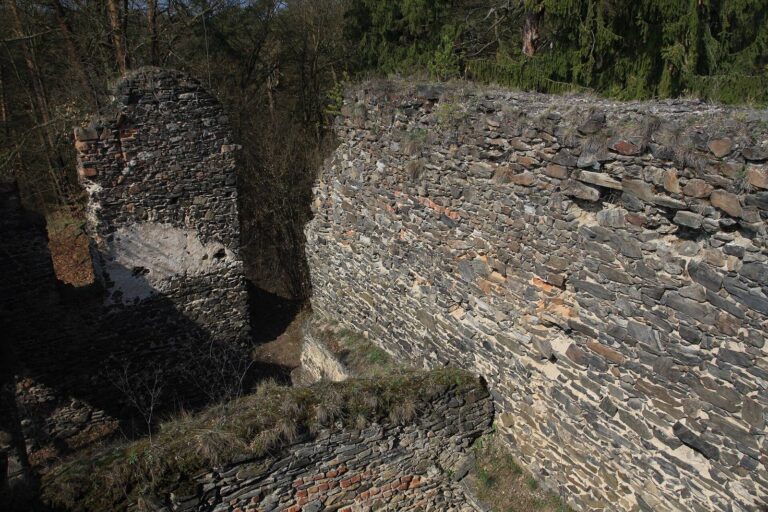
The fortified area covered about 3 hectares and was formed by a ditch and rampart, whose remains are clearest on the western side of the site. A magnate’s residence stood west of the church nave.
Medieval wall paintings
The church contains wall paintings dating to the mid-14th century. Beneath the tower, a scene on the north side shows two noblemen presenting a tithe and an animal to Saints James and Philip. On the north side of the arch leading into the sanctuary, Leviathan, a biblical sea creature, represents Hell. Medieval Christian imagery used this figure in that role, and it also served as theatrical scenery in the Gothic period. Another painting shows Mary, the Madonna, crowned by angels in forms drawing on Romanesque art. A further image presents a geocentric, or Earth-centred, model of the solar system, with the Moon and other planets orbiting Earth. This subject is unusual in a sacred setting.
Cemetery entrance and bells
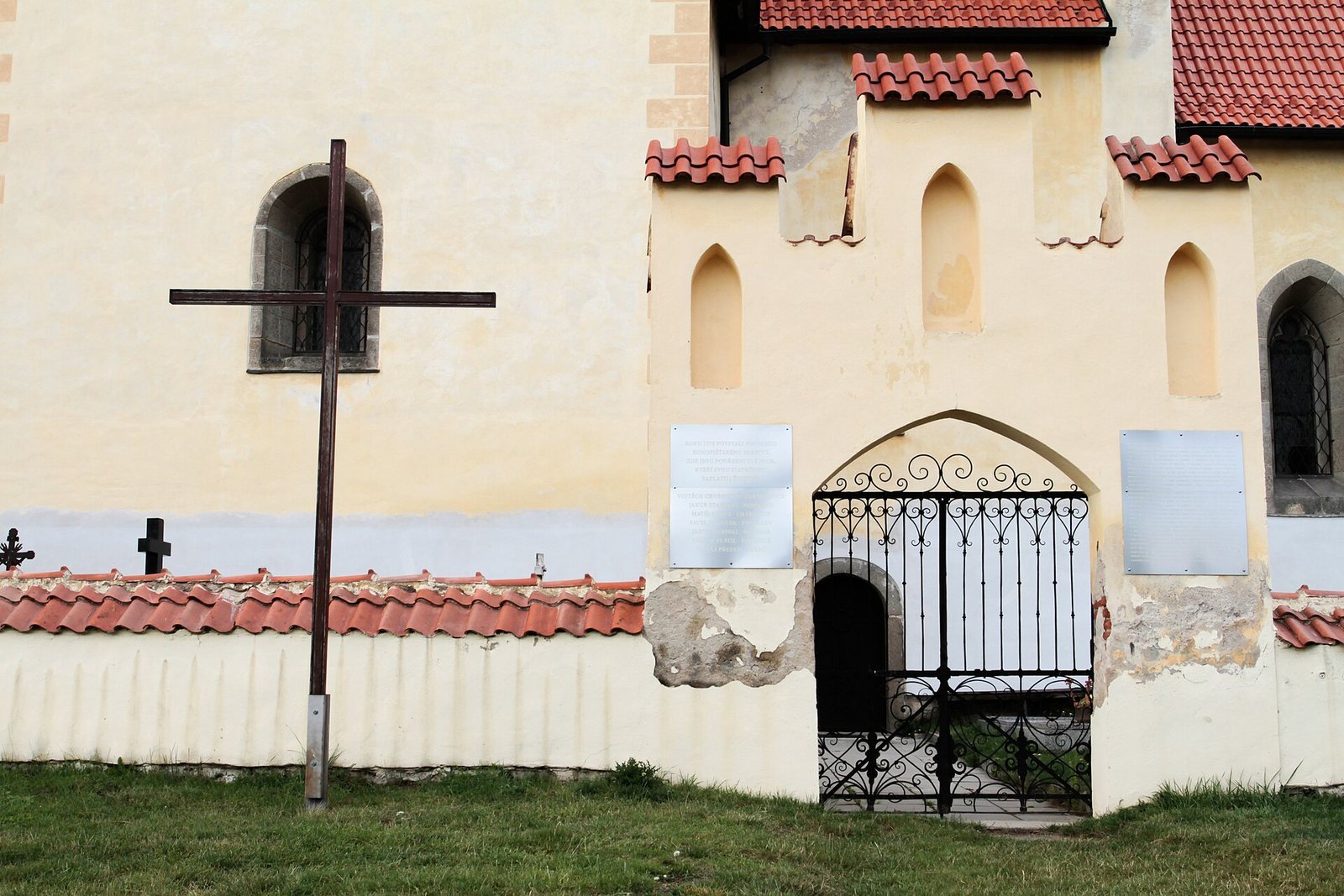
A Neo-Gothic gate gives access to the cemetery. Its plaques recount the site’s history and commemorate peasant rebels from the 1775 uprising who were buried there. The tower holds an older bell, 0.65 metres high and 0.80 metres across, inscribed AVE MARTIN. A second bell, dedicated to Saint Wenceslas, was installed in 2012 and consecrated in the church on 15 September that year by Michael Pojezdný, abbot of Strahov in Prague. Saint Wenceslas was a Bohemian duke revered as a saint and patron of Bohemia. The newer bell is 0.58 metres across, weighs 120 kilograms, and is driven by a linear motor.