Church of Saint-Jacques, Dieppe: A Catholic Parish Church
Site at a Glance
- Rating
- 4.5
- Popularity
- High
- Country
- France
- Primary era
- Medieval
- Eras represented
- Medieval, Early Modern
- Civilizations
- Unclassified
- Site type
- Religious
- Remains
- Church
On this page8 sections
History
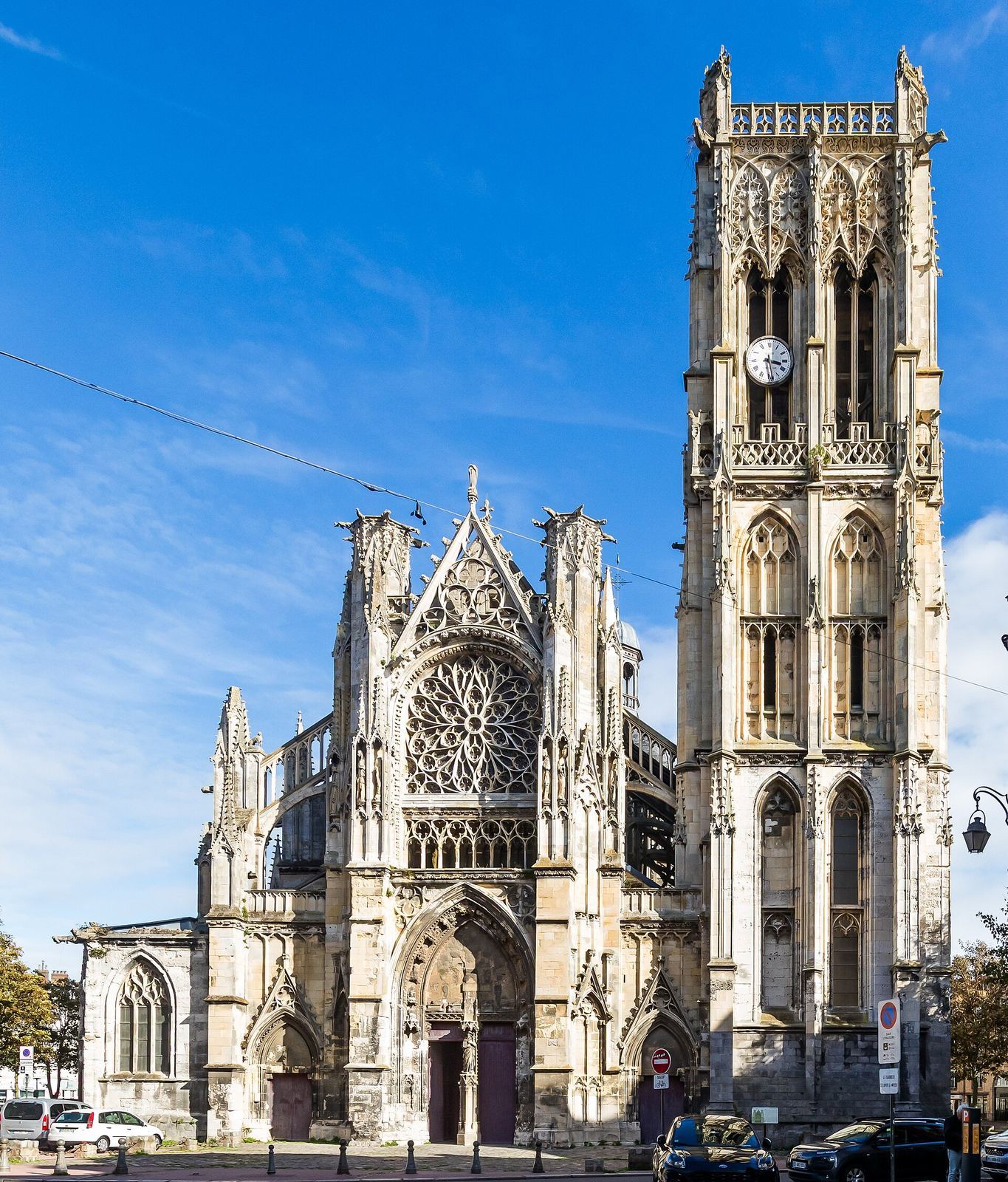
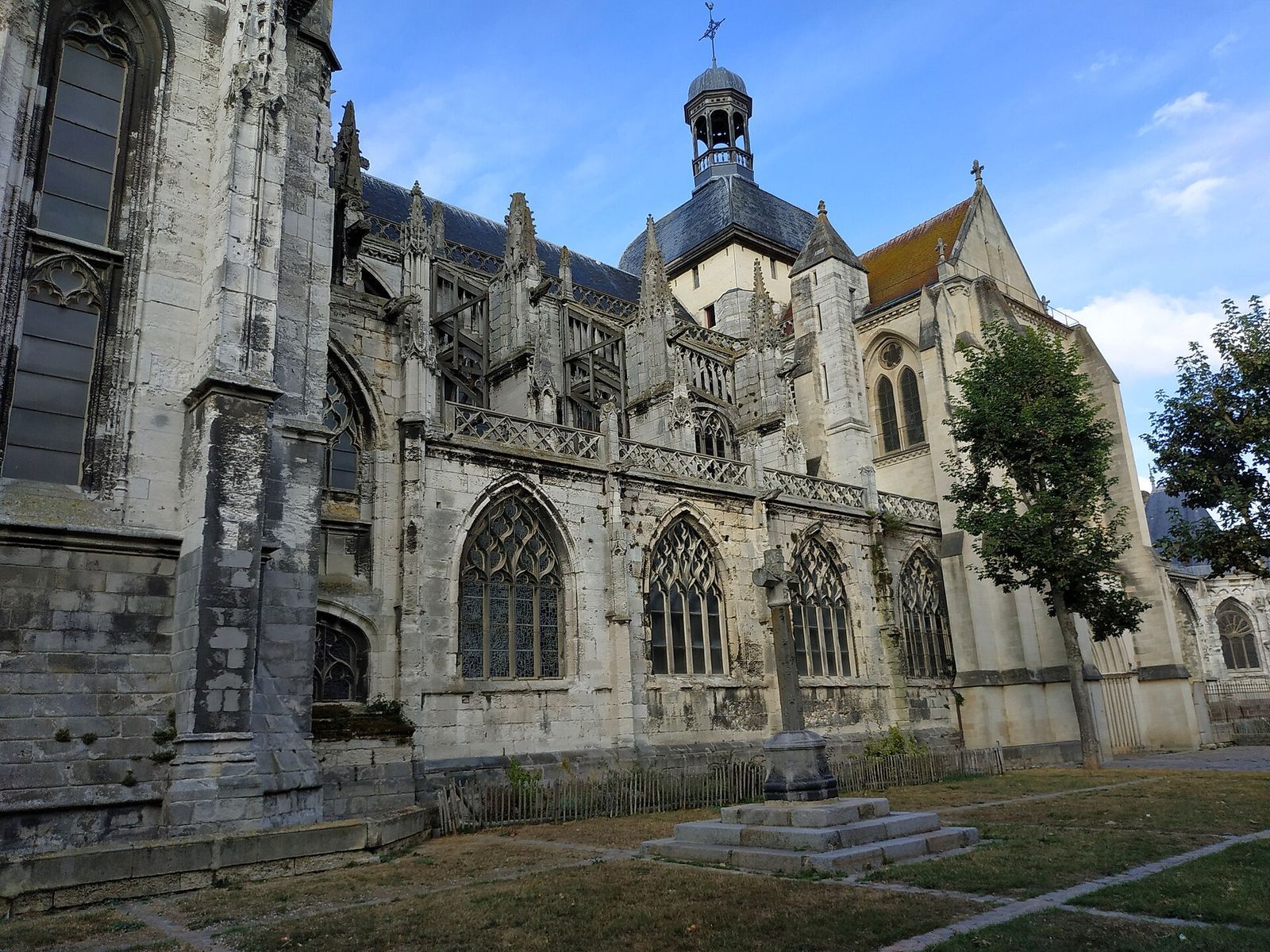
The Church of Saint-Jacques, Dieppe, is a Catholic parish in France, founded in 1195 and built in phases through the 16th century in Flamboyant Gothic, a late Gothic style with flame-like tracery, and Renaissance styles drawing on classical forms.
In 1282, Guillaume de Flavacourt, Archbishop of Rouen, established the church as a parish. Dedicated to Saint James the Great, one of the twelve apostles in Christian tradition, it remains a Catholic parish in the Archdiocese of Rouen, a major church jurisdiction led by an archbishop.
Recognition and later events
Victor Hugo visited the church on 8 September 1837 to see its finely worked stone carving. It was classified as a French historic monument in 1840. Before 1916, departmental architect Lucien Lefort carried out restoration work.
During the night of 6–7 November 2017, eight paintings were stolen. The works were by Anselma (Alejandrina Gessler y Lacroix), Jean-Guillaume Drouet, Auguste Jugelet, Augusta Lebaron-Desves, and Armand Mélicourt-Lefebvre.
Remains
The church’s plan and fabric reflect successive building phases, with crosswise transepts, a central nave and choir, and parallel side aisles forming its principal arrangement.
Medieval plan and structure
The north and south transepts, the arms crossing the main body of the church, date to the second half of the 12th century. The choir, traditionally the area for clergy and singers, the central nave, and its side aisles were built in the 13th century. The nave’s vaulted ceilings and the triforium, an upper passage or arcade above the main nave arcades, date to the 14th century.
Architectural features
Portal, tower, and choir chapels
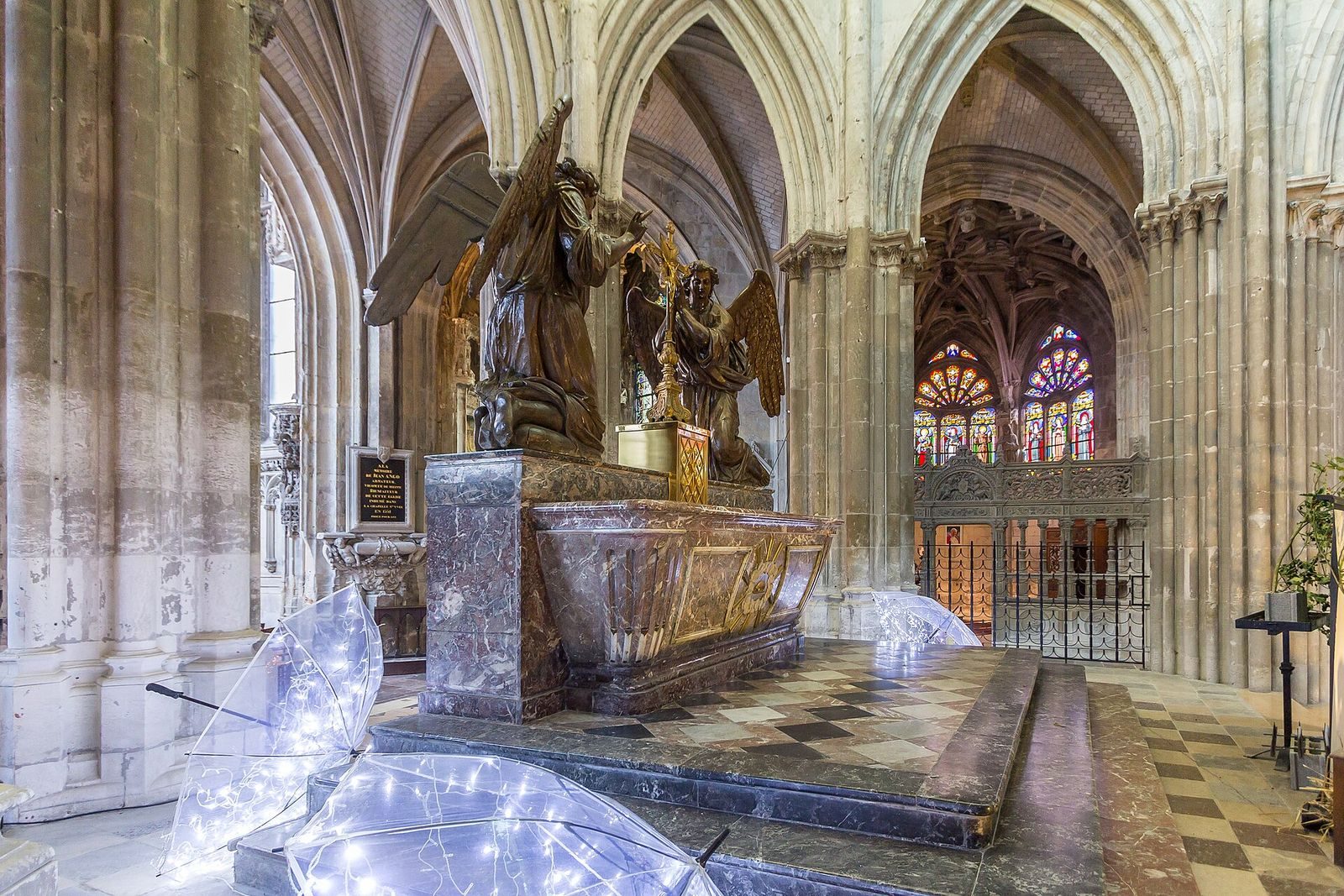
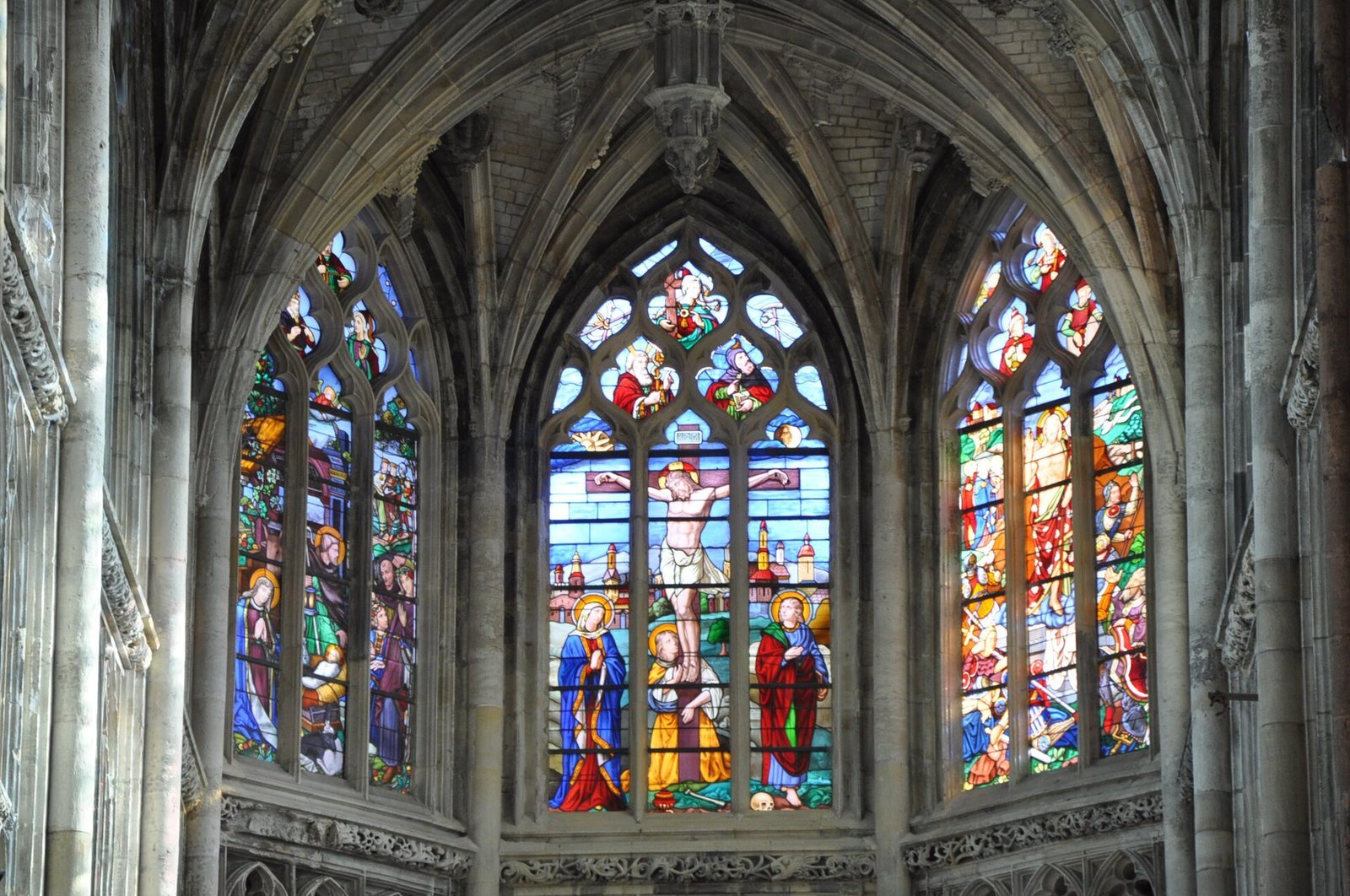
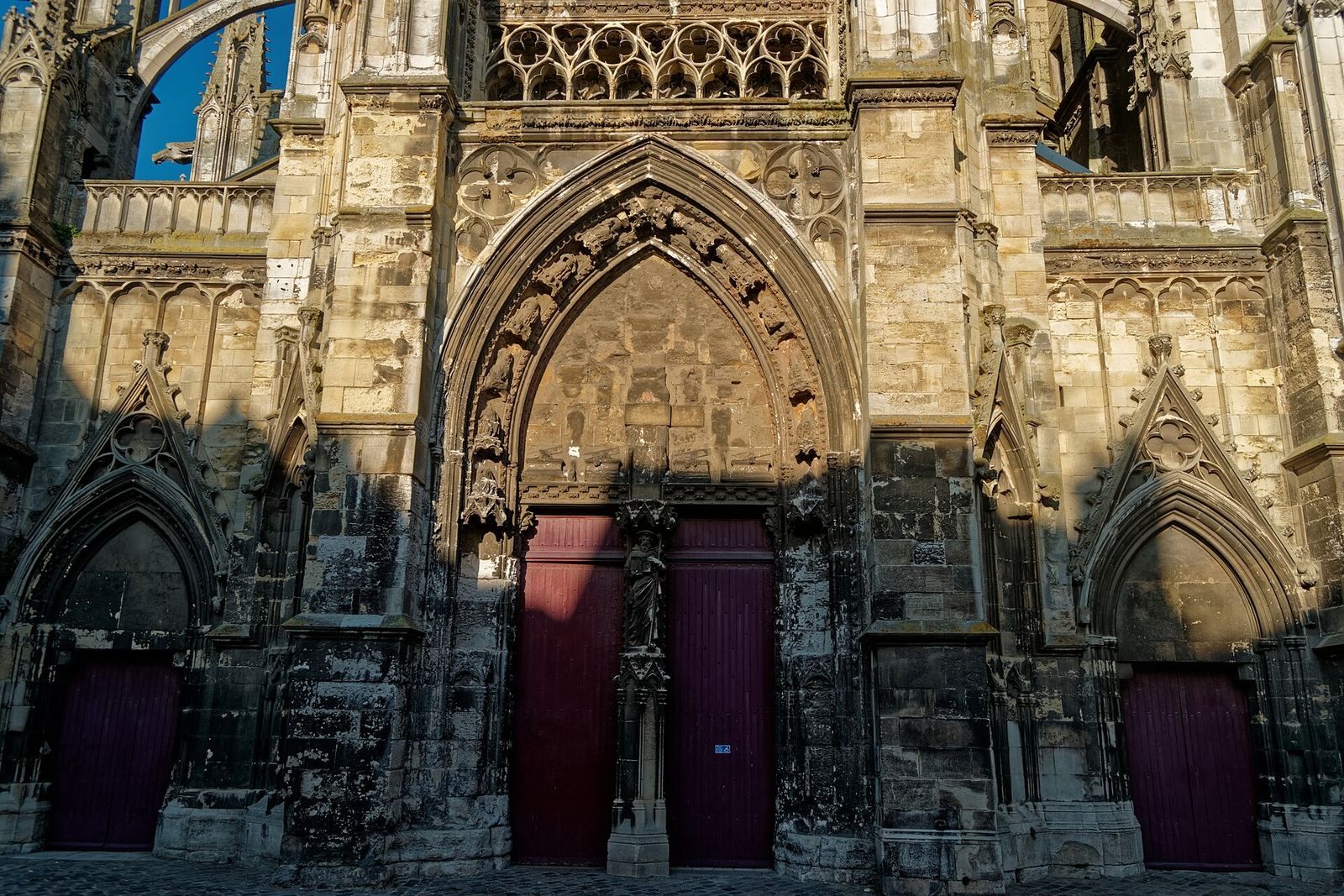
The great portal was built in the 14th century. The tower and the chapels beside the choir’s main nave were erected in the 15th century; two of those chapels had formed part of the church’s original plan.
Treasure Chapel frieze
A frieze in the Treasure Chapel, known by the translated title “Of the Savages,” depicts peoples encountered by Dieppe’s navigators and sailors. Its carved scenes include celebrations, dances, and episodes of warfare. In the 16th century, Jean Ango, a French merchant and shipowner who patronized the church, requested the scenes.
Campanile and dome framework
In January 2015, sagging in the dome’s framework led to the campanile, or bell tower, being removed for restoration.