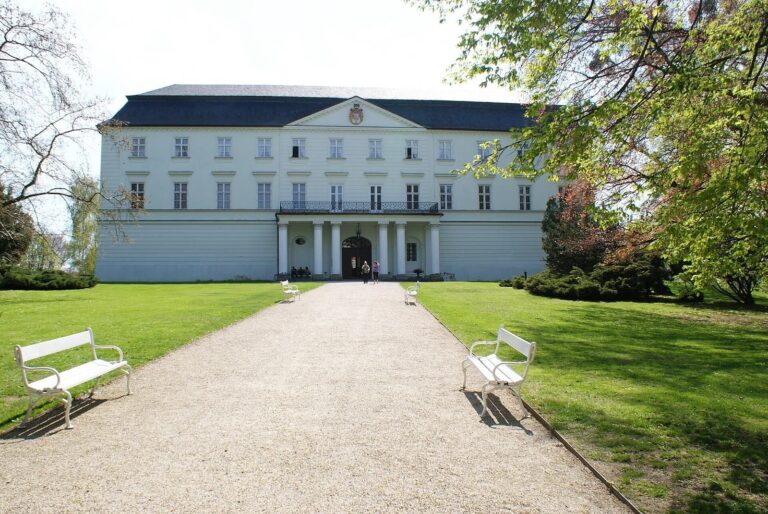
Church of Saint Adalbert: A Jesuit Baroque Church in Opava
Site at a Glance
- Rating
- 4.6
- Popularity
- Medium
- Country
- Czechia
- Primary era
- Early Modern
- Eras represented
- Medieval, Early Modern, Modern
- Civilizations
- Habsburg, Habsburg Austria, Holy Roman Empire, Kingdom of Bohemia
- Site type
- Religious
- Remains
- Church
On this page10 sections
History
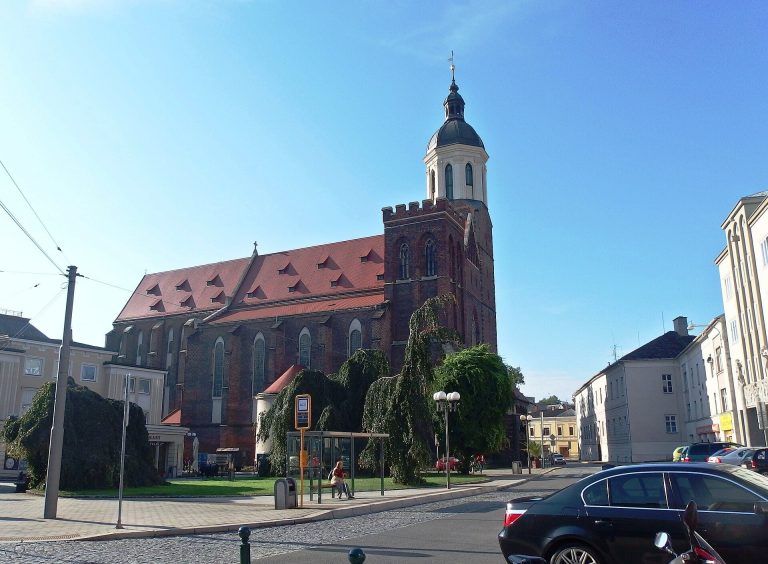
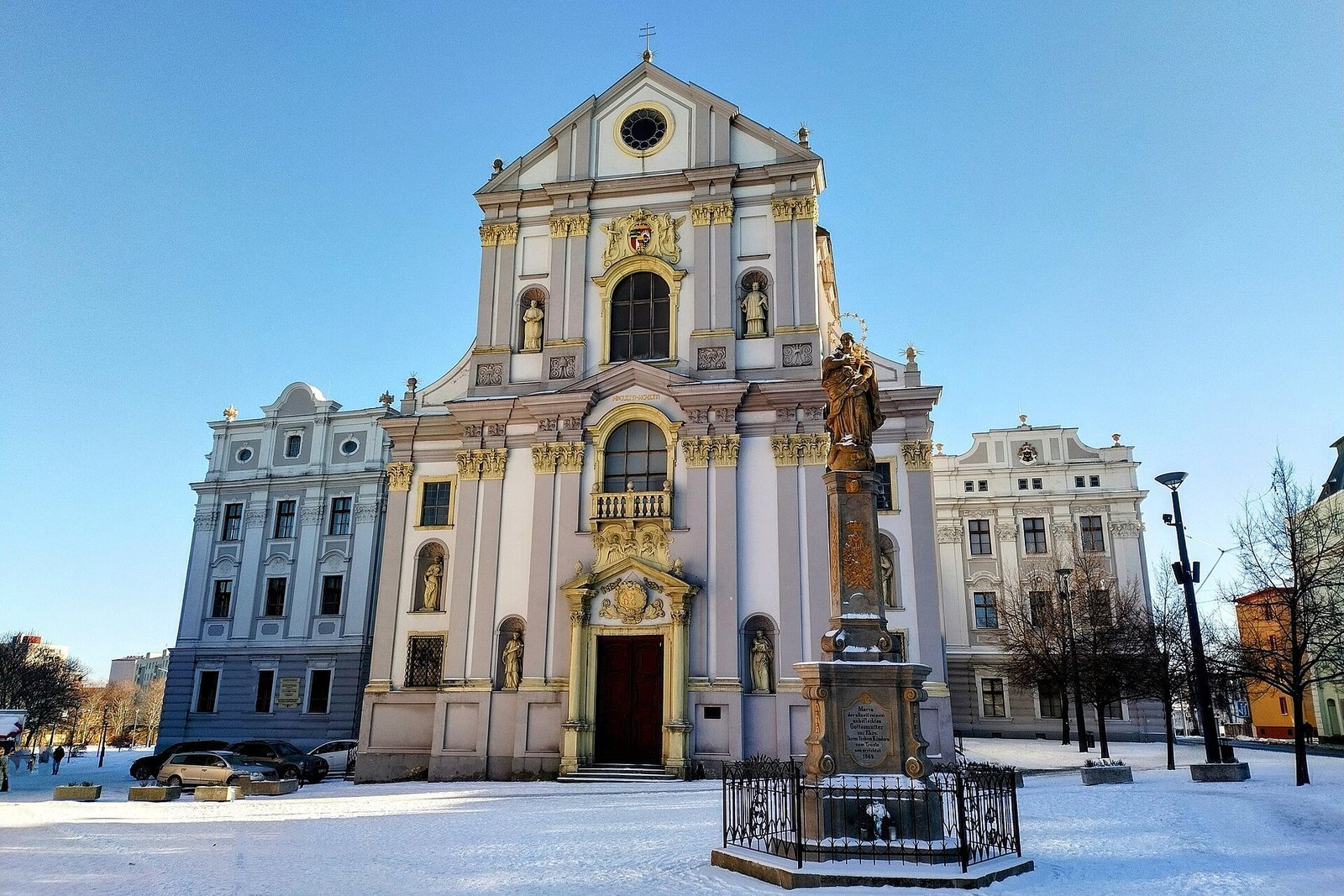
The Church of Saint Adalbert is a Jesuit church in Opava, Czechia, built during the seventeenth century for the Society of Jesus, a Catholic religious order. Its Baroque architecture belongs to a European artistic style associated with the seventeenth and early eighteenth centuries.
The earlier church and Jesuit arrival
A small Gothic church stood on the site before 1350. It was dedicated to Saint George in the sixteenth century, and the church later became known by that name. The present church honors Saint Adalbert, a medieval bishop and missionary, and Saint George, venerated as an early Christian martyr.
At the instigation of Karl, Prince of Liechtenstein, Jesuits from Olomouc arrived in Opava in 1625. With Cardinal Franz von Dietrichstein’s consent, they took charge of the Church of Saint George. They left in 1626 during the Thirty Years’ War, the major European conflict fought from 1618 to 1648, after troops led by the Danish general Mansfeld entered the city. In 1627, the army of Albrecht von Wallenstein, a leading commander in the war, returned the church to the Jesuits under an imperial decree. They were also given responsibility for religious care at Opava’s other churches.
The church and Jesuit college
From 1630, the former parish house served as a three-class Jesuit school. The institution later added a theatre, further school buildings, and a seminary for poor students. The college complex was first built between 1631 and 1642 and rebuilt from 1711 to 1723.
A project for a new church, following the Roman Jesuit church of Il Gesù, was established in 1642. Construction took place in 1675–1678. College rector Tobiáš Gebler contributed to the work, which was carried out by Mikuláš and Jakub Brasch after Gregor Bauer of Olomouc withdrew.
Pilgrimage and later history
Count Jiří Štěpán of Vrbno donated an image of the Virgin Mary to the church during the first half of the seventeenth century. A reference to the image dates to 1648, and pilgrimages began in 1652. In the first half of the eighteenth century, more than 4,000 Masses were celebrated there each year. Following an investigation, Cardinal Wolfgang Hannibal von Schrattenbach declared the image miraculous on 6 June 1734.
On 6 November 1820, an elaborate temporary funerary structure was erected in the church after the death of Austrian field marshal and statesman Karl Philipp zu Schwarzenberg. The college complex also housed a secondary school and, from 1853, the Silesian Diet, an assembly representing Silesia’s estates. It now houses the Regional Archives in Opava.
During the Second World War, fire and an aerial bomb near the end of the conflict damaged the church. The original two-storey main altar, dedicated to Saint George and depicting Saint Adalbert, was lost. Postwar repairs brought the building to its present form.
Remains
Building and interior
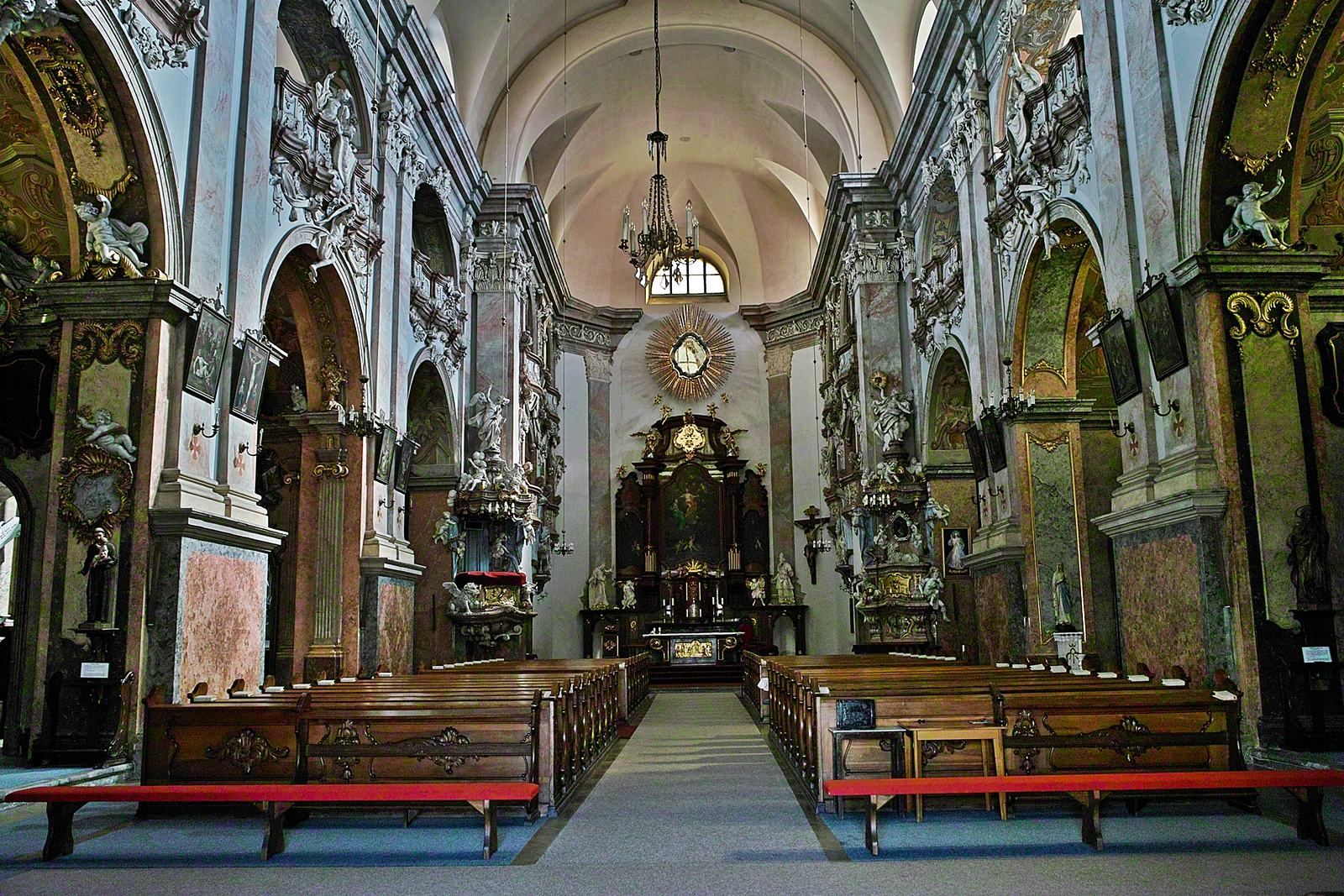
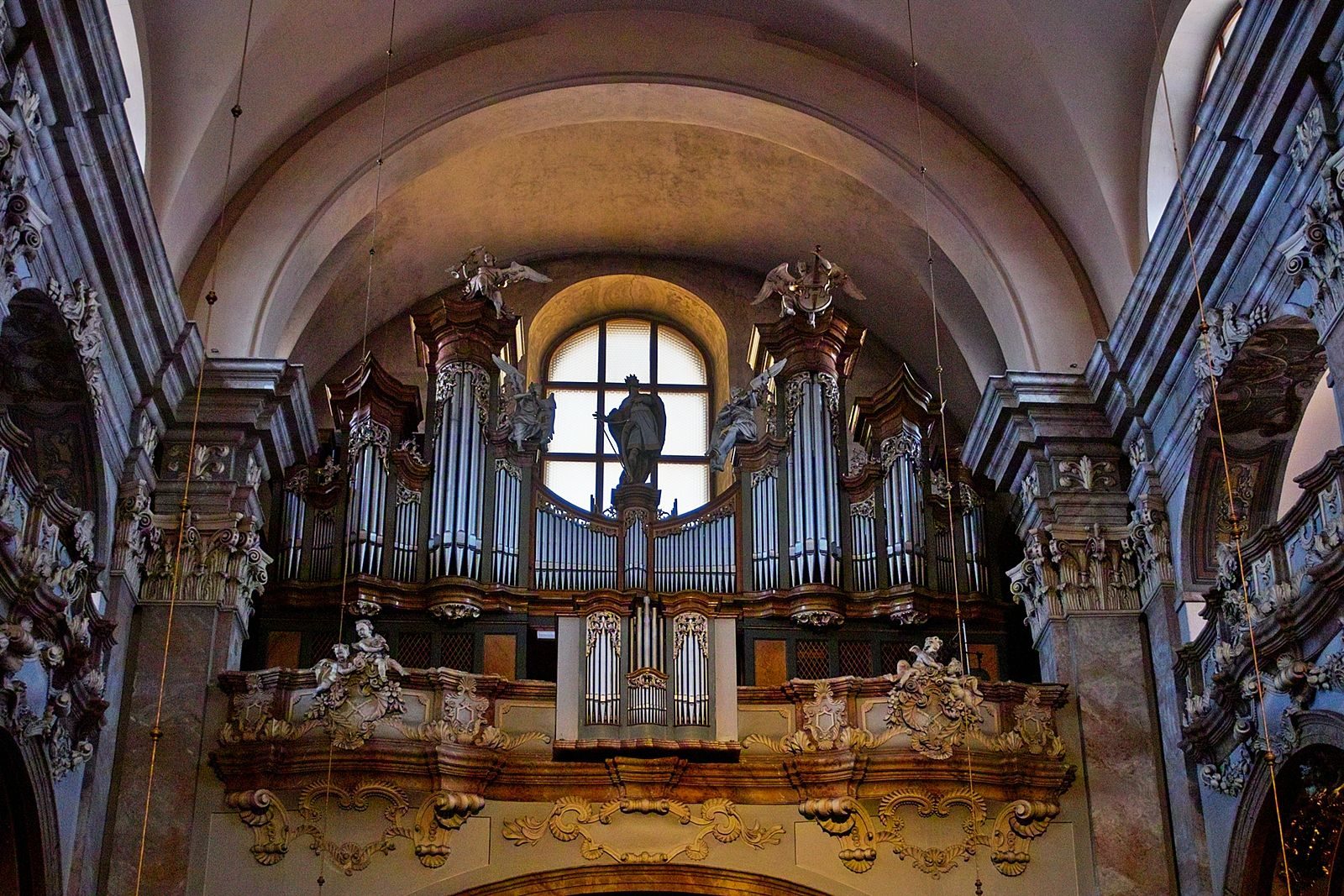
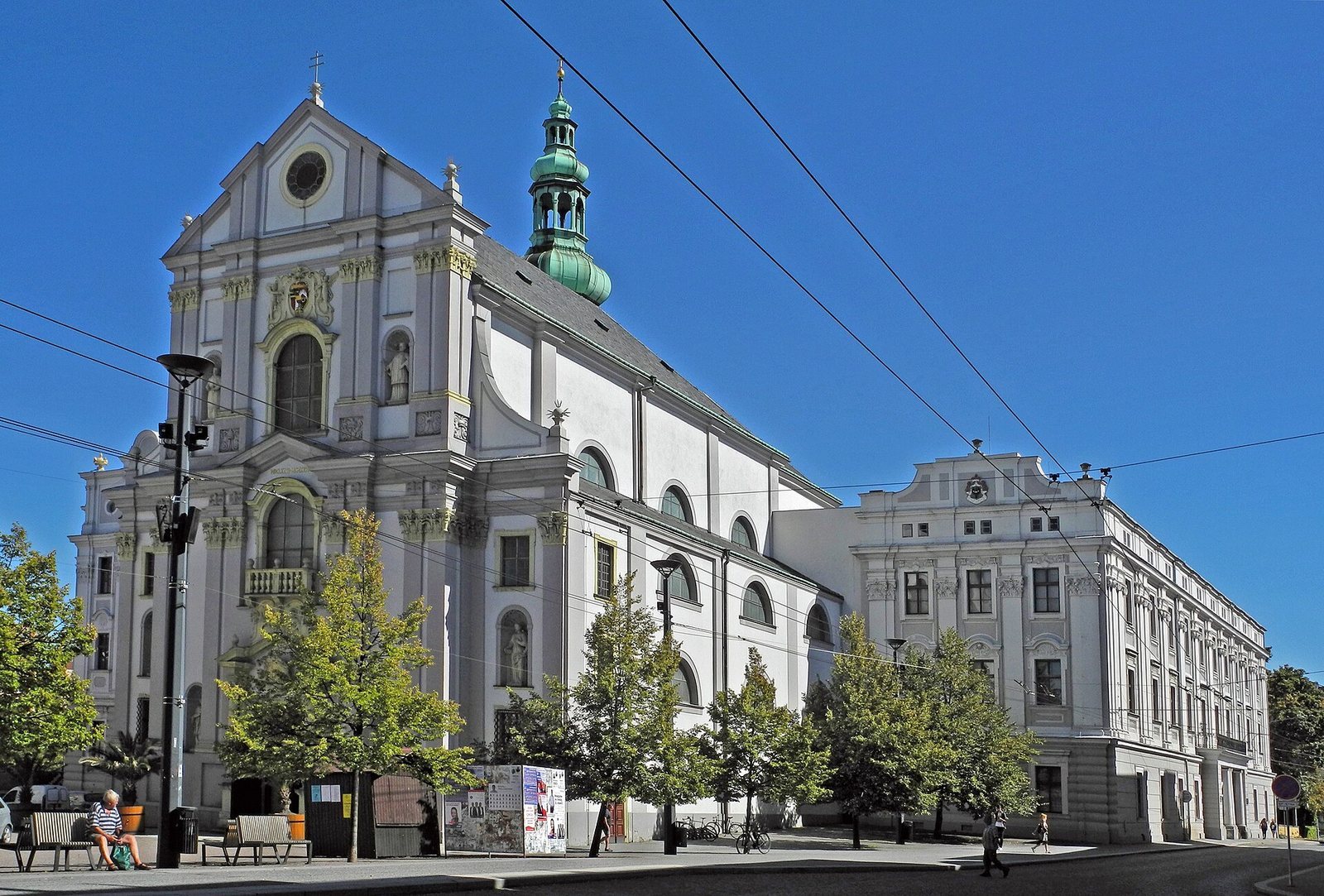
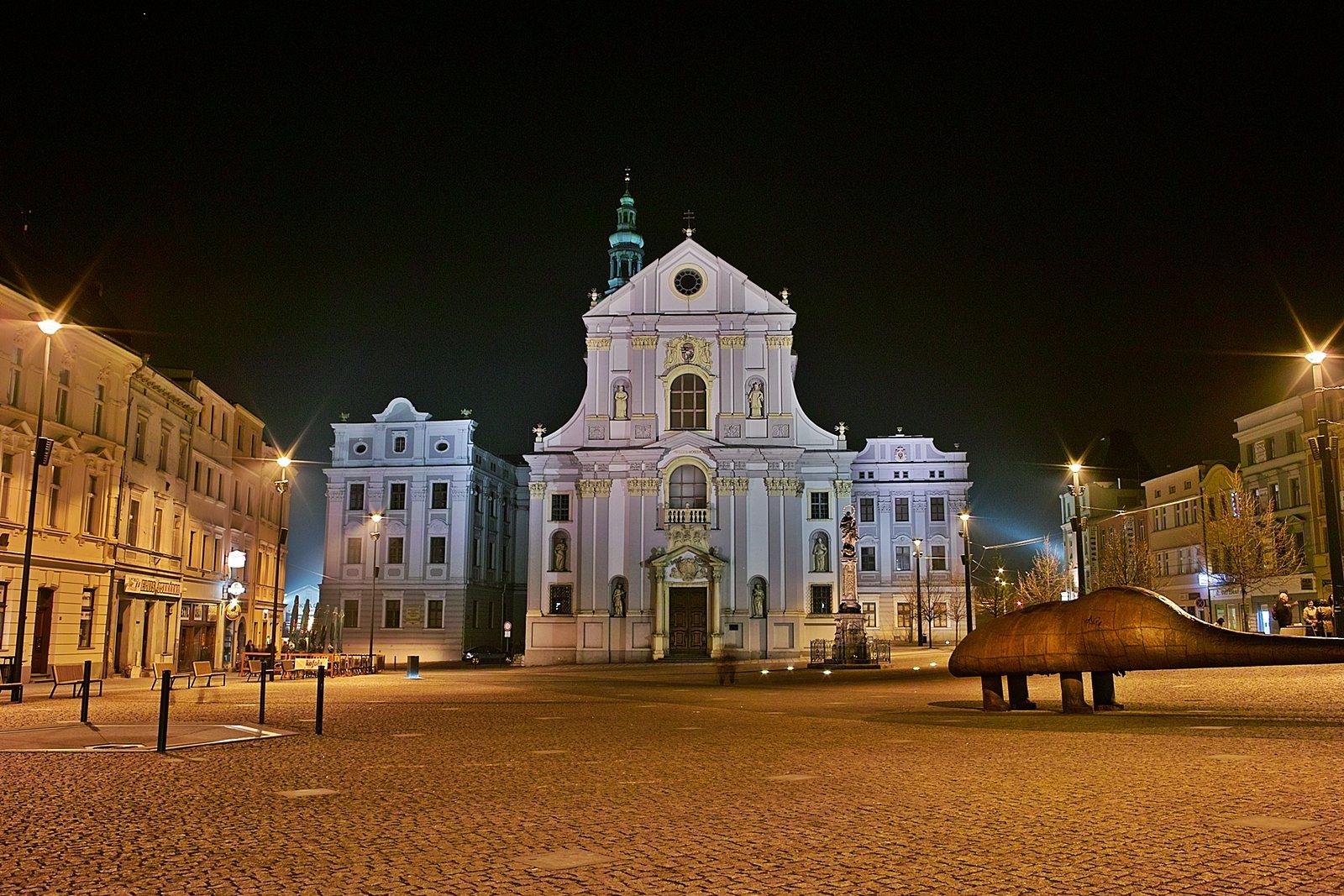
The church stands on Lower Square in the oldest part of Opava and forms part of the Jesuit college complex. It is a monumental Baroque building with a single nave, the main central part of the church, one tower, and an integrated belfry, the section that holds the bells. Side chapels connected through to one another extend along both sides of the nave. František Řehoř Ignác Eckstein painted the interior; frescoes, wall paintings made on plaster, survive in the side chapels.
Main altar
The inlaid wooden main altar came from the Capuchin Church of Saint Joseph in Fulnek. Its dismantled sections were brought to Opava in 1980, restored and reassembled in 1981–1982, and consecrated by Bishop Josef Vrana of Olomouc on 20 November 1982. Felix I. Leicher painted its three pictures, and the inlay above the painting on the right bears the date 1777. Restoration and additions involved Jaroslav Ježek senior and junior, Zdeněk Kunc, Josef Kulda, Antonín Hepnar, and Karel Stádník; Radana and Mojmír Hamsík restored the paintings. A carved, gilded plaque bearing Saint Adalbert’s bishop’s mitre, or ceremonial headwear, and the Slavník rose replaced the original donor coat of arms of the lords of Vrbno. The tabernacle, a small altar cabinet, and its inlaid base stand on an artificial-marble altar table retained from the earlier main altar.
Devotional features
Image of the Virgin Mary
The image depicts the Virgin and Child. A description from 1732 notes gold ornaments set with precious stones on their heads and a covering of silver sheet inlaid with gold. Worshippers gave objects and money to adorn the image, its altar, and its chapel in gratitude for favors received.
Marian column
A column outside the church was erected in 1675 with funding from Count Jiří Štěpán of Vrbno. Its design followed the model of the column in Vienna’s Am Hof square.