Cloister of Santo Spirito: A Church and Convent Complex in Italy
Site at a Glance
- Popularity
- Medium
- Country
- Italy
- Primary era
- Early Modern
- Eras represented
- Early Modern
- Civilizations
- Duchy of Ferrara, Papal States
- Site type
- Religious
- Remains
- Monastery
On this page8 sections
History
Construction and rebuilding
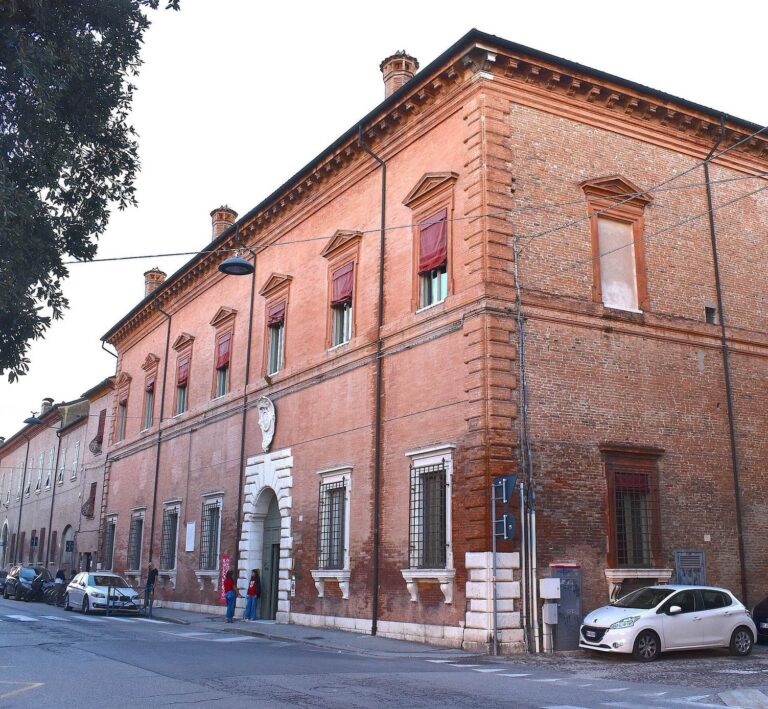
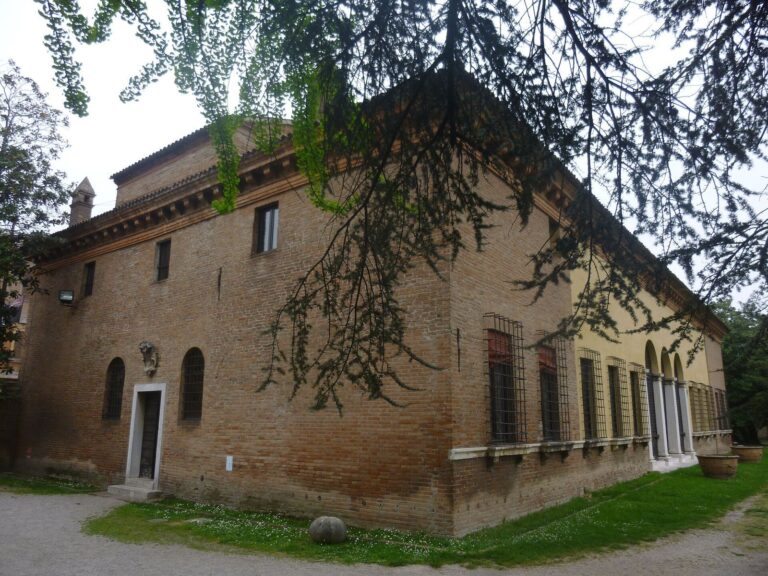
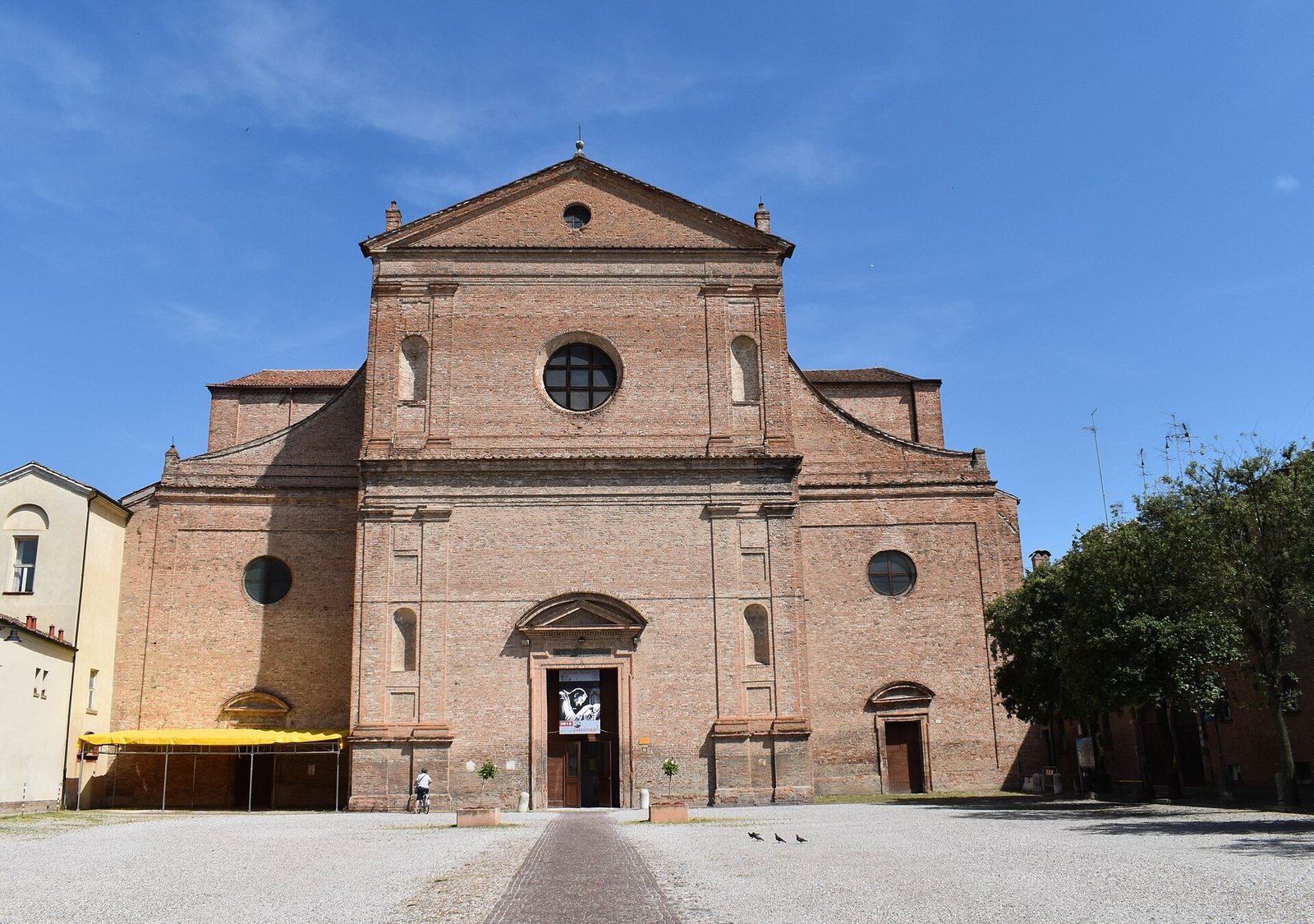
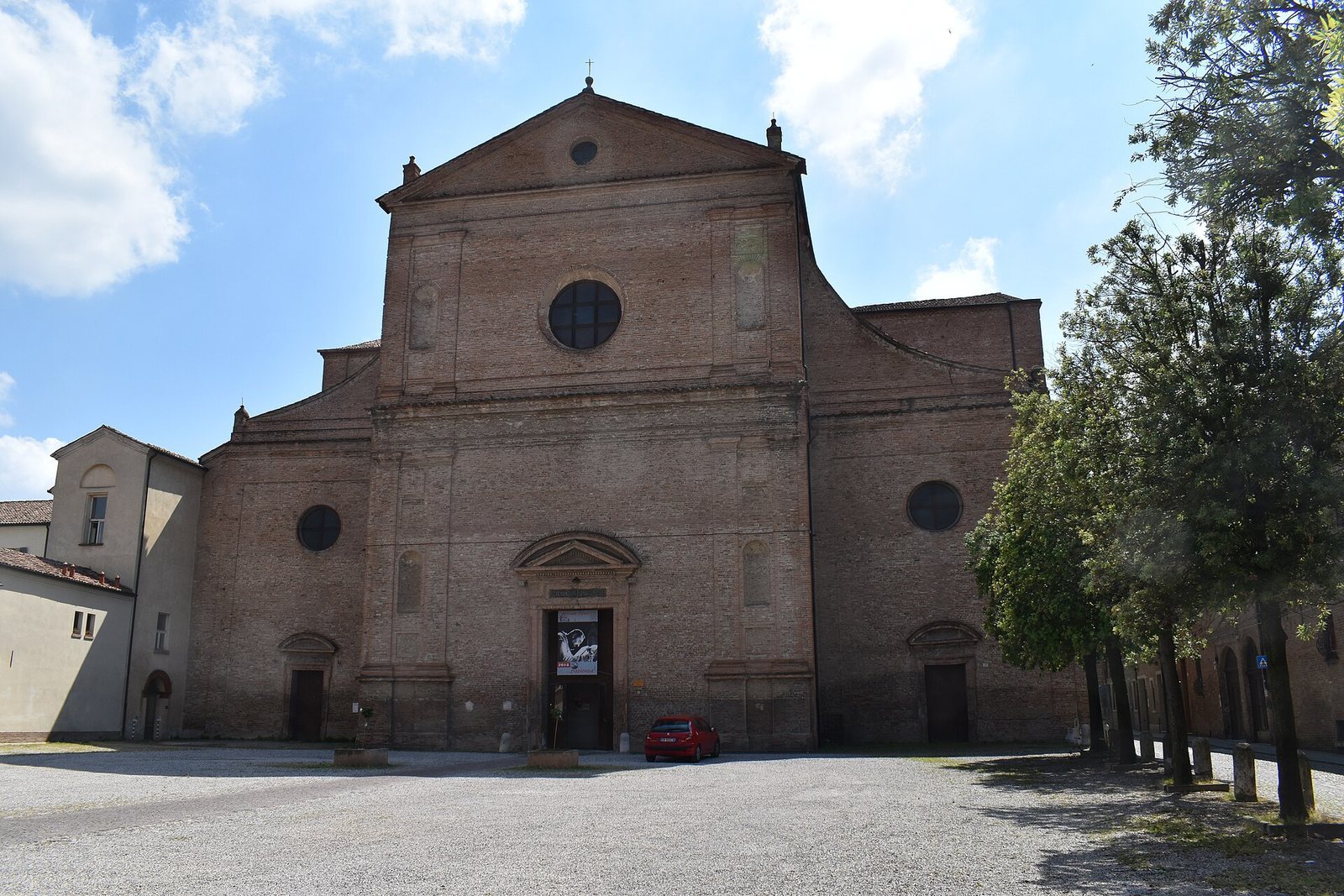
The Cloister of Santo Spirito is part of a church and convent complex in Italy. Construction began in 1519, during the rule of Alfonso I d’Este, Duke of Ferrara, but stopped after his death. The complex already appears to have been considerable in size.
In 1570, a series of earthquakes struck Ferrara and severely damaged the church and convent. Reconstruction began soon afterward and was completed in 1630, establishing the buildings’ present forms.
Devotion to Saint Anthony
The church and convent reached their greatest prestige from the late seventeenth century through the eighteenth century. Devotion to Saint Anthony of Padua, a Franciscan friar and preacher venerated as a Catholic saint, began at the church in 1647. A procession on his feast day first passed through the cloister; as the devotion grew, the procession extended through the city and became an annual event.
Cardinal Carlo Pio paid for the construction and decoration of an altar to Saint Anthony, which he consecrated in 1652. On 13 June 1770, witnesses reported that the wooden statue of the saint moved. They described a slight motion near its base and a stronger one at its head. After an initial movement lasting about 30 seconds, it began again and continued for nearly 15 minutes. Witnesses said the whole figure bowed, including the child in its arms. Some observed movement at other times that day, and one person reported seeing it again the next day. Ferrara notary Leopoldo Castelvetri authenticated the sworn testimony on 16 June.
Later changes and parish use
The church’s ceiling collapsed in 1830, destroying its decoration and paintings on the vaults. In the second half of the nineteenth century, the convent was taken from the Observant Friars Minor, a branch of the Franciscan order, and put to several uses. Parts served as private apartments and as university premises.
The Friars Minor left the convent and its pastoral work in October 2009. The parish was then entrusted, by mandate of Archbishop Paolo Rabitti, to the Franciscan Friars of the Immaculate, a distinct institute in the Franciscan tradition. In 2023, responsibility passed to diocesan clergy. The parish belongs to the Catholic Archdiocese of Ferrara-Comacchio.
Remains
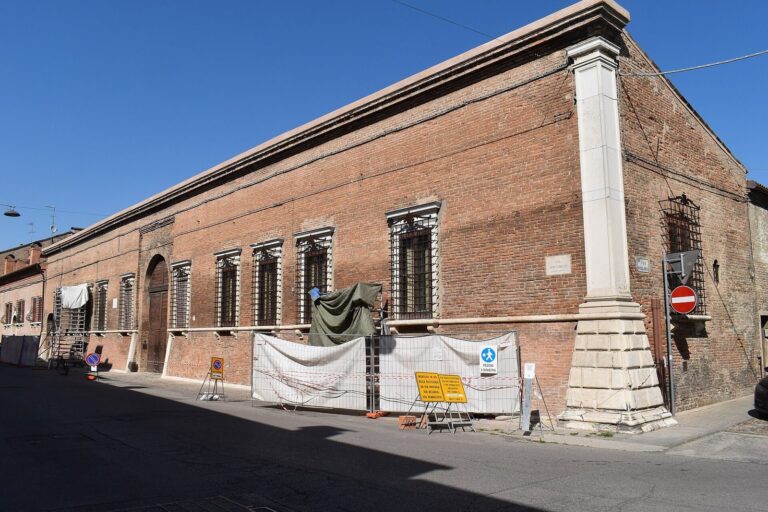
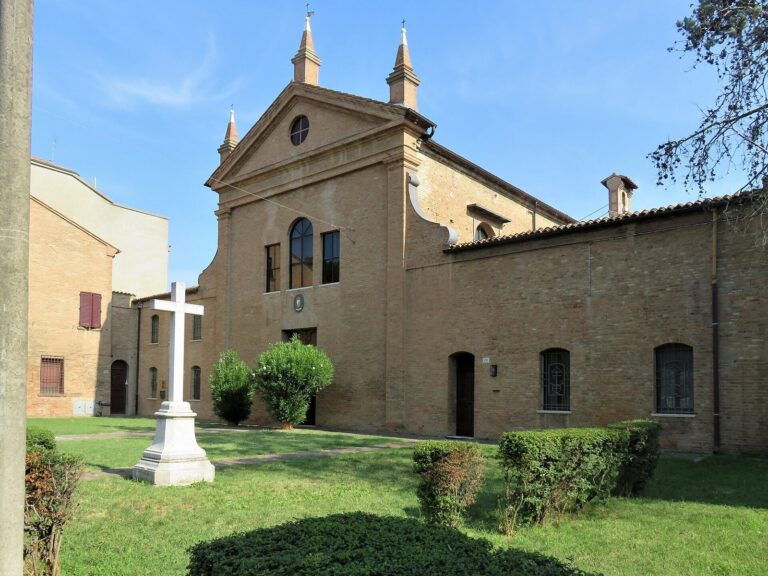
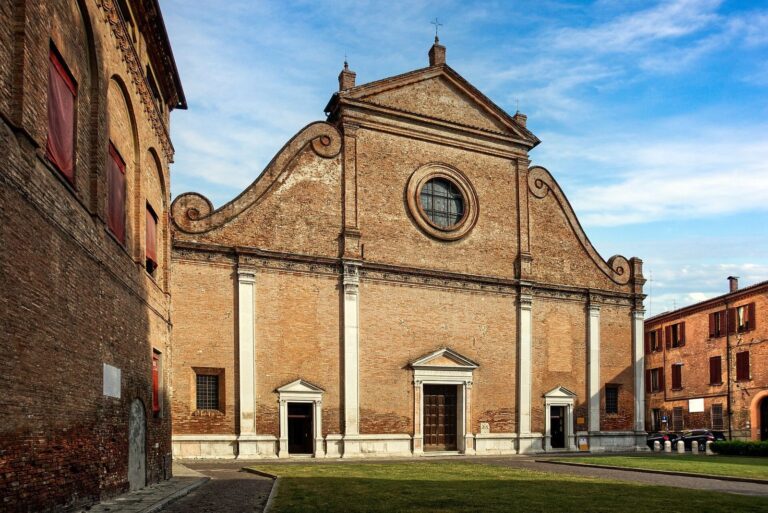
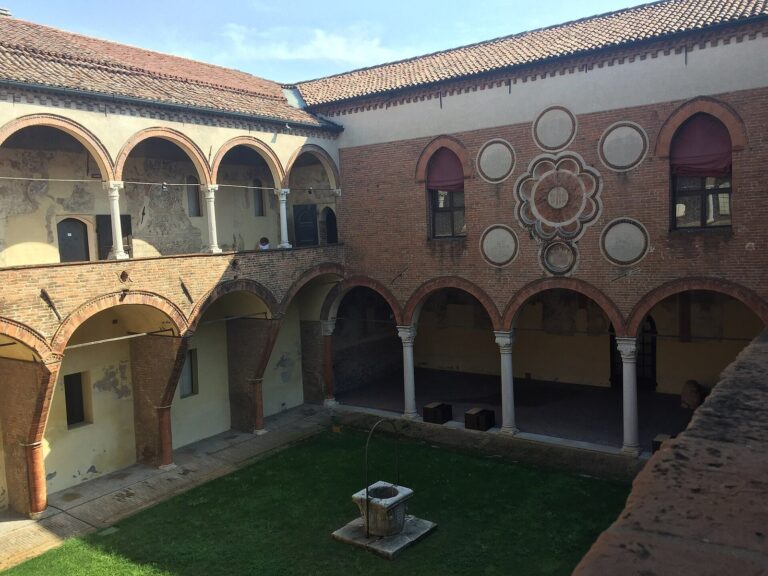
The complex comprises church and convent buildings. Its surviving features include rooms from the convent’s original sixteenth-century construction and the church interior, with its large altars and paintings.
Convent and church interiors
Chapter room and refectory
The convent’s chapter room, where the religious community met, and its refectory, or communal dining hall, date to the original sixteenth-century building campaign. They suffered less damage in the 1570 earthquake than other parts of the complex. Their interiors include five circular decorative motifs, or rosettes, painted by artists of the school of Garofalo, named for Ferrara Renaissance painter Benvenuto Tisi.
Church and Saint Anthony altar
The church has a spacious, bright interior, a small number of very large altars, and several notable paintings. At the Saint Anthony altar, the altarpiece bears Cardinal Carlo Pio’s coat of arms. A wooden statue of Saint Anthony is venerated there.