Santa Chiara delle Cappuccine: A Franciscan Church in Ferrara
Site at a Glance
- Popularity
- Low
- Country
- Italy
- Primary era
- Early Modern
- Eras represented
- Early Modern
- Civilizations
- Papal States
- Site type
- Religious
- Remains
- Church
On this page11 sections
History
Foundation and Franciscan use
Santa Chiara delle Cappuccine is a church on Corso della Giovecca in Ferrara, Italy, built for Capuchin Poor Clare nuns, a contemplative Franciscan community living in enclosure. Architect Luca Danesi designed it with guidance from Marquis Annibale Turchi and Scipione Gualengo, while Ascanio Pio di Savoia, son of Enea, and Guido di Bagno provided patronage. Cardinal legate Marzio Ginetti laid the first stone on 16 June 1641, and construction was completed on 14 May 1646. Cardinal Carlo Cerri consecrated the church on 29 October 1673. It remained part of a Franciscan religious presence for most of its history, apart from two periods when the monastery was suppressed in the nineteenth century.
Nineteenth-century suppressions
During the Napoleonic suppression, the monastery was closed from 1810 to 1816, and the church became a subsidiary of the parish of San Gregorio Magno. A state-property measure led to a second suppression in 1866. After the monastery returned to religious use in 1896, the bishop was granted use of the church and sacristy.
Diocesan use and recent history
In 1987, the nuns decided to close the monastery. Some joined the Capuchin Poor Clare community at San Giovanni Rotondo, while others established a new monastery at Lagrimone, in Tizzano Val Parma. The church and convent guesthouse passed to the Archdiocese of Ferrara-Comacchio, and the cloistered areas were transferred to a local residential health-care facility. After the closure, two diocesan priests officiated at the church. From 2003, part of the guesthouse housed the Catholic movement Communion and Liberation.
On 1 September 2019, Archbishop Gian Carlo Perego designated the church a rectory, meaning a church entrusted to a rector, and authorized Mass according to the Tridentine rite, the form of Roman liturgy standardized after the Council of Trent. By decree of 9 June 2021, he made it the seat of the personal parish of Santa Chiara Vergine, a parish serving a particular group of faithful rather than a geographic area. Its members include those attached to the usus antiquior, or “older usage,” an earlier form of the Roman Rite. Father Davide Benini became the first parish priest. The decree also gave the parish use of the church and associated premises, and authorized its priest to assist at marriages in the church for faithful following the pastoral activity of the Society of Saint Pius X.
The 2012 Emilia earthquake seriously damaged the church, prompting safety work and restoration. Sister Maria Veronica of the Most Holy Sacrament, born Maria Cesira Pazzafini in Ferrara in 1896, entered the monastery in 1915 and died in 1964. Her funeral took place at the church on 9 July that year, before her burial at Ferrara’s Certosa cemetery. The diocesan inquiry into her beatification opened in 2015 under Archbishop Luigi Negri. In Catholic usage, “Servant of God,” the title given to Sister Maria Veronica, identifies someone whose cause for beatification has begun; it does not mean that the person has been beatified or canonized.
Remains
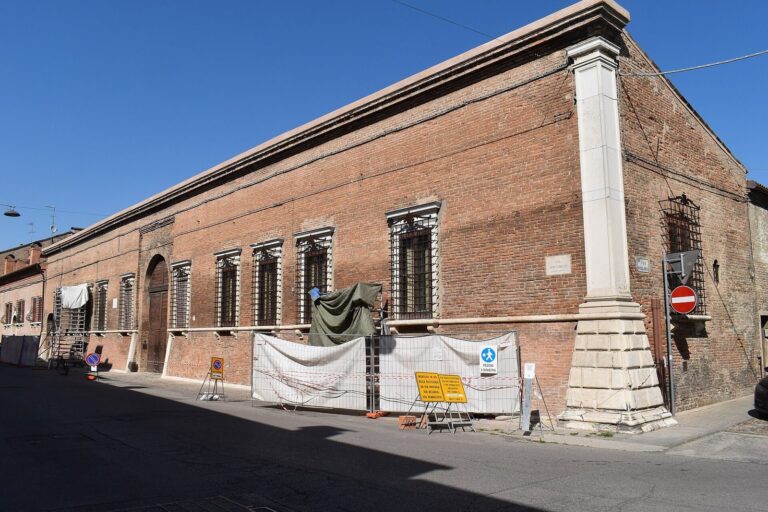
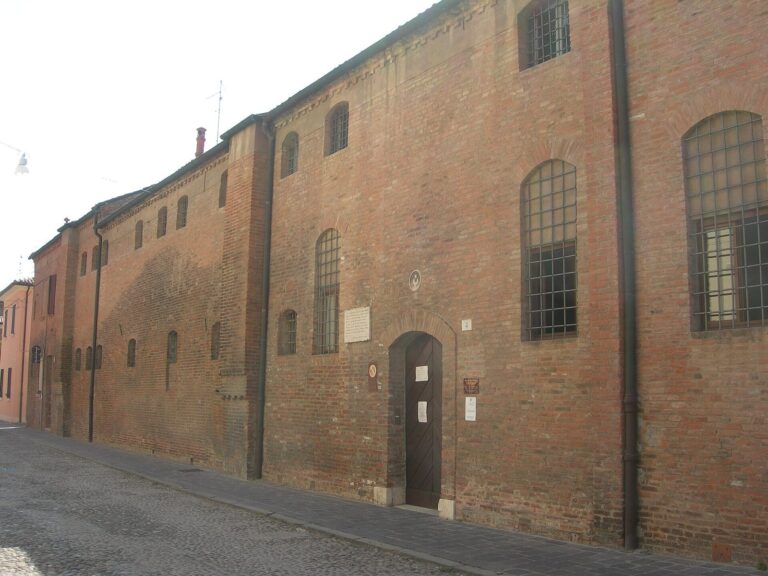
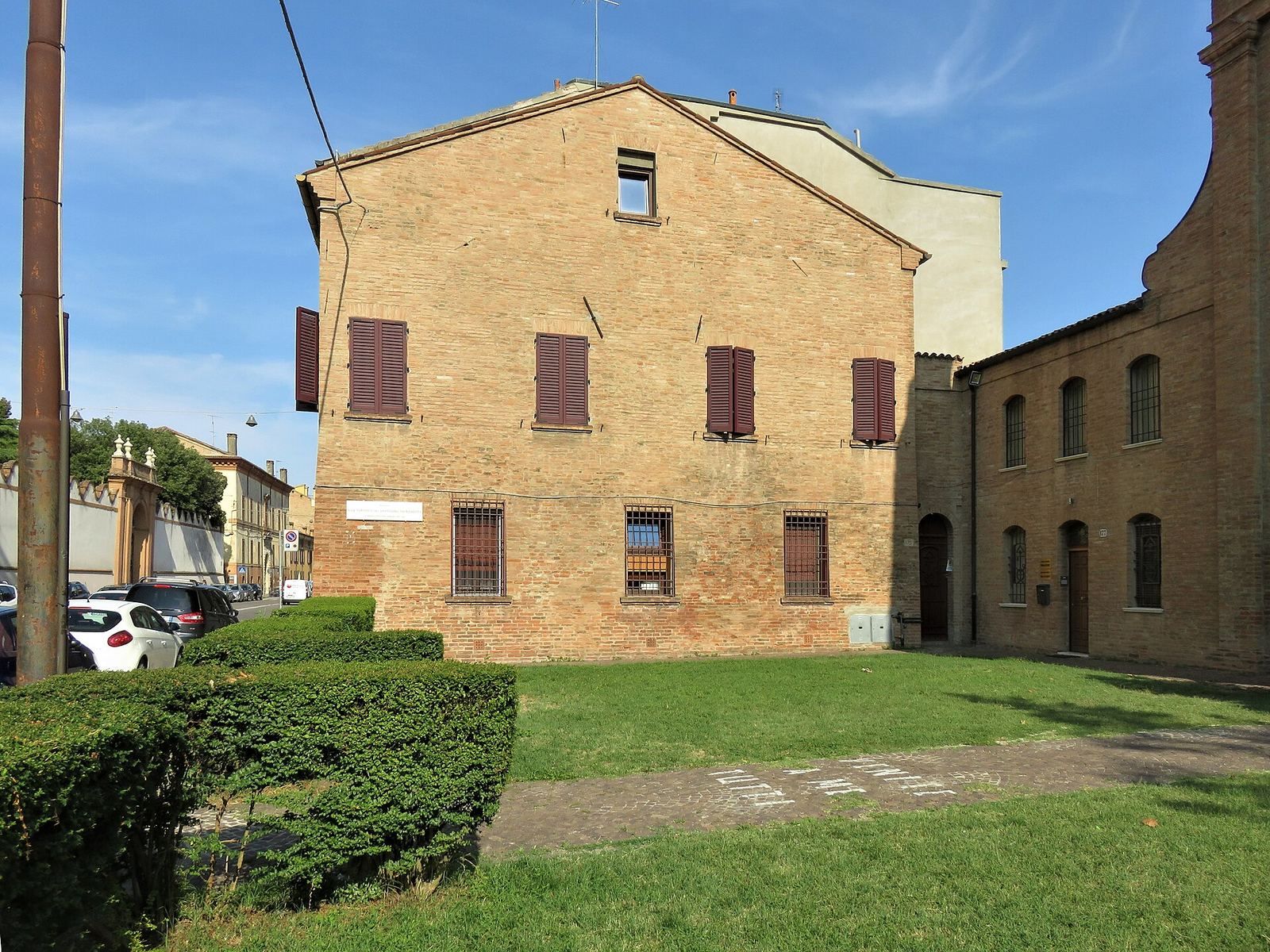
The church faces Corso della Giovecca and forms part of a complex that included the attached monastery, its cloistered areas and guesthouse, rectory premises, and a forecourt. The church’s brick exterior and broad interior contain a range of wooden furnishings, paintings, sculpture, and marked burials.
Church architecture
Facade
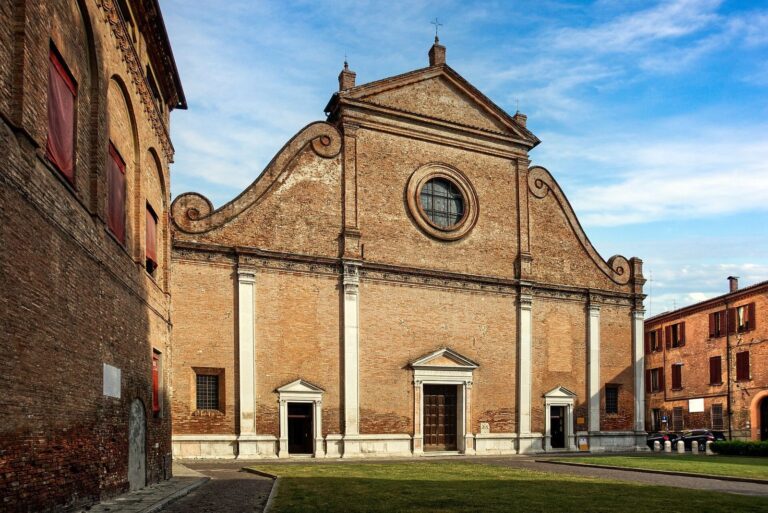
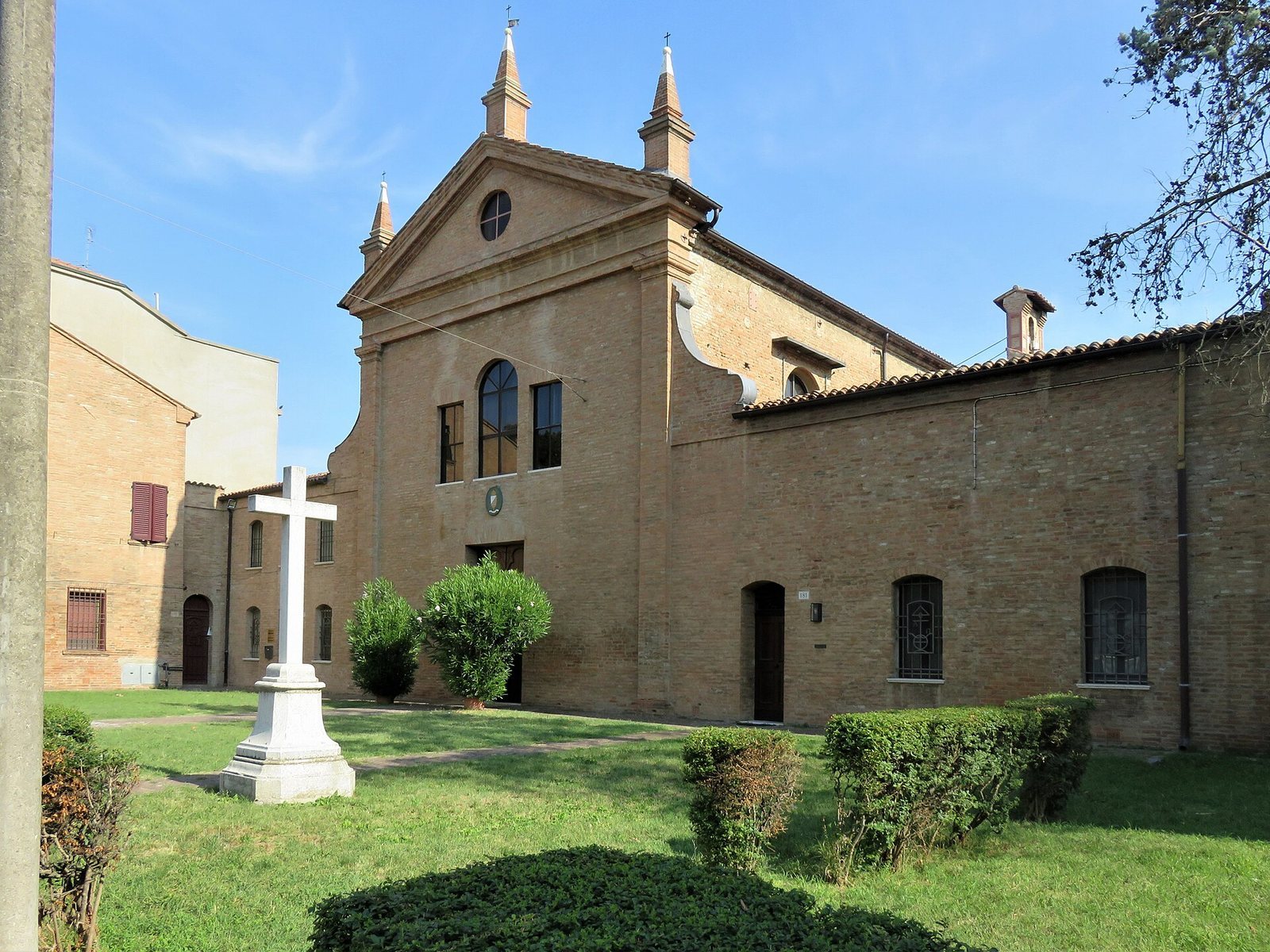
The gabled main facade is built of brick typical of Ferrara. Its plain entrance portal has no framing. Above it, a serliana, a three-part opening with an arched center and narrower sides, admits light into the church. A triangular pediment frames the upper section, which contains a small circular rose window.
Interior
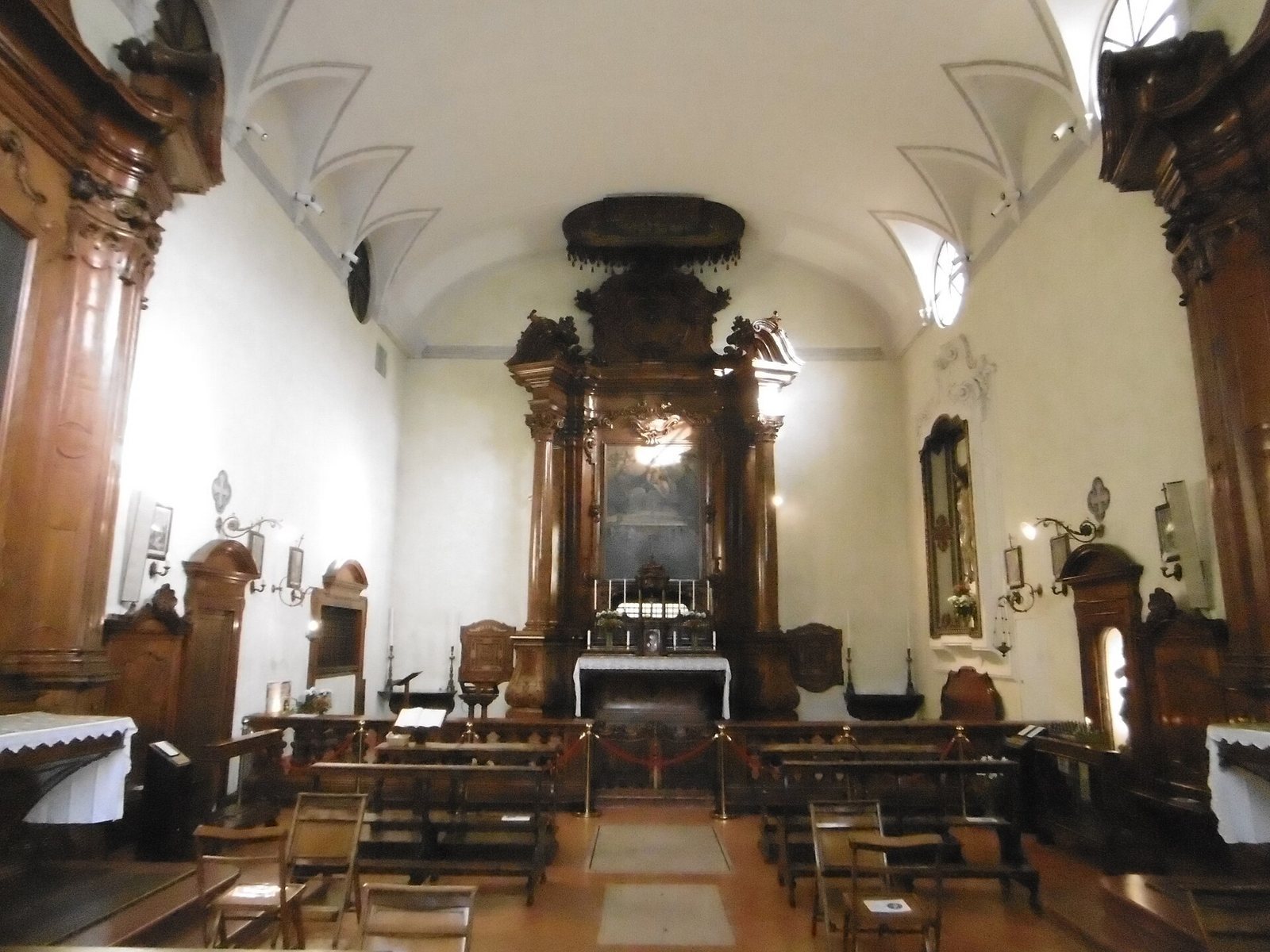
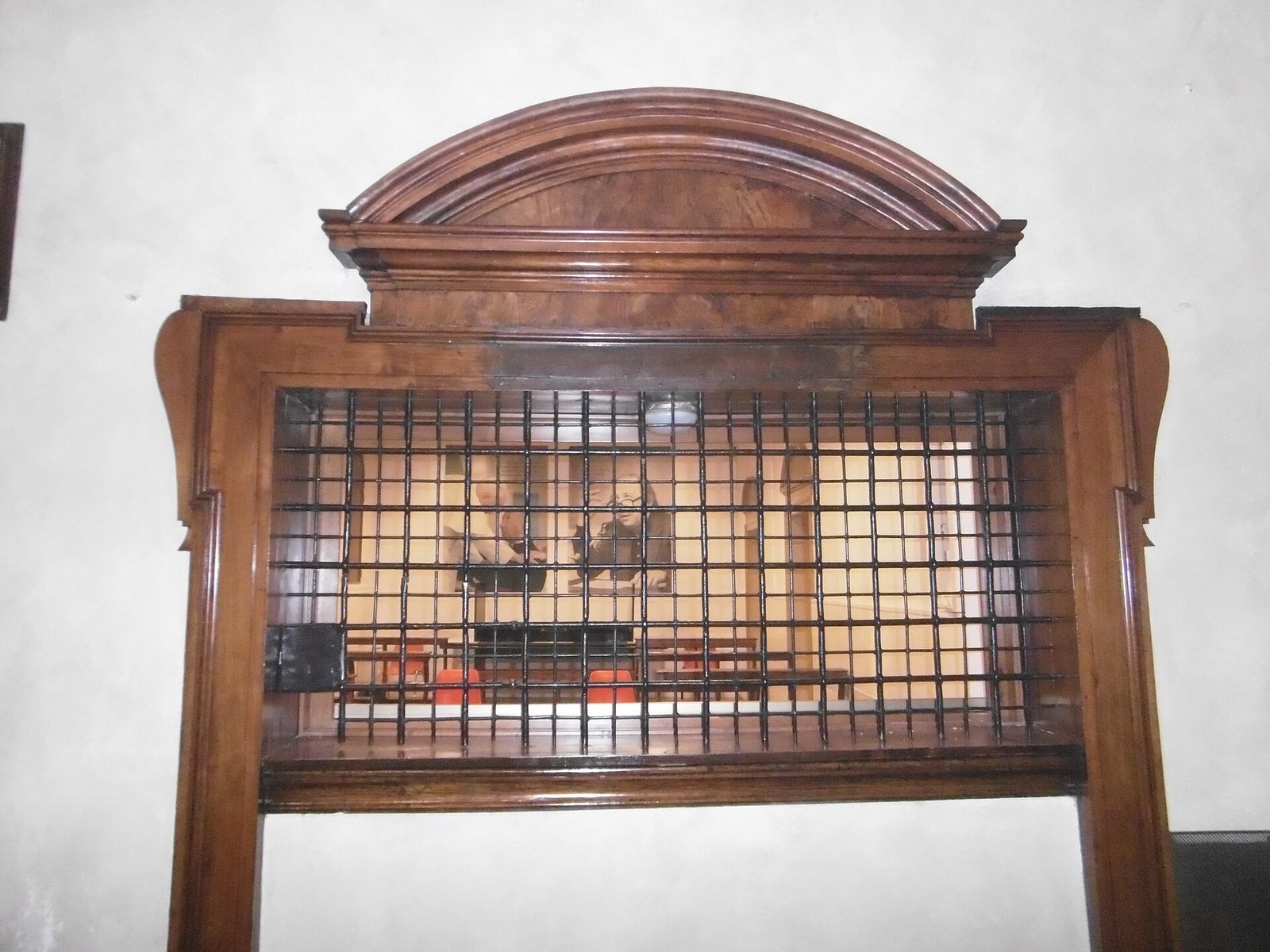
The broad interior has a terracotta floor and a pavilion vault, a vaulted ceiling whose sections meet over the space it covers. The presbytery, the area around the altar, has no partition separating it from the main worship space. A wooden choir extends along the walls, with two confessionals near the inner side of the entrance wall. Wooden altars and marble floor slabs marking burials are also part of the interior.
Art and memorial features
Altarpieces
Ippolito Scarsella, known as Scarsellino, painted the high-altar scene of the Madonna and Child in glory, with Saints Clare and Francis and Capuchin nuns adoring the Blessed Sacrament. His painting on the right-hand altar shows the Madonna and Child with Saints Anthony Abbot and Lucy, the young Saint John, and Elizabeth. Above the left-hand side altar is an altarpiece depicting Saint Charles Borromeo, attributed to Giovanni Bonardi.
Sculpture and furnishings
A seventeenth-century wooden statue of the Immaculate Conception by Andrea and Giuseppe Ferreri stands in a niche on the right near the presbytery. An eighteenth-century benefactor donated a large crucifix placed in the presbytery. Sister Maria Veronica’s remains were later exhumed and transferred from the Certosa cemetery to the church, where Archbishop Filippo Franceschi blessed them.