Chiesa di Madregolo: A Roman Catholic Parish Church in Italy
Site at a Glance
- Popularity
- Very Low
- Country
- Italy
- Primary era
- Early Modern
- Eras represented
- Medieval, Early Modern
- Civilizations
- Duchy of Parma and Piacenza, Holy Roman Empire
- Site type
- Religious
- Remains
- Church
On this page12 sections
History
Chiesa di Madregolo, also known as the Church of San Martino, is a Roman Catholic parish church in Italy dedicated to Saint Martin. Its original church was probably built in the 12th century near a ford across the Taro River, on the Via Francigena, a historic pilgrimage route leading to Rome from areas north of Italy. The church later held authority as a medieval pieve, a parish church overseeing a territory and its dependent churches.
Medieval foundations and parish authority
West of Madregolo, the earlier settlement of San Martino di Garfagnana was named as early as 835. A destructive flood ruined the village and its church, after which the Taro shifted east. The church at Madregolo was probably established following this disaster, near an important river crossing.
An earlier church of San Martino held the title of pieve by 1005. By 1193, that title had passed to the churches of Noceto and Madregolo, both dedicated to Saint Martin. The Pieve of Madregolo was named in 1230, with the chapel of Garfagnana under its authority. Built after the earlier church collapsed, the chapel later disappeared. By the second half of the 14th century, the pieve also had authority over the church and hospital of San Nicolò, near a bridge across the Taro on the Via Emilia.
Rebuilding and later additions
After the nearby castle was demolished in 1421 on the orders of Filippo Maria Visconti, Duke of Milan, the church may have been partly destroyed as well. In 1634 it was almost entirely rebuilt in Baroque style, a later European style characterized by richly articulated forms. Builders reused material from the Romanesque church, a medieval European architectural style, especially in the apse, and reversed the building’s orientation. The church was solemnly consecrated on 1 October 1634.
Side chapels had been added by the early 18th century, and a sacristy was constructed beside the apse in 1733. The church remains a Roman Catholic parish in the Diocese of Parma and the Pedemontana pastoral zone, following the Roman rite. It is identified as part of Italy’s national heritage.
Remains
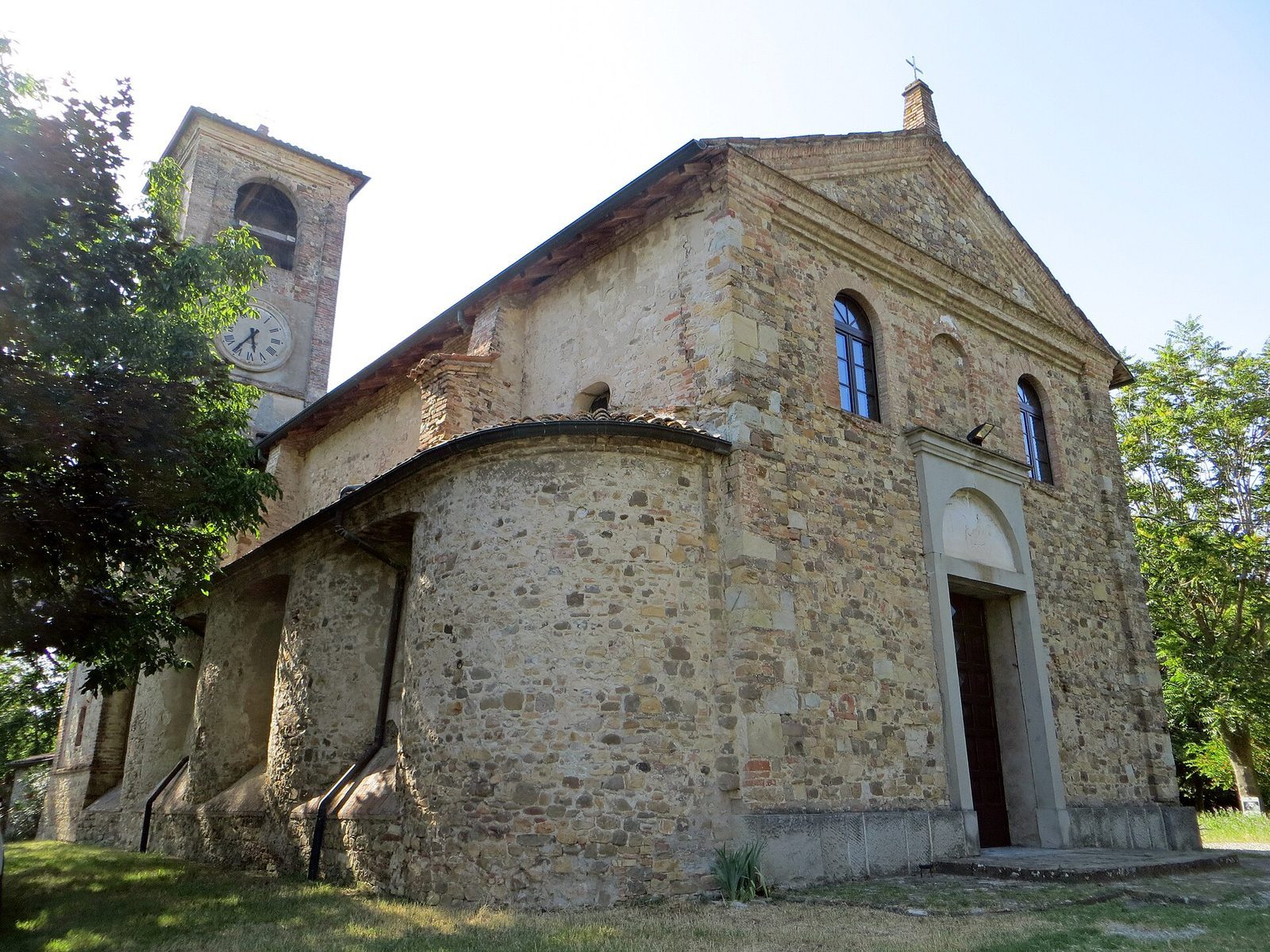
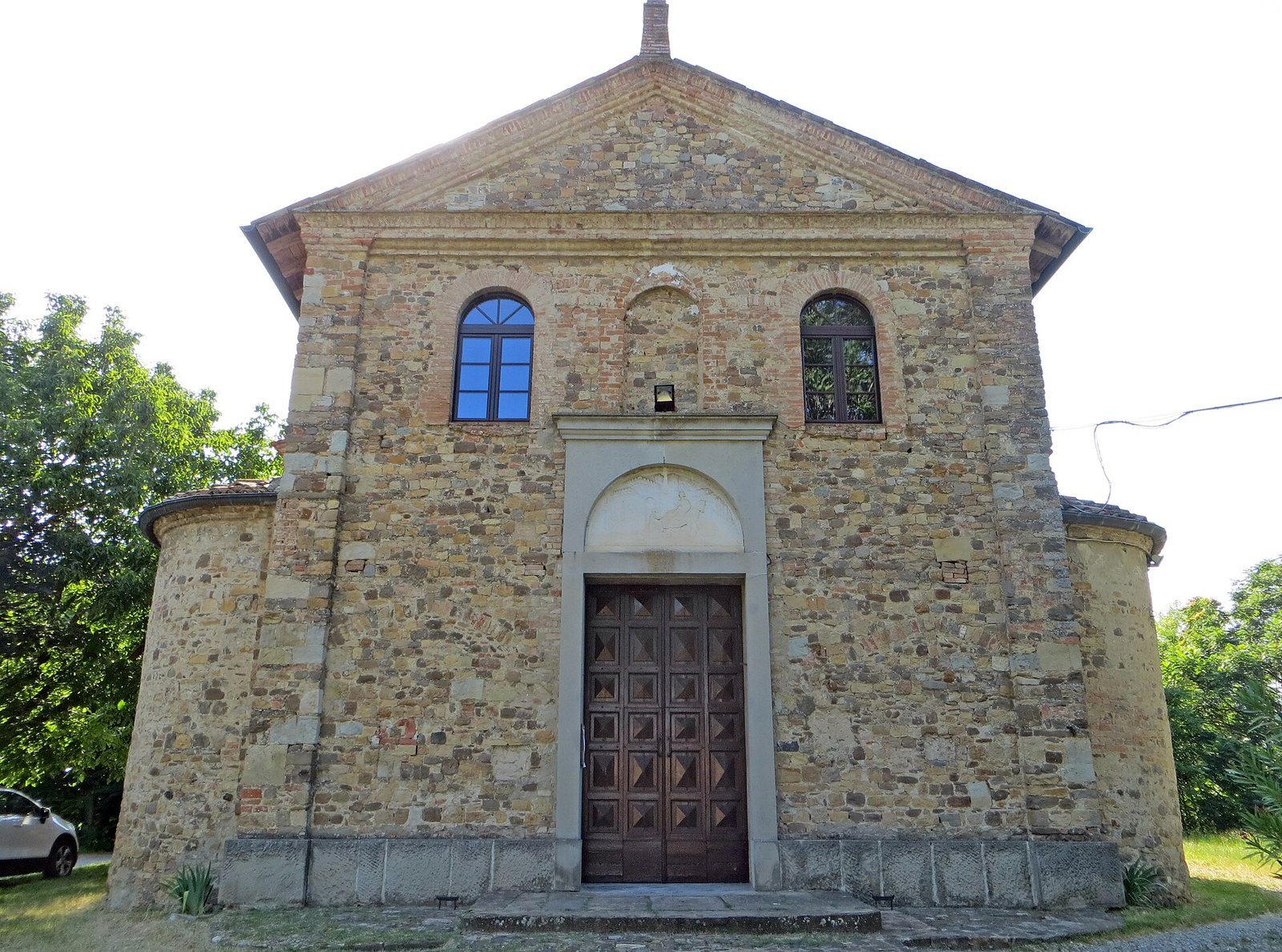
At the edge of the Taro Regional River Park, the church combines Romanesque and Baroque fabric. It has a single nave with four chapels on each side, an entrance at the east end, and a raised sanctuary ending in an apse at the west. River pebbles face the symmetrical exterior, while brick and reused stone appear in other features.
Façade and bell tower
Façade
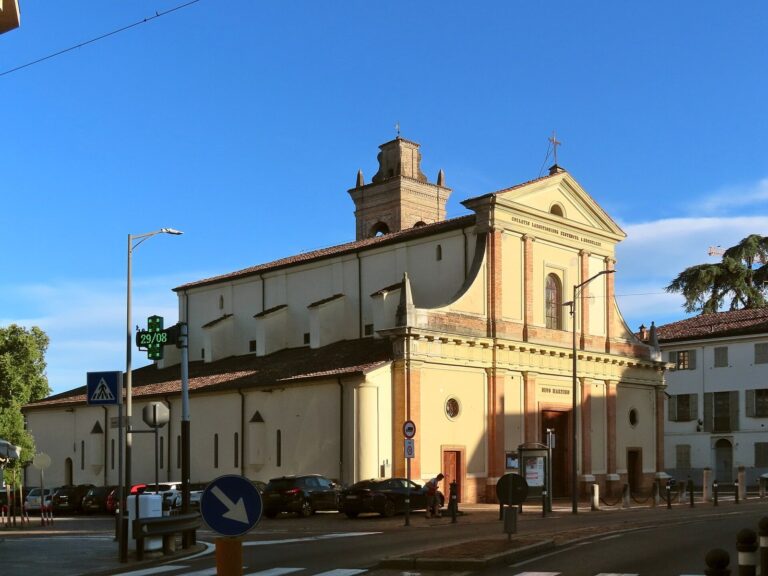
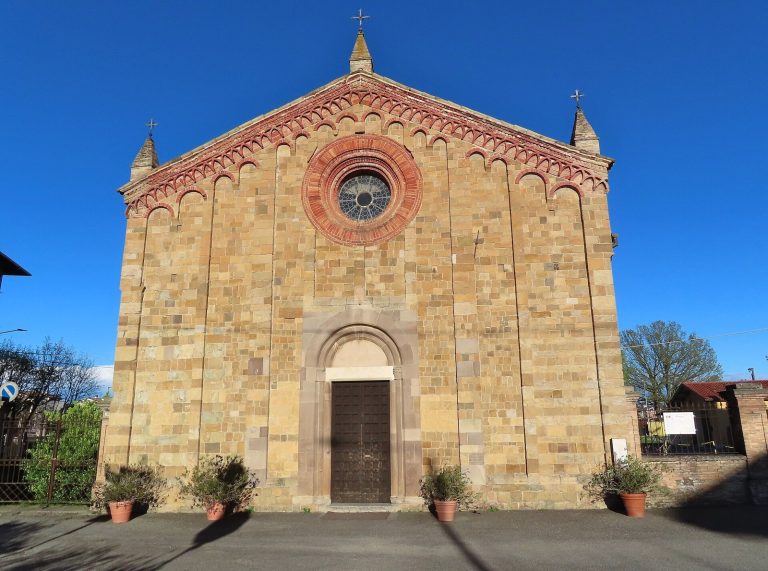
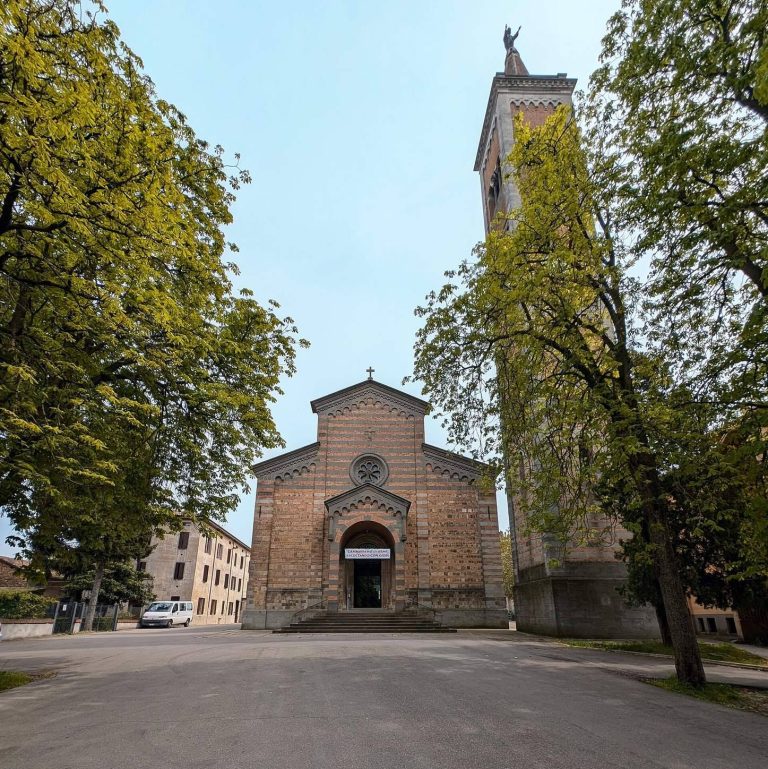
The central doorway has a stone frame and a semicircular panel, or lunette, containing a carved relief. Above it, a round-arched niche sits between two windows with brick surrounds. A broad triangular pediment crowns the façade, with shallow wall-attached columns, called pilasters, at its ends.
Bell tower
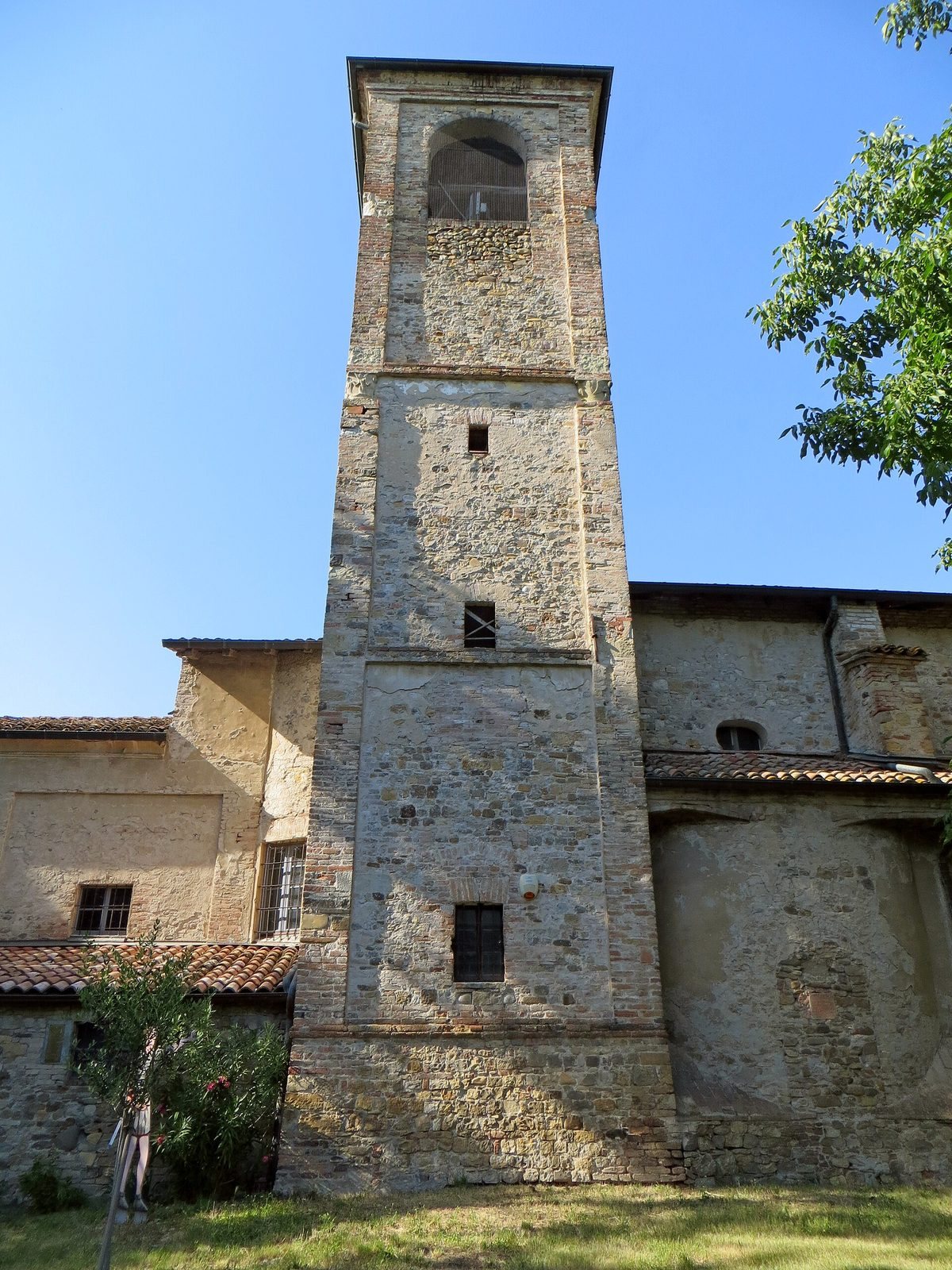
A massive brick tower rises at the far end of the church’s left side. Its three tiers are articulated with pilasters and horizontal masonry bands. Broad, round-arched windows, each with a single opening, mark every side of the bell chamber. Four Romanesque stone capitals, the upper parts of columns or pilasters, are set into the tower’s corners. They depict the four traditional authors of the Gospels and once adorned columns in the nave. These are the only surviving decorative elements identified from the medieval pieve.
Nave, chapels, and sanctuary
Nave and sanctuary
The nave is covered by a barrel vault, a continuous curved ceiling, with lunettes, or arched openings, and fresco decoration. Its pilasters have Doric capitals, the upper load-bearing elements of the pilasters. A round arch leads into the raised sanctuary, which has a painted barrel vault and ends in the semicircular apse.
Right-side chapels
The four semicircular chapels on the right contain a sequence of paintings and carved work. The first holds an oil painting of the Baptism of Christ from the early 17th century. In the second, a carved wooden altar made around 1730 supports a 17th-century painting of the Madonna and Child with Saints Roch and Joseph. The third chapel has an 18th-century frame, possibly made by Antonio Vernieri. In the fourth is Giocondo Viglioli’s 1843 painting of the Miracle of Saint Mauro.
Left-side chapels
The first chapel on the left contains an 18th-century wooden confessional. The second and third have carved frames dating to around 1700.
Altars and other furnishings
A wooden altar in table form, added in 2000, stands in the sanctuary. Behind it is an older wooden high altar with a 17th-century leather frontal depicting Saint Martin. At the center of the apse, between two side windows, an 18th-century altarpiece shows Martin and the poor man, recalling the traditional story of the saint sharing his cloak with a beggar. Its richly carved, gilded Baroque frame dates to around 1700. A 17th-century painted banner at one side depicts the Immaculate Conception, the Catholic teaching that Mary was preserved from original sin from the moment of her conception, with Saints Martin and Anthony of Padua. Other works include a 16th-century silver processional cross and a sideboard from the late 17th century.