San Martino: A Neoclassical Parish Church in Noceto, Italy
Site at a Glance
- Popularity
- Very Low
- Country
- Italy
- Primary era
- Early Modern
- Eras represented
- Early Modern, Modern
- Civilizations
- Duchy of Parma and Piacenza, Italian
- Site type
- Religious
- Remains
- Church
On this page12 sections
History
San Martino is a Neoclassical Roman Catholic parish church in Noceto, Italy, dedicated to Saint Martin of Tours. The present church was built between 1692 and 1754. It serves as a parish in the Diocese of Parma, within a pastoral zone, a grouping of parishes in the diocese.
Medieval parish history
An early place of worship at Noceto was built during the 11th or 12th century, around the time a catastrophic flood of the Taro River destroyed the older parish of San Martino di Garfagnana. That ancient locality, west of Madregolo, is known from a record dated 835, and its church held parish status by 1005. After the flood, the parish role passed to the church at Madregolo and probably also to Noceto, where the church was likewise dedicated to Saint Martin.
The earliest known record of the Noceto church dates to 3 February 1162. It also appears in the Diocese of Parma’s 1230 tithe register.
Rebuilding and later changes
By the end of the 17th century, the small parish church could no longer serve the settlement’s growing population and was demolished. The adjoining bell tower was completed in 1758.
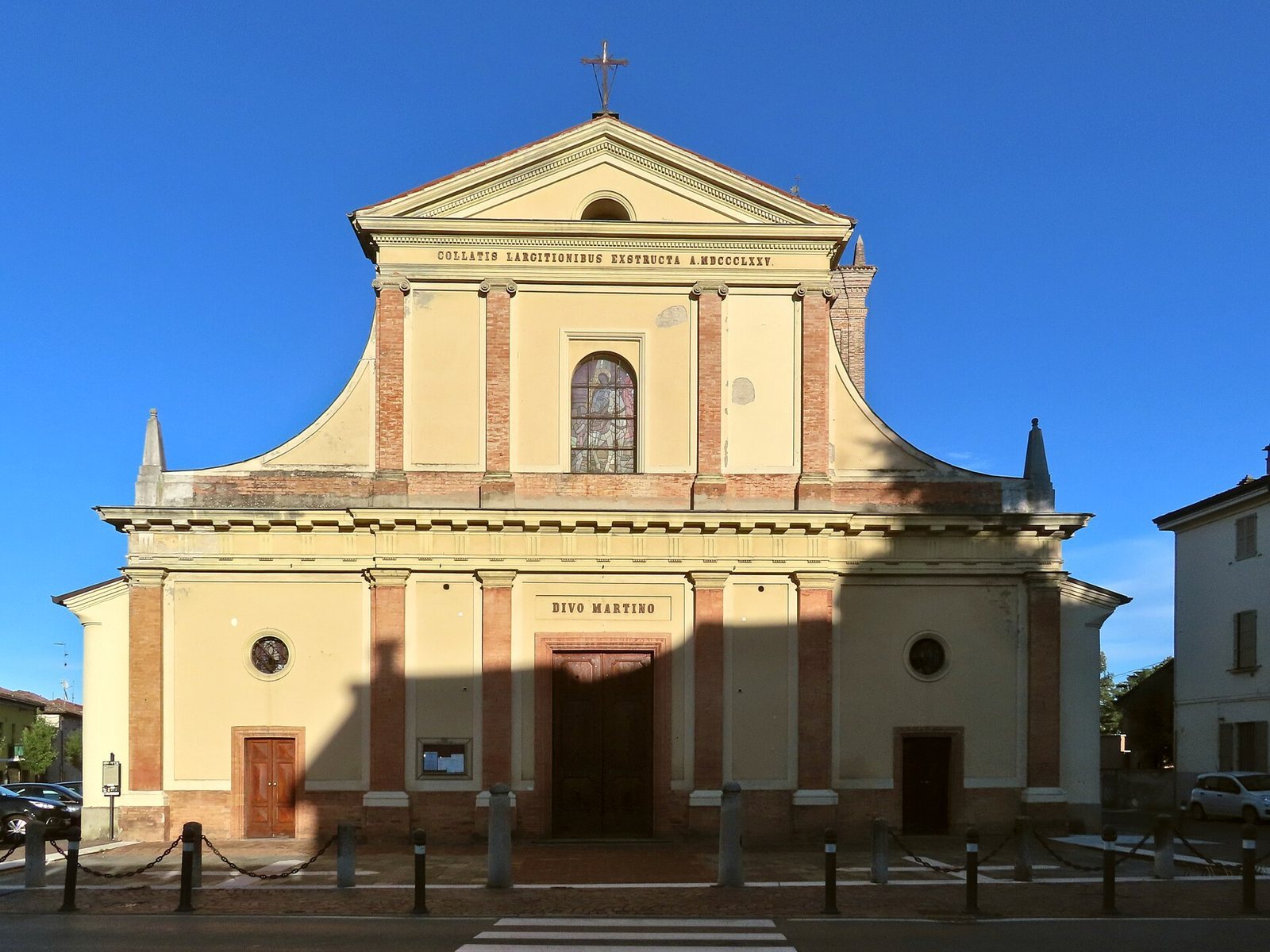
In 1875, surveyor Ferdinando Leonardi designed a wider façade, two side aisles and five chapels on each side. Work on the left side was completed in 1885, and the right side at the end of 1890. The church interior received its first decoration in 1905. In 1908, Guido Maria Conforti, bishop of Parma, consecrated the church.
In 1942, Piero Furlotti prepared a new decorative scheme, beginning with the baptistery chapel. The Furlotti brothers carried out the work after 1950. Eighteen artworks associated with the church are regarded as being of national interest.
Remains
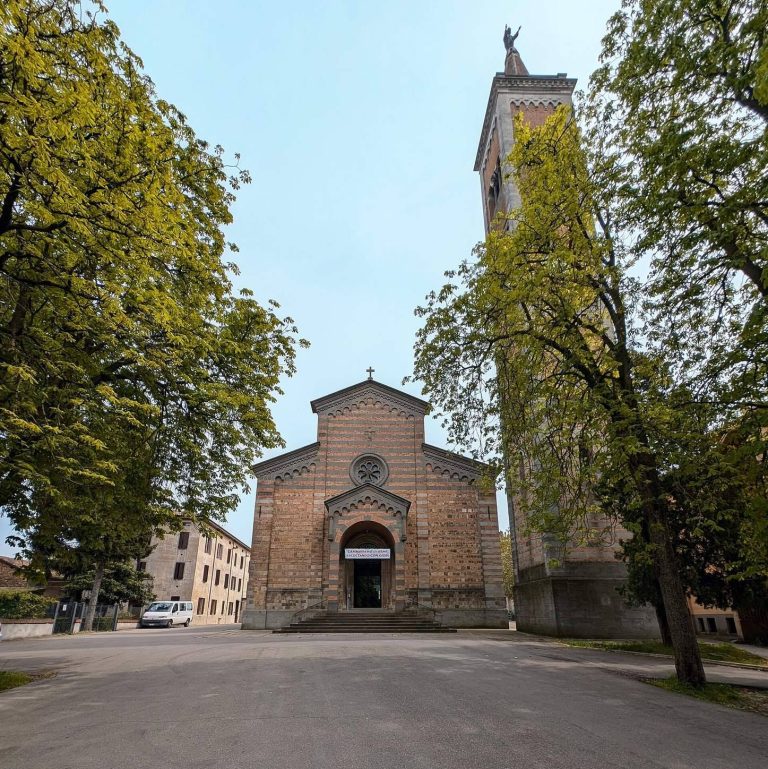
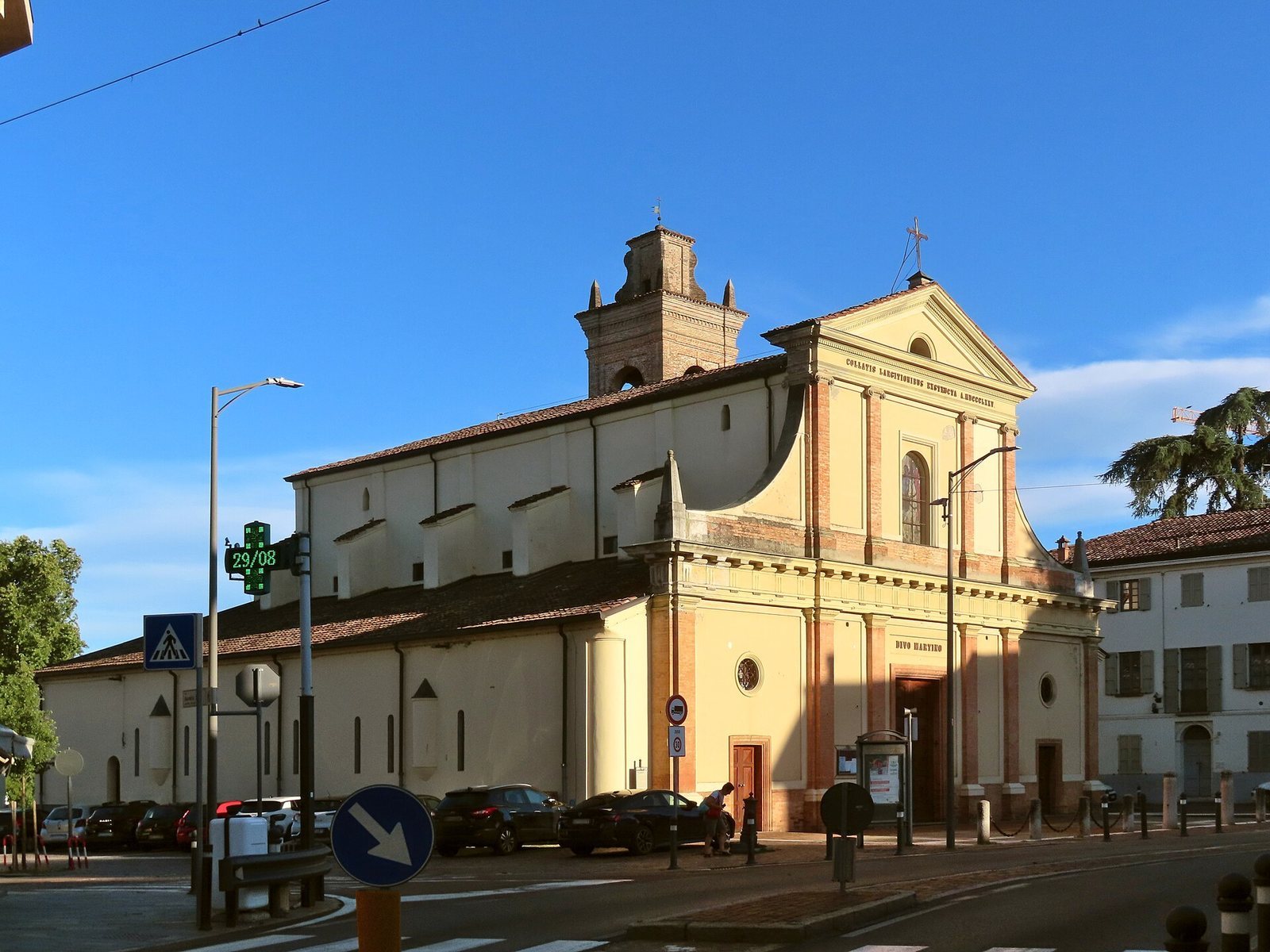
The church has a three-part plan, with a central nave and side aisles, an entrance at the west end, and a sanctuary ending in an apse to the east. Its Neoclassical exterior and interior contain projecting chapels and a bell tower incorporated into the building’s right side.
Exterior
Façade
The broad, symmetrical façade is almost entirely plastered and arranged in two levels, divided by a tall horizontal classical band decorated with triglyphs, repeated vertical blocks. On the lower level, six brick pilasters, shallow attached columns, rise from a high base and have Doric capitals, or column tops. A wide central doorway has a brick frame; circular windows sit above the side entrances. Four brick pilasters with Ionic, scroll-shaped capitals mark the upper level. Its large round-arched window sits within a rectangular plaster frame beneath a wide triangular pediment. A small arched opening is set above an inscription that reads, "Erected through collected donations, 1875". Scroll-shaped ornaments at the sides end in small pinnacles.
Side chapels and bell tower
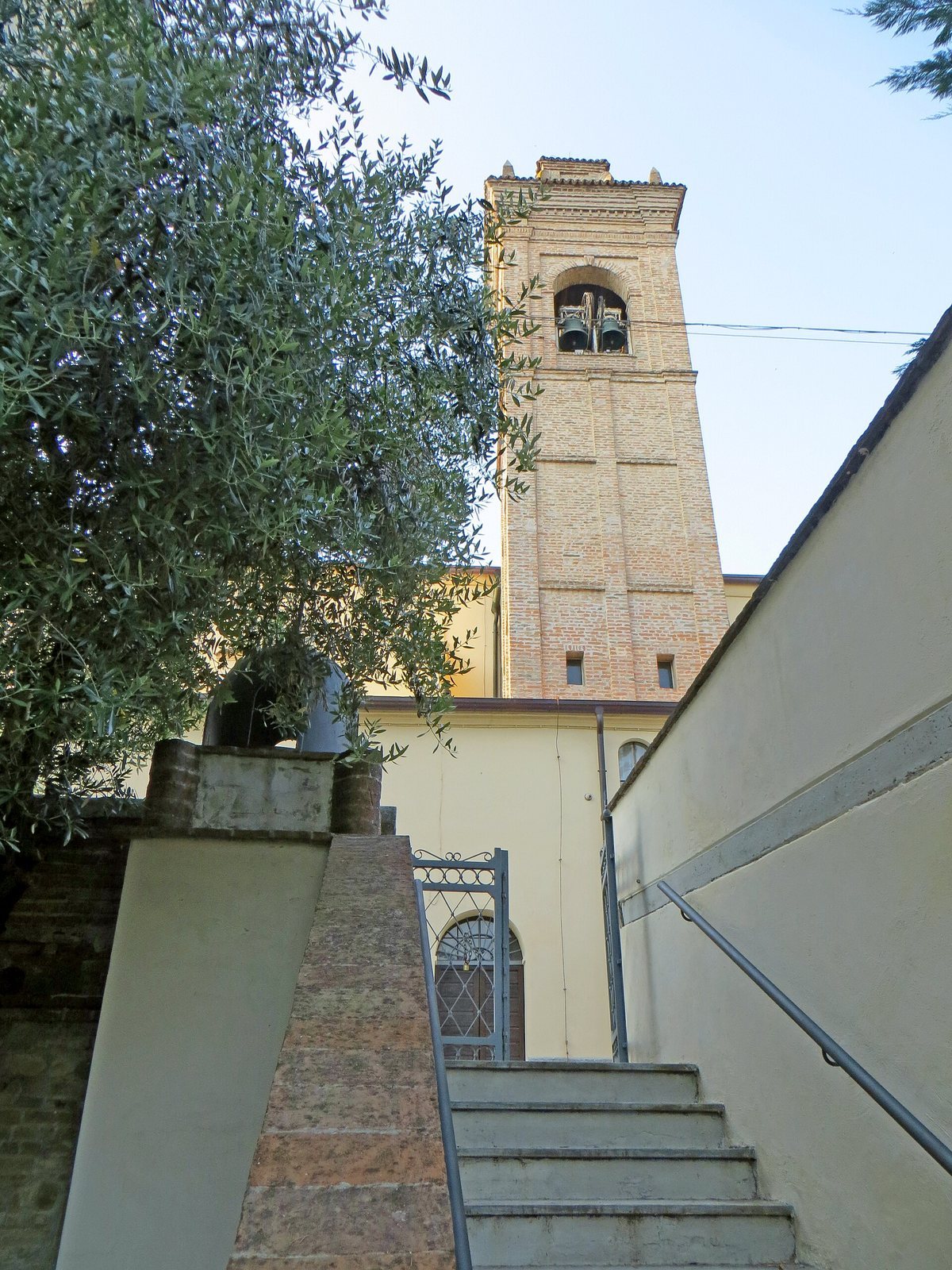
The plastered side chapels project from the church. On the right, they incorporate the brick bell tower, whose exterior has pilasters and decorative horizontal bands. The bell chamber has round-arched openings on all four sides.
Interior
Nave and aisles
The broad central nave has a barrel vault, a curved ceiling shaped like a half-cylinder. Wide round arches separate it from the side aisles and rest on massive piers, or large supports. Tall pilasters attached to the piers have Doric capitals and support a horizontal classical band.
Sanctuary and altarpiece
An arch opens from the nave into the long presbytery, the sanctuary area around the altar, which ends in an apse, a curved sanctuary end. A fresco covers its semi-dome. Behind the altar, an altarpiece shows Saint Martin on horseback. Francesco Scaramuzza painted it in 1832.
Chapels and paintings
The side chapels have altars and elaborate painted altarpieces. The first chapel on the left contains a 20th-century baptismal font and an oil painting of the Baptism of Jesus. Eugenio Scarabella donated the painting shortly before 1750. Other works include a Deposition of Jesus Christ from the Cross from the second half of the 16th century; Souls in Purgatory, possibly painted by Mauro Oddi in the 17th century; Saint James and scenes of a battle, made by Ludovico Pessi around the middle of the 17th century; and Saint Lucy, from the first half of the 19th century.
Crypt beneath the rectory
The Crypt of San Francesco lies beneath the adjoining rectory and is reached by steps. It preserves an ancient baptismal basin from the original church, an organ wheel dated 1780, and a bell-tower clock dated 1754.