Chiddingstone Castle: A Historic House and Museum in Kent
Site at a Glance
- Popularity
- High
- Country
- United Kingdom
- Primary era
- Modern
- Eras represented
- Early Modern, Modern
- Civilizations
- British, English
- Site type
- Domestic
- Remains
- Castle
On this page13 sections
History
The Streatfeild family house
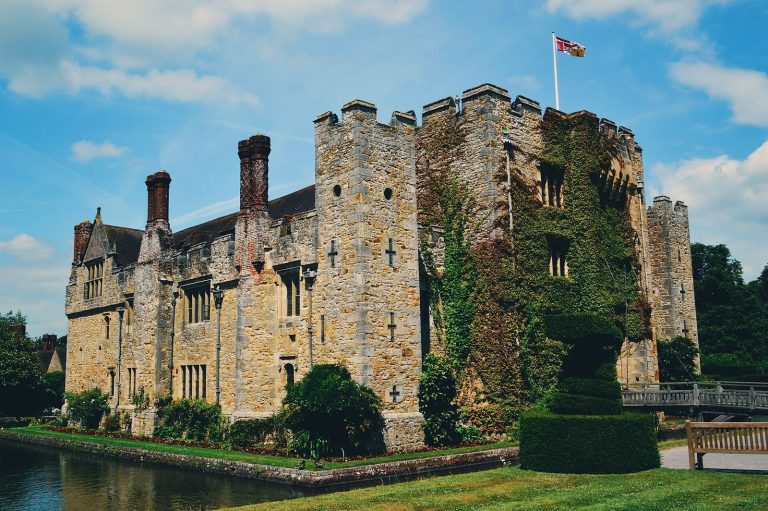
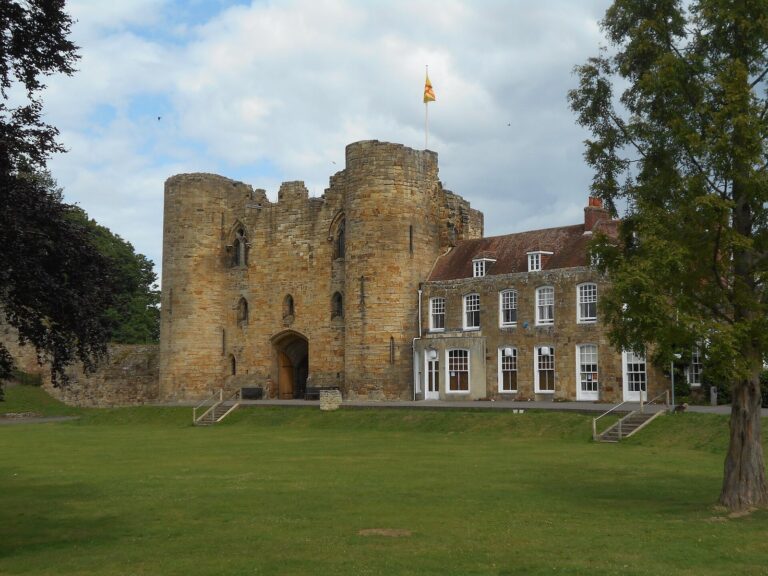
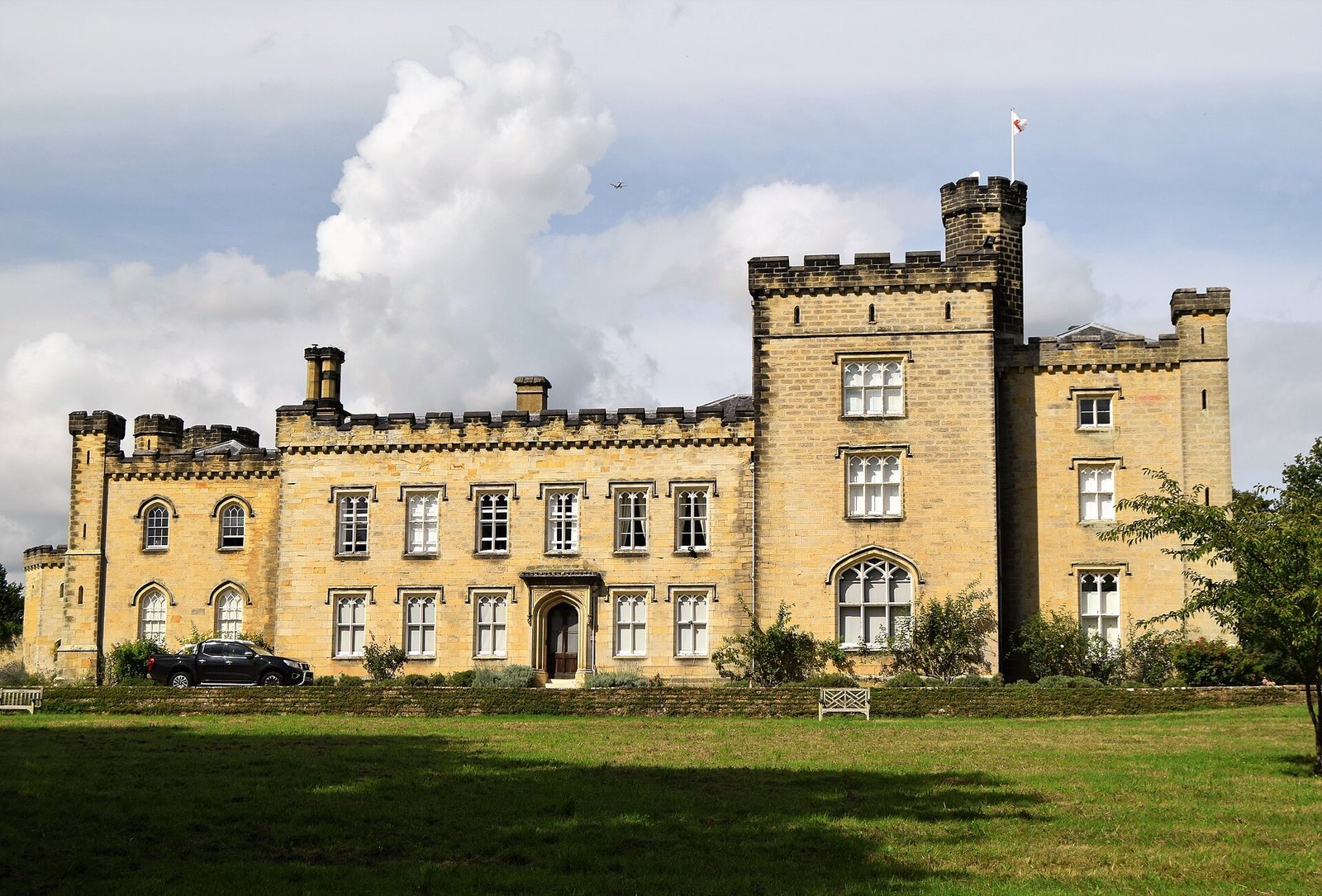
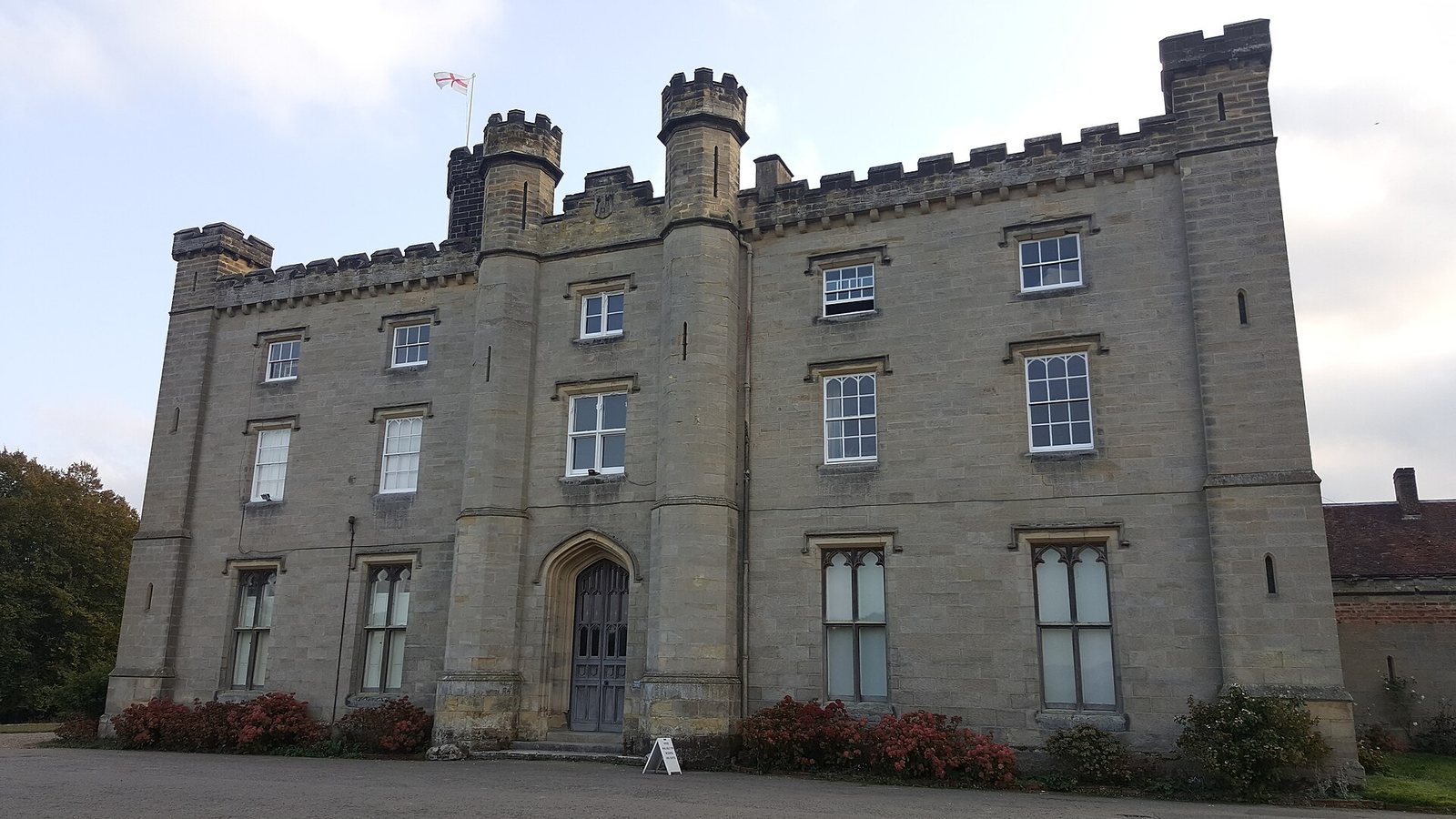
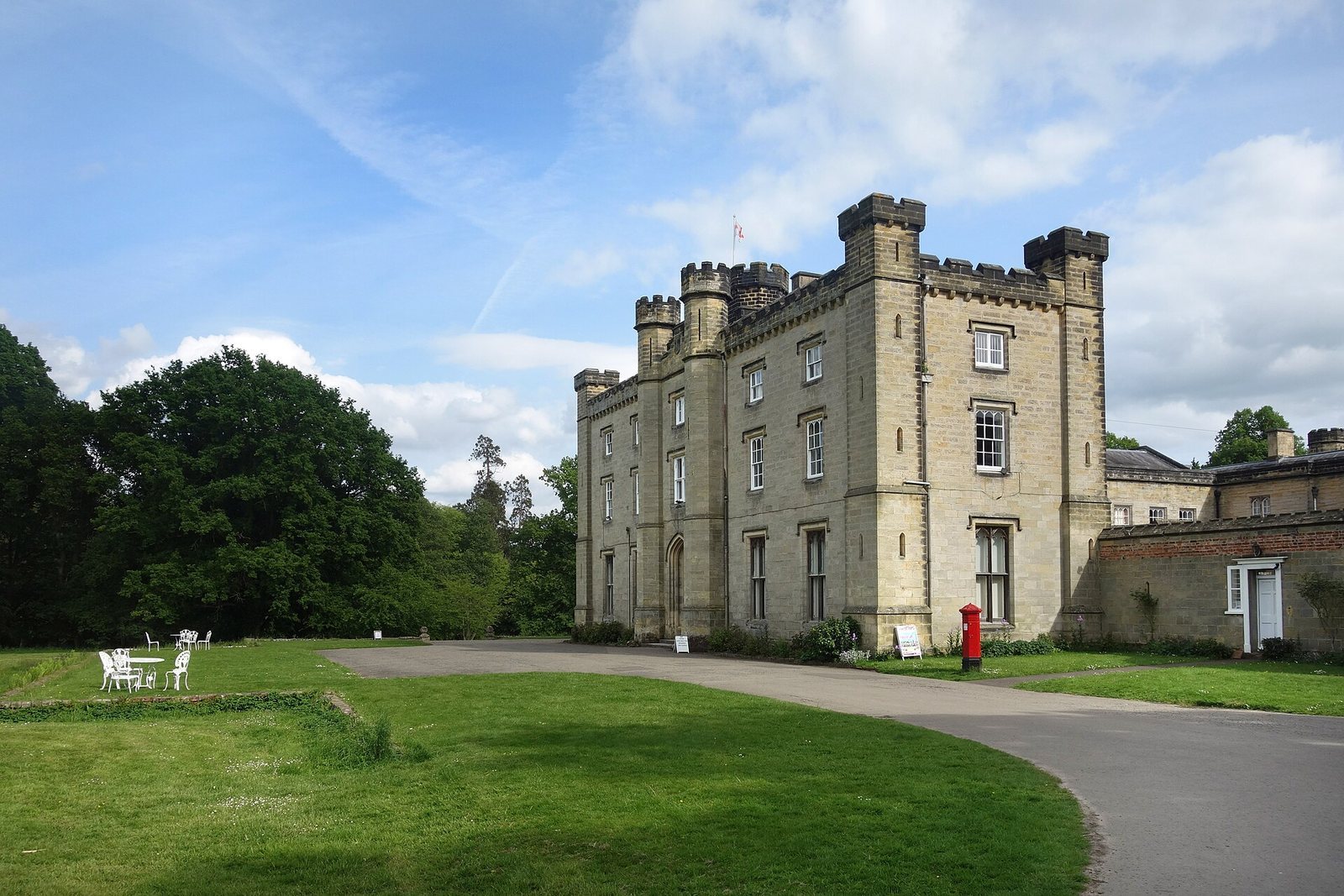
Chiddingstone Castle is a Neo-Gothic country house in Chiddingstone, Kent, United Kingdom. Much of its present form dates from the early nineteenth century, and the Streatfeild family estate had its seat here from the early sixteenth century into the twentieth. Richard Streatfeild, an ironmaster and wool merchant, lived in the first substantial house on the site. In 1679, Henry Streatfeild (1639–1719) had the house rebuilt.
Nineteenth-century redesign
In the early nineteenth century, Henry Streatfeild (1757–1829) commissioned William Atkinson to redesign the house in the Gothic Revival style, which brought medieval Gothic forms back into use. Atkinson’s plans were not completed. In 1835, Henry’s son, Henry Streatfeild (1784–1852), commissioned further work from Henry Kendal, also known as Henry Edward Kendall. Changes to the grounds during the century led to the road being diverted through the village.
Changing ownership and use
The Streatfeild family no longer lived at the castle after 1900 but kept ownership until selling it to Lord Astor in 1938. During the Second World War, members of the Canadian Forces were housed there. Long Dene School occupied the building afterward, until 1954.
Denys Eyre Bower bought the castle in 1955 to display his collections. A former bank clerk, he had taken over the London antiques business Cavendish Hood in 1943; redevelopment on Baker Street prompted his move to Chiddingstone. His interest in Japanese objects grew from his father’s enthusiasm for Chinese porcelain. Bower also collected material relating to the House of Stuart, the royal dynasty that ruled Britain, and Jacobitism, the movement supporting the Stuarts’ return to the throne. He belonged to the Royal Stuart Society and was a Buddhist.
In 1957, Bower was convicted of attempting to murder his mistress, whom he had shot, and of attempting suicide. He was sentenced to life imprisonment, but was released in 1962 after solicitor Ruth Eldridge established that the conviction was a miscarriage of justice. Bower returned to the castle and, with Eldridge and her sister Mary, continued opening it to visitors until his death in 1977.
Bower left the castle and his collection to the nation. The Denys Eyre Bower Bequest was established after his death to care for them, and the property and grounds have since been held in trust. The trust opens the castle to the public, and its trustees include Streatfeild descendants. The castle is an accredited museum. It is a Grade II* listed building, an English category for buildings of particular importance above the standard Grade II level; its listing dates to 16 January 1975. The grounds entered the National Register of Historic Parks and Gardens on 20 December 1988.
Remains
The house and interiors
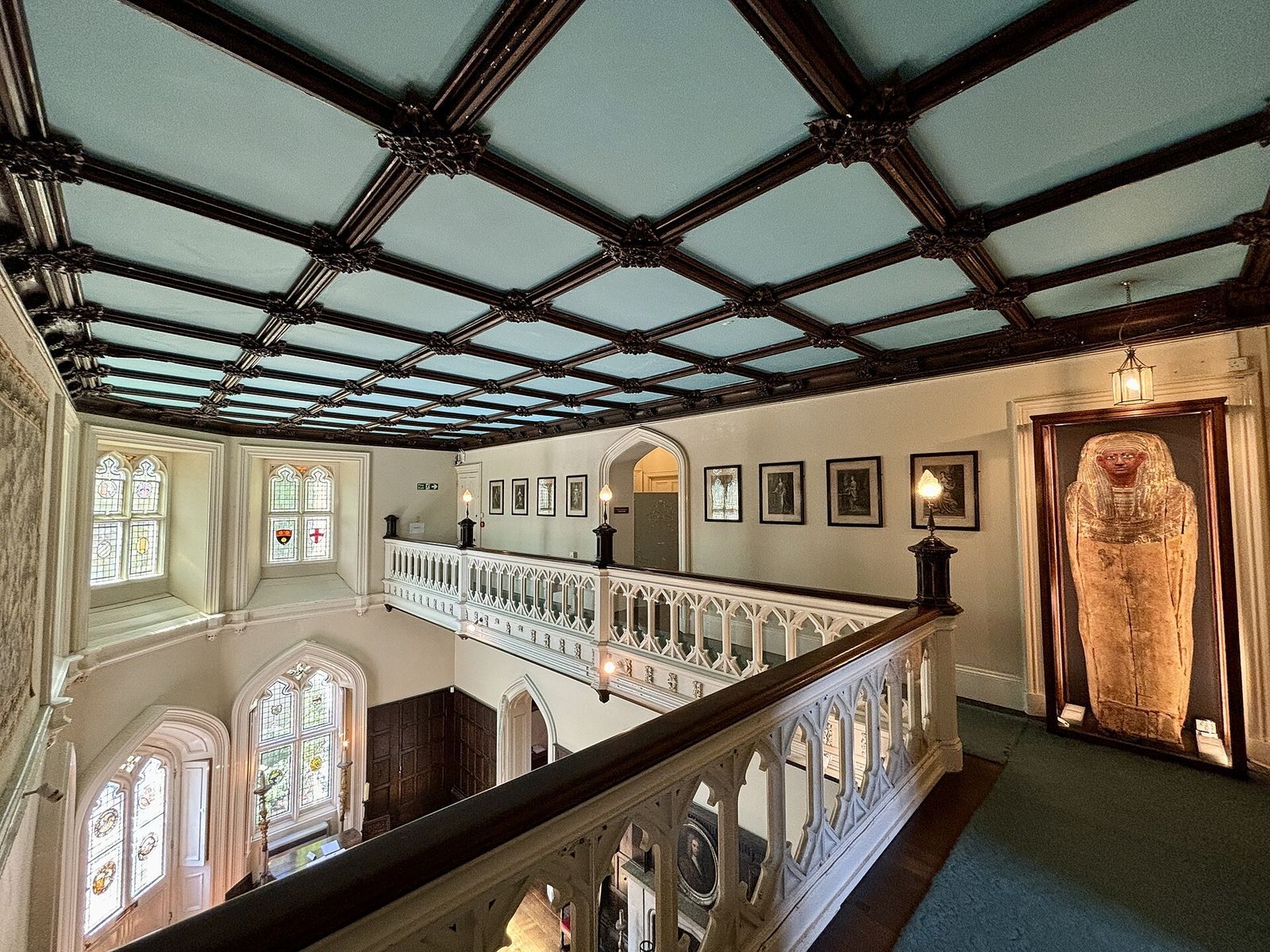
The present building is largely early nineteenth-century in date and combines Neo-Gothic design with parts of earlier houses. The first substantial house was timber-framed, and little of it survives. Its replacement was a red-brick house in the Restoration style, associated with English architecture after the monarchy returned in 1660. It was known as High Street House or High Street Mansion because its front faced the village high street.
The nineteenth-century kitchen retains many original features, including three cake ovens. Its displays include kitchen utensils and an ice chest associated with the castle’s former ice house. The building also contains a servants’ hall and a servants’ bedroom.
Grounds and lake
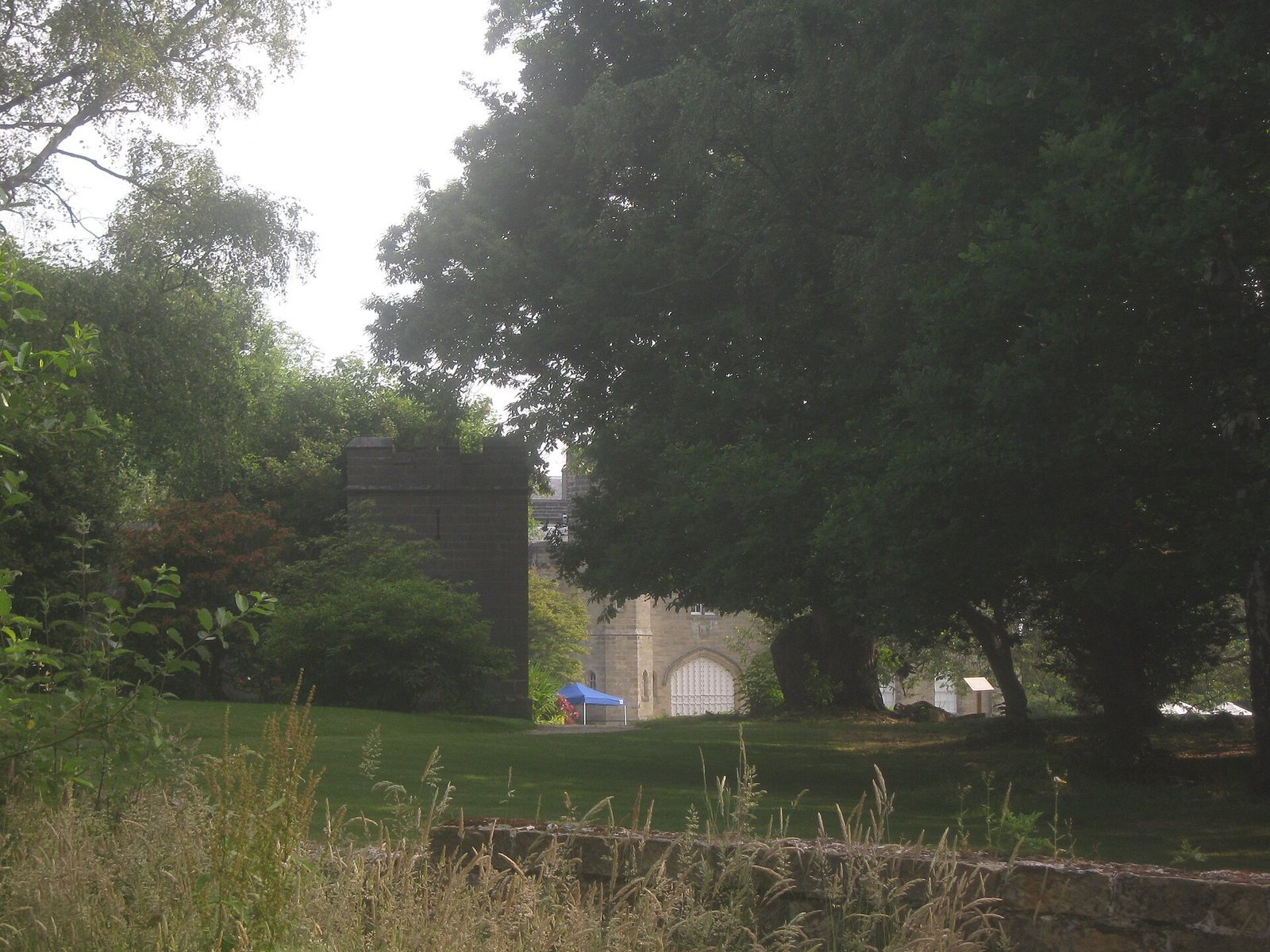
The castle grounds cover 35 acres (14 hectares) and include gardens, an orangery, and a castle gate. A lake of about 3.5 hectares separates the village from the grounds. It is naturally stocked with wild carp, bream, and perch.
Museum collections
Japanese objects
The Japanese displays include lacquerware, swords, armour, and haniwa, clay figures and objects associated with ancient Japanese burial practices. The lacquerware collection is regarded as one of the most important in private hands.
Egyptian objects
The Egyptian collection ranges across the history of ancient Egyptian civilization. It includes grave goods such as ushabti, figurines intended to serve the deceased in the afterlife, and amulets, as well as everyday objects such as vessels for food and drink.
Stuart and Jacobite material
This collection includes portraits of members of the House of Stuart, swords, objects bearing concealed Jacobite symbols, and royal manuscripts. The castle library displays an extensive collection of antique books on Stuart and Jacobite subjects.
Buddhist displays
The Buddhist collection includes thangkas, religious images commonly painted on cloth, as well as images of the Buddha. Its contents are not focused on a particular Buddhist school or country.
Local archives
The castle also holds archives relating to local history.