Chelter-Marmara: A Medieval Orthodox Cave Monastery in Crimea
Site at a Glance
- Rating
- 4.8
- Popularity
- Low
- Country
- Ukraine
- Primary era
- Medieval
- Eras represented
- Medieval
- Civilizations
- Byzantine
- Site type
- Religious
- Remains
- Monastery
On this page7 sections
History
Chelter-Marmara is a medieval Orthodox cave monastery built by a Greek population on Chelter-Kaya in Crimea, Russia. Its foundation has been placed variously between the eighth and thirteenth centuries, and its medieval development remains a subject of debate.
Foundation and medieval use
Some proposed dates place the monastery in the eighth or ninth century, while another places it between the eleventh and fifteenth centuries. A separate proposal dates its foundation to the twelfth or thirteenth century, with its main period of growth in the fourteenth and fifteenth centuries and activity continuing into the late fifteenth. The early dating has been challenged because the evidence does not firmly support such an early origin.
After the Ottoman conquest of this part of Crimea in 1475, the monastery may have been abandoned. Alternatively, it may have declined over time and remained in use for a period after the conquest.
Investigation and later use
A. Bertier-Delagard published the first full description in 1886. V. Babenchikov investigated the complex in 1935 and cleared the main church and several second-level rooms in 1941, assigning the monastery to the eleventh through fifteenth centuries. N. Repnikov identified three churches, without including the chapel on the fifth level. In 1978, E. Weimarn and M. Choref described the architecture in detail and proposed an eighth- or ninth-century date, but later assessments judged the evidence insufficient to establish that chronology securely. A Soviet archaeological expedition surveyed the complex in the 1970s, and S. Belyaev and V. Bushenkov published its findings in 1986. They also proposed an early date, drawing on an interpretation tied to the history of religious-image veneration in Byzantine Christianity, though their argument lacked strong support.
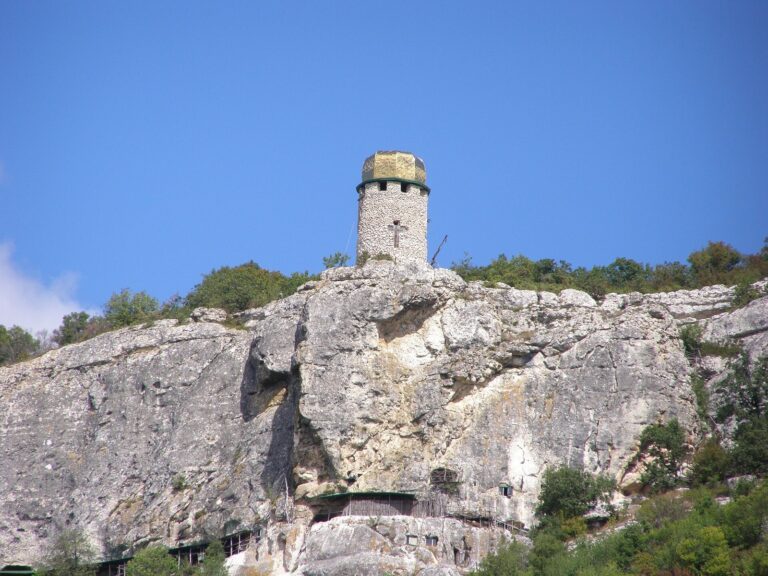
The monastery is recognized as a federal-level cultural heritage site in Russia and a national-level cultural heritage site in Ukraine. An Orthodox monastery dedicated to Saint Sabbas the Sanctified, an early Christian monk and monastic founder, has operated at the site since 2007.
Remains
Cliffside layout and rooms
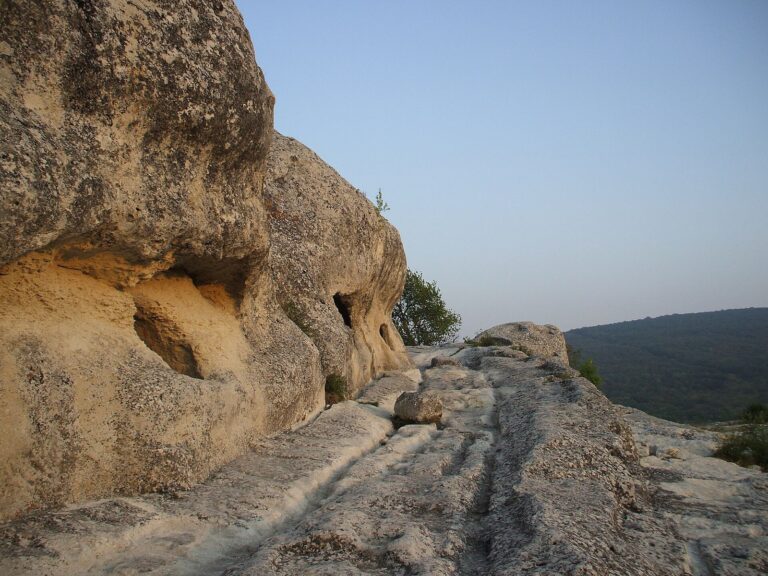
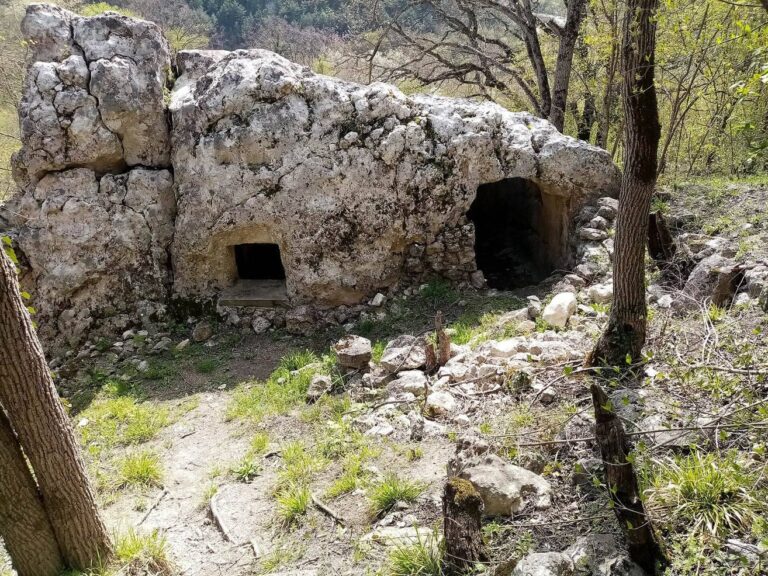
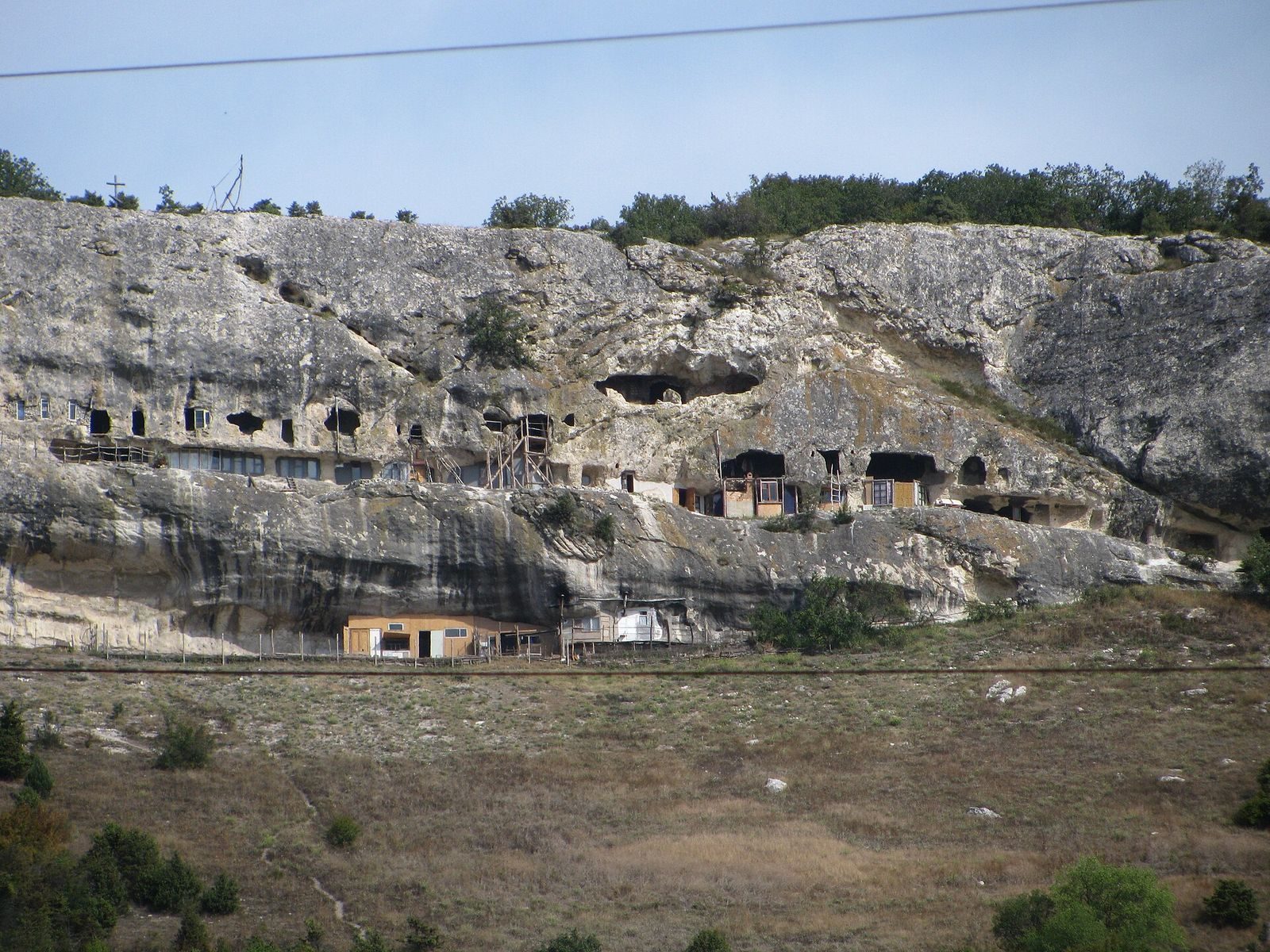
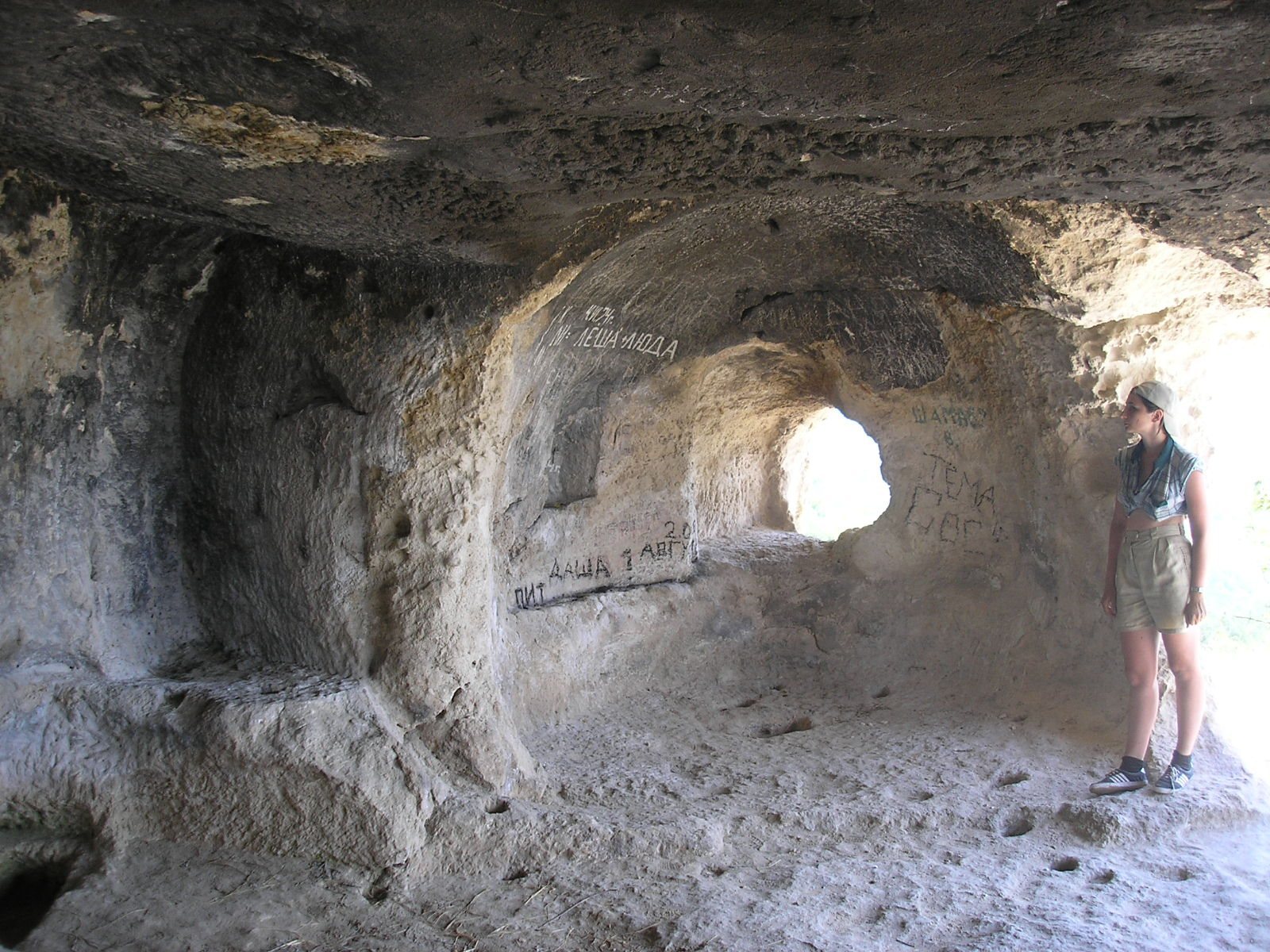
The complex occupies a cliff on Chelter-Kaya, about 1.5 kilometres northwest of Ternovka, overlooking the Karakoba and Shul valleys. The first element of its name means lattice or net in Crimean Tatar; Marmara was the name of a medieval village below the mountain. The monastery has more than 50 rock-cut rooms. A detailed count gives 86, of which 56 are preserved and 30 are heavily damaged. Most were cut into the cliff, while some adapted natural caves. The rooms occupy four principal tiers, with a further cave recorded on a fifth level. The lowest tier held burial places and funerary chapels, and some caves elsewhere served as cattle shelters. The second level contains the largest rooms, including the principal church and a former refectory. Around 20 caves on the third level were mostly monks’ cells, alongside a church. The fourth level has six caves, including a church and residential and utility rooms; it was probably used by the monastery’s superiors. One fifth-level cave was a small chapel.
Churches and connections between levels
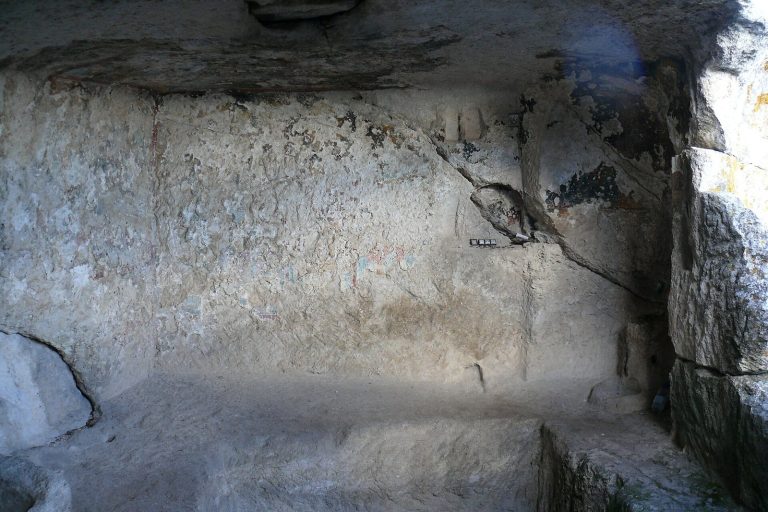
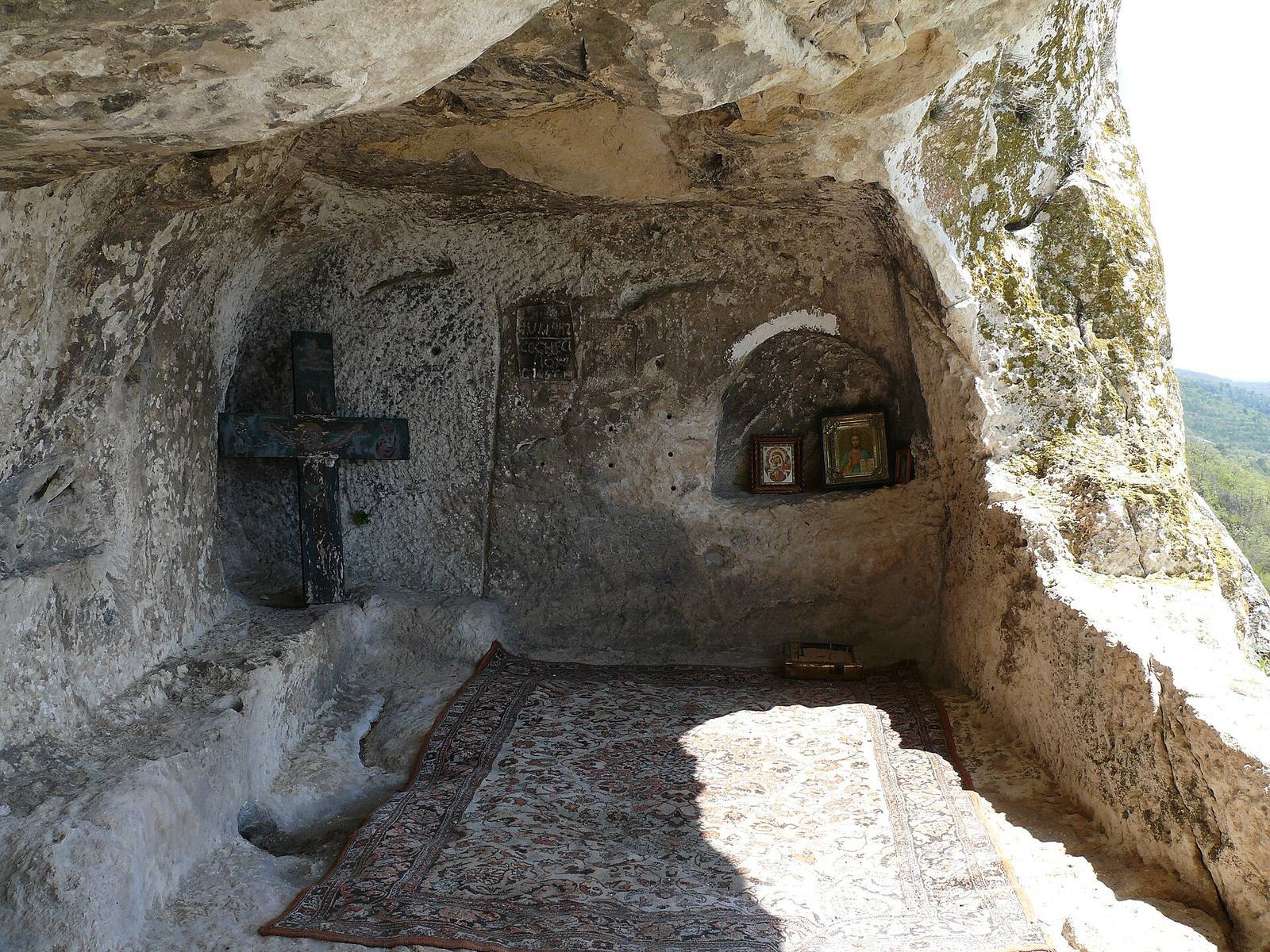
The principal church occupies a space about 9 by 5.3 metres and 2.5 metres high, within a natural cave roughly 32 metres long and 8 metres wide. Two masonry walls divide the church space from the larger cave, and a rounded sanctuary end, or apse, is cut into the eastern end. Only the grotto’s eastern part served as the church. Church No. 1 is plain, with one main interior space and a flat ceiling; it has been considered earlier than a group of churches at Inkerman. Churches Nos. 2 and 3 are later and relate to the monastery’s expansion. Carved crosses survive on the walls of all four churches, and fragments of Greek inscriptions remain in some. A fragment from the fourth-level church bears the date 1403. A rock-cut tomb is also among the remains. Stairways connect the levels above the lowest one, with the main access to the stairs on the second level. In the past, wooden stairs, balconies, and galleries also linked the rooms in a lattice-like arrangement.
Associated eastern retreat
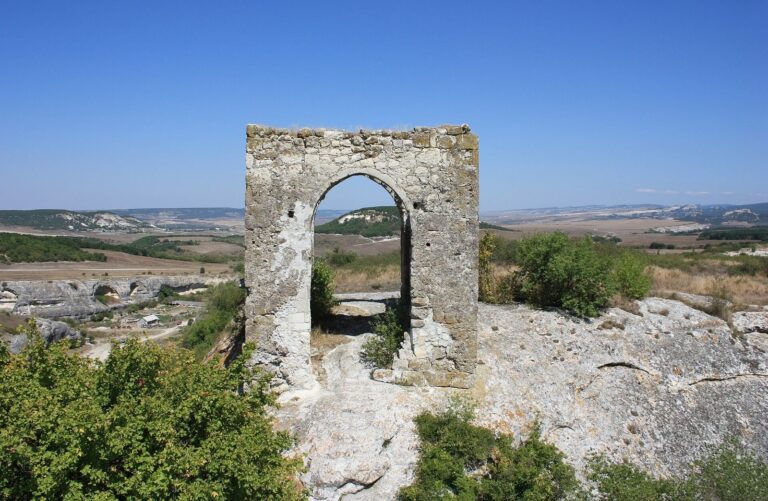
About one kilometre east of the monastery is a related religious complex. Its natural cave, approximately 20 by 5 metres, was adapted as a church. Steps lead to it, and an entrance portal is cut into the rock. The complex is thought to have been a small monastic retreat associated with Chelter-Marmara.