Château Saint-Antoine: A Historic Estate and Masonic Temple
Site at a Glance
- Popularity
- Medium
- Country
- France
- Primary era
- Early Modern
- Eras represented
- Early Modern, Modern
- Civilizations
- French
- Site type
- Domestic
- Remains
- Elite Residence
On this page12 sections
History
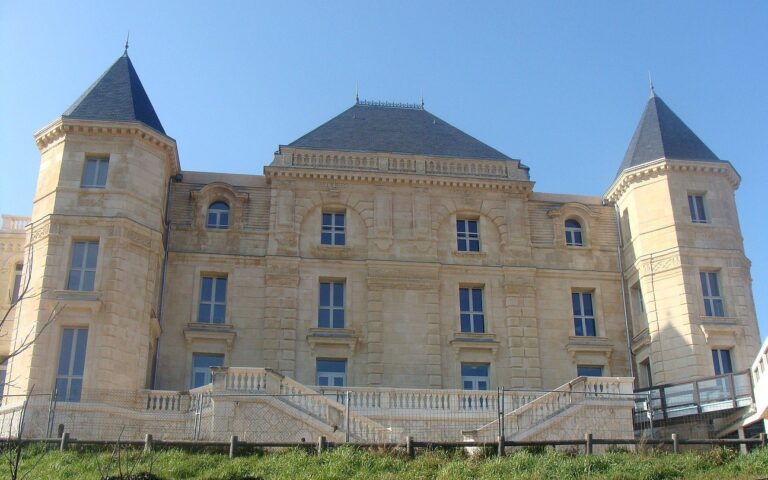
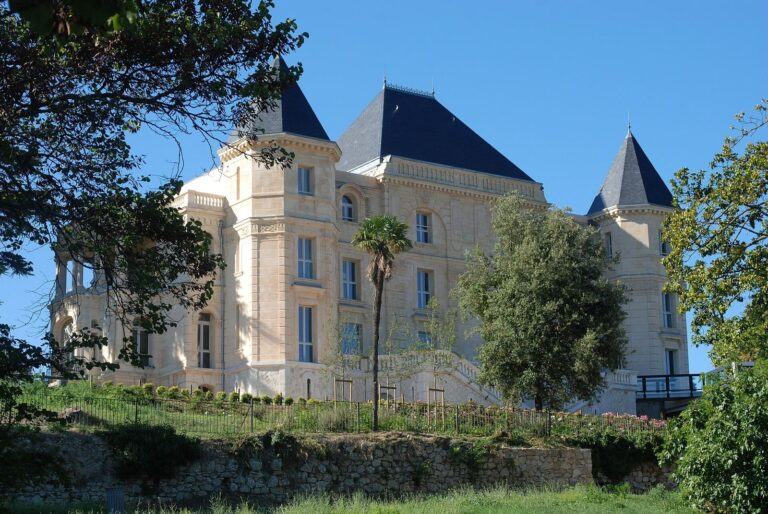
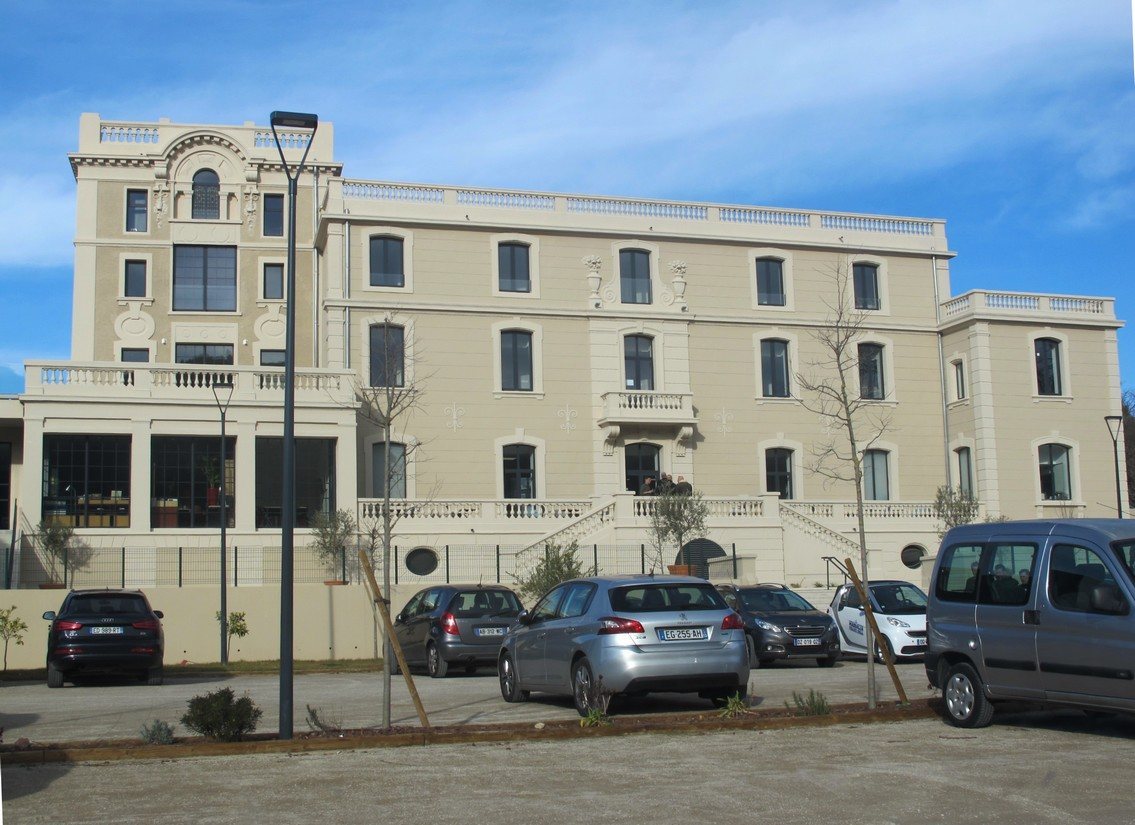
Château Saint-Antoine is a historic country house and estate in France, with a central section built in 1792. Its growth reflected successive acquisitions and rebuilding, and it later became a Masonic temple.
Formation of the estate, 1762-1894
In 1762, lawyer Joseph Isoard purchased La Miniarde, east of La Barasse. His heir, Jean-Baptiste Isoard, enlarged the property in 1792 by acquiring neighboring La Rousse. He replaced an earlier building there with the central part of the present château and named the estate La Rousse. In 1812, he added land south of La Maussane, across a small road to Aubagne, now Avenue de Saint-Menet (D2). The property later passed to Louis d’Alayer de Costemore in 1842, François Philippe in 1867, and Joseph Blanc in 1894.
The de Robien period and literary associations
Marguerite Marie Blanche Halna du Fretay acquired the property in 1907. Her husband, Guy de Robien, substantially altered and extended the house, giving it the name Château Saint-Antoine. A French count and career army officer, he volunteered for military service when war began in 1914 and served as a lieutenant colonel in the reserves with the 26th Infantry Regiment. He was killed at Roclincourt on 5 January 1915. In May 1920, his widow transferred the estate to Gabrielle Salles, the wife of businessman Xavier Fine.
In the early twentieth century, Marcel Pagnol’s family travelled from the tram terminus at La Barasse to the holiday village of La Treille by crossing four private properties and following the Marseille Canal. Their concealed route through the Saint-Antoine estate later became a recreational path. The owner was remembered for welcoming the family and giving Augustine Pagnol roses each Saturday. The turreted château belonging to a count in Pagnol’s My Mother’s Castle is thought to evoke Saint-Antoine, and de Robien may have inspired the count character.
Industrial ownership and redevelopment
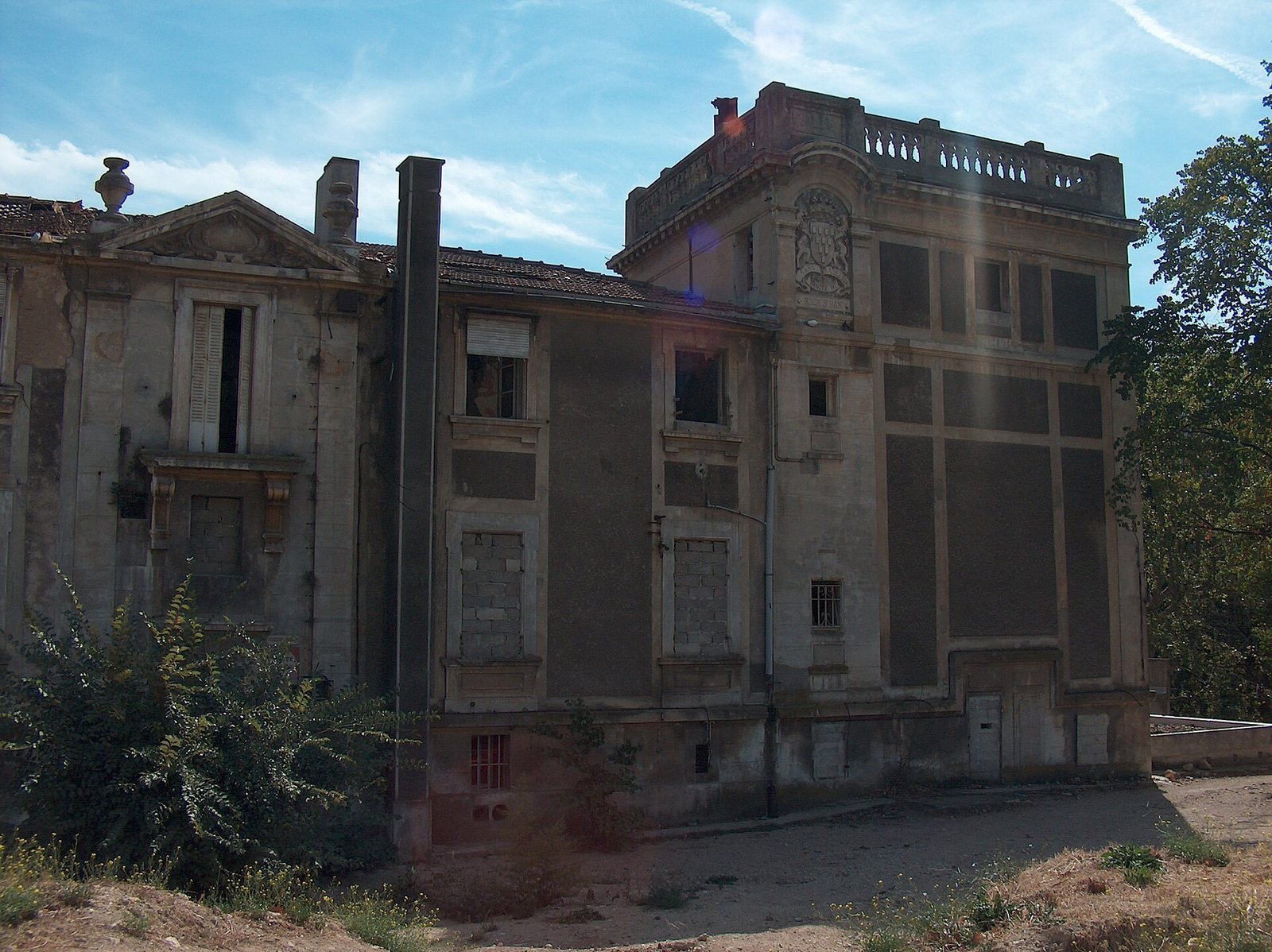
In 1940, the Fine family transferred the estate to the Barrasse electrochemical works. After the company ceased operations, the property was sold in 1992 to SNC de la Valentine, which was responsible for developing the Valentine concerted development zone, an area planned for coordinated urban growth. Marseille-Aménagement, now SOLEAM, acquired the château in 1995 and left it abandoned.
A later request by an association for protection was refused because the building was in an advanced state of ruin. In 2006, the municipal council removed the château’s protection under the local urban plan, contrary to the public inquiry’s recommendation. The council argued that protection could hinder development across the wider area. Earlier rules for the Valentine development had required detailed plans, prepared with city services, for projects near the château and garden, and restricted exposed façade materials that looked unfinished.
Redevelopment further reduced the estate’s grounds. Twenty hectares east of Saint-Antoine were acquired first by the Australian company Goodman and later by the French company YG Investissement for the Valentine Vallée Verte business park. Former Nestlé factories were rehabilitated for the project. Work also took place south of the château, part of the park was removed, and a postal sorting center was built beside the Huveaune to the southeast.
Masonic use
The Grande Loge de France, a French Masonic organization, acquired the property in 2017. The château now serves as a Masonic temple, hosting its lodges and accommodating other Masonic bodies.
Remains
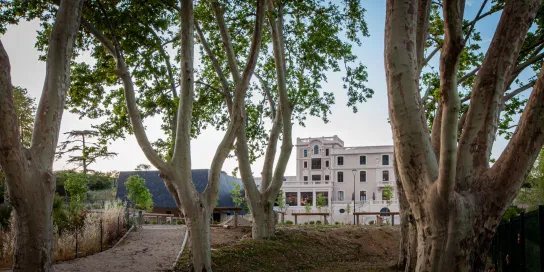
The estate is organized around the château, whose central block is joined by a west wing. Its grounds cover about nine hectares, with the Marseille Canal crossing the property west of the house. A plane-tree avenue is also associated with the château.
The château
Main house and west wing
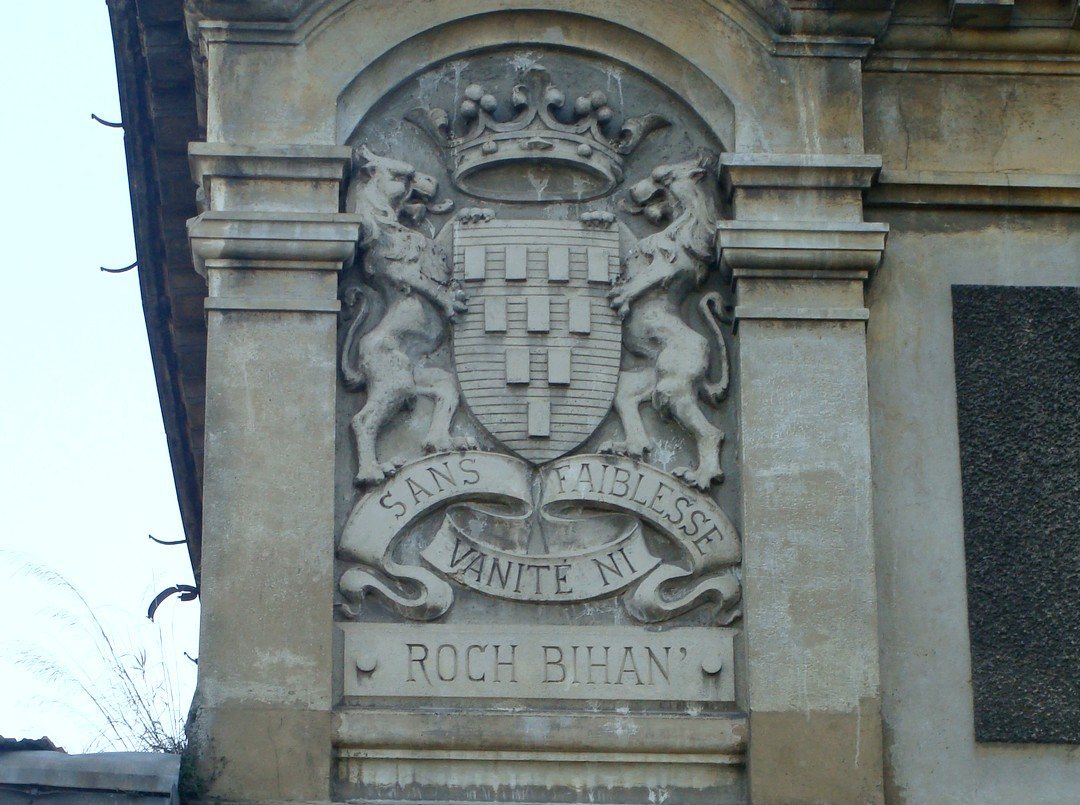
The present central block replaced an earlier building. Guy de Robien added the west wing and substantially altered the house in 1907-08. The wing carries a sculpted coat of arms: two lions stand on their hind legs beside a shield beneath a crown. Carvings give the motto “Without vanity or weakness” and the name “Roch Bihan,” an earlier form of de Robien.
Upper-floor chapel
A small chapel occupies an upper floor. Before her death in 1908, Louise Bouffier, a Toulon charitable benefactor who founded the work “Bread of the Poor,” gave de Robien a statuette of Saint Anthony of Padua, a Franciscan friar and Catholic saint associated with devotion to the poor. He placed it in the chapel and dedicated the château to the saint’s protection.
Grounds and Masonic adaptation
Estate layout
The retained parcel was reduced on its northern side. A juvenile detention center lies to the north, the Huveaune to the south, the Marseille Canal to the west, and the Valentine Vallée Verte business park to the east. Wooded areas lie east and west of the estate. Under the local urban plan, the château and plane-tree avenue are designated for collective public facilities, nearby land for low-density housing, and some areas to the north and west for economic activity.
Modern extension and interior
Rehabilitation in 2018 added an extension in a distinctly modern style. The exterior form changed little from its earlier state, although the renovated building took on a new appearance. Parking areas replaced green spaces around the house, and the interior was arranged for Masonic use. Several temples allow seven lodges to meet at the same time, while a larger temple has 400 seats for exceptional events.