Château de Cassis: A Former Fortified Castle in France
Site at a Glance
- Rating
- 4.4
- Popularity
- Low
- Country
- France
- Primary era
- Medieval
- External website
- Open
- Eras represented
- Medieval
- Civilizations
- Carolingian
- Site type
- Military
- Remains
- Castle
On this page9 sections
History
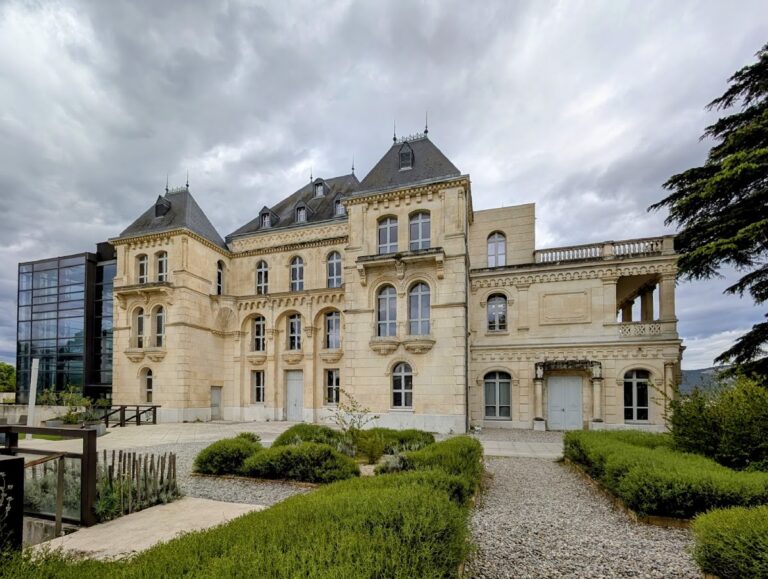
Château de Cassis is a former fortified castle in France, built in the eighth century during the Carolingian period to defend the Carolingian Empire, the political realm established by Charlemagne and his successors in western and central Europe. Rising above the port of Cassis, the castle reflects the long military and maritime history of this Provençal settlement.
Settlement before the castle
Cassis developed as a maritime trading settlement through the Etruscan, Celto-Ligurian, Greek, and Gallo-Roman periods. It is attested from the first century BC and appears in the Antonine Itinerary as Carsicis Portus. Maritime trade, fishing, viticulture, and the export of Cassis stone throughout the Mediterranean shaped the settlement before the medieval fortress was established.
In the fifth century, an observation tower made of wood or stone overlooked the ancient town and its port. During the seventh century, barbarian invasions and the decline of the Western Roman Empire encouraged inhabitants of Provençal ports to seek refuge inland in fortified settlements. Amid the Saracen invasions of the Carolingian Empire in the eighth century, a first fortified enclosure was built at the site. One surviving tower is traditionally known as the Saracen Tower.
Medieval lordship and expansion
In 1223, the powerful lords of Baux took possession of Cassis and its castle. This Provençal noble family used a sixteen-rayed star as its heraldic emblem. During the Hundred Years’ War, the lords strengthened the maritime defenses by constructing the enclosure that largely gives the castle its present form.
In 1426, Cassis was incorporated into the County of Provence under Louis III of Anjou, a fifteenth-century ruler of Provence. In 1473, his brother and successor in the Angevin political tradition, Rene of Anjou, transferred the lordship to the bishops of Marseille. The bishops retained control until the French Revolution in 1789.
Destruction and military reuse
In 1524, Charles V, the Habsburg ruler whose Mediterranean and European conflicts included military operations affecting Provence, destroyed the castle and devastated Cassis. At the end of the seventeenth century, the Count of Grignan, deputy governor of the province, strengthened the defenses and installed new artillery.
As Cassis expanded beyond its walls during the eighteenth century, the town developed increasingly around the port. On 10 February 1794, Napoleon Bonaparte, then a young French general, stopped at the castle to inspect the French army’s military batteries. The Royal Navy, the naval service of the British state, destroyed those batteries during a commando operation on 17 April 1813.
Private ownership and modern use
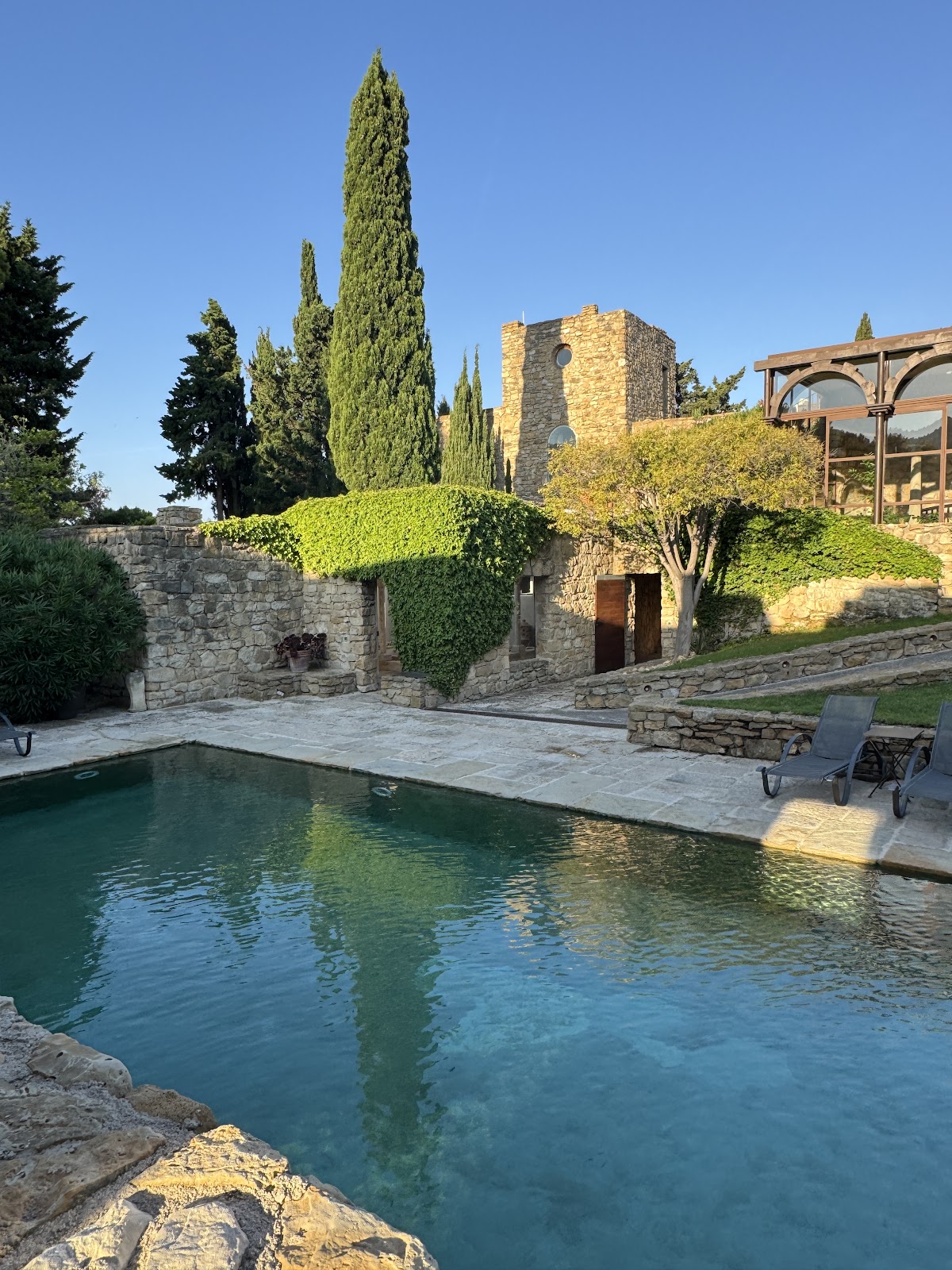
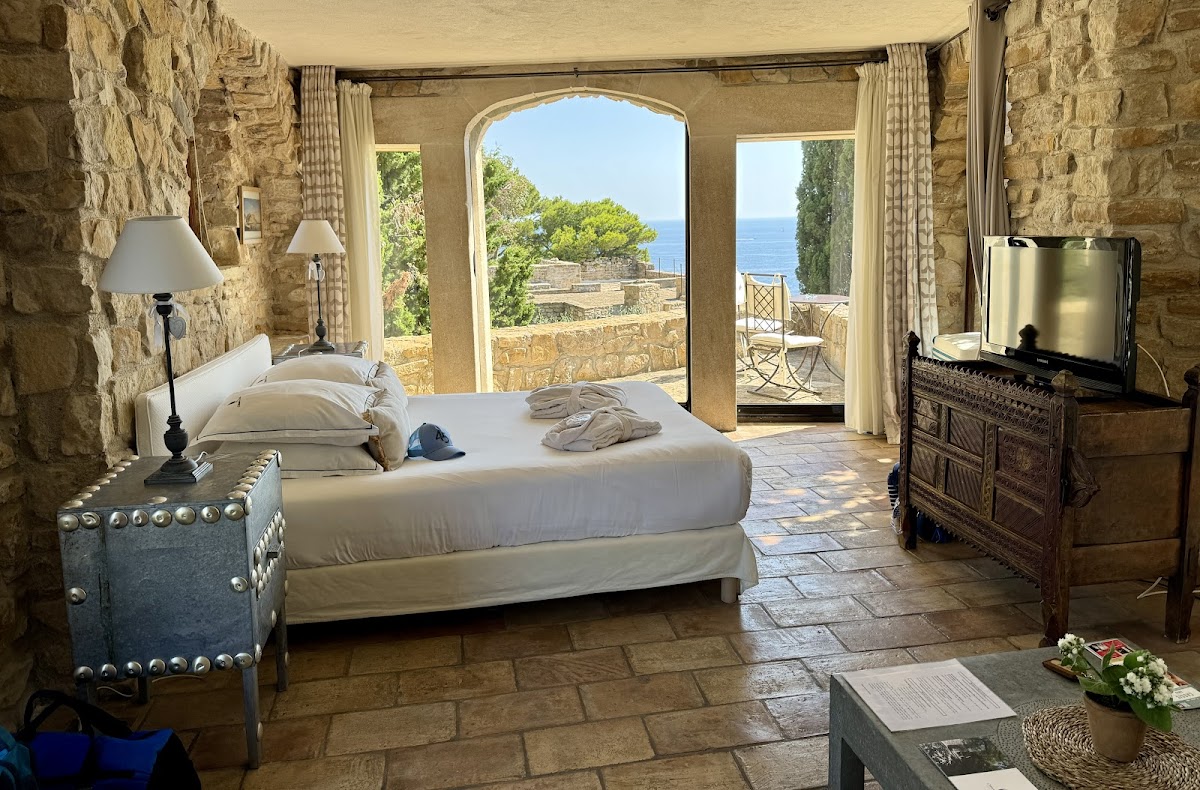
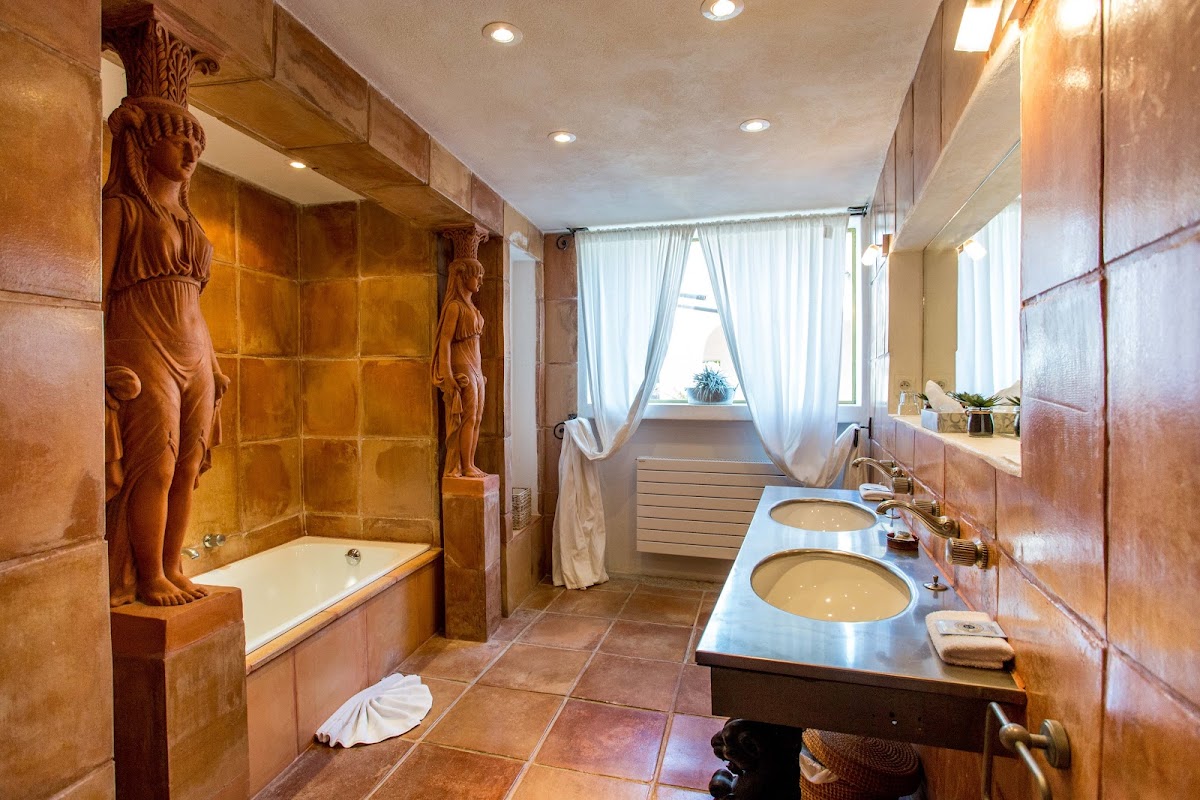
In 1896, the Domains administration sold the castle to a tobacconist from Saint-Cyr-sur-Mer. The property later belonged to the Michelin family for 35 years. After the castle had fallen into ruin, its present owner completely renovated it and converted it into guest accommodation. It now functions as a privately owned prestige hotel and Provençal restaurant, forming part of the site’s modern institutional history.
Remains
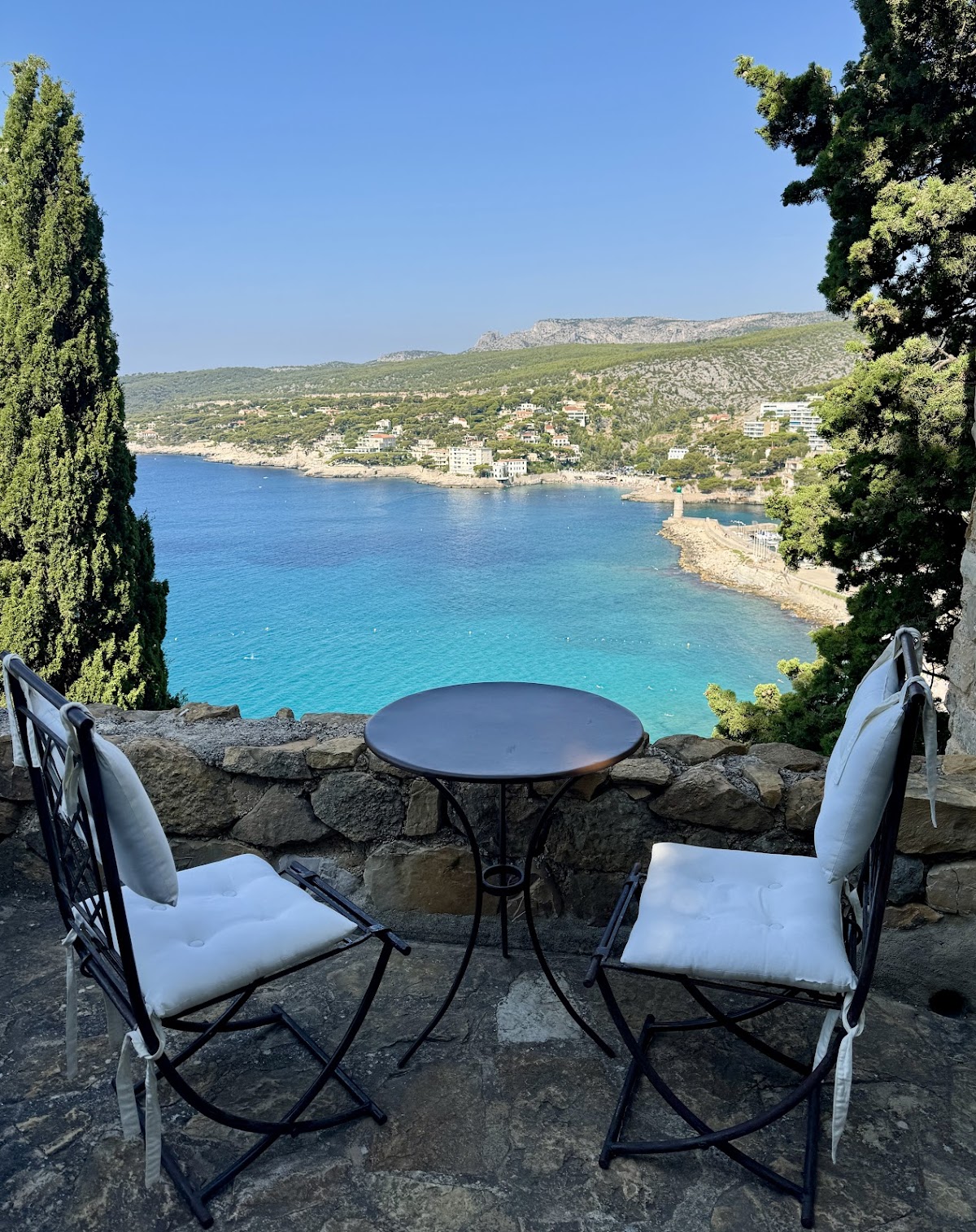
The castle occupies a cliff approximately 57 metres above sea level, overlooking the port of Cassis, the Mediterranean Sea, and the vineyards between the Calanques and Cap Canaille. Its surviving fabric combines the eighth-century fortified enclosure, the medieval defensive works, and later military installations that shaped the complex before its renovation.
Fortified enclosure
The first enclosure dates from the eighth century, and a surviving tower within the complex is traditionally called the Saracen Tower. The enclosure constructed or substantially renewed during the Hundred Years’ War consists of walls and four square towers, each approximately 8.5 metres high. Together they surrounded several dozen dwellings and formed the main defensive boundary of the castle.
Courtyard and religious buildings
A water well stood at the centre of the courtyard. Between 1372 and 1380, a bread oven and a church dedicated to the archangel Saint Michael were built within the fortified settlement. These features formed part of the occupied medieval enclosure, whose surviving structures were later incorporated into the renovated complex.
Entrance and military batteries
A sixteen-rayed star, the coat of arms of the lords of Baux, survives above the principal entrance. The defenses also included military batteries, which received new artillery at the end of the seventeenth century before being destroyed by the Royal Navy in 1813. The ruined castle was subsequently completely renovated, and the present complex provides views over the port, the bay, and the vineyards.
Nearby sites