Château Malromé: A Historic Château and Wine Estate in France


Site at a Glance
- Rating
- 4.4
- Popularity
- Low
- Country
- France
- Primary era
- Early Modern
- External website
- Open
- Eras represented
- Early Modern, Modern
- Civilizations
- French
- Site type
- Domestic
- Remains
- Castle
On this page8 sections
History
Château Malromé is a château and wine estate in France, in the commune of Saint-André-du-Bois. Its recorded history and vineyard date to the sixteenth century, when Étienne de Rostéguy de Lancre, a Bordeaux parliamentary official and local lord, built the noble house of Taste. The estate later developed into a residence combining agricultural production with domestic and aristocratic uses.
From Taste to Malromé
Around 1780, Catherine de Forcade, the widow of Jean-Baptiste de Geneste, Baron of Malromé, acquired the château. She gave it the name Malromé in memory of her husband. In 1847, ownership passed to Adolphe de Forcade Laroquette, president of the Council of State under Napoleon III, and his half-brother, Marshal Armand Jacques Leroy de Saint-Arnaud, a senior military commander and government minister. They restored the château in a manner associated with Viollet-le-Duc, the nineteenth-century French architect and theorist known for influential restorations of medieval and Renaissance buildings.
After Adolphe de Forcade Laroquette died in 1874, his widow, Adélaïde Fergusson, sold the wine estate in 1883 to Countess Adèle de Toulouse-Lautrec. The acquisition was connected with Malromé’s proximity to Château de Respide, where the countess’s cousin lived, and to Verdelais, a nearby shrine and pilgrimage site. The vineyard had been badly damaged by phylloxera, an insect pest that attacks grapevines. The countess replanted it with American rootstocks, resistant vine roots onto which European varieties could be grafted.
Henri de Toulouse-Lautrec at Malromé
Château Malromé became one of the Toulouse-Lautrec family residences. Henri de Toulouse-Lautrec, the French painter and printmaker associated with the late nineteenth-century avant-garde, first visited the estate at nineteen. He later spent long summer periods there, painting and practicing rowing and archery.
Henri de Toulouse-Lautrec died at Malromé on 9 September 1901, aged thirty-seven. He was buried in the cemetery at Verdelais, where his mother, Adèle de Toulouse-Lautrec, joined him in 1930. The estate’s later identity remained closely connected with his life and death.
Later ownership and heritage status
After Countess Adèle de Toulouse-Lautrec died without a direct heir, her nephews sold Malromé to Georges Séré de Rivière in 1933. Later owners included Gabriel Seynat and André Sagne, an industrialist from La Réole, who opened the estate to the public in 1984.
Kim Valéry Huynh acquired the estate in 2013 and began restoring and promoting it with his two daughters. The wine cellars were entirely restored after the acquisition, and the estate began converting to organic agriculture in 2020. The 2023 vintage was the first to receive organic certification. On 7 October 2016, the château received the French Ministry of Culture’s Maisons des Illustres designation, a heritage status for residences associated with notable figures, in tribute to Henri de Toulouse-Lautrec. The estate now accommodates a museum, receptions, exhibitions, concerts, and a restaurant that opened in 2018.
Remains
Courtyard and Renaissance wing
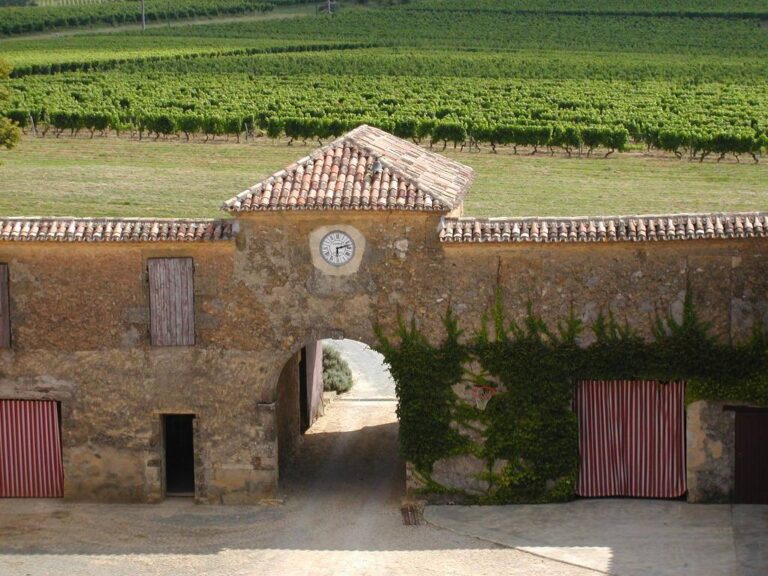
The château is organized around a square courtyard, whose center now contains a hexagonal lawn. Two opposing postern gates, or small gates within a fortified enclosure, lead into the courtyard and retain nineteenth-century crenellations.
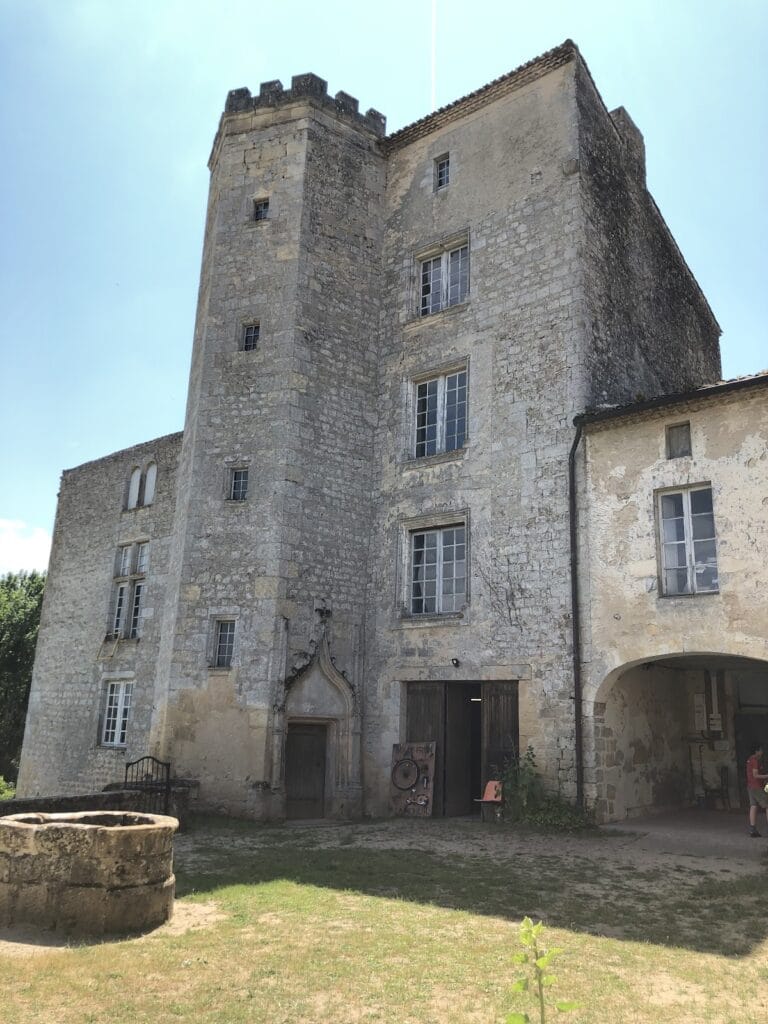
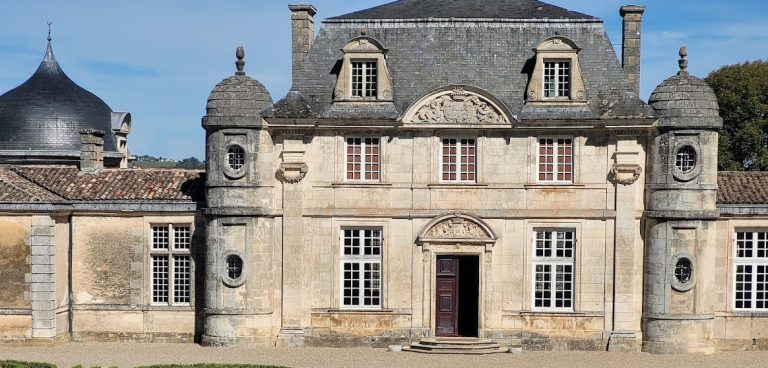
The principal western wing is Renaissance in style. Its mullioned windows are divided vertically by stone or timber members, and a rectangular tower rises at the center of the façade. Round towers mark its two ends. The other wings originated as service buildings and have been renovated in a contemporary, pared-down style.
Residential interiors
Inside the residential part of the château, connected salons form a sequence of rooms aligned in an enfilade, allowing doorways to create a continuous perspective. Several salons have unusual coffered ceilings made with recessed panels and monumental fireplaces. Furnished bedrooms include the former apartments of Henri de Toulouse-Lautrec and his mother, as well as the room where Henri died.
Vineyard and cellars
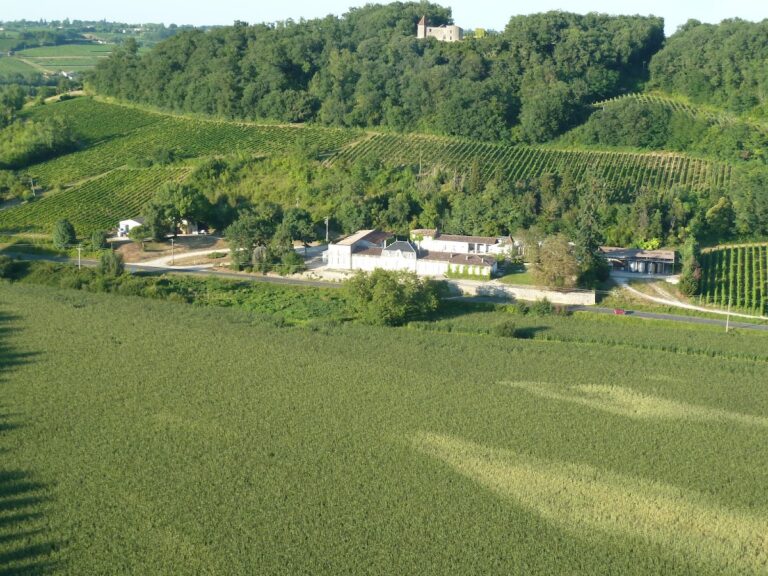
The Malromé vineyard extends across approximately forty-two hectares of gravelly clay slopes. Vines have been cultivated on the estate for five centuries, and its wines are made under the Bordeaux and Bordeaux Supérieur appellations, regulated geographic designations for wine. The wine cellars were entirely restored after 2013, preserving the production facilities as part of the estate’s continuing agricultural use.