Château-Gaillard: A Medieval Residence and Court in Vannes
Site at a Glance
- Popularity
- Medium
- Country
- France
- Primary era
- Medieval
- Eras represented
- Medieval, Early Modern
- Civilizations
- Duchy of Brittany, French
- Site type
- Domestic
- Remains
- Elite Residence
On this page11 sections
History
Château-Gaillard is a medieval private urban residence in Vannes, France, built around 1430–1440 by Jean de Malestroit. Also known as the Hôtel du Parlement de Bretagne, it later served as a hearing place for Brittany’s high court of justice and as a museum. The building’s name comes from Gaillard Tournemine, one of several successive owners of the property.
Private residence and ducal court
The land first belonged to the Knights of Saint John of Jerusalem. It later passed through the hands of Gaillard Tournemine, Thomas Faverill, Jean de Crésolles, the Pantin family, and Jean de Malestroit. Malestroit, a bishop and political figure, served as chancellor to Duke Jean V of Brittany from 1408. After his death, the residence passed to Hervé de Malestroit, Jean de Mésanger, and the canons of Nantes. The Duke of Brittany bought it in 1457.
The building became a venue for the duke’s sovereign court, where his vassals voted on taxes. In 1485, Duke François II transferred the Estates of Brittany’s role in resolving disputes to the Parlement de Bretagne, a high court rather than a modern legislature. Château-Gaillard then became the court’s hearing chamber and the residence of its president.
The Parlement and later owners
Château-Gaillard remained the Parlement’s administrative seat until 1535. Three years earlier, the Estates of Brittany had voted for the Treaty of Union, which brought Brittany into union with France. After the Parlement moved permanently to Rennes, King Henri II sold the building in 1554.
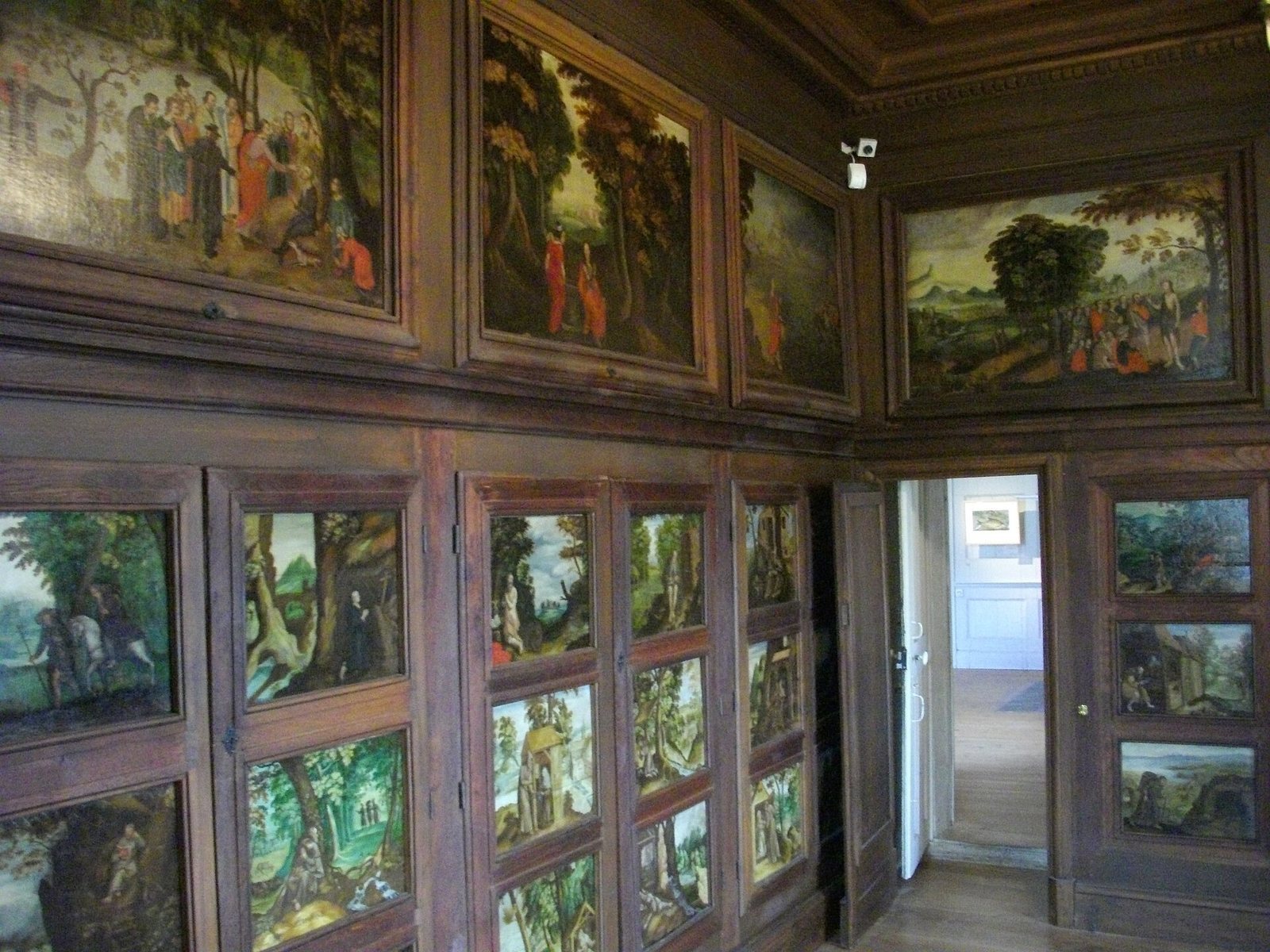
In the seventeenth century, the residence belonged to Pierre de Sérent, a magistrate who presided over the royal court at Vannes. He commissioned the Desert Fathers chamber and its wooden panels.
Museum and preservation
The Société polymathique du Morbihan, a learned society based in the region, acquired Château-Gaillard in 1912 to establish a museum. President Raymond Poincaré officially opened its new collections on 22 September 1914. Since 2000, the society has leased the building to the municipality of Vannes for the city’s history and archaeology museum, which presents permanent archaeological collections.
Château-Gaillard has been classified as a historic monument since 1913. The Stone of Justice associated with the building received the same designation in 1937.
Remains
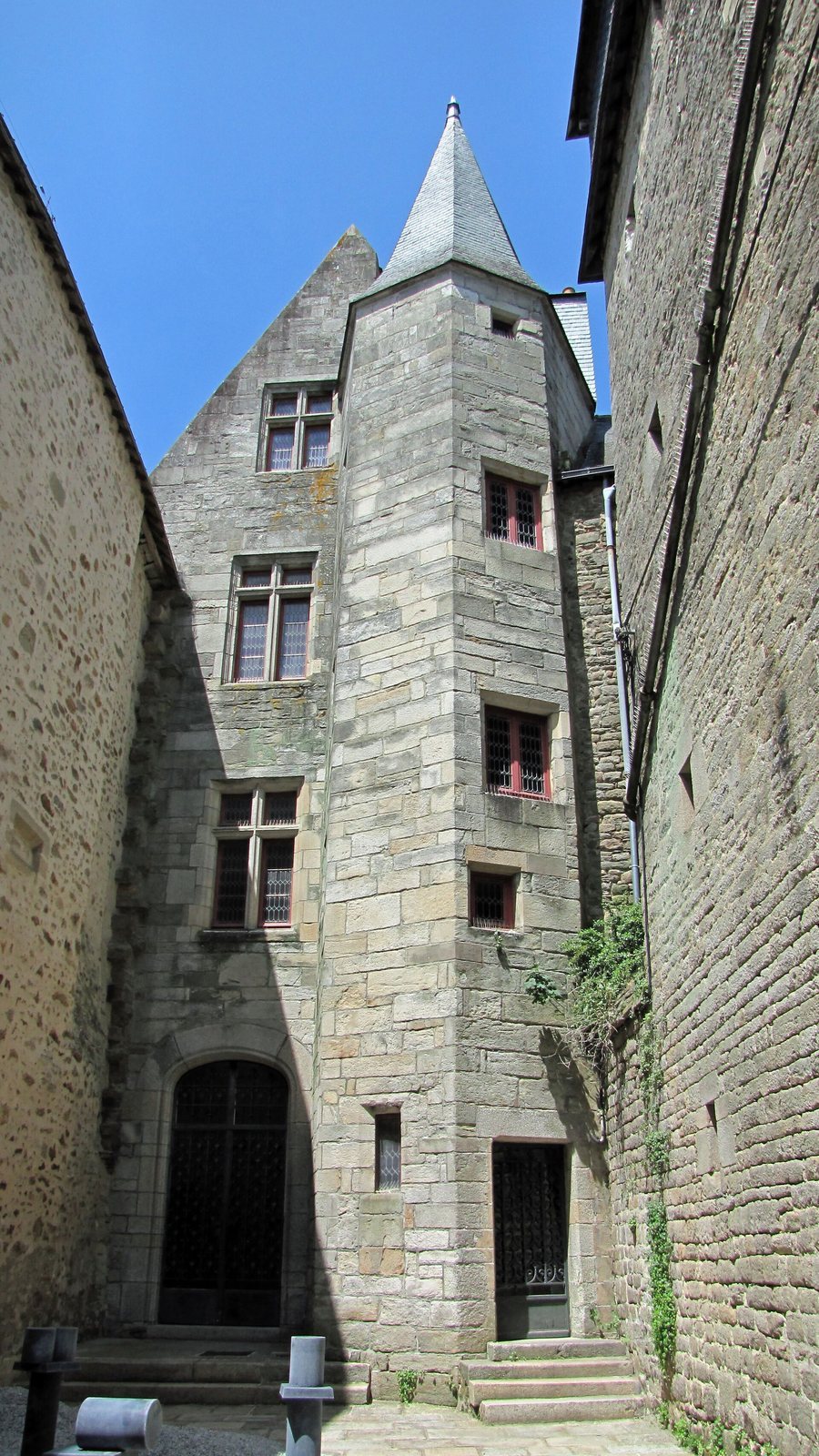
The building has two main residential blocks with mullioned windows. A polygonal stone tower contains a spiral staircase, and a narrower staircase at the rear connects the different levels. Renaissance decoration and woodwork, along with a coffered ceiling and a timber roof frame shaped like a boat’s hull, contribute to the building’s surviving interior character.
Residential architecture
Blocks and staircases
The two residential blocks are served by the spiral staircase set within the polygonal stone tower. A second, narrower spiral staircase at the rear provides a connection between the building’s levels.
Interior and roof
Renaissance paintings and woodwork decorate the interior, which also includes a coffered ceiling. Above it, the roof rests on a timber frame shaped like an overturned boat’s hull.
Panels and courtyard stones
Desert Fathers chamber
The chamber contains 66 wooden panels depicting countries and historical periods. Their images were based on engravings that reproduced works by the Flemish painter Maarten de Vos. The Desert Fathers were early Christian ascetics associated especially with the deserts of Egypt.
Stone of Justice and other stones
The Stone of Justice, a Breton memorial associated with the Lande de Justice at Crach, was formerly displayed in the courtyard facing Rue Noé. Other stones found in Morbihan were also displayed there, including upright Breton markers and a milestone.