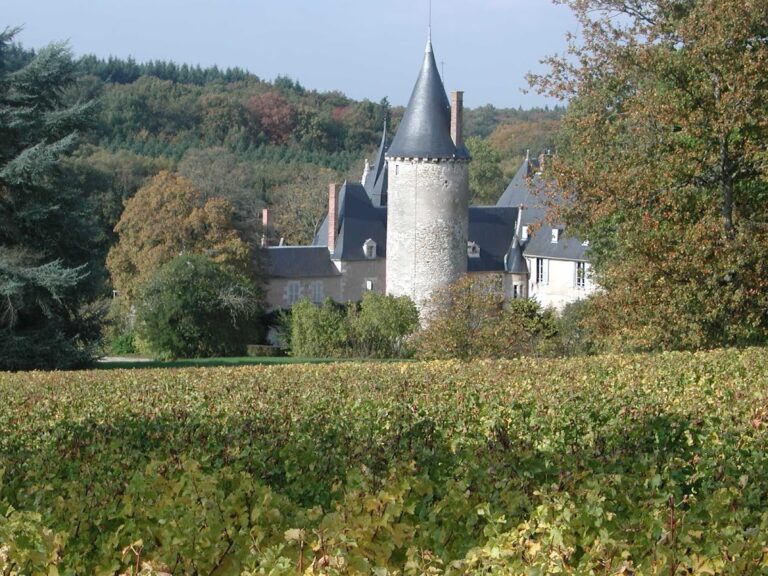
Château de Beaujeu: A Renaissance Seigneural Residence in France


Site at a Glance
- Rating
- 4.3
- Popularity
- Low
- Country
- France
- Primary era
- Modern
- External website
- Open
- Eras represented
- Early Modern, Modern
- Civilizations
- French
- Site type
- Domestic
- Remains
- Castle
On this page9 sections
History
Château de Beaujeu is a historic seigneurial residence in Sens-Beaujeu, France, built in 1566 beside the Sauldre as a residence for a landed nobleman. Its history is linked to the House of Sully, a major noble family of the medieval lordship of Beaujeu-en-Berry, and to the later Rochechouart, Mesnil-Simon, Mesgrigny, Bouthillier de Chavigny, and Pommereau families.
Medieval Origins
In the mid-eleventh century, Eudes I of Sully, lord of Beaujeu-en-Berry, established the Château de la Motte at the site now known as La Motte in Sens-Beaujeu. This motte castle was a medieval fortified settlement centred on an artificially raised earthen mound and protected by one or more enclosures made from sharpened wooden stakes. It was also called the Sully motte or Chapel motte.
Toward the end of the thirteenth century, Eudes III of Sully abandoned the motte castle and built a second castle at the former site of Vieux Beaujeu in neighbouring Neuilly-en-Sancerre. Ruins of that later castle remain visible. Beaujeu subsequently passed through a junior branch of the Sully family and, through marriage, came to the Rochechouart and Mesnil-Simon families.
The Sixteenth-Century Residence
In 1566, Jean du Mesnil-Simon abandoned the old castle of Beaujeu and commissioned the present château at the foot of the hill of Sens, beside the Sauldre. The new building was conceived as an imposing seigneurial residence, replacing the earlier castle associated with the family’s lordship.
From the Mesgrigny Family to the Revolution
The Beaujeu estate passed to the Mesgrigny family through the marriage in 1656 of Jean-François de Mesgrigny, marquis of Vendeuvre, to Françoise-Henriette du Mesnil-Simon, heiress of Beaujeu. Jean-François also held the royal titles of grand écuyer tranchant and bearer of the King’s white cornette, offices connected with royal service and ceremonial duties.
In 1688, their daughter Louise-Françoise de Mesgrigny married Jacques-Léon Bouthillier de Chavigny, who assumed the title of marquis of Beaujeu. The château remained with the Bouthillier de Chavigny family until the French Revolution. At that time, it belonged to their granddaughter Gabrielle-Pauline Bouthillier de Chavigny, Countess of Adhémar and a lady of Queen Marie Antoinette’s household.
The Pommereau Ownership
Pierre-Maurice de Pommereau, treasurer-general of the finances of the Bourges generality, bought the château from the Countess of Adhémar in 1809. His descendants continued to own and inhabit the property.
After acquiring it, Pierre-Maurice de Pommereau began major embellishment works, which his son Marcellin completed. The scale of these changes and the interior decoration brought renewed prominence to Sens-Beaujeu and attracted commerce and crafts to the village. Château de Beaujeu was listed as a historic monument in 1981.
Remains
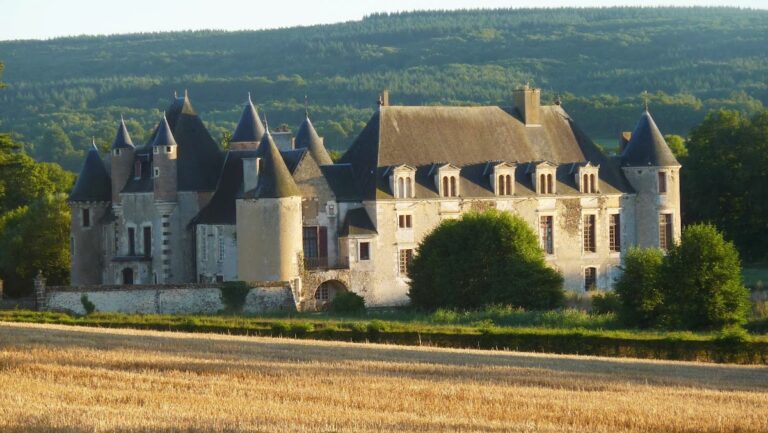
Château de Beaujeu stands beside the Sauldre in a pastoral setting. The present ensemble combines surviving elements of the sixteenth-century residence with a coherent neoclassical remodelling carried out during the Bourbon Restoration, the period when the Bourbon monarchy returned to France after Napoleon, chiefly between 1814 and 1830.
Sixteenth-Century Structure
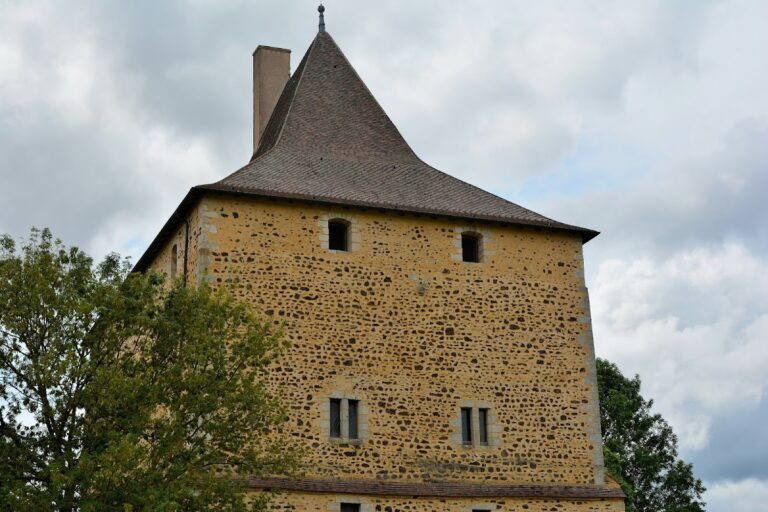
Part of the château’s original infrastructure survives, including the foundations of the seigneurial dwelling and two towers. These remains belong to the building commissioned in 1566. The earlier residence had a medieval appearance, but later work altered its facades and redecorated its interiors, leaving the sixteenth-century fabric incorporated into the present architectural ensemble.
Restoration-Era Interiors and Grounds
The complete refurbishment carried out during the Bourbon Restoration gave the château its present character. Its interior decoration and remodelled facades follow a consistent neoclassical style, while part of the earlier structure was retained. The ensemble is unusually well preserved in its architectural form.
Moats surrounding the château were visible on a plan from the late eighteenth century and were later filled in. A sixteenth-century dovecote, a building designed to house pigeons on a seigneurial estate, also survives within the property. The buildings around it were largely rebuilt between the late eighteenth and early nineteenth centuries.
Earlier Castle Sites
The medieval castle sites connected with Beaujeu remain part of the wider physical history of the estate. At La Motte in Sens-Beaujeu, the raised mound of the former motte castle was associated with defensive wooden enclosures. At Vieux Beaujeu in neighbouring Neuilly-en-Sancerre, the ruins of the later castle built by Eudes III of Sully remain visible at its former location.
Nearby sites