Château de Vallière: A French Estate and Country Residence
Site at a Glance
- Popularity
- Medium
- Country
- France
- Primary era
- Modern
- Eras represented
- Medieval, Early Modern, Modern
- Civilizations
- French
- Site type
- Domestic
- Remains
- Castle
On this page24 sections
History
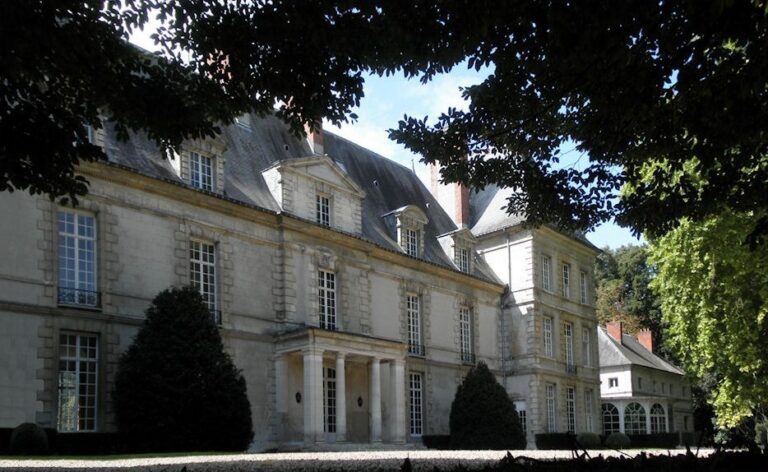
Château de Vallière is a country residence in France, built in 1894 for Agénor de Gramont and his wife, Marguerite de Rothschild. Its eclectic design combines a neo-Gothic silhouette, a nineteenth-century revival of medieval Gothic, with Renaissance-inspired forms. The surrounding Grand Parc, developed under Joseph Bonaparte, became a reference for aristocratic landscape design in Europe.
Estate and landscape before 1814
The Vallière estate grew from the larger Mortefontaine and Montmélian property. Joseph Bonaparte, Napoleon I’s elder brother, acquired the estate on 20 October 1798, when it covered 569 hectares. By the time he left in 1814, it had expanded to more than 1,500 hectares.
Landscape work had begun around 1780 under financier Louis Le Peletier de Morfontaine. From 1808 to 1814, architect Jacques Cellerier further shaped the Grand Parc for Joseph. The work transformed the estate’s land and waterways into a carefully composed aristocratic landscape.
Changes of ownership and the château’s construction
Joseph left for exile in 1814 and transferred the estate to his administrator, Madame de Villeneuve, through a fictitious sale. She rented much of it to the Prussian baron Georg-Arthur von Schickler, who had hoped to purchase it. In 1829, Louis Henri de Bourbon, the last Prince of Condé, bought the property. After his death, his mistress, Sophie Dawes, Baroness de Feuchères, received it as a gift in 1837. Her ten-year-old goddaughter, Sophie Thanaron, inherited it in 1840 and later married Henri Corbin.
The Corbin family decided in 1892 to sell about 1,500 hectares, the largest part of the Mortefontaine and Montmélian estate, to Agénor de Gramont. They kept Château de Mortefontaine and the woods on Montmélian hill. Gramont, the 11th Duke of Gramont, commissioned Château de Vallière as a home for himself and Marguerite de Rothschild. Alfred-Philibert Aldrophe designed the residence, which was completed in 1894.
Family life and public events
Hunting was a major activity on the estate in the nineteenth and twentieth centuries, alongside forestry. The duke organized hunts for pheasants, ducks, and deer, while the duchess arranged performances of plays by Eugène Labiche and staged scenes in which performers posed like figures in paintings. A horse-drawn omnibus connected the railway station with the château. The estate welcomed visitors under Joseph Bonaparte and Madame de Villeneuve, and a guide to the park appeared in 1825. It continued to receive visitors under the dukes Agénor and Armand de Gramont.
In 1904, Armand de Gramont, then Duke of Guiche, married Countess Élaine Greffulhe at the estate. His friend Marcel Proust dined with the family on the château terrace on 14 July that year. From there, Proust saw the towers of Senlis Cathedral beyond the ponds and trees.
War and twentieth-century changes
On 2 September 1914, an advance guard of four battalions from the 3rd Infantry Division crossed Ermenonville Forest and entered the park at nightfall. There it encountered the rearguard of the 56th Reserve Division, including the 354th Infantry Regiment and the 69th Light Infantry Battalion. During the capture of Mortefontaine, the 2nd and 9th Grenadiers suffered two deaths and thirty wounded. The Battle of Mortefontaine is regarded as the battle fought closest to Paris and the furthest point reached by the enemy advance.
After Agénor died in 1925, his son Armand became the 12th Duke of Gramont. Henri-Armand succeeded him as the 13th duke in 1962. The estate shrank during the twentieth century: land was taken for a golf course in 1913 and 1927, 190 hectares went to the CERAM automotive test tracks in 1956, and housing developments appeared near Mortefontaine from the 1970s. Château de Vallière and the Grand Parc had passed out of the family’s ownership by 1982. The château and park are now owned by Emirati businessman Mahdi Al Tajir.
The château’s façades and roofs were added to the supplementary inventory of historic monuments in 1975. Since 1961, a 330-hectare portion of the park has held protected natural-site status.
Remains
The estate combines a château on raised ground with a hilly, wooded park shaped by springs, streams, ponds, meadows, heath, and exposed rock. Its central area surrounds the residence, while the Roche Pauvre and Grange sectors extend to the west and south of the D607. Planting and alterations to the terrain brought local and introduced species together within this designed landscape.
The residence and estate buildings
Château de Vallière
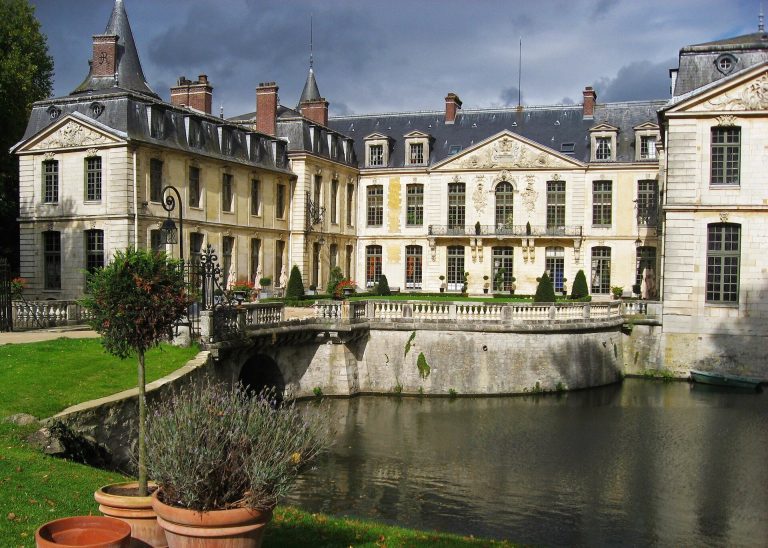
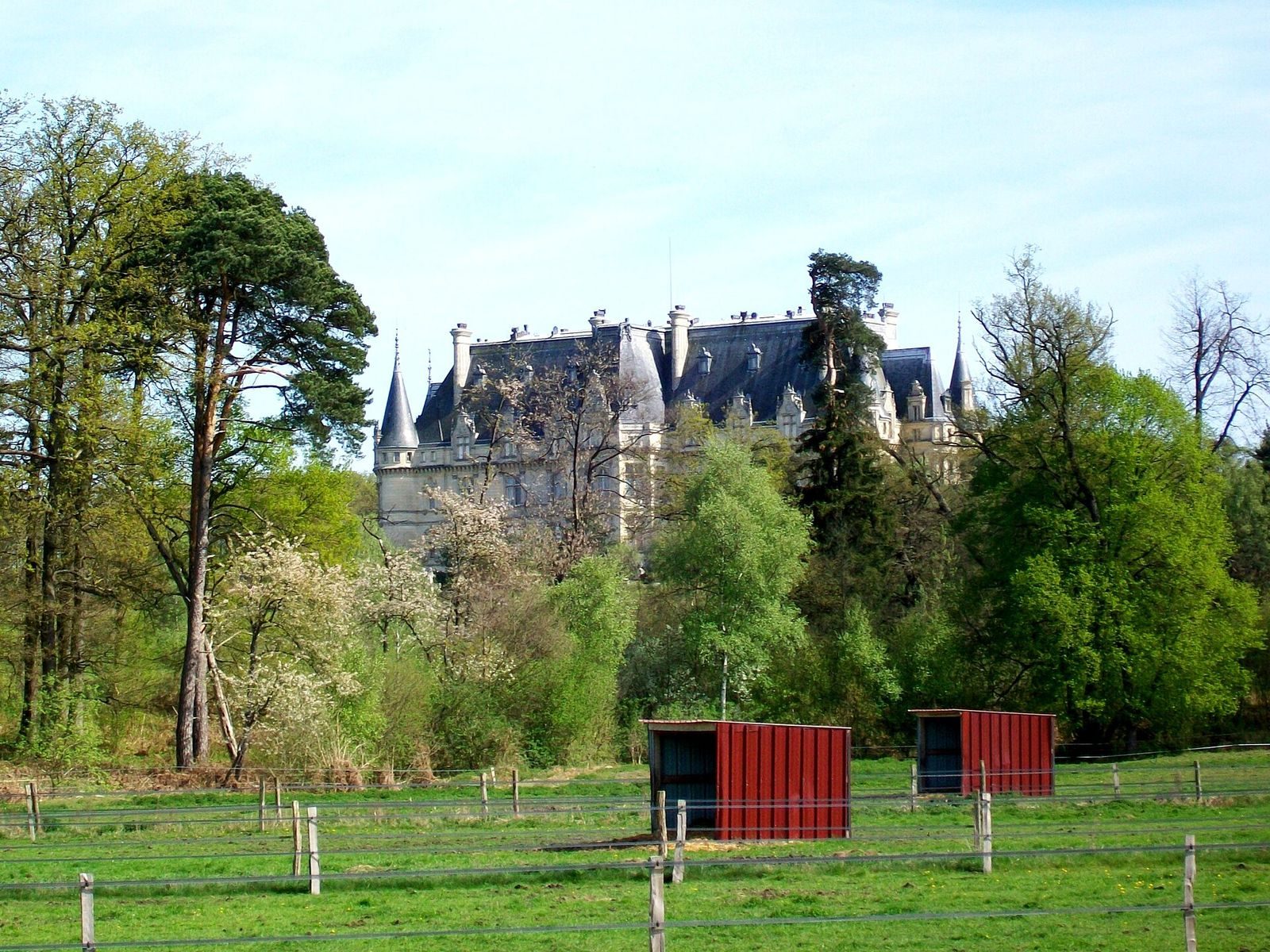
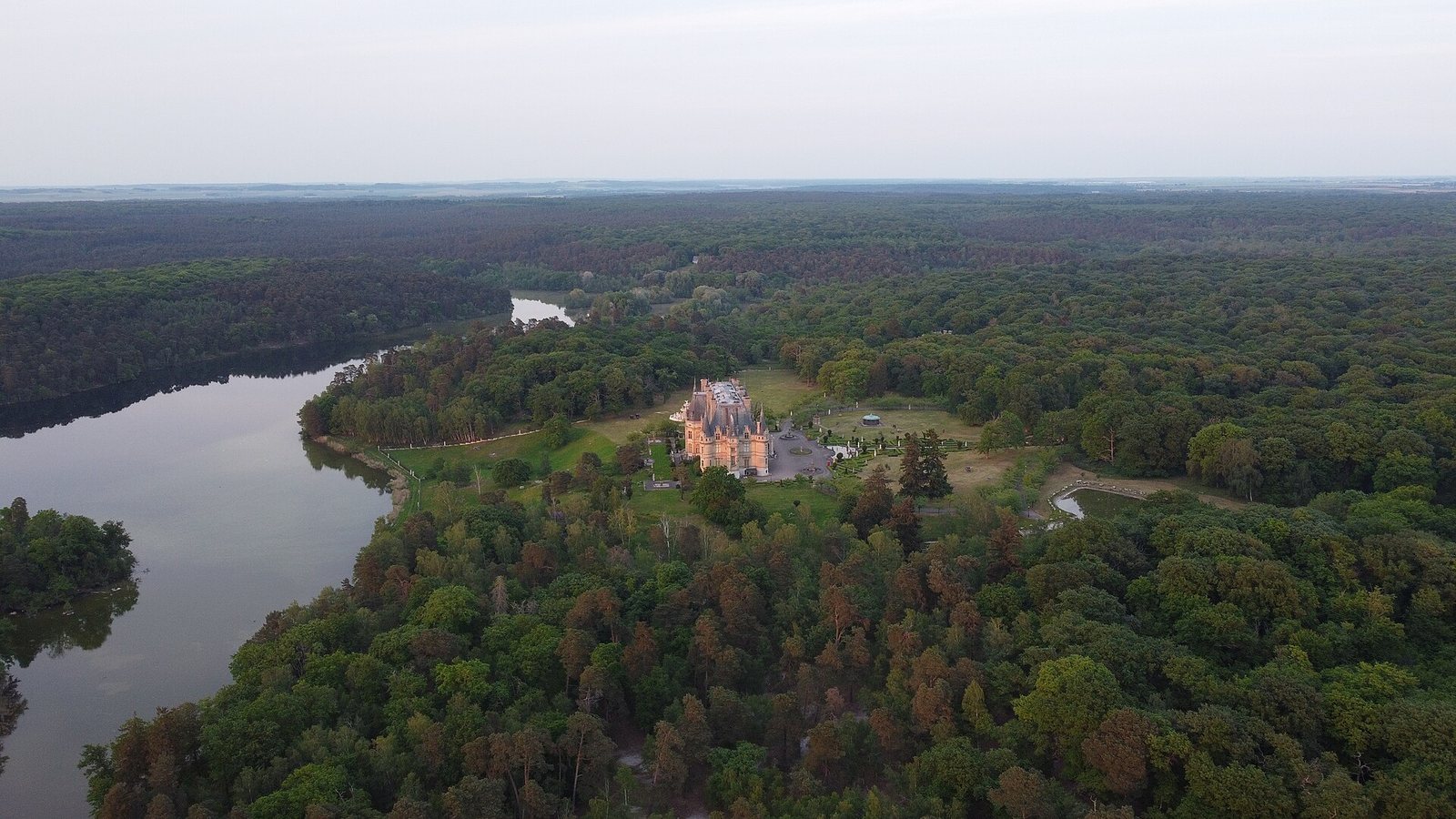
The château stands on a mound overlooking the Étang de l’Épine and Molton Island, with its principal entrance facing northeast. Its exterior has four corner towers and Renaissance-style façades, windows, roofs, and chimneys inspired by Loire Valley châteaux. The towers particularly recall Château d’Azay-le-Rideau. At thirteen metres deep, the building has room for an interior chapel and theatre. Its thirty rooms each have a bathroom and toilet, while glazed openings at the centre of the roof bring overhead light to the principal reception rooms. The roof is arranged as a terrace.
Outbuildings and entrance pavilion
The château’s outbuildings stand 200 metres to its east and include architecturally distinguished stables. Hôtel d’Ormesson, a concierge pavilion, is near the main gate at Mortefontaine.
Ponds, islands, and waterways
The park’s water system
Four ponds structure the park. The Étang de l’Épine, also called the Grand Lac, lies to the north and reaches up to 400 metres across. It receives water from the Thève, a small river in the Oise area. The Étang de Vallière lies southwest of it, the smaller Étang des Islettes, also known as Étang Colbert, is south of Vallière, and the Étang de la Grange is farther west. Numerous springs feed the latter three ponds, including the underground Fontaine Morte. Monks of Chaalis Abbey, a medieval Cistercian monastery, created the ponds in the twelfth century. Le Peletier later added canals to connect them, and the ponds were painted by Antoine Watteau and Camille Corot.
Molton Island and other park islands
A twelve-metre-wide canal encircles Molton Hill to form Molton Island in the Étang de l’Épine. Joseph Bonaparte had the canal dug in 1806. Vines had grown on the hill during the Middle Ages, and its name is associated with the former abundance of horseflies there. Local tradition links the name Cave du Diable to a castle that may once have stood on the hill. Joseph planned to excavate the site, but rockfalls prevented the work. The Étang de l’Épine has Molton Island and five other islands; the Étang de Vallière has three, and the Étang de la Grange has five. A second canal connects the Vallière and Épine ponds. Boat trips between ponds were organized under Joseph, with a person employed as a “marine guard.”
The former park passage
A passage once connected the Petit and Grand Parcs beneath the present D922. Its entrances remain visible, although the passage was blocked when the Vallière estate was created in 1892.
Park structures and landscape features
Rocks, grottoes, and smaller features
Near the entrance, the Grand Rocher measures ten metres long and four metres high. It carries a dedication from a poem by Abbé Delille, translated as “Its indestructible mass has wearied time.” Nearby, the Grotte des Amours may have formed naturally. The Cabane du Pêcheur, or Fisherman’s Hut, stands east of the dam between the Colbert and Vallière ponds. Fontaine Claudine includes a figure of a water nymph.
Pavillon de Vallière and Bains de Diane
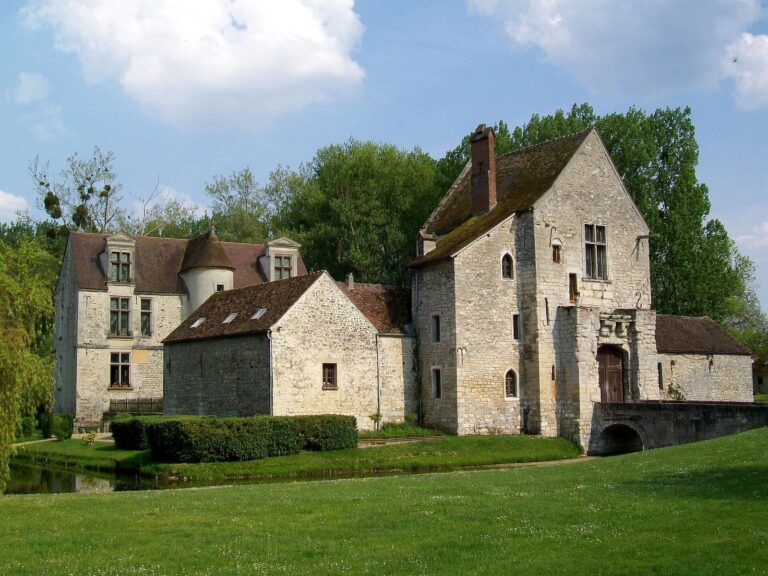
Pavillon de Vallière stands on the dam between the canal from the Étang de l’Épine and the Étang de Vallière, at the site of a medieval fortified manor. Its two main façades face the water. One side is known as the Salon de Vallière, while the other, facing the pond, is called the Chalet Suisse. The pavilion survives in an abandoned condition. Across from the château, the Bains de Diane occupies an island. The rustic hut sits in a natural harbour screened by rocks and has undergone restoration.
Roche Pauvre and the Grange sector
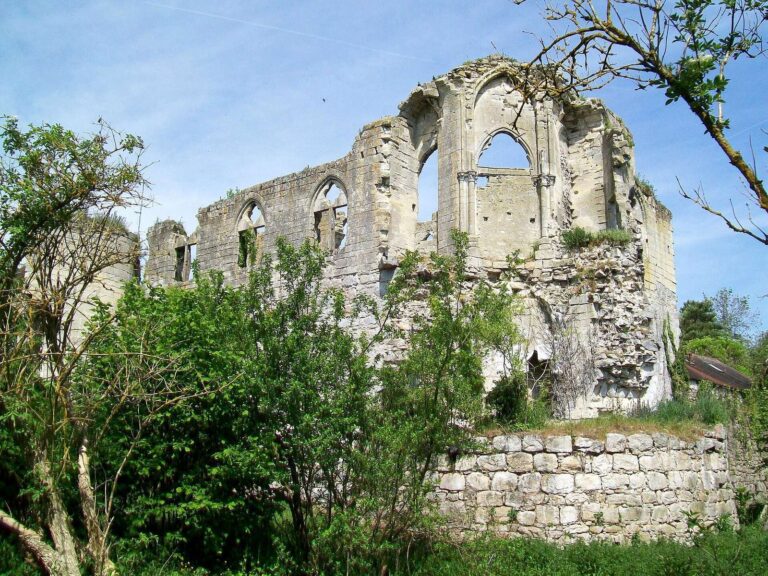
Between the Étang de la Grange and the D607 stands the Tour de la Roche Pauvre, also called the Tour Rochefort. This ornamental ruin is the only park folly visible from public land. The Grange, a large farm building west of the D607 and outside the present park, also survives. The estate’s other facilities included a kennel, a pheasantry for keeping or breeding pheasants, orchid greenhouses, the Charlepont stud farm, a gardener’s house, and utility buildings.
Stone bridge
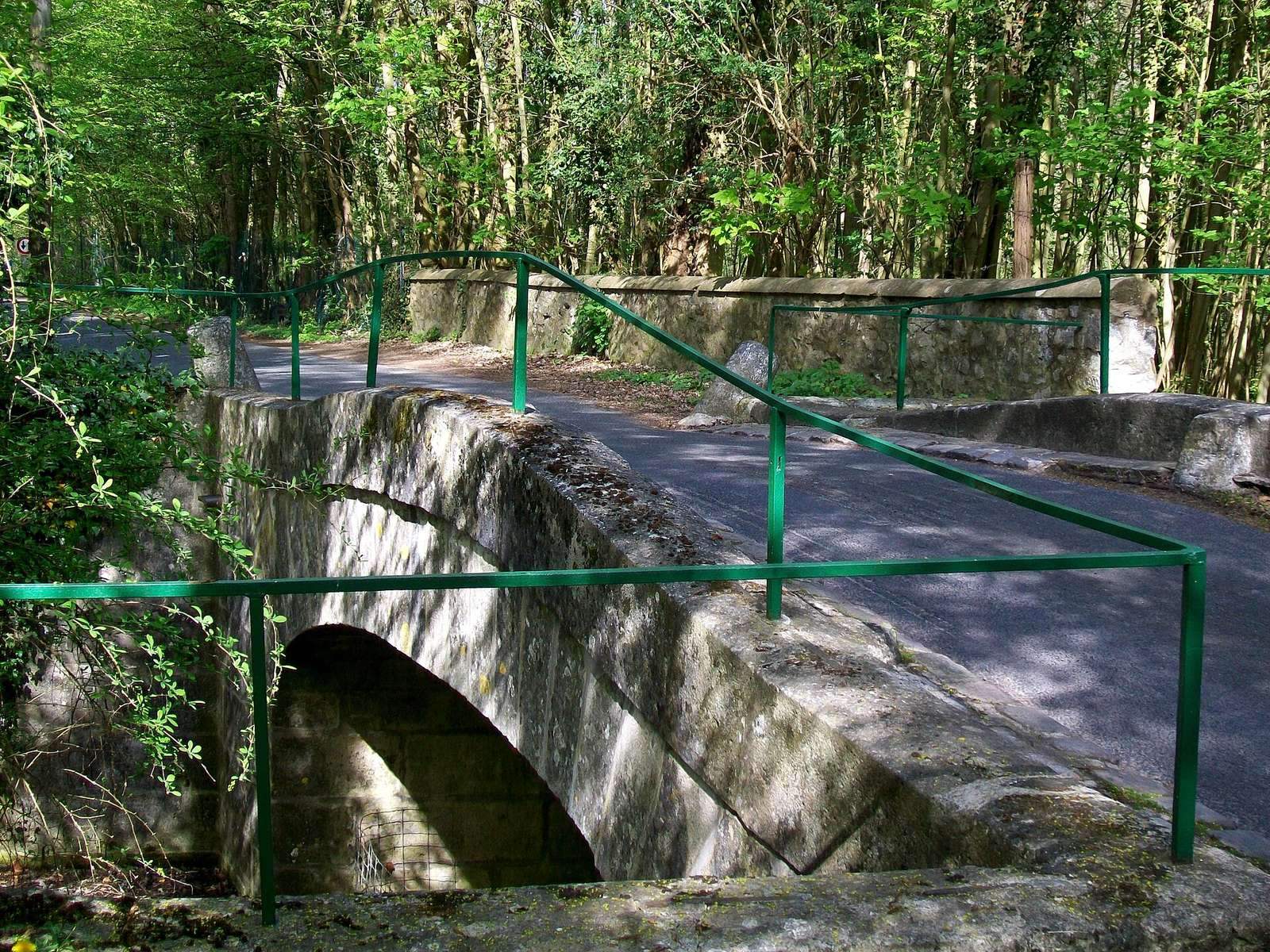
A surviving stone bridge in good condition crosses the artificial canal between the Vallière and Grange ponds.
Chapel and memorials
Sainte-Marguerite-des-Grès
Sainte-Marguerite-des-Grès stands on a hill 102 metres high, about 100 metres from the state forest. Rocks, heath, heather, and birch surround it. This area is described as the part of the Grand Parc that has kept its original character. A pilgrimage chapel stood here by the twelfth century; the present building replaced it in 1852–53.
First World War memorials
The Gramont family erected a monument to its dead from the First World War. A separate small memorial, leaning against the château, commemorates three soldiers of the 354th Infantry Regiment killed on 2 September 1914: Maximilien Delion, Édouard Flamand, and André Sardat.
Interiors and the Gramont collection
Paintings and furnishings
The château’s recorded furnishings included family portraits by Giovanni Boldini and Philip Alexius de László, cloisonné objects decorated with enamel held within metal divisions, and furniture and objects originating in the looting of the Old Summer Palace in Beijing. A seventeenth-century tapestry bearing the arms of Gramont and Guiche was in the dining room around 1970. In 1902, Agénor commissioned de László to paint two canvases, each 2.20 metres high, for that room. One showed three men of the family and the other three women. The paintings appeared at the Paris Salon in 1903 and were cut up at Armand’s request in 1929. Portraits of the ducal couple are now in the Musée de Pau.
The Collection de Gramont
The Collection de Gramont comprised 186 paintings and graphic works, chiefly family portraits, along with sculpture, furniture, and other objects. Around 1928, a countess gave her brother, the Duke of Gramont, memorabilia and sculptures associated with their ancestor Alfred d’Orsay. These included a screen bearing the Orsay–Gramont monogram, an equestrian portrait of the Duke of Wellington, busts, drawings, and small objects. They were arranged in the Salon d’Orsay, and about thirty sculpted portraits by d’Orsay joined the collection. Other pieces included an early eighteenth-century Beauvais tapestry with the arms of Boufflers and Gramont, acquired around 1930, and heraldic coverings made for the horses of the Marshal of Gramont, a senior French military commander.
The collection remained at Vallière after the 12th Duke’s death in 1962 and until the château was sold in 1981. The family archives went to the French National Archives that year. The portrait and memorabilia collection was placed with the City of Bayonne on a renewable forty-year deposit, made permanent in 1992. After four decades in the reserves of the Domaine national du château de Pau, it moved in 2023 to the Musée Basque et de l’Histoire de Bayonne.