Château de Thuillières: A Classical Château in France


Site at a Glance
- Rating
- 4.5
- Popularity
- Very Low
- Country
- France
- Primary era
- Early Modern
- External website
- Open
- Eras represented
- Medieval, Early Modern
- Civilizations
- Duchy of Lorraine, Holy Roman Empire
- Site type
- Domestic
- Remains
- Elite Residence
On this page6 sections
History
Medieval origins and eighteenth-century rebuilding
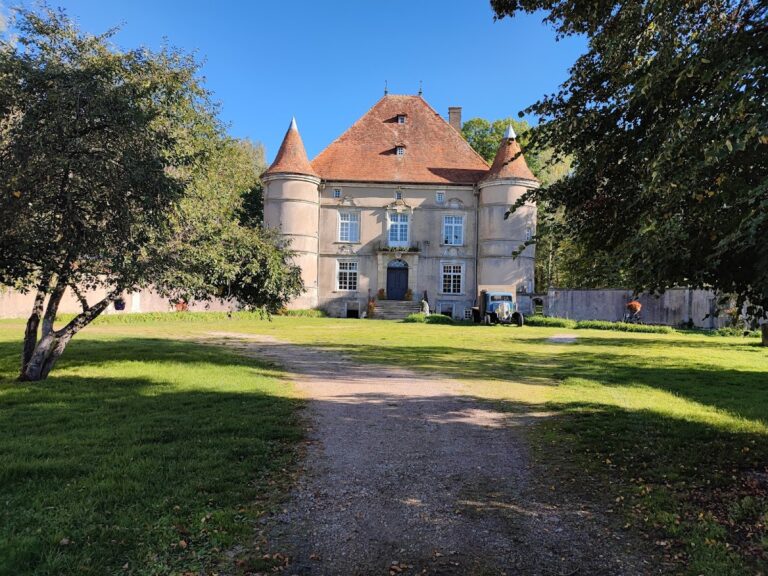
A medieval castle stood below the village of Thuillières in France before Germain Boffrand built the present Château de Thuillières in the Classical style between 1722 and 1725. The earlier castle had been built by Simon de Thuillières in 1328. By the beginning of the eighteenth century, it belonged to Marc de Beauvau-Craon, Marquis, governor, and grand equerry of Lorraine, but had become uninhabitable.
Because of Beauvau-Craon’s debts, the property was seized. Germain Boffrand bought it in 1722 for 10,000 livres and demolished the medieval castle, reusing its materials in the construction of the present residence. Boffrand was an eighteenth-century French architect associated with major Classical buildings in Lorraine and elsewhere in France. He wanted a residence in Lorraine, where he often stayed while working on projects that included Haroué Castle, Nancy Cathedral, the Nancy Mint, and La Favorite.
Boffrand’s ownership was troubled by continuing conflicts with villagers and local lords. After the death of his Lorraine patron, Duke Leopold I, in 1729, Boffrand eventually sold the property again in 1736. Jean-François d’Hablenville, an equerry to the Duke of Lorraine, then acquired the château. At the time of the French Revolution, it belonged to the Randenrodt family.
Later owners and preservation
Charles de Finance, a member of a family of glassmaking gentlemen, bought the château in 1874. He occupied its southern part and rented the northern part to agricultural tenants. Bernard Diné acquired the property in 1973 and undertook substantial work, restoring the roof in the traditional manner, repairing some ceremonial rooms, removing later ancillary buildings from the main courtyard, and laying out the park.
Matthieu Cognet became the owner in 1985. The château and its pigeon loft were entered on the French register of historic monuments on 25 June 1986. The façades and roofs were classified on 28 August 1989. In France, inscription and classification are distinct levels within the legal system protecting historically or architecturally important heritage.
The château faces Saint-Baslemont Castle in the neighboring commune of Saint-Baslemont. Its museum dedicated to Ève Lavallière presents the life and conversion to Catholicism of the actress associated with Paris’s Théâtre des Variétés. Lavallière spent the final part of her life at Thuillières between 1920 and 1929.
Remains
Exterior and grounds
Château de Thuillières is a rectangular building whose Classical design emphasizes symmetry and proportion. The eastern façade faces the main courtyard and the village, presenting a severe composition centered on a triangular pediment. On the western side, the garden façade has a semicircular projection above a double-flight entrance stair. A fountain in the Louis XIV style stands before it. Louis XIV was king of France from 1643 to 1715, and his reign is closely associated with formal French classical architecture.
Pigeon loft and interior spaces
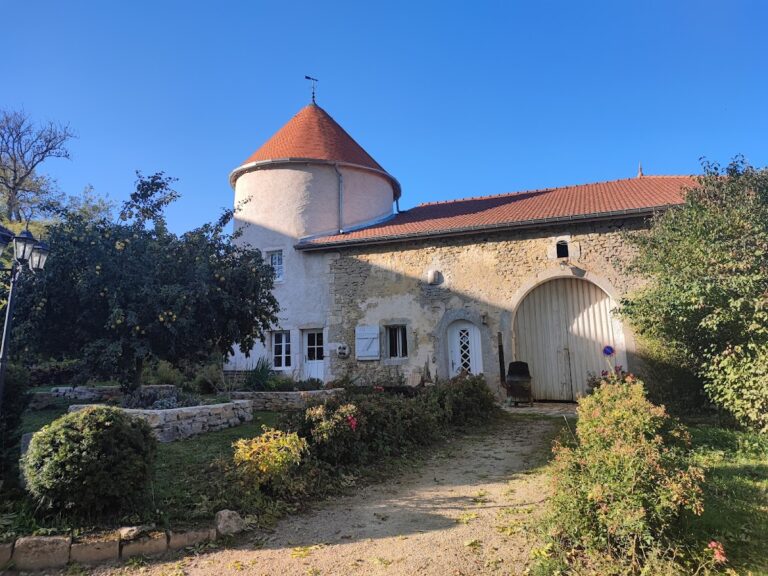
Beside the northern façade stands an eighteenth-century pigeon loft built into a former fourteenth-century tower. It retains 700 pigeon niches, known as boulins, together with a revolving ladder. Inside the château, the central principal salon is oval, with windows overlooking the park. The Baroness of Thuillières’s bedroom contains a Polish-style bed, a dressing table, and a writing desk.
The château also contains a chapel with religious furnishings, the Ève Lavallière Museum, an attic extending across the entire roof area, and cellars.