Thégra Castle: A Medieval Seat of Local Lordship
Site at a Glance
- Rating
- 5
- Popularity
- Very Low
- Country
- France
- Primary era
- Medieval
- Eras represented
- Medieval, Early Modern
- Civilizations
- County of Toulouse, French
- Site type
- Domestic
- Remains
- Castle
On this page8 sections
History
Church, early lords, and the medieval castle
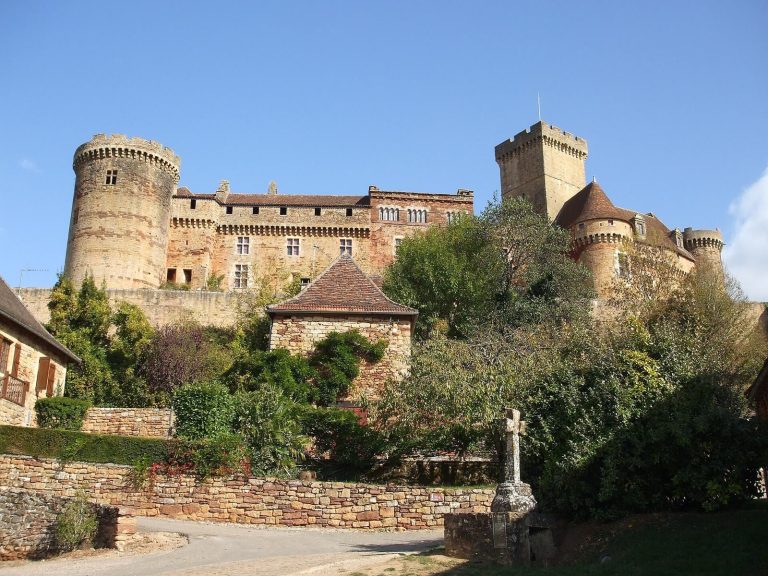
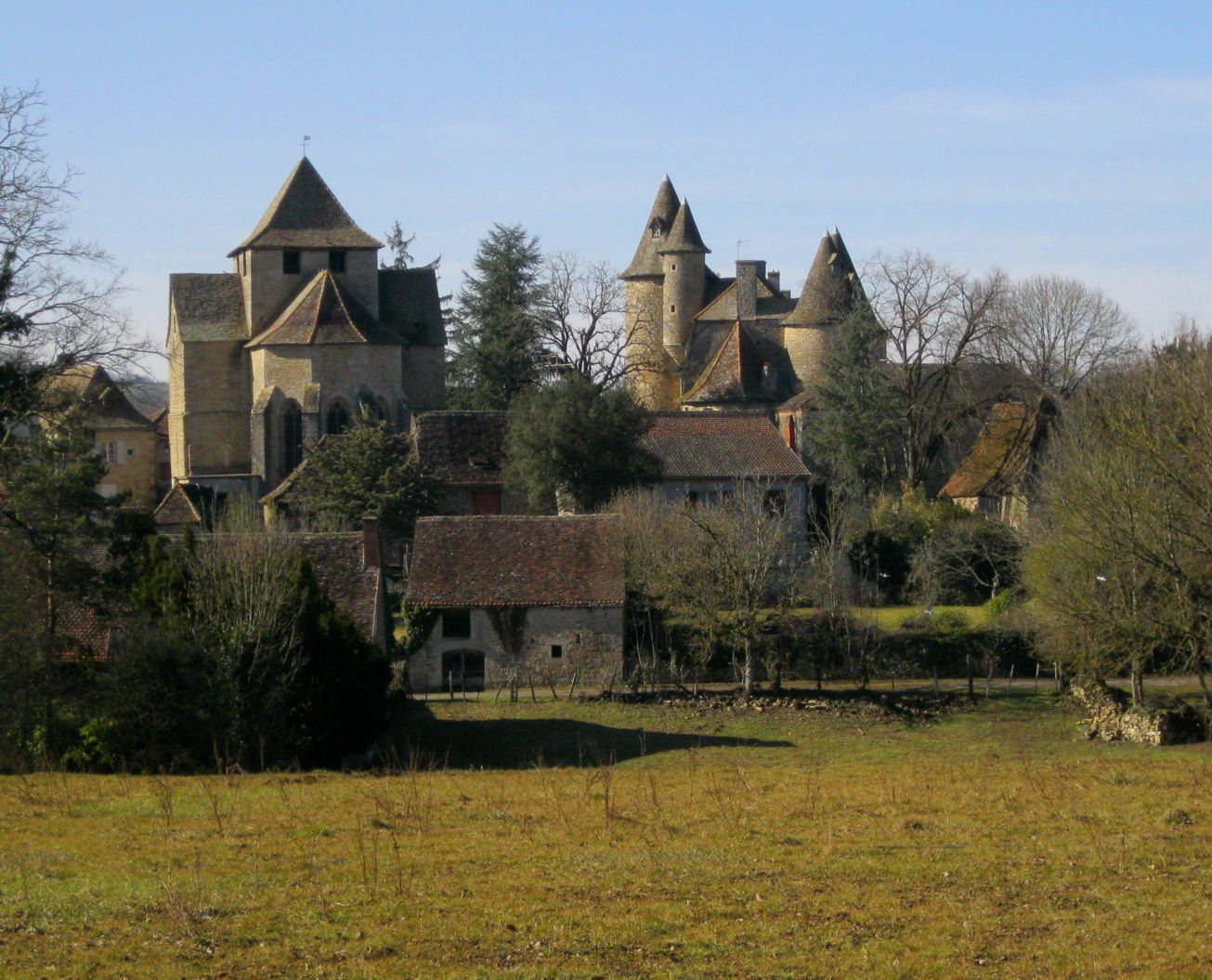
Thégra Castle (Château de Thégra) is a castle in Thégra, France, whose origins probably date to the 11th century. Its history is closely tied to the local lords who held Thégra and its judicial rights. In 1106, a papal bull confirmed the Cahors clergy chapter’s possession of revenues from the Church of Saint-Barthélemy. The chapter was a corporate body of clergy, and the church served as the centre of an ecclesiastical district overseen by an archpriest, a senior church officer. The district was said to have originated in the time of Saint Didier, bishop of Cahors, and included more than 60 parishes, among them Rocamadour.
In the 12th century, the lordship and judicial rights of Thégra passed from the viscounts of Turenne to the Gasc family through a marriage alliance. The viscounts, hereditary nobles ranked below counts, may have granted the family Thégra and Bétaille. Guillaume I Gasc was living in 1120; his descendants included Guillaume III, who gave property to Obazine Abbey in 1181, and Bertrand II, lord of Bétaille and Thégra. During the abbacy of Ebles de Turenne, head of a monastic community, pilgrimage to Rocamadour expanded. Because the shrine lay within Thégra’s ecclesiastical district, Ebles asked his Gasc relatives to protect it. Bertrand II later guaranteed an agreement between Raymond IV de Turenne and Matfred de Castelnau in 1221.
By about 1284, several lords held shares in Thégra. They included Guillaume de Valon, Arnaud Stephani, Rigal de Cavagnac, and Géraud de Cornil, who was the dominant lord. Shares passed between the Gasc, Cornil, Cavagnac, and Valon families through sales, inheritance, and marriage. The Valons’ influence grew through the marriage of Bernard Stephani de Valon and Guillemette de Valon, heiress of the Valons of Lavergne. Their sons held interests in Thégra, and later family settlements addressed claims over Thégra and Bétaille. Galaubie de Valon became the dominant lord after marrying Géraud de Cornil’s daughter.
Fortification, rebuilding, and disputed authority
Guérin de Valon fortified the castle between 1342 and 1390. By the end of the Hundred Years’ War, a prolonged series of conflicts between the English and French crowns, it lay in ruins. The Valon family had already moved to Rocamadour. Adhémar de Valon, lord of Thégra and a descendant of Jean de Valon and Antonie de Miers, rebuilt the castle in the second half of the 15th century. Thégra had been deserted at the end of the war, so from 1442 Adhémar also encouraged settlement by leasing land to newcomers.
The viscounts of Turenne claimed to be Thégra’s feudal overlords, a claim challenged by the lords of Cazillac. A ruling by the royal court at Bordeaux in 1526 affirmed Turenne’s overlordship. Disputes over the boundary between the two jurisdictions meant that Thégra’s lords were not required to perform homage, the formal act of acknowledging a feudal overlord. They consequently treated the lordship as land held free of such an overlord, and declared themselves subject only to the count of Toulouse and later the king. The boundary dispute ended after the viscounts bought the barony of Cazillac on 3 March 1689. The 1526 ruling was renewed in 1705 and 1735.
After Adhémar, the lordship passed to Antoine de Valon and then to his son Gilles, who married Marie Ricard de Genouillac in 1541. Their daughter Jeanne de Valon married Antoine de Gozon in 1560. In 1574, Antoine de Malleville, a lieutenant of the Protestant captain Bessonie, seized the castle and killed Gozon. Jeanne was forced to marry Malleville, and Thégra served as a Protestant stronghold from 1574 to 1580, during the French Wars of Religion, conflicts between Catholics and Protestants in France. After Malleville was killed in 1577, his lieutenant Pierre de Lagrange took charge, married Jeanne, and had a son with her. Lagrange was killed in 1580. Widowed for the third time, Jeanne regained control of Thégra and married the Catholic lord Henri des Ondes.
Jeanne passed the lordship to her granddaughter Jeanne de Gozon, whose marriage to Jean Gabriel de Gauléjac continued the family line. Their descendant Jeanne Marquèse de Gauléjac married Jacques-Victor de Touchebœuf-Beaumond in 1646. Their daughter Anne married Armand de Durfort in 1670. The lordship was sold in 1699 to brothers Louis and Jean de Lagarde, who sold it in 1731 to François Niocel, a merchant from Saint-Céré. Niocel rebuilt and rearranged the castle during the 18th century.
Revolution and later ownership
During the French Revolution, the castle became state-owned property and was sold to Lavaur. Louis Lavaur lived there in 1836. By 1848 it belonged to the lawyer Jean-Jacques Bergues, whose adopted daughter Céline married Gustave Calmels d’Artensac in 1863. Their son Alain owned the castle in the 1930s. Thégra Castle was listed as a historic monument in 1960.
Remains
Castle sites and surviving layout
The castle’s physical history includes an earlier elevated site and a later plan centred on a residential block with circular towers.
Earlier castle site
The first castle occupied an eminence 800 metres from the site of the present-day village. This location distinguishes the earlier stronghold from the later castle described in the surviving architectural account.
Later château
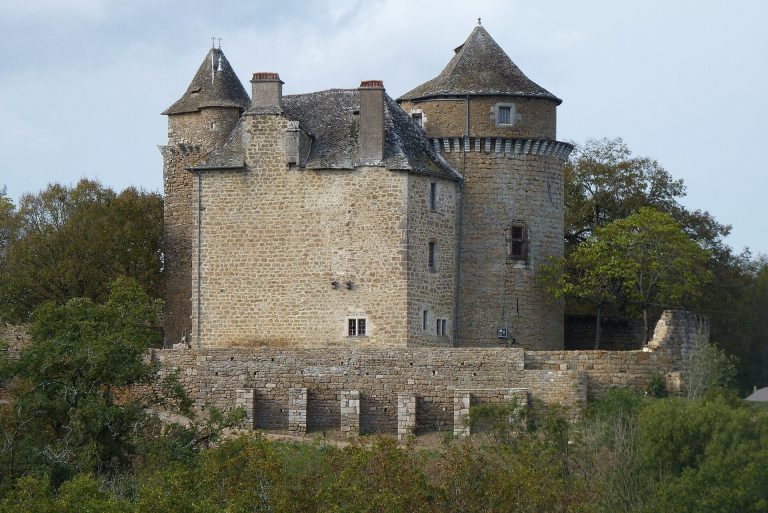
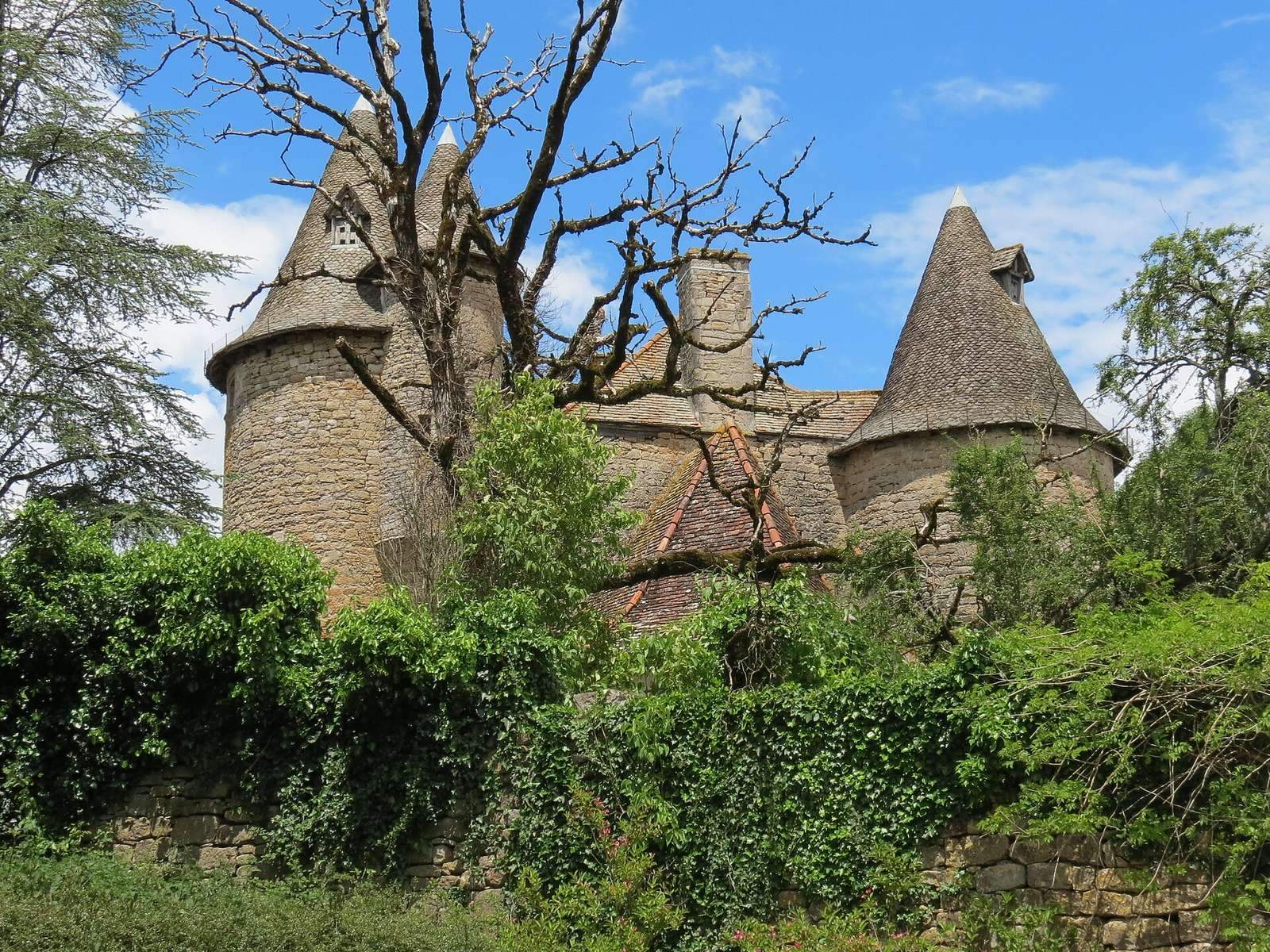
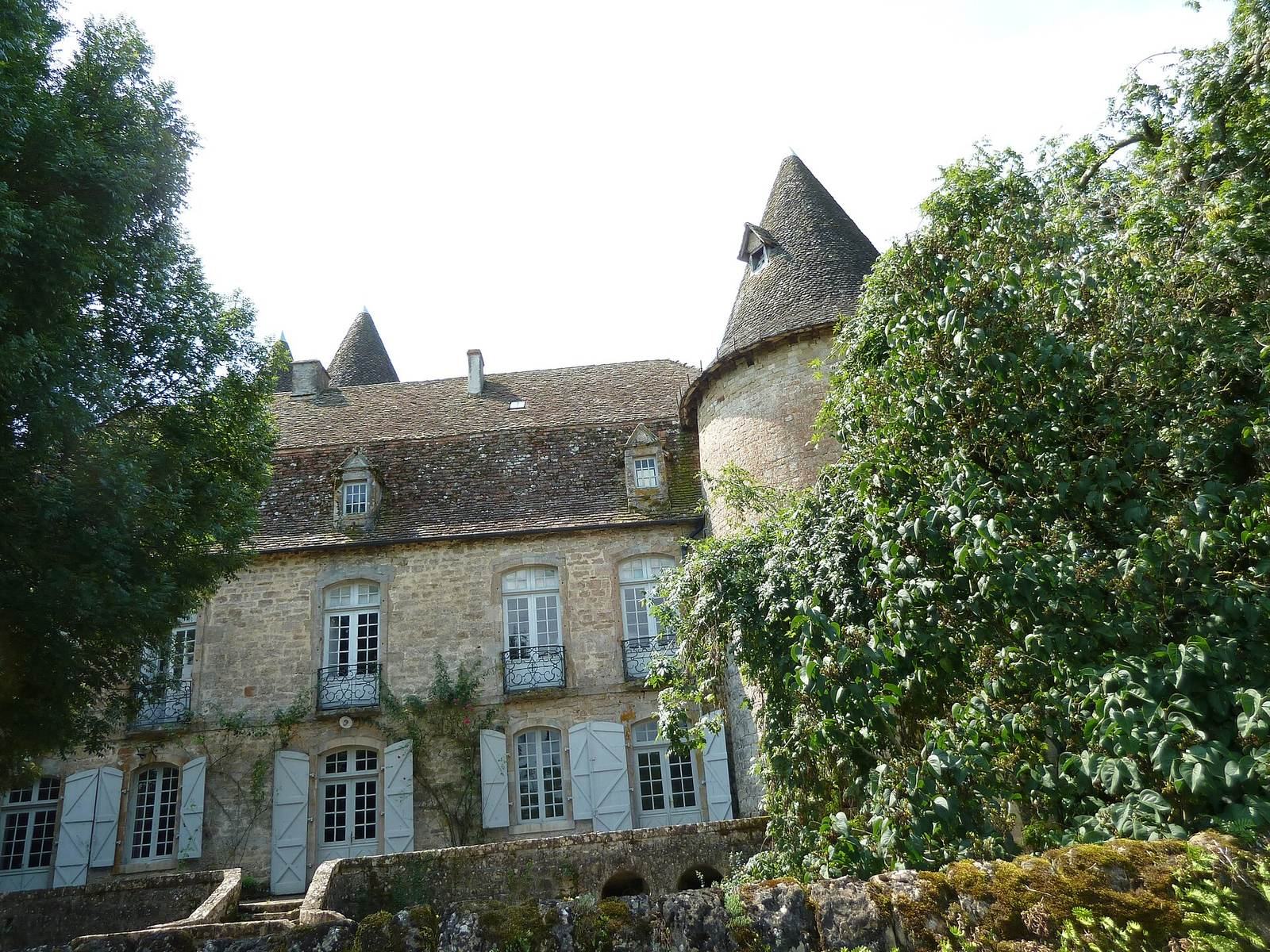
The later castle has a rectangular residential block joined to three circular towers. A spiral staircase in one of the towers serves the building’s floors.