Château de Sibra: A Historic Residence in Lagarde, France


Site at a Glance
- Rating
- 4.8
- Popularity
- Very Low
- Country
- France
- Primary era
- Modern
- External website
- Open
- Eras represented
- Modern
- Civilizations
- French
- Site type
- Domestic
- Remains
- Castle
On this page6 sections
History
From seigneurial estate to family residence
Château de Sibra is a historic residence in Lagarde, France. It originated as a fortified house on a seigneurial estate associated with Camon Abbey, a religious institution whose community held the territorial domain at several points in the estate’s history. The property lies within the historic County of Foix.
Louis de George, the estate’s owner, was ennobled at the end of the sixteenth century. In 1706, the seigneury was taken back by the religious community of Camon. The estate later returned to the George family, which became known as the De Saint-Georges family. In 1811, the Espert family purchased the property. Its most prominent member was Pierre Espert, known as de Sibra, a general of the Empire.
Nineteenth-century transformation
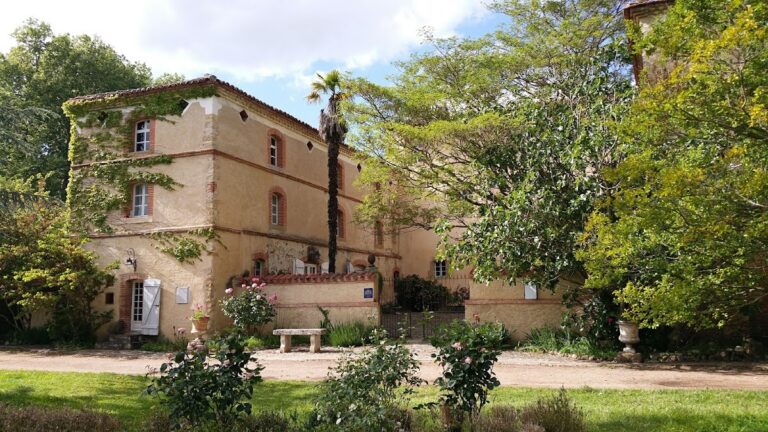
Joseph Paul François Villary, known as de Fajac, acquired Château de Sibra at auction in 1878. He then commissioned extensive remodeling that gave the building its present appearance. The work was carried out by a local contractor and the Toulouse architect Louis Mortreuil. The redesigned residence combined eclecticism, a nineteenth-century approach drawing on several historical styles, with medieval-inspired troubadour elements and neo-Renaissance forms.
The château, its park, associated outbuildings, and garden structures were listed as historic monuments by an order dated 7 July 2004. In 2017, the property became the residence of the Swiss architect Sybille Thomke, who undertook major works, fitted out bedrooms, and installed a restaurant. The property is also identified as a private residence.
Remains
The château
The original fortified house was extensively remodeled during the nineteenth century. Its eclectic design brings together raised crenellations, parapets with openings, and machicolations, projecting defensive structures through which defenders could drop or throw objects, alongside Renaissance-type openings. On the façade facing the park, an oval relief medallion shows Saint George defeating the dragon, recalling the Christian saint’s traditional association with that legend.
The interior decoration includes terracotta ornaments manufactured by Virebent, including work for the large fireplaces. The stained glass bears the signature of Saint-Blancat, while the tapestries were supplied by the Parisian decorator Tétrel.
The landscaped park
The landscaped park covers 15 hectares and was laid out from 1883 by an unidentified landscape designer. Its planting includes ginkgo, sophora, and weeping beech. Bodies of water and several garden follies, decorative structures in a landscape garden, form part of the grounds, together with a former apiary and honey house containing 80 hives, a hunting lodge, an obelisk, and an artificial grotto.
Nearby sites