Château de Salkhad: A Medieval Fortress in Syria


Site at a Glance
- Rating
- 4.5
- Popularity
- Very Low
- Country
- Syria
- Primary era
- Medieval
- Eras represented
- Medieval
- Civilizations
- Fatimid, Mamluk
- Site type
- Military
- Remains
- Castle
On this page9 sections
History
Château de Salkhad, also known as Salkhad Castle, is a medieval fortress in Salkhad, Syria, built and repeatedly reshaped under successive Islamic dynasties. The city was historically known as Sarakhad, and the fortress occupies a strategic position in the southern Syrian landscape. Its original construction date remains uncertain: many historians associate it with the Fatimid caliph al-Mustansir around AH 446, while another dating places the beginning of construction between 1214 and 1247.
Fatimid, Seljuk, and Atabeg Rule
The Fatimids, a Shi’i Ismaili dynasty that ruled Egypt and parts of the Levant from the tenth to the twelfth century, are widely associated with the fortress’s early construction. Salkhad later came under Seljuk authority. The Seljuk ruler Tutush governed it between AH 471 and 488, followed by his sons Falus and Takin. Between AH 479 and 522, Atabegs also controlled the castle. These military guardians and governors supervised young members of ruling dynasties, and in Salkhad their authority operated under the commander Fakhr al-Din Kumushtakin.
Control by Damascus and the Ayyubids
A further phase in the castle’s history is dated to AH 541, or AD 1146, and is associated with the Mamluks, the military ruling class that governed Egypt and Syria. Mu’in al-Din Athar, the ruler of Damascus, later incorporated Salkhad into his domain and transferred it to the command of Qaid al-Din Buzan.
After Salah al-Din’s victory over the Crusader states at the Battle of Hattin in 1187, he took control of Salkhad in AH 583, or AD 1187. Salah al-Din founded the Ayyubid dynasty, which ruled territories in the eastern Mediterranean and the Middle East. Zayn al-Din Qaraja al-Salihi subsequently ruled Salkhad and undertook extensive repairs to the castle in AH 601. Nasir al-Din Yaqub governed it from AH 604, while inscriptions in the castle mosque record the name of Izz al-Din Aybak and date to AH 611–614.
Mamluk Renewal
Following al-Zahir Baybars’s victory over the Mongols, Salkhad and its castle came under his protection. Because of the fortress’s strategic position, Baybars renewed it, repaired many of its buildings, and restored its mosque. In AH 668, or AD 1270, he entrusted the fortress to Balban al-Afram. Under Sultan Qalawun, the castle received particular attention, and Sayf al-Din Basiti was appointed to oversee it.
The fortress housed emirs, commanders, and scholars and experienced periods of prosperity. Its successive rulers and repairs tied it to the major political and military events that affected southern Syria.
Remains
Fortress Layout
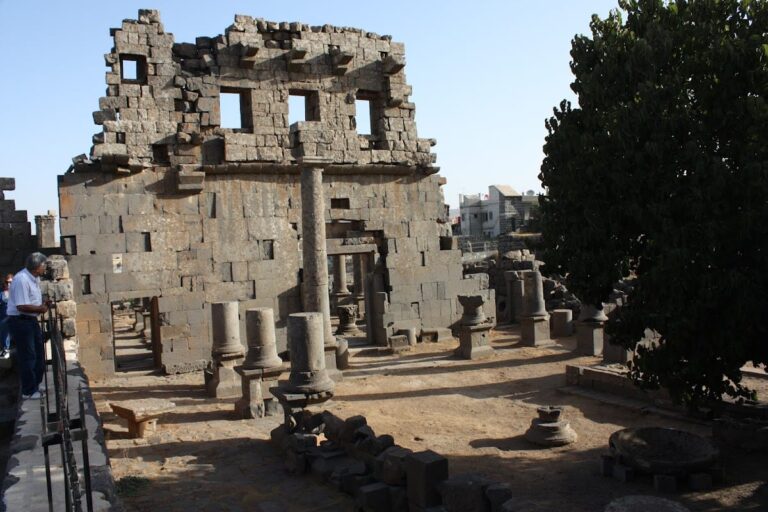
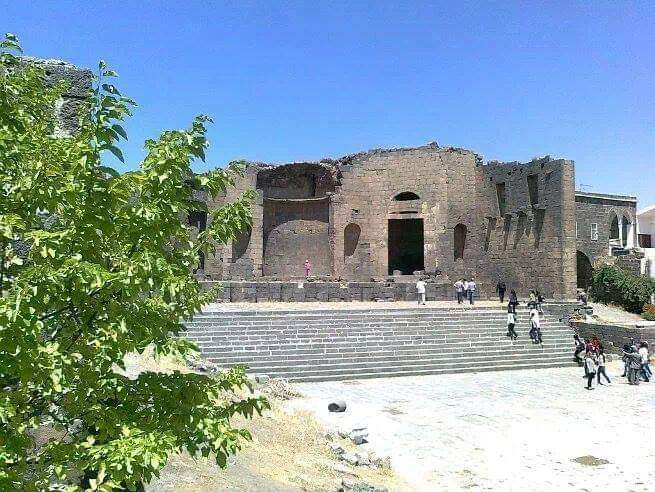
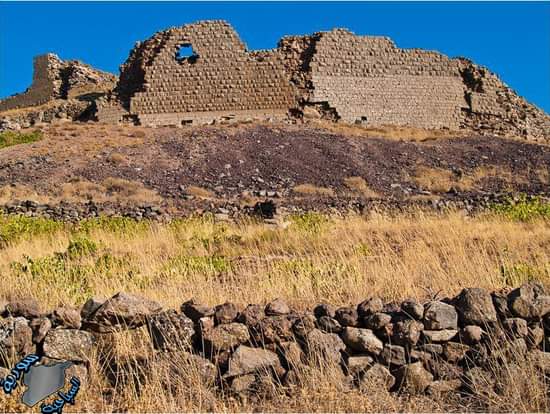
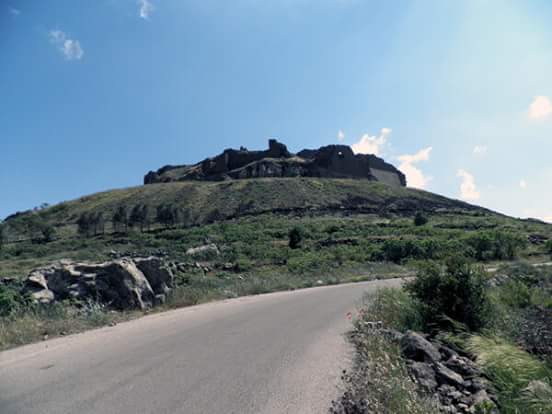
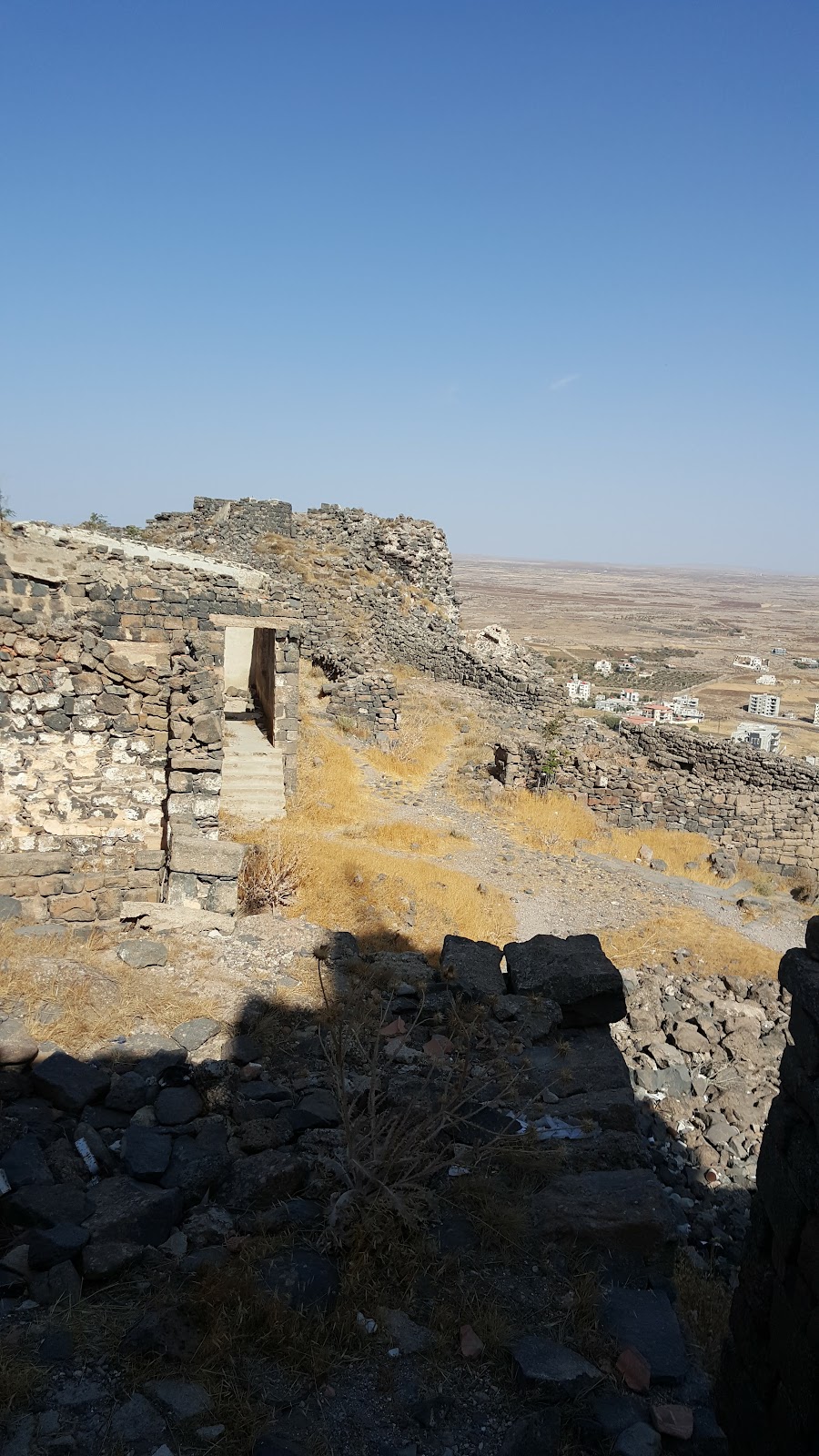
Château de Salkhad stands at approximately 1,450 metres above sea level on a basalt hill above the city. Basalt is a dark, dense volcanic rock, and the hill provided an elevated setting over the surrounding settlements, districts, and the heights of Jabal al-Arab toward the Hauran. The fortress was connected with other sites through a network of watch and reconnaissance towers.
Levels and Internal Spaces
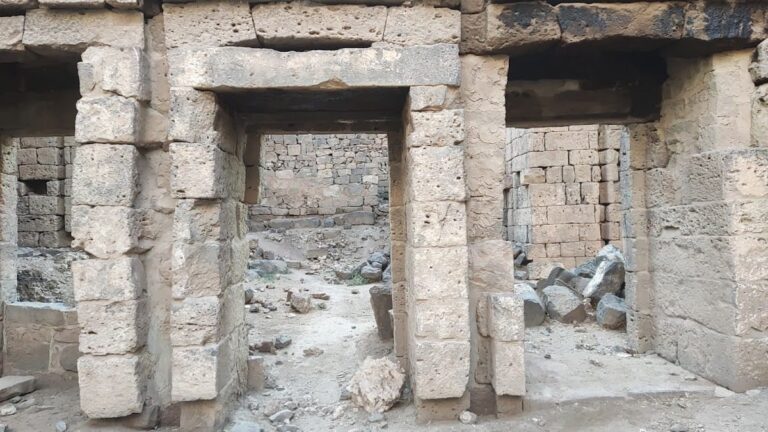
The buildings are arranged across three levels and include administrative structures, residential quarters, and a mosque. Halls, passageways, corridors, underground chambers, and tunnels form the interior of the fortress, linking its working, residential, and defensive spaces.
Enclosing Walls
Two enclosing walls surround the castle. One follows an approximately semicircular plan, adding a distinct curved element to the fortress’s defensive layout.
Castle Mosque
The castle mosque contains inscriptions and writings dated to AH 611–614 and associated with Izz al-Din Aybak. It was later restored during the renovation works carried out under al-Zahir Baybars, preserving the mosque as part of the fortress’s surviving architectural complex.