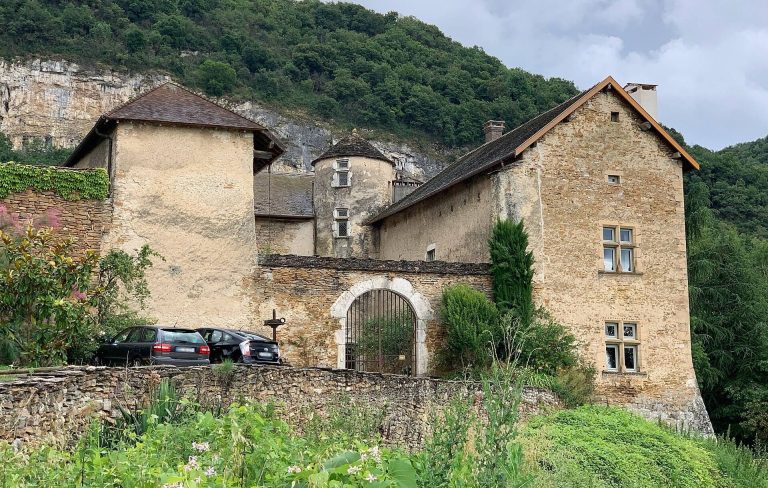
Sainte-Julie Castle: A Medieval Fortified Manor House in France
Site at a Glance
- Popularity
- Low
- Country
- France
- Primary era
- Medieval
- Eras represented
- Medieval
- Civilizations
- Holy Roman Empire
- Site type
- Domestic
- Remains
- Castle
On this page5 sections
History
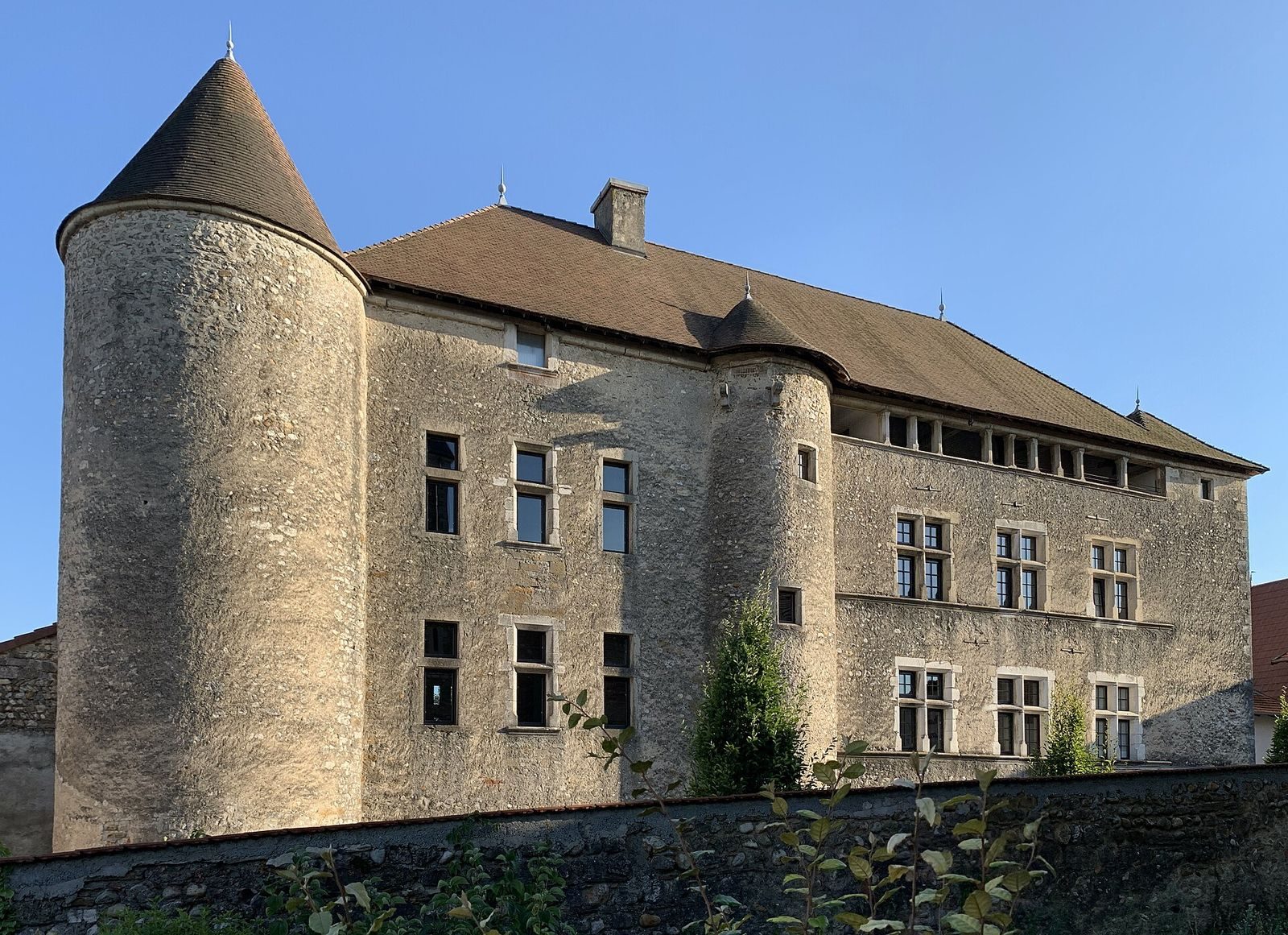
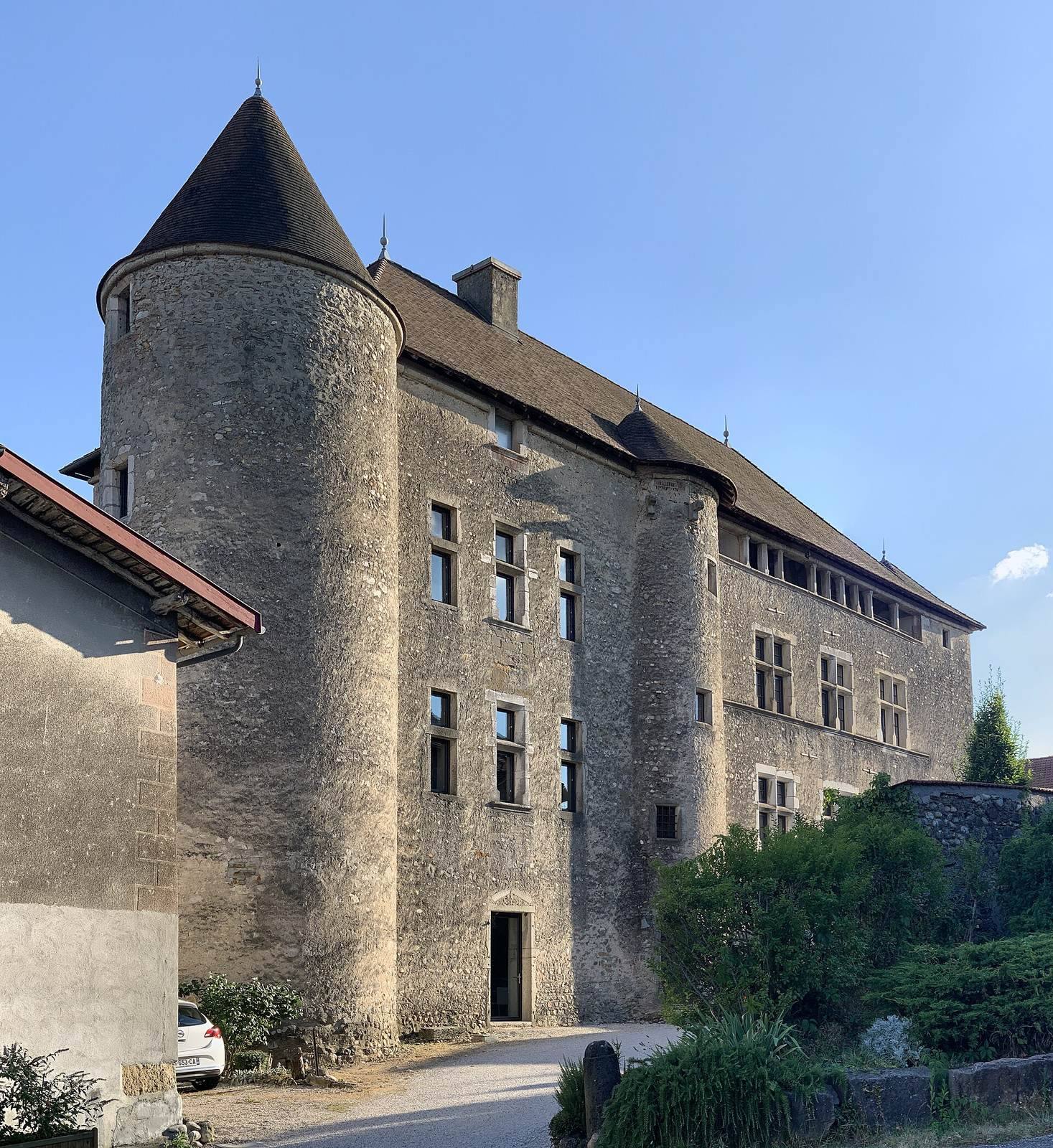
Sainte-Julie Castle is a medieval fortified manor house in France, built in the thirteenth century by the lords of Coligny. It became the center of the lordship of Sainte-Julie, the estate and authority held by a local lord. Amédée de Coligny may have been involved in its construction.
From Coligny to the lords of Savoy
The lordship passed from the Coligny family to the La Tour du Pin family through the marriage of Béatrix de Coligny to Albert III, lord of La Tour-du-Pin. Their family later held the title of Dauphin of Viennois, given to the heir of the Dauphiné, a historic principality in southeastern France.
On January 5, 1354, King John II and his son Charles, newly named Dauphin of Viennois and later King Charles V, transferred the lordship to Count Amédée VI of Savoy. Amédée granted it as a fief, land held within a feudal relationship, to the knight Guy de Torchefelon. Guy sold it on June 8, 1379, to Jean, lord of Crangeac and Chazey.
Transfers among noble families
Jean’s eldest son, Antoine de Crangeac, succeeded him. Antoine, who was married to Françoise de Varax, died without children, and his brother Pierre, lord of Loyettes, inherited the lordship. Pierre also died without descendants. In 1439, his widow, Jeanne de Varax, retained Sainte-Julie, Loyettes, and Chazey to satisfy her claims as his widow. Around 1450, she left Sainte-Julie to her nephew Georges de Varax. After Georges lost his only male heir in 1460, he transferred the lordships of Sainte-Julie, Loyettes, and Chazey to Philippe de Savoie, Count of Bresse, under an agreement made at Château de Chazey on January 24, 1462.
The lordship later passed to André de Bignins. His widow, Louise d’Inteville, transferred it on February 4, 1549, to Jacques de Savoie, duke of Genevois and Nemours. Jacques incorporated it into the marquisate of Saint-Sorlin, a territory held by a marquis, established for him on October 14, 1571. On January 6, 1579, the lordship passed to Béatrix Pacheco, countess of Entremont, with a right of redemption and authority over high, middle, and low justice, meaning judicial matters of differing seriousness. It was transferred to Renaud de Cremeaux, lord of La Grange, on January 30, 1615.
The Lyobard and Balme families
Georges de Lyobard, lord of Châtelard and Ruffieu, held the lordship, which remained with his descendants until Prosper de Lyobard left it to his nephew René de Varanges in his will of March 9, 1662. René sold it on August 24, 1680, to André Balme, an honorary secretary to the king at the Parlement of Metz, a regional high court. Balme was ennobled by formal royal documents in March 1698.
The Balme family retained Sainte-Julie through the convocation of the Estates-General, an assembly representing the clergy, nobility, and commoners summoned by the French crown. Charles-Auguste Balme de Sainte-Julie, the last of the family line, sold the estate in 1824 to Jean-Marie Dupuis. A decree dated December 21, 1984, listed part of the château as a historic monument.
Remains
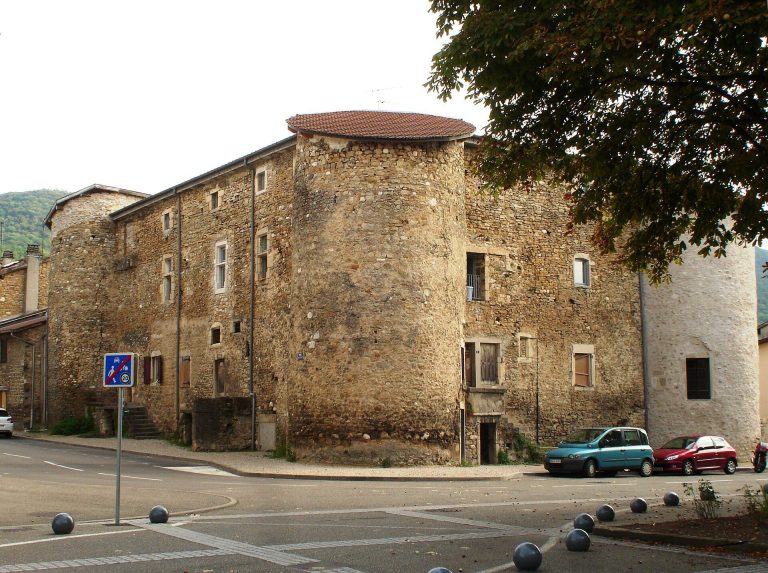
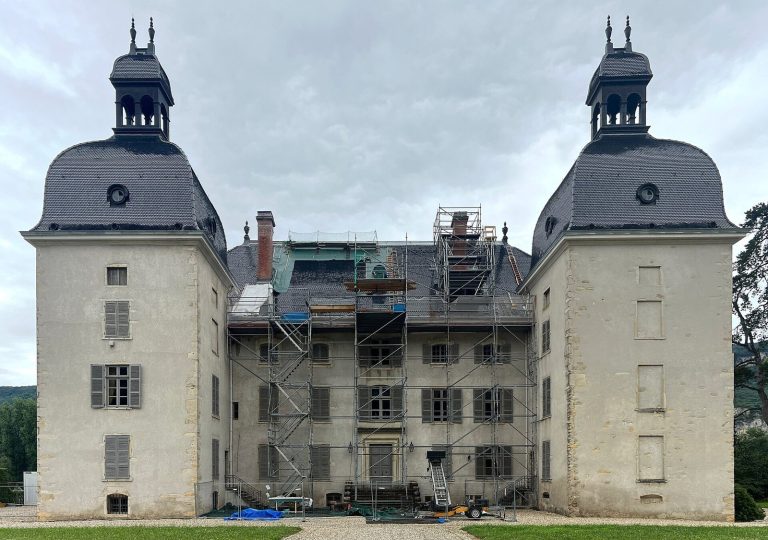
The surviving château is a medieval fortified manor house. Its façades and roofs, as well as the great hall and an oratory, a small room or chapel for private prayer, on the first floor above ground are included in the protected fabric; wall paintings remain in both interiors. A painting on the upper part of the château’s fireplace shows the combined coats of arms of André Balme and his wife, Françoise Trocu.