Roquefère Castle: A Medieval Fortified Residence in France
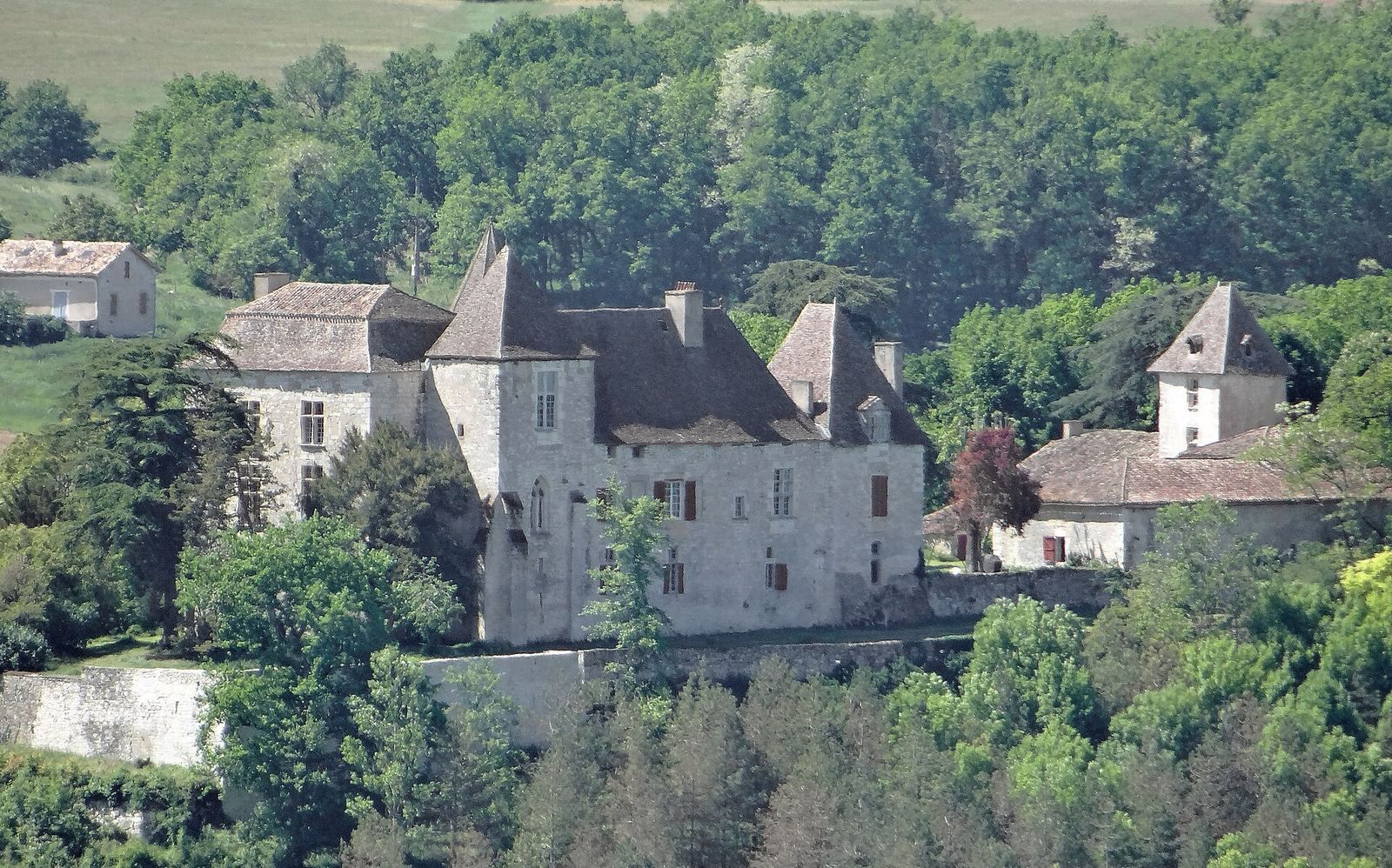
Site at a Glance
- Popularity
- Medium
- Country
- France
- Primary era
- Medieval
- Eras represented
- Medieval, Early Modern
- Civilizations
- Duchy of Aquitaine, English, French
- Site type
- Military
- Remains
- Castle
On this page11 sections
History
Roquefère Castle is a fortified residence in France, first referred to in 1279. Its surviving medieval core includes Gothic architecture, a medieval style, and some defensive features may date to the late thirteenth century. In 1279, Hugues de Castelmoron sold the site to Edward I, king of England, who had taken possession of Agenais, the historic region centered on Agen, after the Treaty of Amiens. Edward granted the castle to Jean de Grailly, his senior administrator in Agenais, in a deed made at York on 10 August 1280.
The Grailly lordship and disputed possession
The castle remained with Jean de Grailly’s descendants until the end of the Hundred Years’ War, the prolonged conflict between the English and French crowns. Bertrand de Got, later Pope Clement V, passed through Roquefère in 1305. Jean II de Grailly later granted the castle to the English military commander John Chandos for life, with the expectation that it would return to the Grailly family or its heirs after Chandos’s death in 1370.
Jean and Jacmet Hébrard and Guillon de La Martinie then took possession without right and held the castle for nearly a century. The Grailly heirs challenged their claim and recovered the property after 1470 with Jean de Foix-Candale. He had been captured at the Battle of Castillon in 1453 and freed in 1460 after negotiating a ransom. After Charles VII died, his successor Louis XI prevented the unpaid balance from being collected. Jean de Foix-Candale passed the castle to his daughter Lucrèce, described as an illegitimate member of the Foix-Béarn line. She married Jacques I de Chaussade, a knight and lord of Calonges and Roquefère by 1494. In 1495, the Parlement of Bordeaux, a high court, recognized Jacques’s possession after the captal of Buch, the lord of Buch, gave up his claim and an agreement was reached with the Hébrard family.
The Chaussade family and religious conflict
Jean de Chaussade, lord of Roquefère and a Protestant who took part in the French Wars of Religion, made his will in 1584. Catholic troops under the commander Blaise de Monluc occupied the castle.
Seventeenth-century transfers and the Fronde
The castle was sold in 1604 to Jean de Sarrau de Boynet and his son, Jean de Sarrau. Françoise de Lanne bought it back on 8 December 1608, then sold it on 27 March 1609 to her daughter Anne de Chaussade. This transfer separated Roquefère from Château de Calonges. Anne, the wife of Joseph de La Mothe, passed the castle to their son Bernard de Chaussade de La Mothe. Bernard left it to his daughter Anne, who married Jean II de Rochefort de St-Angel.
During the Fronde, a series of French rebellions and civil conflicts from 1648 to 1653, Jean II de Rochefort and his father, Charles II de Rochefort, sided with the Prince of Condé, Louis II de Bourbon. They used the castle as a base for attacks on royal troops. Jean II later submitted to the king, who agreed that the castle should not be destroyed. It passed to Jean II’s son Charles (1645–1680), then to Charles’s daughter Marie-Guyonne de Rochefort, wife of Louis Pons. The last heiress among the Grailly-Foix lords of Roquefère, she sold the castle to the apothecary Jean Fournyé Gorre.
Later owners and protection
Gorre died before 1727, and the castle passed to his son Pierre Fournier de Saint-Amans, a physician to the Duke of Orléans who came from Monflanquin. Pierre left it to his cousin Jean Fournier de Saint-Amans, who died in 1780. Jean’s wife, Élisabeth de Bérail, left the property to her brother-in-law Charles Raymond de Bérail in 1781. The castle later passed to the Chasserel family. Through the marriage of Thérèse de Chasserel (1846–1901) to Maxime d’Anglars (1845–1911), it came to the d’Anglars family. Roquefère Castle was classified as a historic monument on 20 June 1963.
Remains
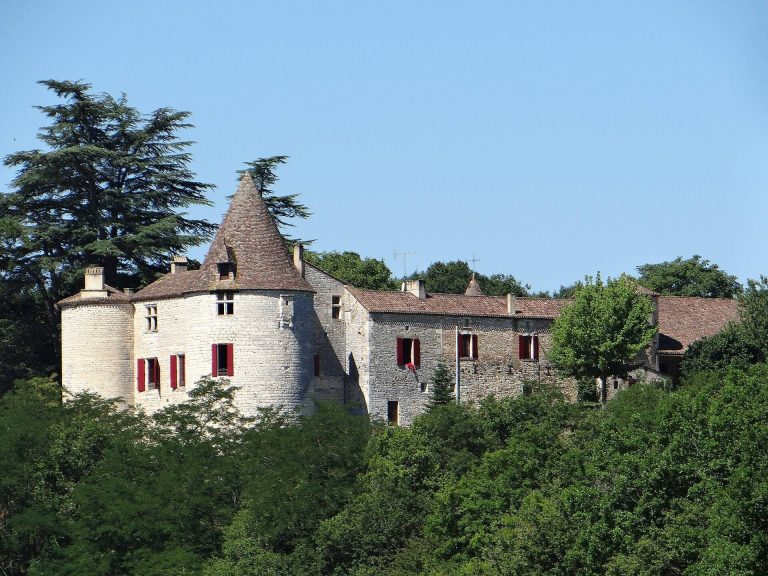
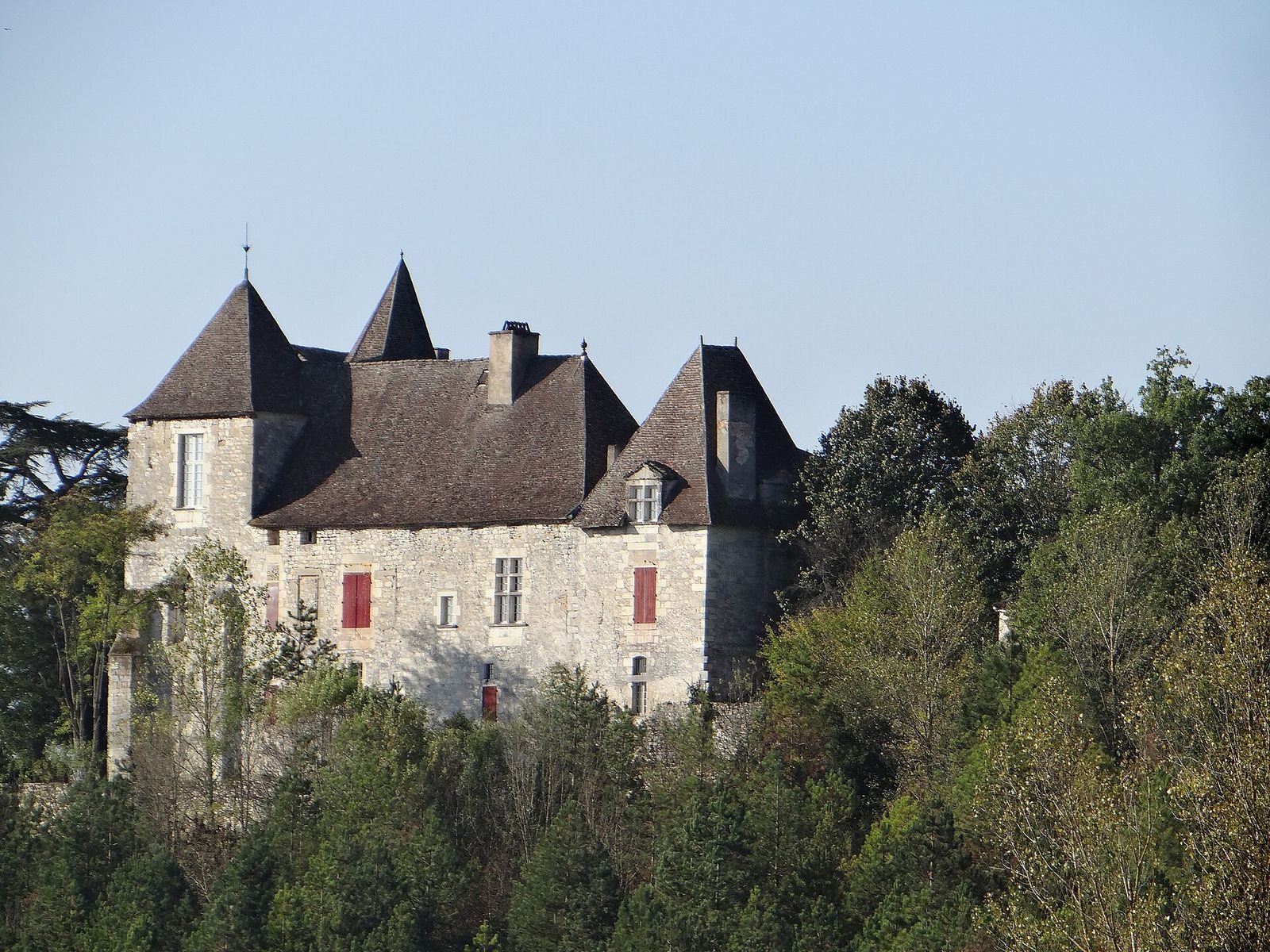
The castle occupies the end of a plateau above the Lède, in a position that allowed it to control approaches from Monflanquin toward Castillonnès and Villeréal. Its layout centers on a courtyard, with medieval residential wings at the southern end and other buildings enclosing the remaining sides.
Medieval residential wings
Southern manor and keep
The oldest parts stand to the south, at the end of the slope. A two-storey manor, a landed residence, rises above a lower hall with a curved, vaulted ceiling. Beside it is a small square keep, the castle’s principal fortified tower, measuring four metres on each side. Its pointed-arch openings and arrow slits, narrow wall openings for shooting projectiles, have shapes that may date to the late thirteenth century. The slits widen toward the ends of their cross-shaped openings.
Eastern wing
The medieval eastern wing turns at an angle. Its large windows facing the courtyard were remade in the fifteenth or early sixteenth century; vertical stone bars divide them into sections. A turret containing a spiral staircase was added where the eastern and southern wings meet.
Southwestern wing
A shorter wing turns toward the southwest and probably belongs to the same period as the remade eastern windows. It also contains a spiral staircase and extends into a lower structure built later.
Courtyard enclosure and northern buildings
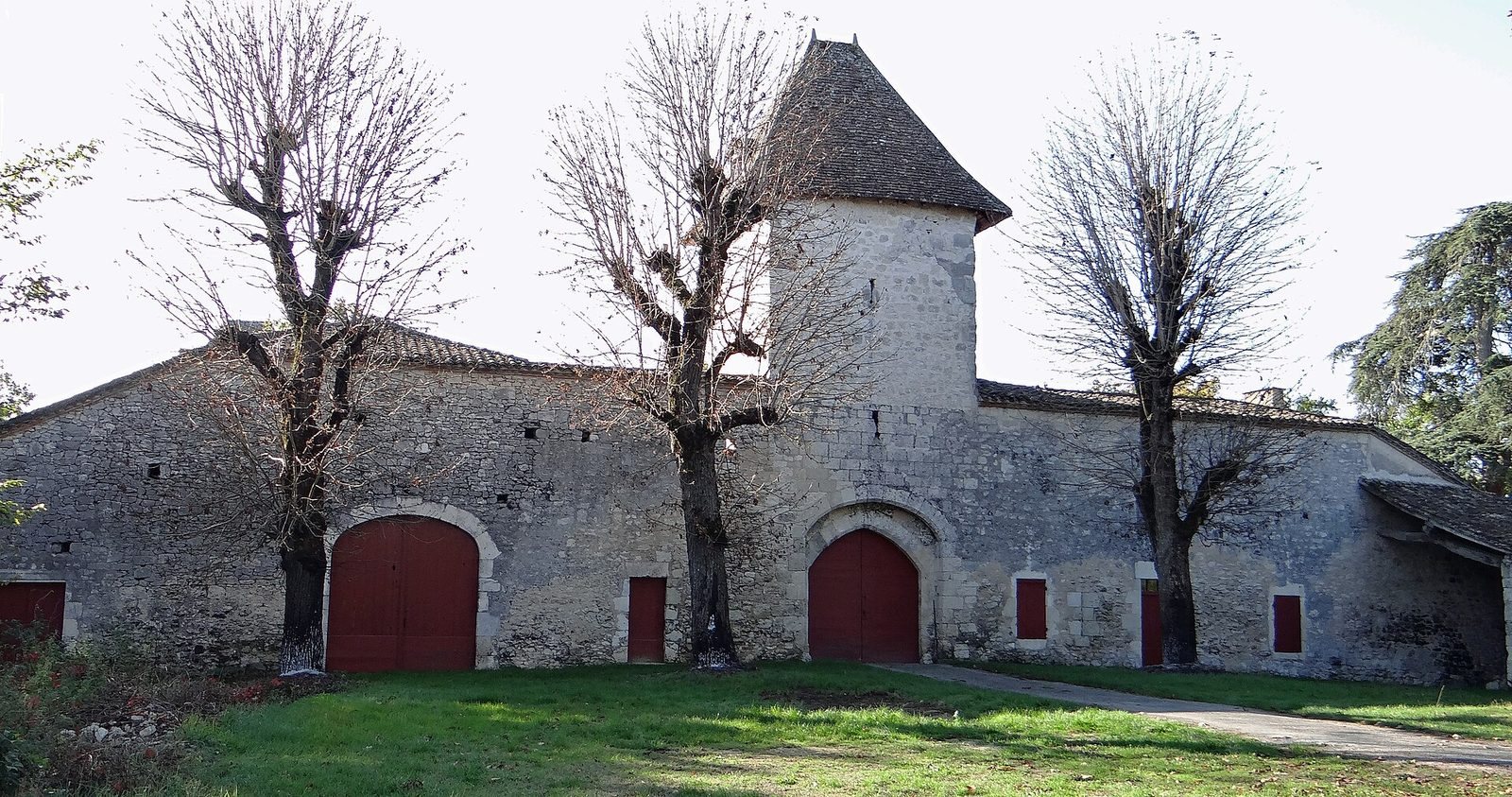
A wall encloses the rest of the courtyard. On the north, toward the hamlet, a square, tower-shaped gatehouse and service buildings close the courtyard; these probably date to the sixteenth century. Parts of the château were altered during the seventeenth century. A pigeon loft stands nearby.