Château de Louvois: A Historic French Estate and Rebuilt Château
Site at a Glance
- Popularity
- Medium
- Country
- France
- Primary era
- Modern
- Eras represented
- Medieval, Early Modern, Modern
- Civilizations
- County of Champagne, French
- Site type
- Domestic
- Remains
- Elite Residence
On this page12 sections
History
Château de Louvois is a historic estate in France, founded in the early thirteenth century as a seigneury, a territory held under a lord’s authority. The château standing today is a nineteenth-century pavilion in the classical style, built on the site of the earlier residence. The estate’s history spans medieval lordship, the Le Tellier family’s ownership, revolutionary destruction, and later rebuilding.
Medieval and early modern ownership
In 1218, the seigneury belonged to Gaucher V de Châtillon, Count of Saint-Pol, before passing to the de Cramaille family. Eude Dazieu held the property in 1352, and the de Sarrebruck-Commercy family owned it from 1399. Members of that family included Amé I, Robert I, Jean VII, and Robert II. By 1520 the estate was associated with the de Silly family, beginning with Charles de Silly, who married Philippa de Sarrebruck-Commercy, Robert II’s daughter. Later holders included Louis, Antoine, and Catherine de Silly.
Claude Pinart, lord of La Cramail and finance director to Charles IX, bought the estate in 1576. Ownership records for 1605 name Claude Pinart the younger, François de Mouville, Antoinette and Charlotte, and Eustache III de Conflans, Charlotte’s son. In 1625, the barony of Louvois was raised to a marquisate, a noble title and territory, for Henri de Conflans.
The Le Tellier estate
Michel Le Tellier bought the estate on 4 February 1656. On 19 March 1662, he transferred it to his son François Michel Le Tellier de Louvois when the younger man married. François Michel took the title Marquis de Louvois and used the estate for hunting with hounds. After the death of Colbert, a minister under Louis XIV, Louvois coordinated construction work at Versailles. Work on the château and park at Louvois was completed in 1681.
In 1694, the property belonged to the Marquis de Barbezieux, Louvois’s son. Louvois’s widow, Anne de Souvré, acquired it in 1701, and it remained in the family until the time of Louis-Sophie Le Tellier, Louvois’s great-grandson.
Royal ownership and revolutionary destruction
On 3 February 1776, Adélaïde and Sophie de France, daughters of Louis XV, acquired the estate. It was elevated to a duchy-peerage, combining a duchy with the status of a peer of France, and became known as the Château des Dames de France in reference to the princesses. Architect Nicolas Durand carried out work on the château during their ownership.
The estate was destroyed during the French Revolution. In 1793, it was confiscated and sold as national property, meaning property taken over and sold by the Revolutionary state. The sale required that the estate remain undivided and that its purchaser demonstrate sufficient income to maintain it. Louis Vincent Pommier acquired it in 1798, banker Hainguerlot in 1799, and Pierre Dambrun in 1805. During this period, stonework and, later, timber were dismantled and sold.
Rebuilding and later ownership
Entrepreneur Jean-Joseph Davias bought the property on 16 May 1812 and partly restored it. Claude-Julien Provost acquired it in 1826 and sold it on 20 December 1827 to Pierre Charles, second Baron Hémart de La Charmoye. It later passed to Pierre Elie, third Baron Hémart de La Charmoye. Subsequent sales involved Lazare Elisée, fifth Baron Hémart de La Charmoye, and his aunt Marie-Françoise Hémart de La Charmoye, Countess of Bengy. A landscaped garden was laid out during this period.
Frédéric Gabriel Chandon de Briailles bought the château on 3 February 1877, intending to restore its eighteenth-century appearance. It remained in his family, passing to François and then Frédéric. Since 1989, the property has belonged to the Champagne house Laurent-Perrier. In 2015, the château and park were entered on France’s list of historic monuments, with protection covering the façades, roofs, and park.
Remains
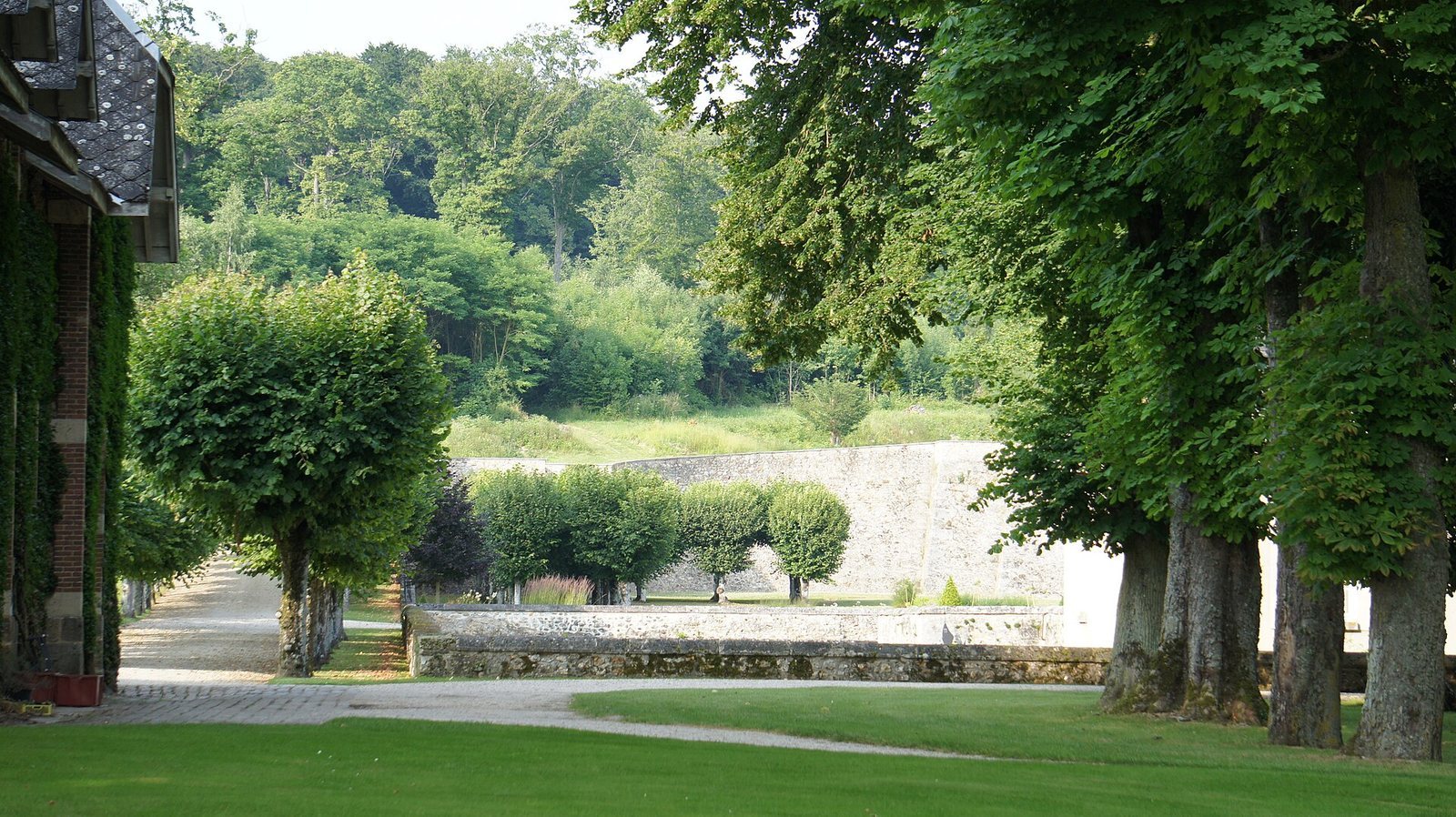
The estate combines the nineteenth-century château with remnants of the earlier residence and a formal garden shaped by earthworks and water features. The former garden covered fifty hectares, while the château and its gardens now belong to a property of thirty-five hectares.
Château and earlier remains
The nineteenth-century pavilion
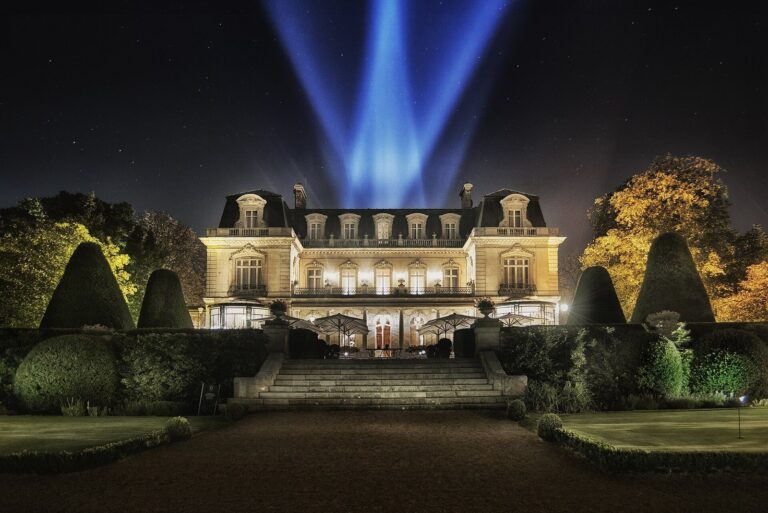
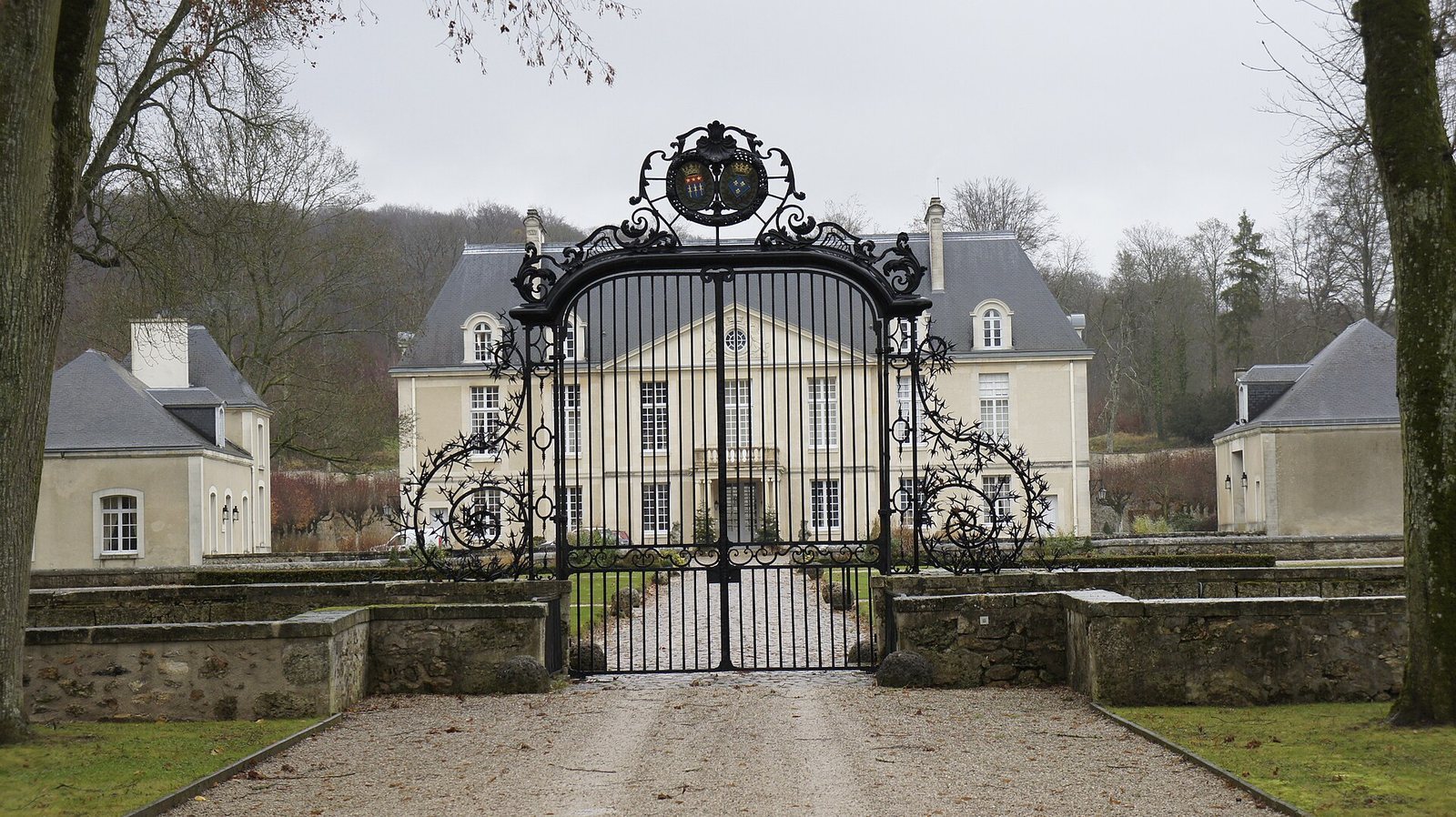
The present château is a simple pavilion in the classical style, built on the site of the destroyed building with some materials from the earlier structures. The earlier château followed plans by Mansart.
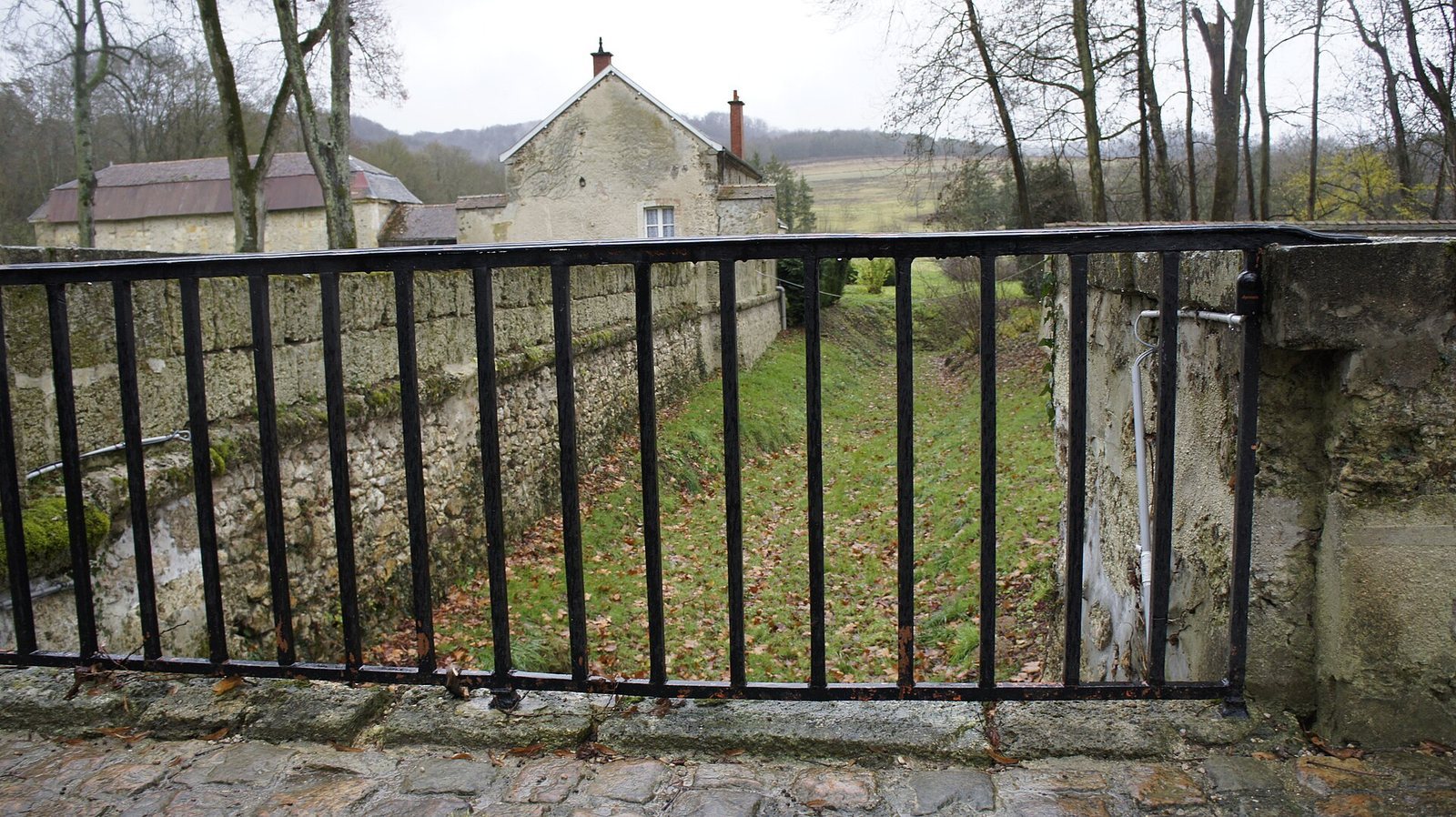
Moats and entrance features
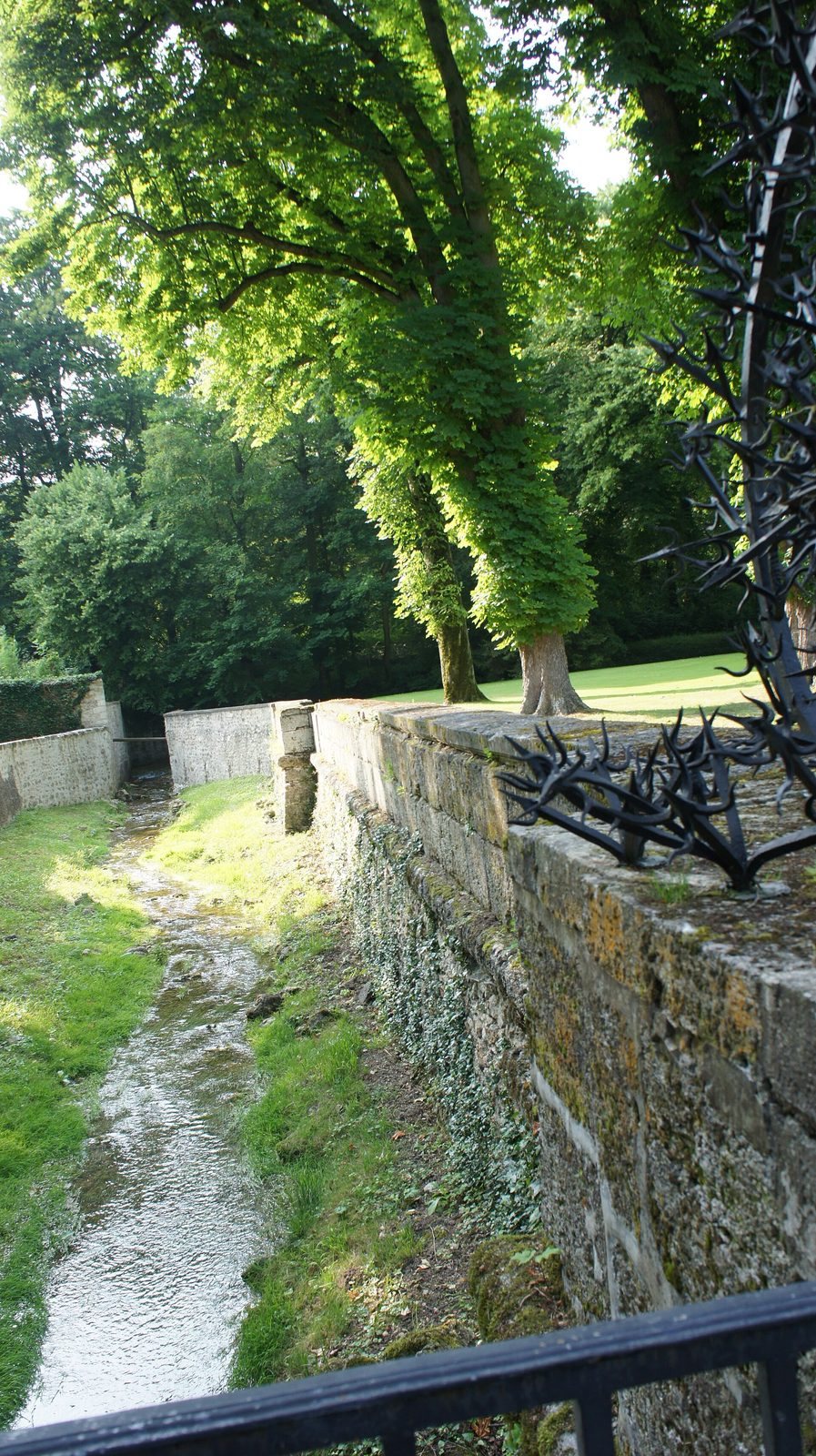
Features associated with the first château include its moats, cellars, and prison. After the Revolutionary destruction, foundations, an entrance grille, an orangery used to shelter citrus trees in cold weather, the water supply, and large basins remained, along with a vertugadin, a sloping garden embankment. Decorated with heraldic designs, the entrance grille stood before the moats when viewed from the parade ground.
Formal garden and water system
Garden layout
Michel Le Bouteux, a pupil of landscape designer André Le Nôtre, designed the fifty-hectare garden. Its features include a parterre, a formal area arranged in ornamental beds, a grotto, a circular basin above the grotto, a central staircase, and a central upper avenue. From the staircase’s upper end, the basin aligns with the château while the parterre appears to disappear, an effect associated with Le Nôtre. A small part of the historic garden has been reconstructed using original plans.
Basins and conduits
Earthworks and three kilometres of conduits carried water from Vertuelles and Fontaine fraîche to a large upper basin. It supplied a sixty-foot basin on the terrace and four side basins. Military engineer Sébastien Le Prestre de Vauban directed the construction of these basins, with the Swiss Guards, a military body in French royal service, providing the labour.