Château de Lourdon: A Medieval Cluny Fortress in France
Site at a Glance
- Rating
- 3.7
- Popularity
- Very Low
- Country
- France
- Primary era
- Early Modern
- External website
- Open
- Eras represented
- Early Modern
- Civilizations
- French
- Site type
- Military
- Remains
- Castle
On this page11 sections
History
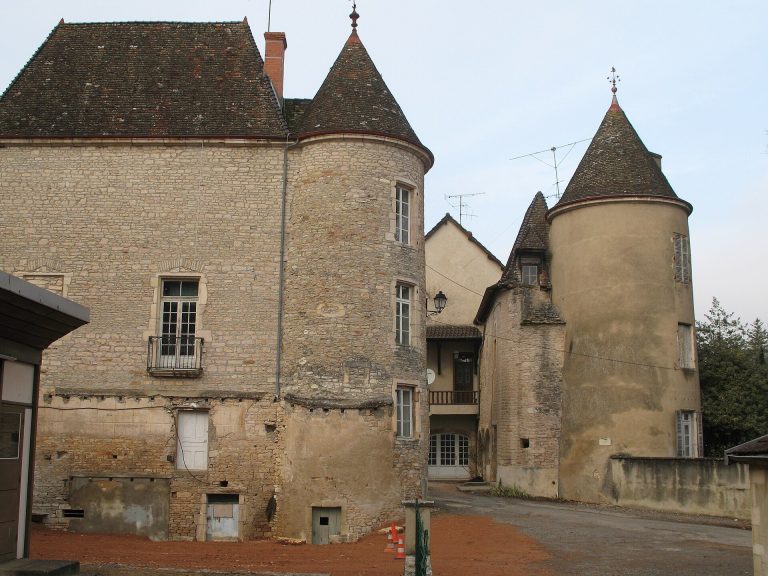
Château de Lourdon is a medieval castle ruin in France, near Lournand, whose early stronghold is first mentioned in the ninth century. At that time, Lourdon became the seat of a viguerie, an administrative jurisdiction. In 910, the Count of Mâcon included the land in a donation to the monk Bernon for the foundation of Cluny Abbey, a major Benedictine monastery. From the eleventh century, the castle frequently served as a residence of the abbots of Cluny.
Cluny and the County of Mâcon
During the twelfth century, secular lords sought control of the castle. Louis VII and Philip Augustus, kings of France, intervened as protectors of the abbey. Their actions helped strengthen royal influence and contributed to the eventual attachment of the County of Mâcon to the French Crown. In 1165, William I of Chalon sent his young son William with an army of foreigners to seize Lourdon.
From the fourteenth century, the castle also served as a refuge for the monks of Cluny and for the abbey’s library, archives, and treasures. Its connection with the abbey therefore extended beyond the residence of its abbots, giving the fortress a role in protecting the community and its important possessions.
Destruction and Reconstruction
Louis XI’s troops ravaged the fortress in 1470. Between 1471 and 1476, troops of Charles the Bold, the fifteenth-century duke of Burgundy, pillaged it again. At the end of the fifteenth century, Abbot Jean de Bourbon began extensive repairs, including work on the keep, the southern tower, and the abbot’s residence.
A small Protestant force captured the castle by surprise in 1574. When it withdrew in 1576, only four walls remained. In 1586, Claude de Guise, an abbot of Cluny and an illegitimate member of the House of Guise, rebuilt the castle, restored its defensive capability, added new buildings, and enclosed the wider domain with a long defensive wall. He is also associated with the construction of the jeu de paume, a court or building for the historical racket sport that preceded modern tennis.
In 1593, supporters of Henry of Navarre, the Protestant prince who later became King Henry IV of France, were repulsed with the aid of a large cannon. That cannon is now displayed at the Musée des Invalides. After the castle resisted a royal attack, the Estates of the Mâconnais requested its dismantling in 1613. In 1632, mines demolished the fortified sections, while the demolition contract spared the non-fortified Logis d’Amboise and the jeu de paume.
Later Ownership and Preservation
In 1791, the castle and its lands were sold as national property. They have remained with the same family and its descendants ever since. In 2013, the site was entrusted under a long-term lease to the Castrum Lordo association for its preservation and enhancement.
Remains
The Fortified Platform
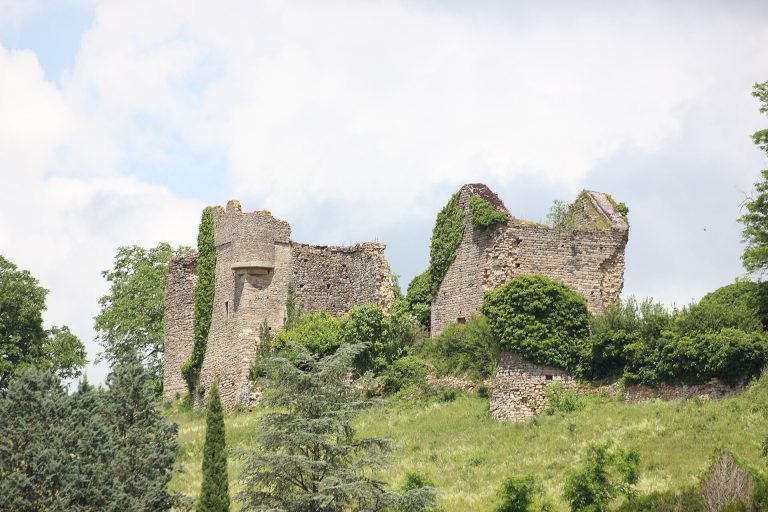
The ruins occupy a roughly one-hectare trapezoidal platform. Parts of the enclosure-wall foundations survive around it, while an eastern forecourt was protected by a man-made defensive ditch. The remaining structures reflect the castle’s rebuilding and later destruction, with masonry standing among accumulated rubble.
Southern and Northern Towers
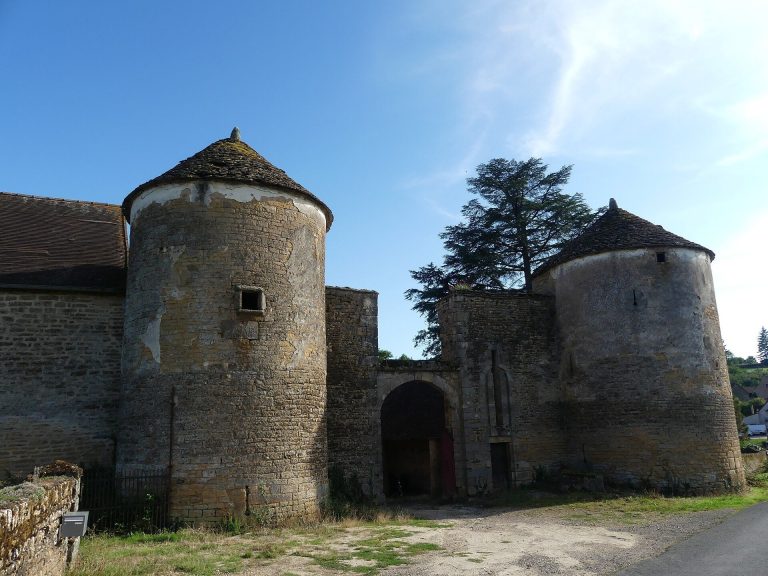
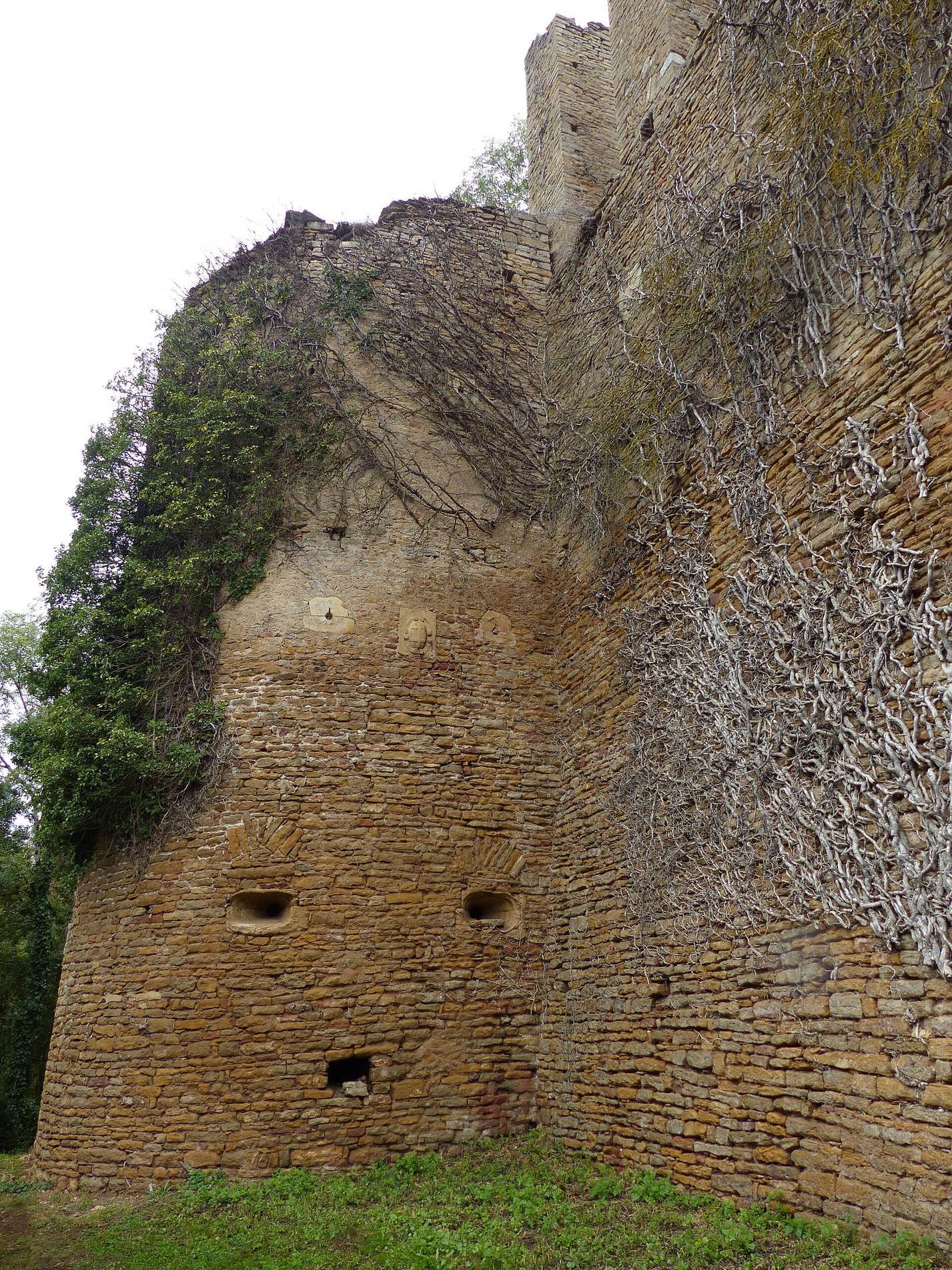
The partly destroyed circular southern tower is known as the Dovecote Tower. To the north stands the Powder Tower, whose upper storey alone rises above the rubble. These towers form two of the clearest surviving elements of the fortified enclosure.
Central Building Remnants
Near the centre of the platform, two building remnants stand in line as extensions of one another. A round tower projects partly from the wall and is attached to the western end of the eastern building. That building’s wall supports nine square masonry pillars, which reach a maximum height of 7.50 metres.
The Jeu de Paume
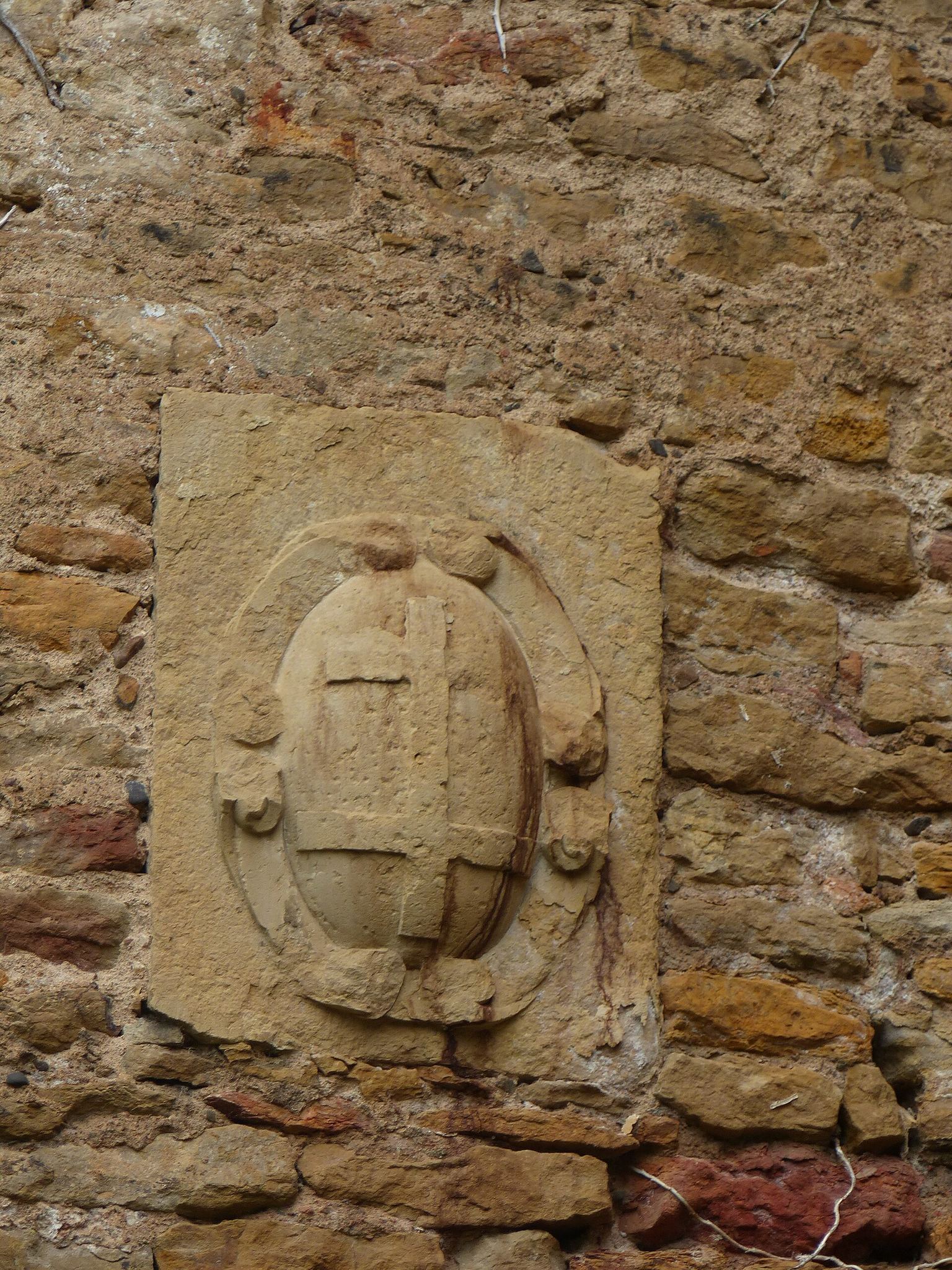
A large building measuring approximately 13 by 40 metres carries a cartouche with the arms of Lorraine and the date 1586. These details associate it with Claude de Guise. Its identification as a genuine jeu de paume was long uncertain, but studies carried out since 2012 established that interpretation. The building was one of the non-fortified structures spared by the demolition contract of 1632.
The Enclosed Park
Beyond the castle platform, a fifteen-hectare wooded park contained a small chapel dedicated to Saint Stephen, a vineyard, and other land. In the sixteenth century, the domain was enclosed by a three-kilometre defensive wall strengthened with twelve round towers. Various parts of this enclosure remain visible.
Saint Stephen Chapel
The small chapel dedicated to Saint Stephen stands within the former park. It was restored during the nineteenth century, preserving a religious feature of the wider estate alongside the surviving defensive works.