La Roque Castle: A Medieval Stronghold in France
Site at a Glance
- Popularity
- Medium
- Country
- France
- Primary era
- Medieval
- Eras represented
- Medieval, Early Modern
- Civilizations
- French
- Site type
- Military
- Remains
- Castle
On this page10 sections
History
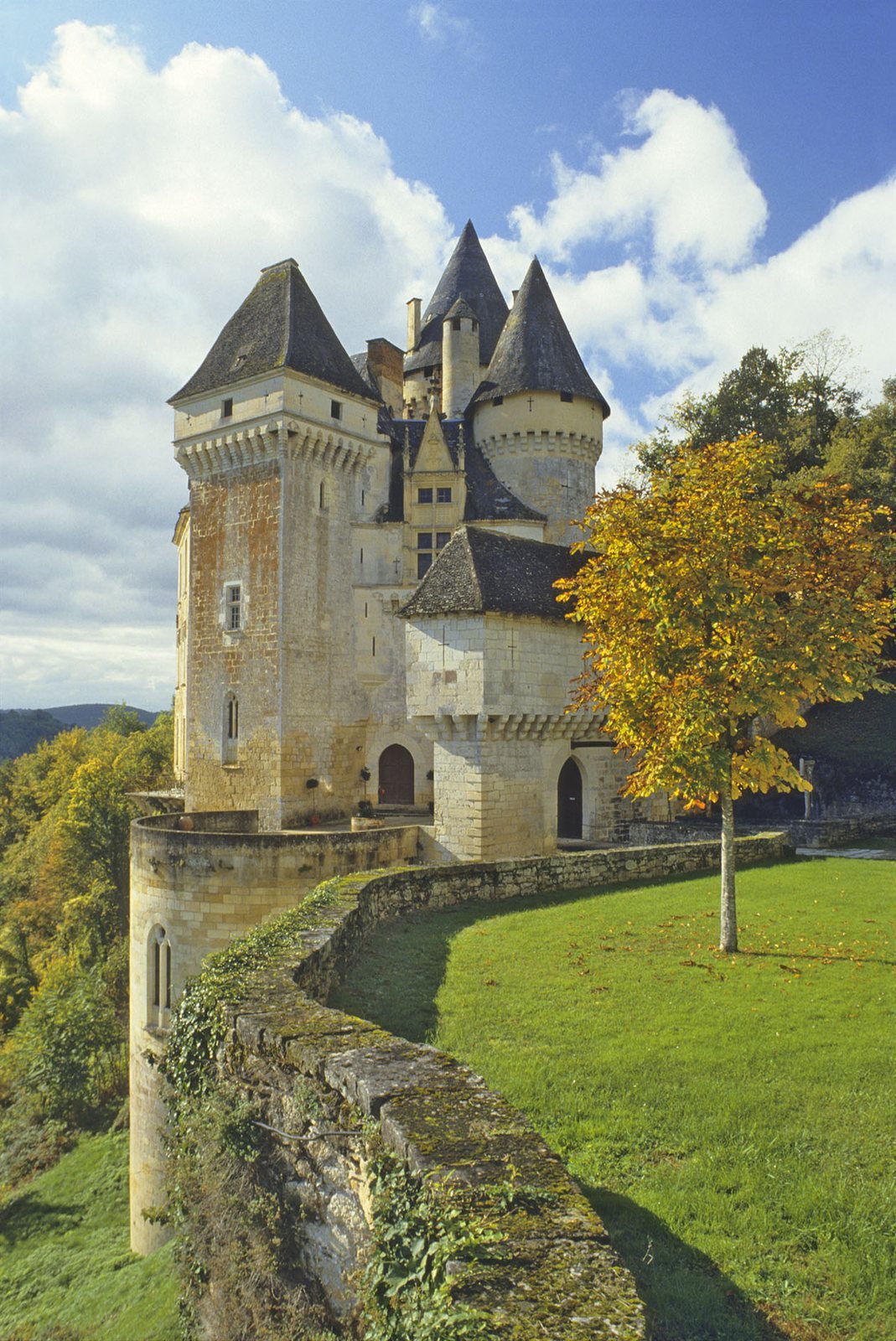
La Roque Castle is a medieval stronghold in France, between the communes of Castels, Meyrals, and Saint-Cyprien. Its construction dates to the 12th century, although it may be earlier, and the castle was altered in the 13th and 16th centuries.
Medieval and early modern phases
The castle was a fief, a landholding within the feudal system, of the Beynac and Beaumont families. Christophe de Beaumont, who later became Archbishop of Paris, was born there.
Christophe de Beaumont and later history
In 1754, Louis XV sent Christophe de Beaumont into exile at the castle after he condemned Jean-Jacques Rousseau’s Émile, or On Education, a work on education. The king sought to ease his dispute with the Parlement of Paris, the French monarchy’s high court rather than a representative legislature.
The castle received historic-monument status in 1927. Its 16th-century oratory paintings received a separate classification in 1963.
Remains
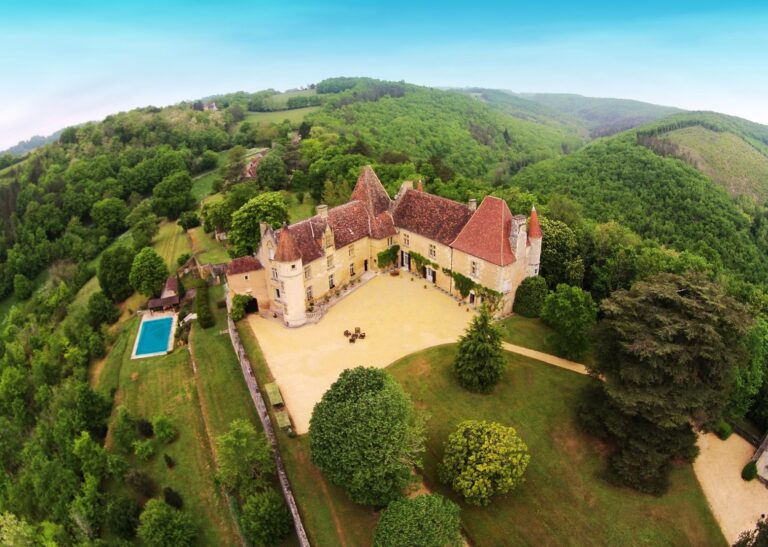
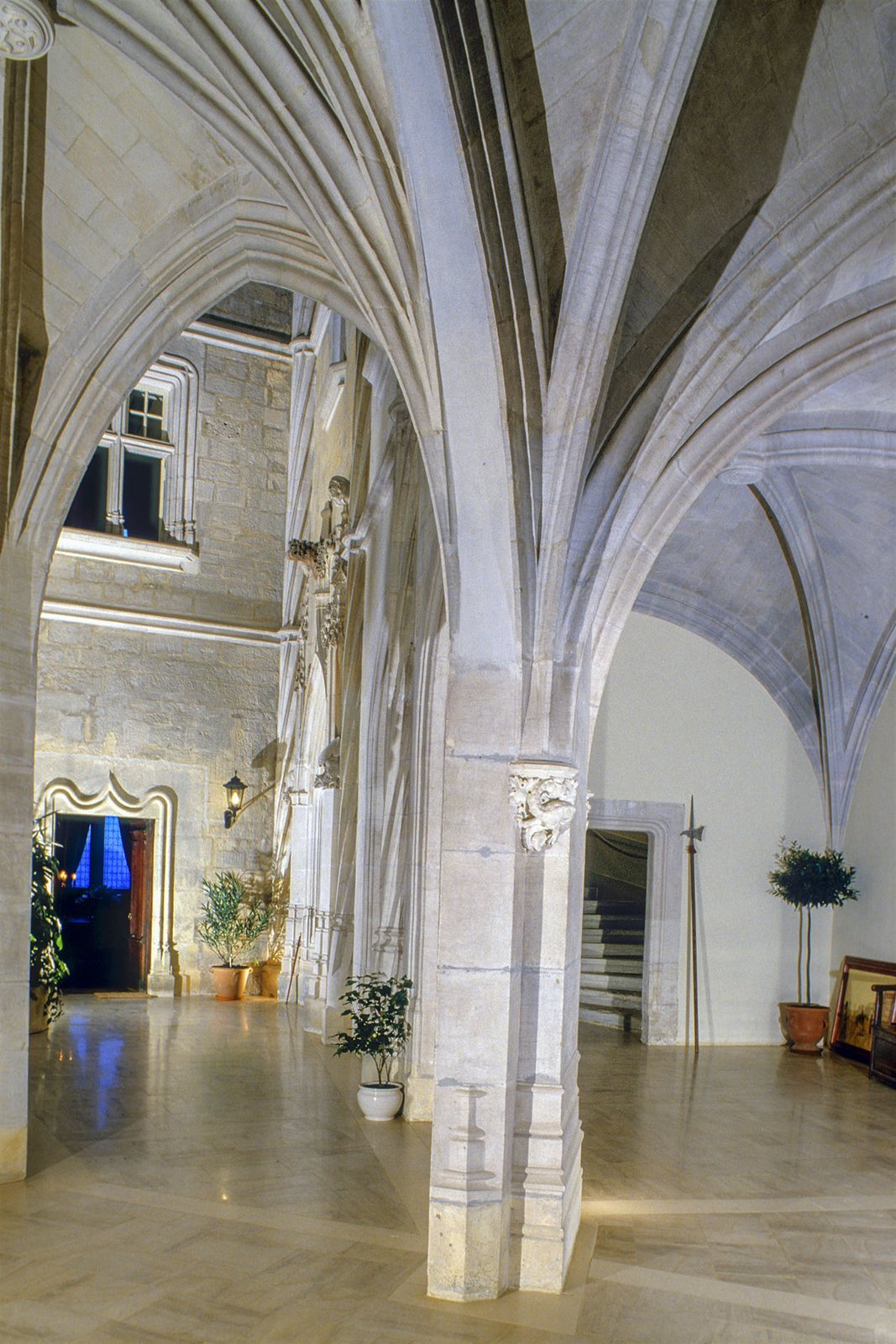
The surviving complex combines an inner courtyard, residential ranges, and defensive towers. Its buildings occupy a rocky slope, with a small prayer chapel housed in a square tower.
Setting and approach
Rocky landscape
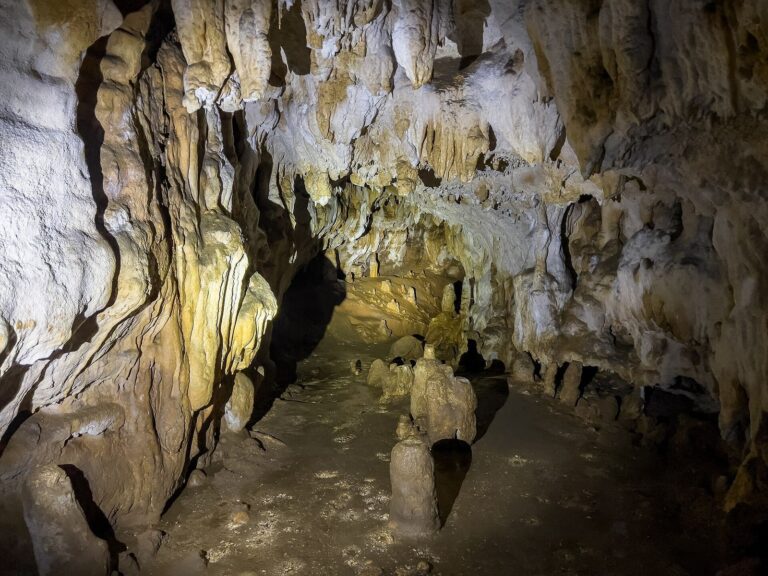
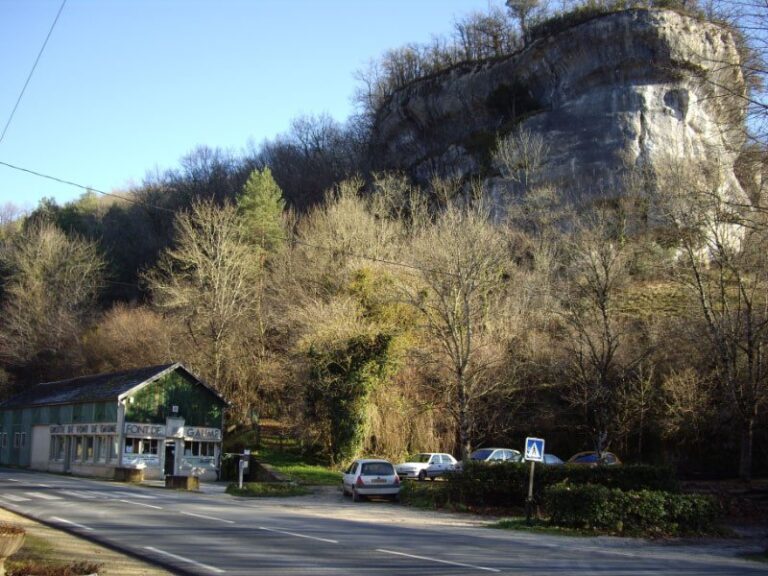
The castle stands on the southern slope of a defensive site dating to La Tène, an Iron Age period in Europe. It rises above a cliff containing cavities in the rock and overlooks the Moulant valley. The Moulant is a stream that flows into the Dordogne.
Moat and entrance
A dry moat separates the castle from the hill. An early-17th-century fortified gatehouse protects access to the inner courtyard, and an inner portal forms part of the entrance arrangement.
Courtyard buildings and oratory
Residential ranges and towers
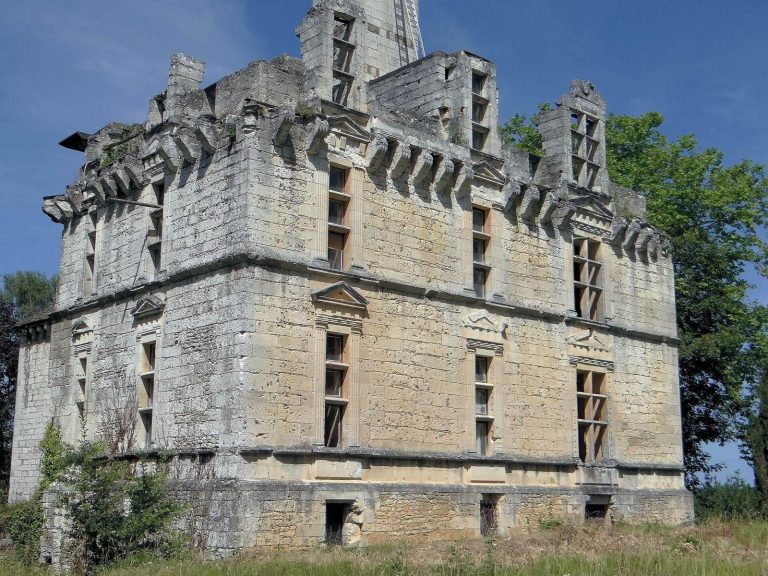
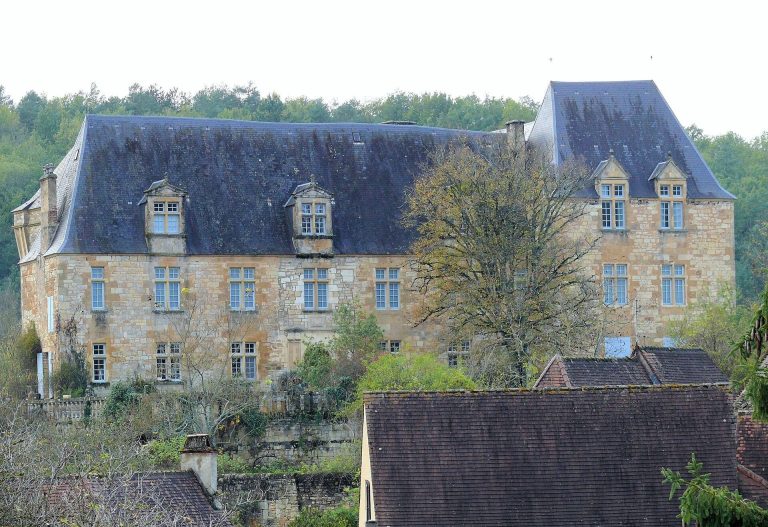
Two residential ranges dating to the 15th century meet at a right angle around the courtyard. The buildings stand on rock and have two storeys beneath two-slope slate roofs. Two towers have machicolations, projecting openings used to defend the walls below; one is square and the other round. A pavilion with Renaissance-style windows, from a European artistic period spanning roughly the 14th to 16th centuries, connects the towers. Round towers with small conical roofs flank the ranges, while the square tower has a four-sided roof of flat stone slabs.
Oratory and wall paintings
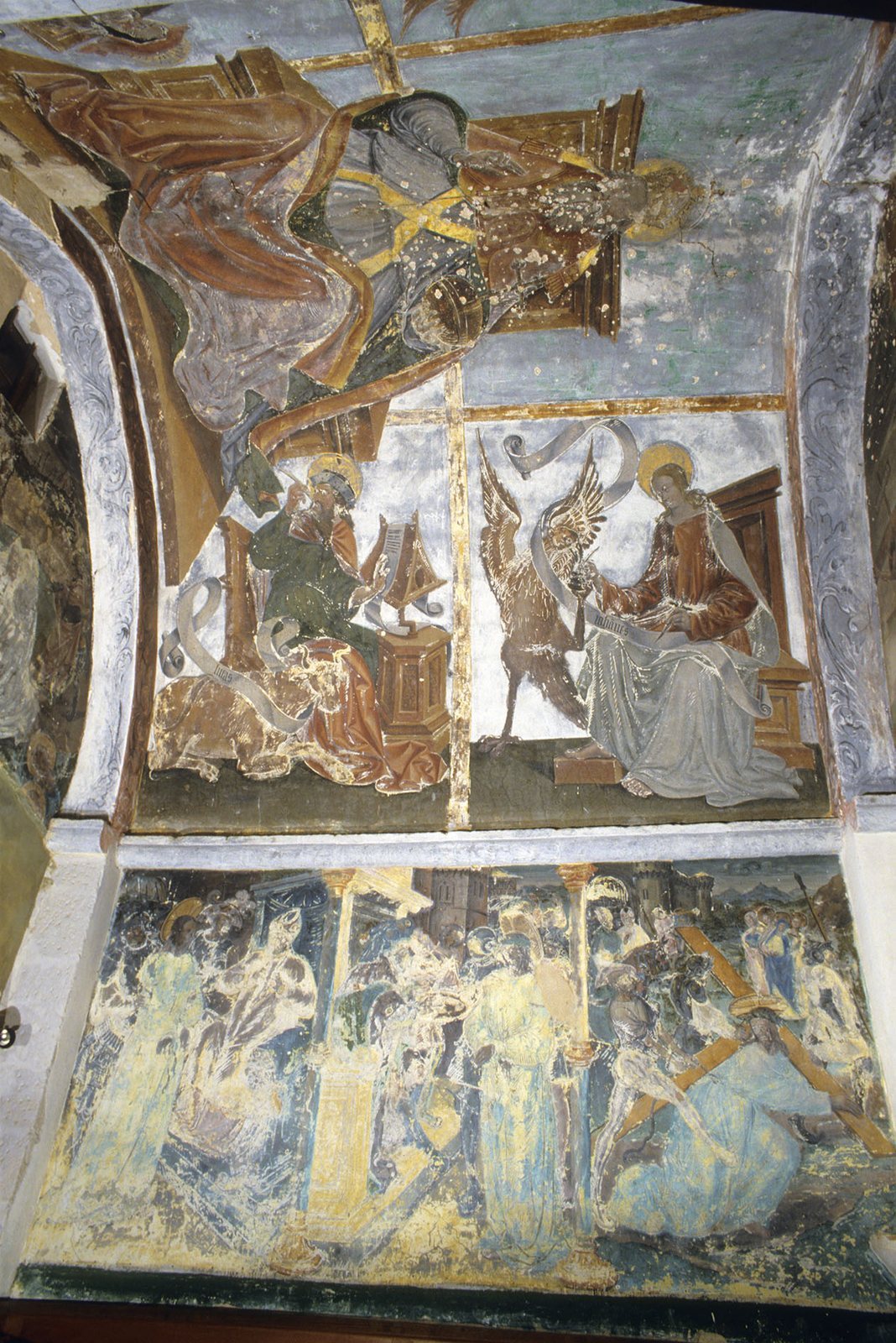
The square tower contains an oratory, a small chapel for prayer. Its early-16th-century wall paintings show God the Father, the first person of the Christian Trinity, and the four Evangelists, traditionally identified as the authors of the Gospels, on the vault. Scenes of the Passion, Christ’s suffering and death, appear on the walls, while an Annunciation, depicting the announcement to Mary that she would bear Jesus, is painted at the chapel’s end.
An Entombment scene depicts François de Beynac, lord of the castle, and Jeanne de Salignac. The paintings also include a Crucifixion and Saint Francis of Assisi. A reproduction of the frescoes is held at the Musée des Monuments Français in Paris.