Château de La Colle Noire: A Provençal Estate and Christian Dior Residence
Site at a Glance
- Popularity
- High
- Country
- France
- Primary era
- Modern
- Eras represented
- Modern
- Civilizations
- French
- Site type
- Domestic
- Remains
- Castle
On this page6 sections
History
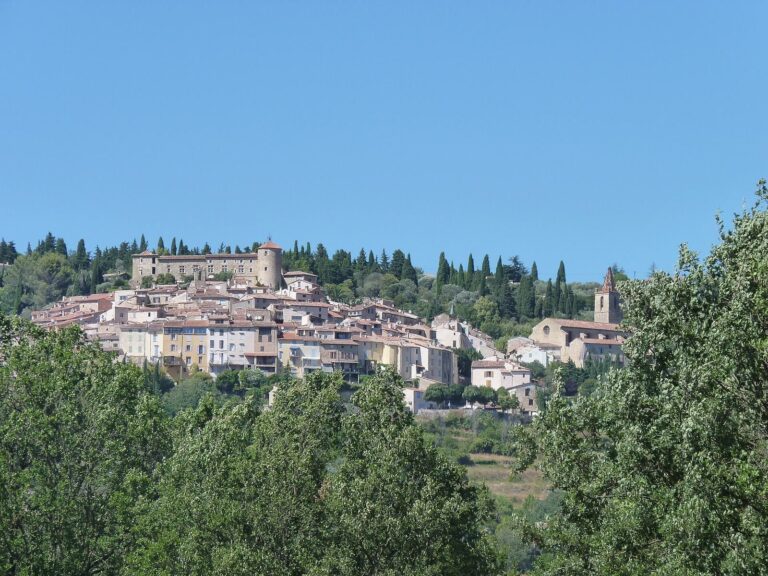
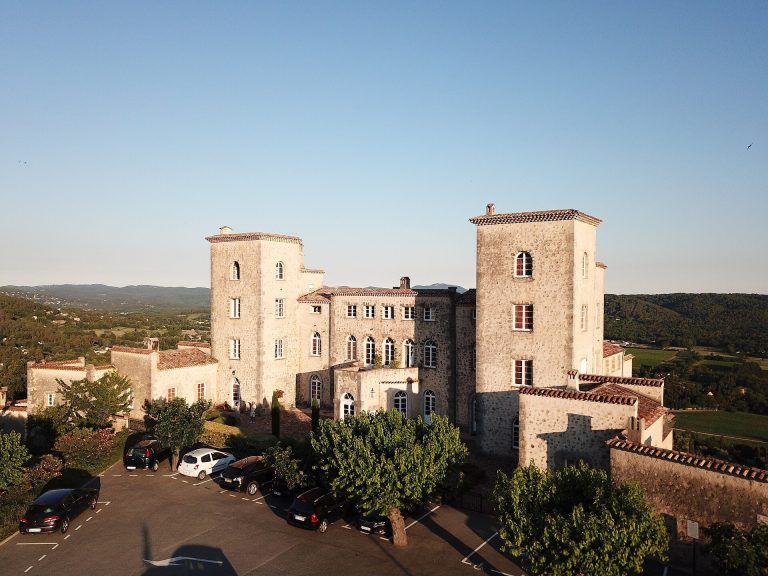
Château de La Colle Noire is a nineteenth-century residence on an agricultural estate overlooking the plain of Montauroux in southeastern France. Henri-Emmanuel Poulle built the residence from 1858 to 1861. The estate later became associated with Christian Dior and the connection between flower cultivation and perfume.
Poulle and the estate’s formation
From the fifteenth century into the early nineteenth, the place was known by names including La Colle Narbonne, La Colle, and La Colle Noire. The estate took shape in 1826, when Poulle, a lawyer, senior judge, and representative for the Var, acquired the property. It later took the name of a nearby hamlet. From 1839, he operated a postal relay station there, whose building may have provided the basis for the later residence. Further purchases expanded the estate to more than 90 hectares of farmland, pasture, vineyards, and mulberry trees.
While the residence was being built, Poulle also established a chapel dedicated to Saint Anne, named for his daughter Anne-Victoire. After his death in 1877, she inherited the estate and received permission for the priest of Montauroux to celebrate Sunday Mass in the chapel, except on Christmas, Easter, and other feast days. Residents attended the services, and the chapel remains consecrated.
Poulle also owned a separate chapel dedicated to Saint Bartholomew in Montauroux. Built in 1634 by the White Penitents, a Catholic religious confraternity, it could not be sold as national property during the French Revolution because its deed of ownership had been lost. It became part of Poulle’s holdings and was spared vandalism during the revolution of 1870. The chapel later passed to Christian Dior, who gave it to the commune of Montauroux in 1953.
Later owners and Christian Dior
When Anne-Victoire died in 1894, her son Paul Félix Honoré Reibaud inherited the estate but showed little interest in it. It passed to an industrialist named Fayolle, whose widow sold it to Pierre Grosselin in 1921. Dior bought La Colle Noire on 25 October 1950. The property included the residence, agricultural buildings, and land used mainly for vines and flowers. Familiar with the region through his family, Dior hoped to make the house his home and eventual retirement refuge.
Dior began redesigning the estate in 1950, and from 1955 he commissioned an architect to carry out restoration and renovation. His attachment to Provence also shaped the estate’s fragrance associations. The region inspired Miss Dior, created in 1947, while lily-of-the-valley at La Colle Noire inspired Diorissimo, created in 1956 by perfumer Edmond Roudnitska.
After Dior died in 1957, his sister Catherine inherited the property but could not maintain it. It later belonged to the Laroche family and then to Mr. and Mrs. Tassou. Parfums Christian Dior bought La Colle Noire in 2013, and an extensive restoration began in 2015. The estate again served to host guests of the Dior house and to connect flower cultivation with perfume creation.
Remains
The house stands on a promontory above the plain of Montauroux, near the entrance to the Pays de Fayence and close to the boundary between the Var and Alpes-Maritimes. A park surrounds the residence and contains the Saint Anne chapel.
House and interiors
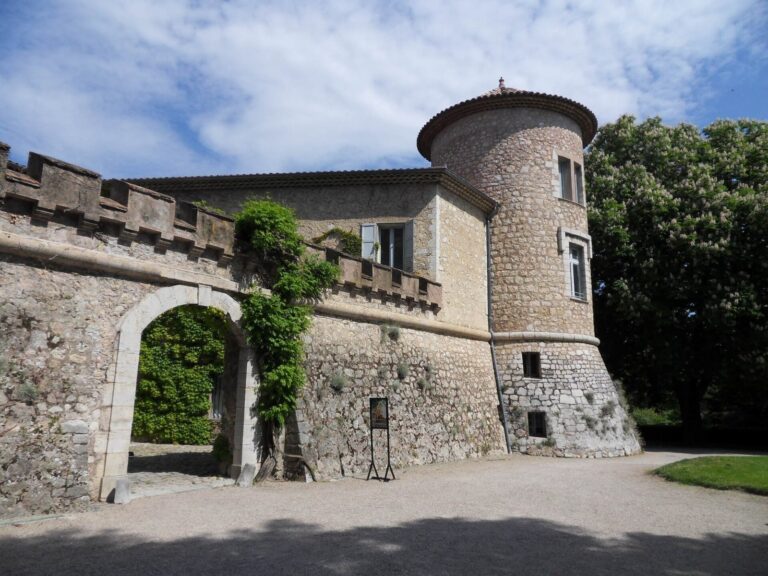
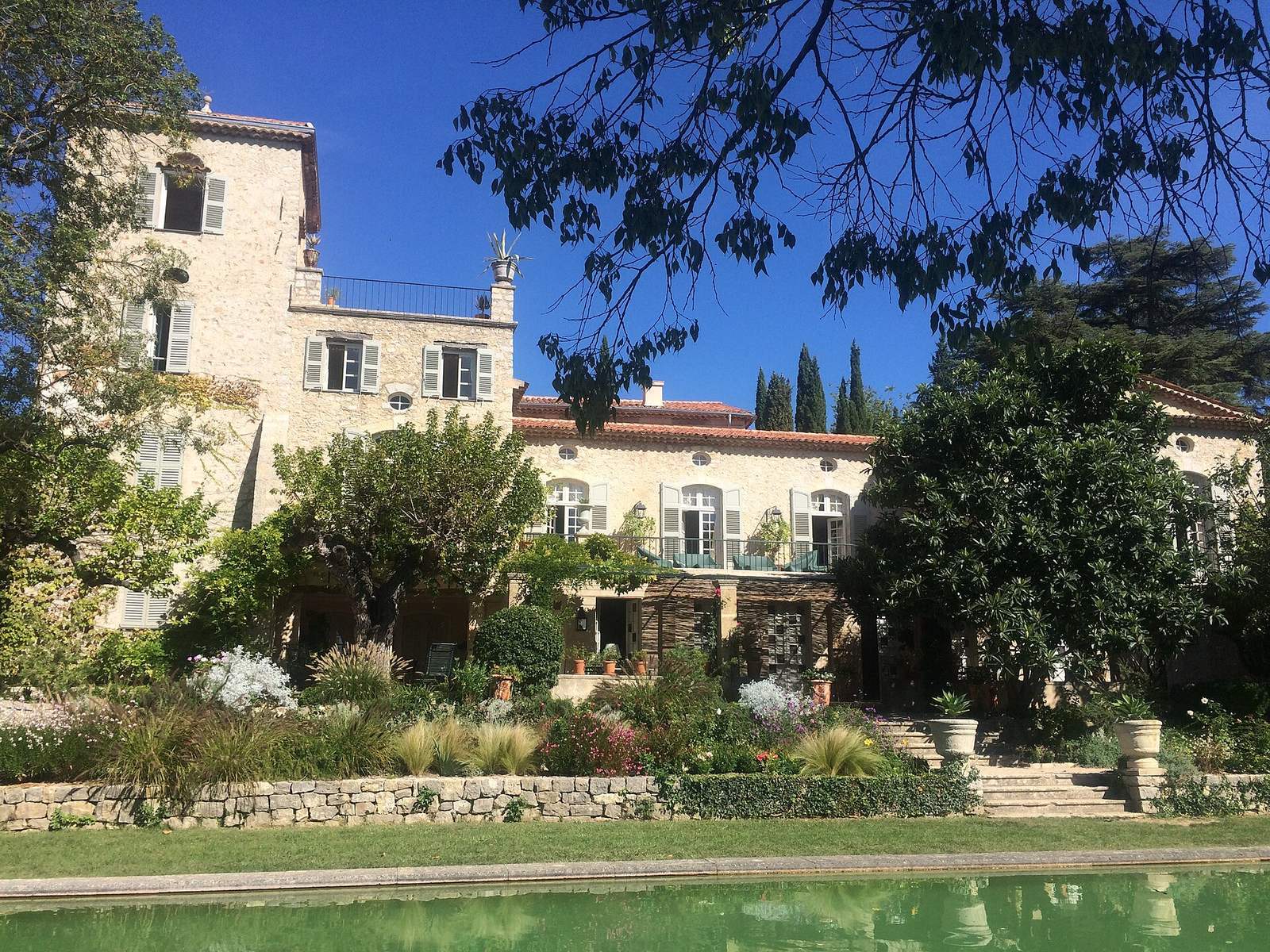
The original façade has two towers. The later redesign paired the north front with an asymmetrical south façade in a Provençal style of the 1940s and 1950s. A former service wing became the main entrance, with an appearance inspired by an eighteenth-century Provençal country house. A cypress-lined path leads to a hexagonal entrance hall conceived by Dior as a central space. Its Provençal stone floor forms a compass-rose pattern.
Inside, a large staircase receives light from above and leads to guest rooms. A sequence of reception rooms includes one more than 18 metres long, which opens onto a terrace overlooking the reflecting pool. The reception rooms and Dior’s apartment contain furnishings and decorative objects from the eighteenth and nineteenth centuries, acquired from antiques dealers. Some bedrooms use Louis XV and Louis XVI decorative styles, named for the reigns of those kings, or Egyptian Revival, a style drawing on ancient Egyptian forms.
Park and chapels
A straight-sided ornamental pool, 45 metres long, reflects the residence and contrasts with the curves of the surrounding landscape. The park also contains a field of May roses planted as a tribute. In 2016, perfumer François Demachy created a fragrance named La Colle Noire using roses from this field. The Saint Anne chapel stands within the park.
The separate Saint Bartholomew’s Chapel is in the village of Montauroux, near the parish church. Its walls and vaulted ceiling retain painted wooden decoration.