Château de la Chevrette: A Country Estate and Literary Residence in Deuil
Site at a Glance
- Popularity
- Medium
- Country
- France
- Primary era
- Unclassified
- Eras represented
- Unclassified
- Civilizations
- Unclassified
- Site type
- Domestic
- Remains
- Elite Residence
On this page8 sections
History
Origins and seventeenth-century rebuilding
The Château de la Chevrette was a country estate in Deuil, France, rebuilt in 1638 in the architectural style associated with the reign of Louis XIII. A marriage in 1398 between Lancelot Turpin de Crissé, lord of Deuil, and Denyse de Montmorency suggests an earlier manor in the area. La Chevrette is first named in a deed of sale dated 1 October 1559, which describes an estate with several buildings, courtyards, and gardens bounded by ditches and hedges.
Pierre Puget de Montauron acquired the property in 1636, commissioned the rebuilding, and had a park laid out. In 1645 he sold it to Michel Particelli d’Émery, the senior royal official responsible for state finances. Marion Delorme, a courtesan and one of Particelli’s lovers, also visited the château. Ownership later passed to Phélypeaux de la Vrillière in 1650, Balthazar, Marquis de Châteauneuf, in 1670, Guillaume de Boissier, Romain Dru de Mongelas in 1707, and Eustache François Le Couturier in 1727.
An eighteenth-century residence and literary circle
In 1731 the estate was acquired by Lalive de Bellegarde, a contractor who collected royal taxes. He undertook extensive renovations, and the château was enlarged and embellished in 1734. His son Lalive d’Épinay married his cousin Louise Florence Pétronille Tardieu d’Esclavelles in 1744. She became known as Madame d’Épinay, a writer and literary hostess.
Madame d’Épinay welcomed Jean-Jacques Rousseau, a writer and philosopher, in 1748, after her sister-in-law, the Countess d’Houdetot, introduced them. In 1756 she had a separate house, the Hermitage, built for him. Rousseau spent time at the château, the Hermitage, and the Countess’s home in Eaubonne. A quarrel with Madame d’Épinay led him to leave in December 1757.
From 1760, the château also received Denis Diderot and other intellectuals, including Baron Melchior Grimm, d’Holbach, and Galiani. Madame d’Épinay corresponded with writer and philosopher friends and contributed to the periodical Correspondance littéraire. She left La Chevrette in 1762.
Demolition and later history
The La Savalette de Magnanville family rented the property from 1764 to 1780 and made it a major theatrical centre. The Duke and Duchess of Infantado, members of Spain’s highest nobility, rented it from 1780 to 1786. Madame d’Épinay’s daughter, the Vicomtesse de Belzunce, inherited the estate in 1783. In 1786 her husband, the Vicomte de Belzunce, had the château and its theatre demolished. The farm and orangery were lost during the nineteenth century, and the stables were demolished in the 1960s.
A reproduction of the park’s Galatea statue was installed in 2018 in Place de la Nation in Deuil, and the Galathée district also recalls the statue. The Municipality of Deuil-la-Barre now owns the surviving property.
Remains
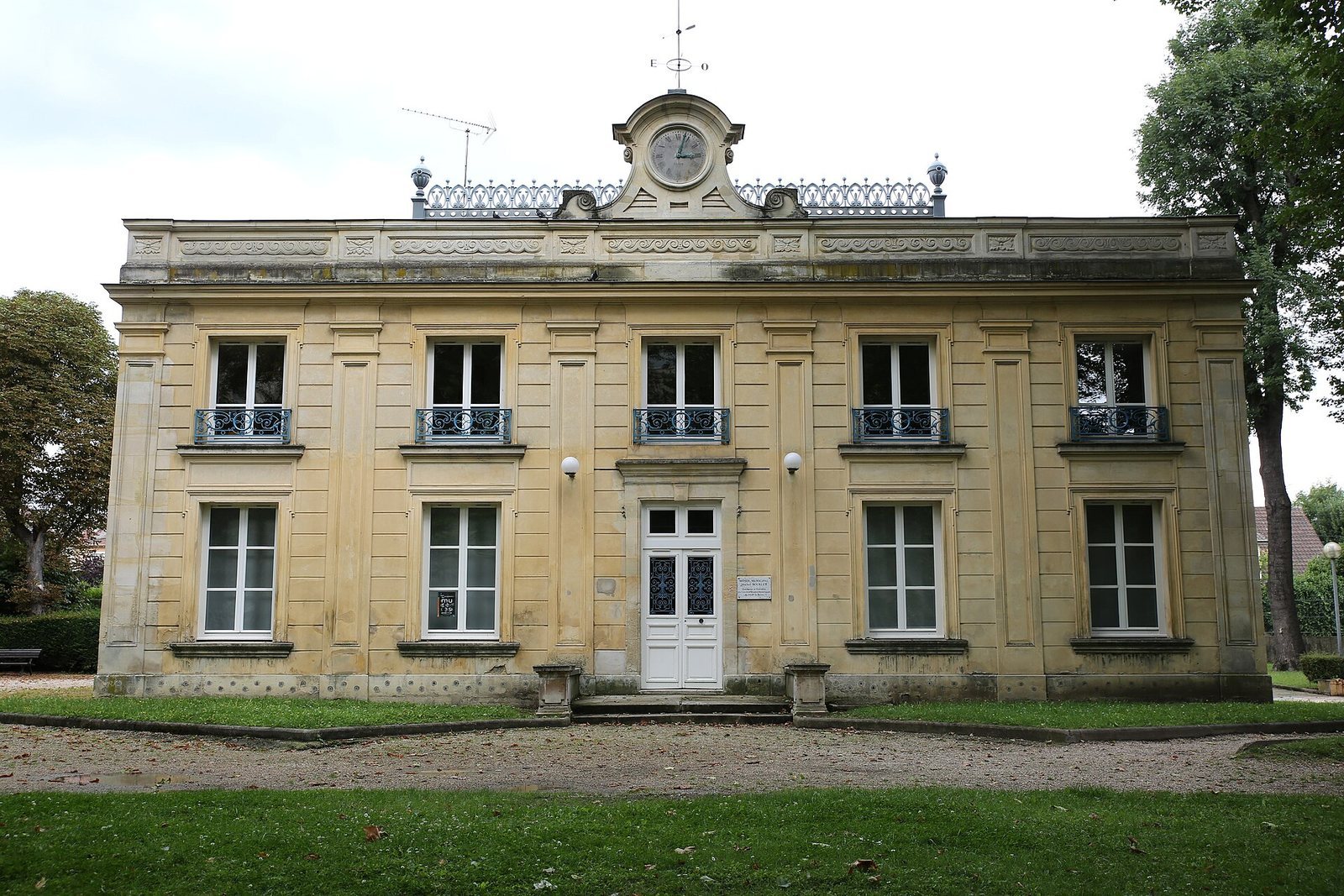
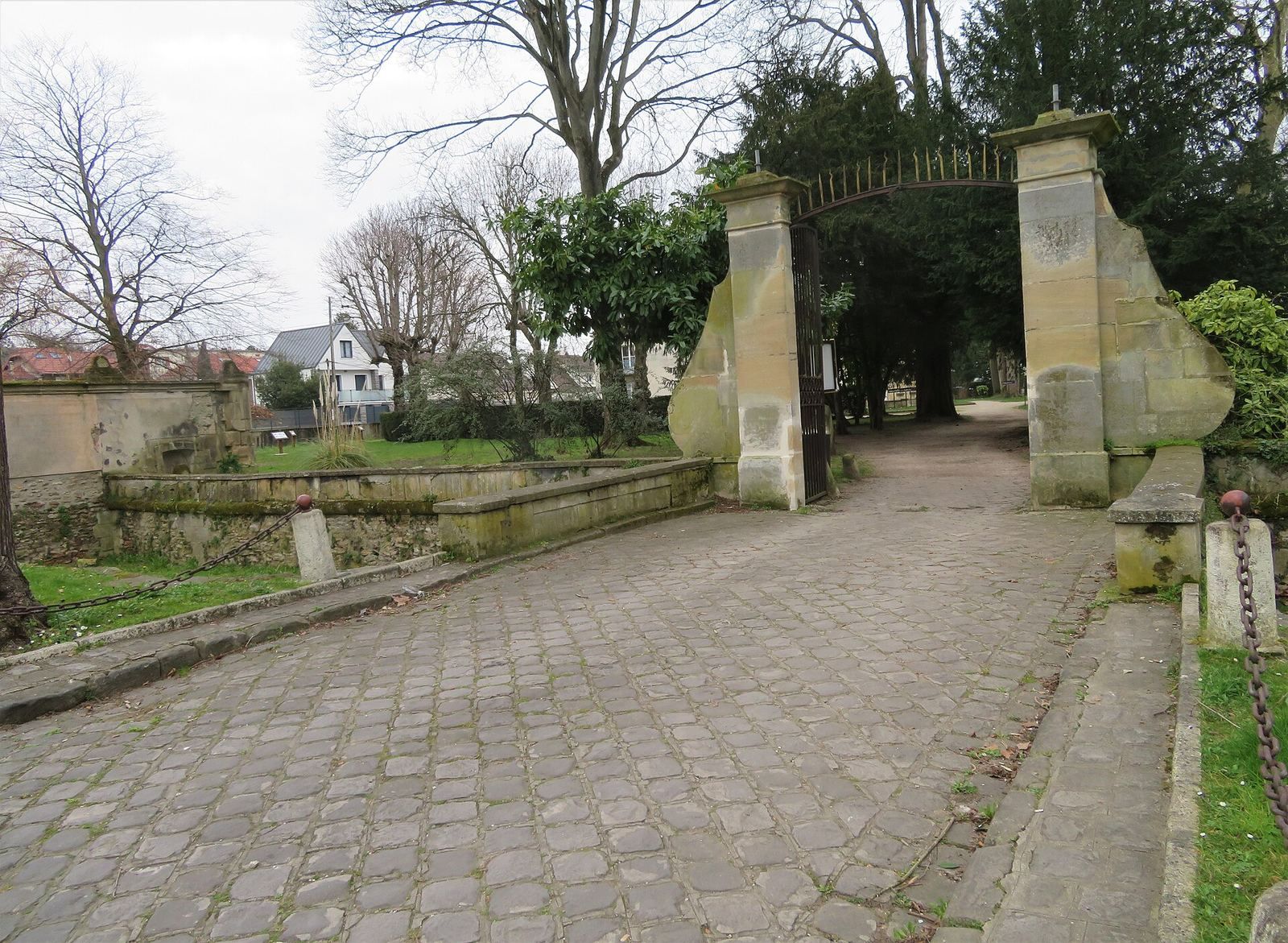
The former estate combined a château with a 30-hectare formal French park. The park extended east to Avenue Galliéni, north to the path along its boundary, and west beside Rue du Château to near Avenue de la Division Leclerc. Today, the entrance gate and former gatekeeper’s lodge are the surviving estate structures. The gate stood on Rue du Château, aligned with Rue Célestine; the lodge now serves as a museum and music school.
The château and entrance
The château’s main building occupied the site of Deuil’s present ice rink. Its façade measured 51 metres. A chapel with paintings by Jacques Blanchard stood to its left, while a pavilion containing baths stood to its right. Later alterations added a wing and two pavilions in the main courtyard. The entrance gate and lodge preserve part of the estate’s former approach.
The park and its features
André Le Nôtre designed the formal gardens, which included a 285-metre canal, three basins, and an orangery, a building for growing or sheltering citrus trees. The park also contained commissioned statues, including one of Galatea, a figure from Greek mythology. A theatre was built within the grounds.
The Hermitage
The Hermitage was a separate house near the park’s water reservoir, at the edge of Montmorency Forest. Madame d’Épinay had it built for Rousseau, apart from the château itself.