Château de Dieulouard: A Medieval Fortress in France
Site at a Glance
- Rating
- 4.1
- Popularity
- Very Low
- Country
- France
- Primary era
- Medieval
- External website
- Open
- Eras represented
- Medieval, Early Modern
- Civilizations
- Holy Roman Empire
- Site type
- Military
- Remains
- Castle
On this page11 sections
History
Château de Dieulouard is a medieval fortress in France, built at the end of the tenth century near Pont-à-Mousson. Constructed in 997 by Heimon, bishop of Verdun, it succeeded the earlier settlement of Scarpone and became an episcopal stronghold controlling an important position along the Moselle.
From Scarpone to the medieval castle
Scarpone was a Gallo-Roman city beside the Roman road linking Lugdunum, now Lyon, with Augusta Treverorum, now Trier, through Divodurum, now Metz. The road crossed the Moselle at this point. In 366, the Roman historian Ammianus Marcellinus recorded that the consul Jovinus defeated the Alamanni, a confederation of Germanic peoples active along the northeastern frontier of the Roman Empire, at Scarpone.
During the late fourth century, a castrum, meaning a fortified Roman or late-antique military settlement, was built outside the city. When Attila destroyed Scarpone during the invasions of the fifth century, the fortified settlement survived and provided the basis for the later castle.
Heimon founded the medieval castle in 997. An imperial charter issued by Conrad II in 1028 for nearby Gellamont Priory names the site Castrum quod dicitur Deus Louvart, meaning the castle called “God protects it,” and confirms Heimon as its builder. This charter is the earliest surviving authentic document concerning Dieulouard Castle.
Sieges and episcopal authority
In the twelfth century, forces from Metz captured and razed the castle twice after the burghers of Toul suffered a major defeat against the count of Vaudémont. Rebuilding followed, but conflict continued. The fortress endured repeated sieges by the Messins of Metz, Charles the Bold, and the Huguenots, French Protestants who became a political and military force during the French Wars of Religion.
Repeated destruction, burning, rebuilding, and restoration transformed Dieulouard into an imposing fortress by the fourteenth century. It became the seat of a Verdun prévôté, an administrative and judicial district governed by a provost, comprising seven villages. The castle also formed an episcopal territory projecting into the Duchy of Lorraine, giving the bishop an observation post over the Moselle valley and control of its prosperous river commerce.
Dismantling, reuse, and restoration
In 1660, Louis XIV ordered the castle walls dismantled. During the French Revolution, the property was sold as national property and divided into lots. About fifteen families occupied the resulting houses, opening new windows and laying out gardens within the former fortress complex.
A major rehabilitation began in the 1970s. The work included restoration of the episcopal residence and the creation of a Gallo-Roman museum inside the castle. Château de Dieulouard is now used as both a dwelling and a museum. It has been listed as a historic monument since 19 June 1927.
Remains
The surviving complex combines the remains of a medieval fortress with houses built against its walls and later domestic alterations. Its principal enclosure developed around a long eastern front, while the castle museum preserves objects connected with the earlier settlement of Scarpone.
Fortress enclosure and defences
Eastern façade and polygonal enclosure
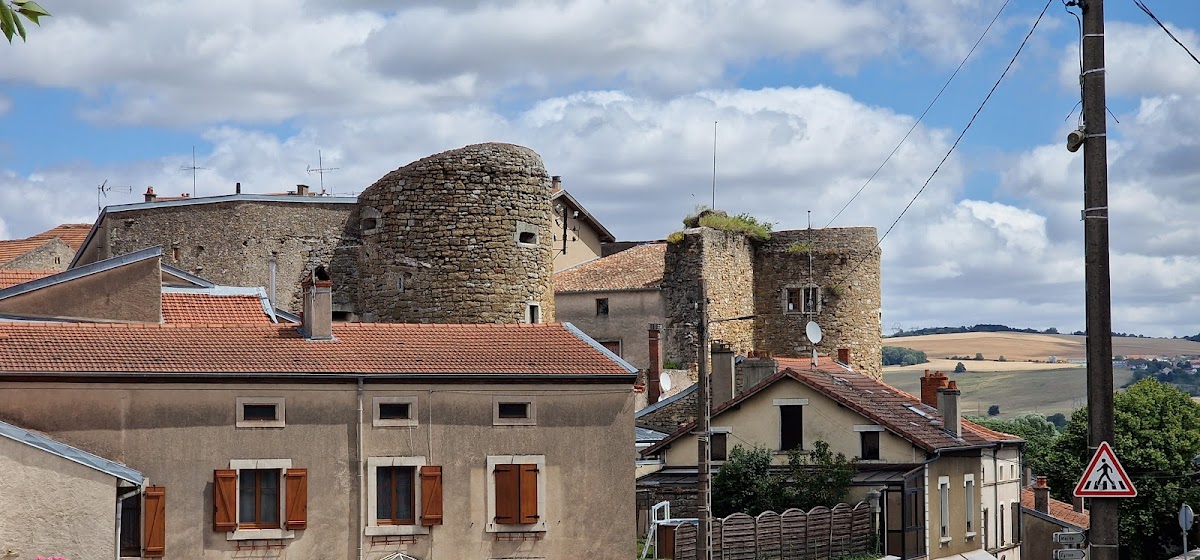
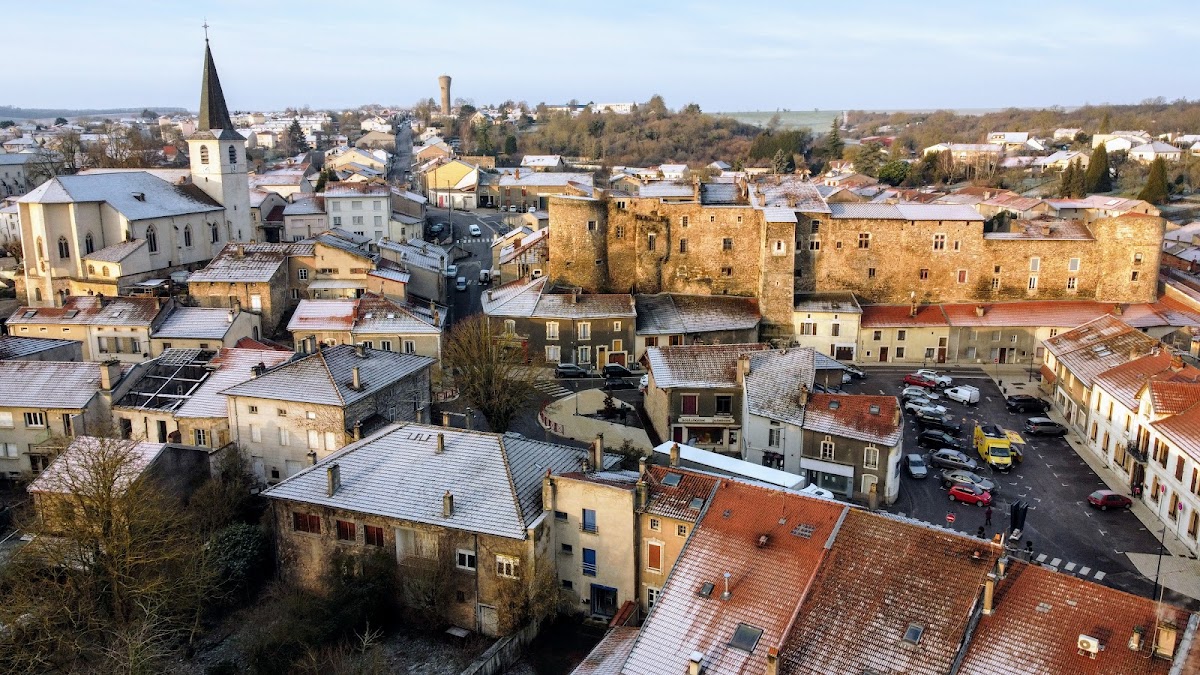
By the fourteenth century, the fortress had an approximately 100-metre-long straight façade facing east. Behind it, a large polygonal enclosure formed a semicircle. The walls were crenellated, and later houses were built against them. In places, the walls are described as reaching 20 metres in height.
Towers and fortified entrance
The enclosure included seven circular towers dating from the tenth century and a square tower on its western side. A fortified gateway was preceded by a drawbridge, while a four-arched stone bridge formed part of the approach. These defensive elements belonged to the castle’s development from a fortified house into a larger fortress.
Later buildings and museum collections
Sixteenth-century remodelling
The complex was remodelled in the sixteenth century and became incorporated into a group of houses raised against the medieval walls. The alterations made the fortress enclosure part of a later residential setting, while the episcopal residence was subsequently restored during the modern rehabilitation.
Scarpone and Renaissance collections
The Musée des Amis du Vieux Pays occupies part of the castle and presents objects from Scarpone, the earlier Gallo-Roman city associated with the site. Its displays include milestones, roadside stones marking distances and often naming the ruler responsible for a road, commissioned by the emperors Hadrian and Postumus. The museum also contains a collection of Renaissance glassware.
Nearby sites