Château de Cornillon (Bugey): A Medieval Fortified Castle in France
Site at a Glance
- Rating
- 5
- Popularity
- Very Low
- Country
- France
- Primary era
- Medieval
- Eras represented
- Medieval
- Civilizations
- Holy Roman Empire
- Site type
- Military
- Remains
- Castle
On this page11 sections
History
Château de Cornillon (Bugey) is a medieval fortified castle in Saint-Rambert-en-Bugey, France. Its construction date is uncertain, but the site appears to have originated around the beginning of the eleventh century, while another dating places the start of construction in the twelfth century. The Abbey of Saint-Rambert established a watchtower here to monitor the Albarine road, a major route for invasions. The name Cornillon derives from a Latin term describing a projecting promontory.
From watchtower to Savoyard stronghold
The first installation was a simple surveillance post with few inhabitants. It was later rebuilt in stone and strengthened as a castle. On 30 November 1196, under a treaty of pariage, a medieval agreement sharing rights or protection between a religious institution and a secular ruler, Abbot Régnier placed the abbey’s possessions under the protection of Thomas I, Count of Savoy and Maurienne. Cornillon was transferred permanently to the count. It was not to be separated from the county or granted as a dowry, and the count had to station a garrison there and maintain the fortress.
In 1252, Peter II, Count of Savoy, granted Cornillon as an appanage, a land or rights grant to a member of a ruling family, to his brother William. William nevertheless bequeathed the castle in his will of 6 May 1258 to Beatrice of Savoy, Peter II’s daughter and the wife of the Dauphin of Viennois, the hereditary ruler of the neighboring principality of Dauphiné. After Beatrice’s death, Cornillon returned to the comital domain and was not separated from it again.
Warfare and changing strategic importance
Around 1304, Cornillon became the last Savoyard stronghold on the route to Pont-d’Ain. Its position increased the military importance of Saint-Rambert, which developed into a garrison town surrounded by ramparts. The town also served as a mustering point for raids and as a place of retreat and storage for military equipment.
The castle was drawn into the wars between Savoy and the neighboring Dauphinoise stronghold of Saint-Germain. Around 1310, its castellan, the official responsible for administering and defending a castle, was Arthaud de Montfaucon. He sent men to reconnoiter Saint-Germain before they burned its castle and town. In 1321, troops of the Count of Savoy besieged Saint-Germain from Saint-Rambert, using men and equipment supplied by Cornillon’s castellan.
The Dauphino-Savoyard War ended around 1355, and the Treaty of Paris reduced Cornillon’s strategic importance. During the fifteenth and sixteenth centuries, the castle was therefore maintained only intermittently. The Treaty of Lyon in 1601 ended the Franco-Savoyard War and annexed Bresse, Bugey, the Pays de Gex, and Valromey to France. To prevent a possible Savoyard revanche, Marshal de Biron dismantled Cornillon and Saint-Germain Castle.
Ruins and modern stewardship
The ruins have since been enhanced by the Association of the Friends of the Canton of Saint-Rambert. Rather than being excavated, the site has been examined through surveys and recording. The Abbey of Saint-Rambert is identified as the original owner, while the Commune of Saint-Rambert-en-Bugey is the current owner.
Remains
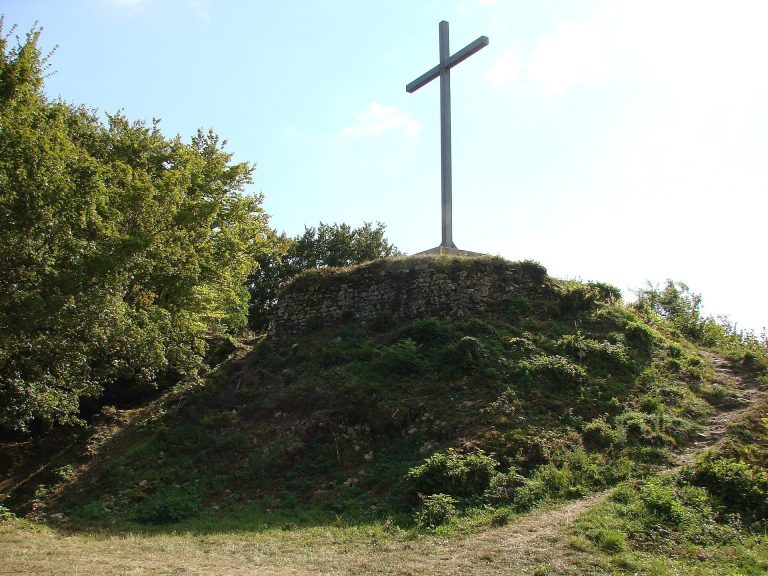
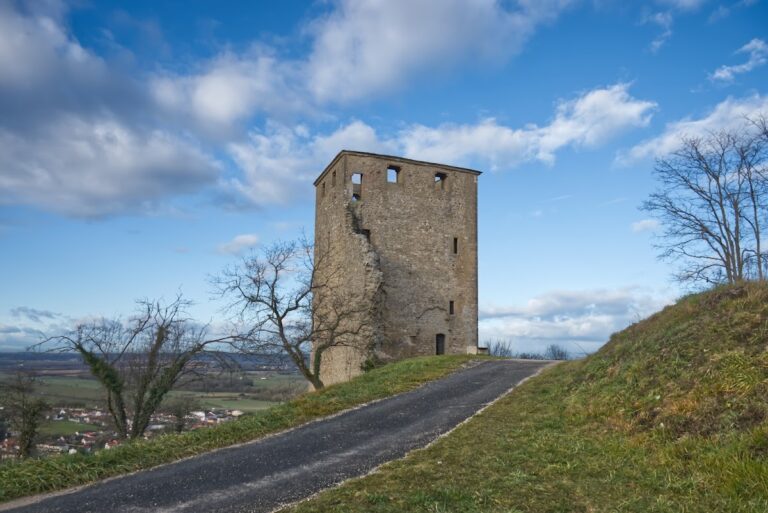
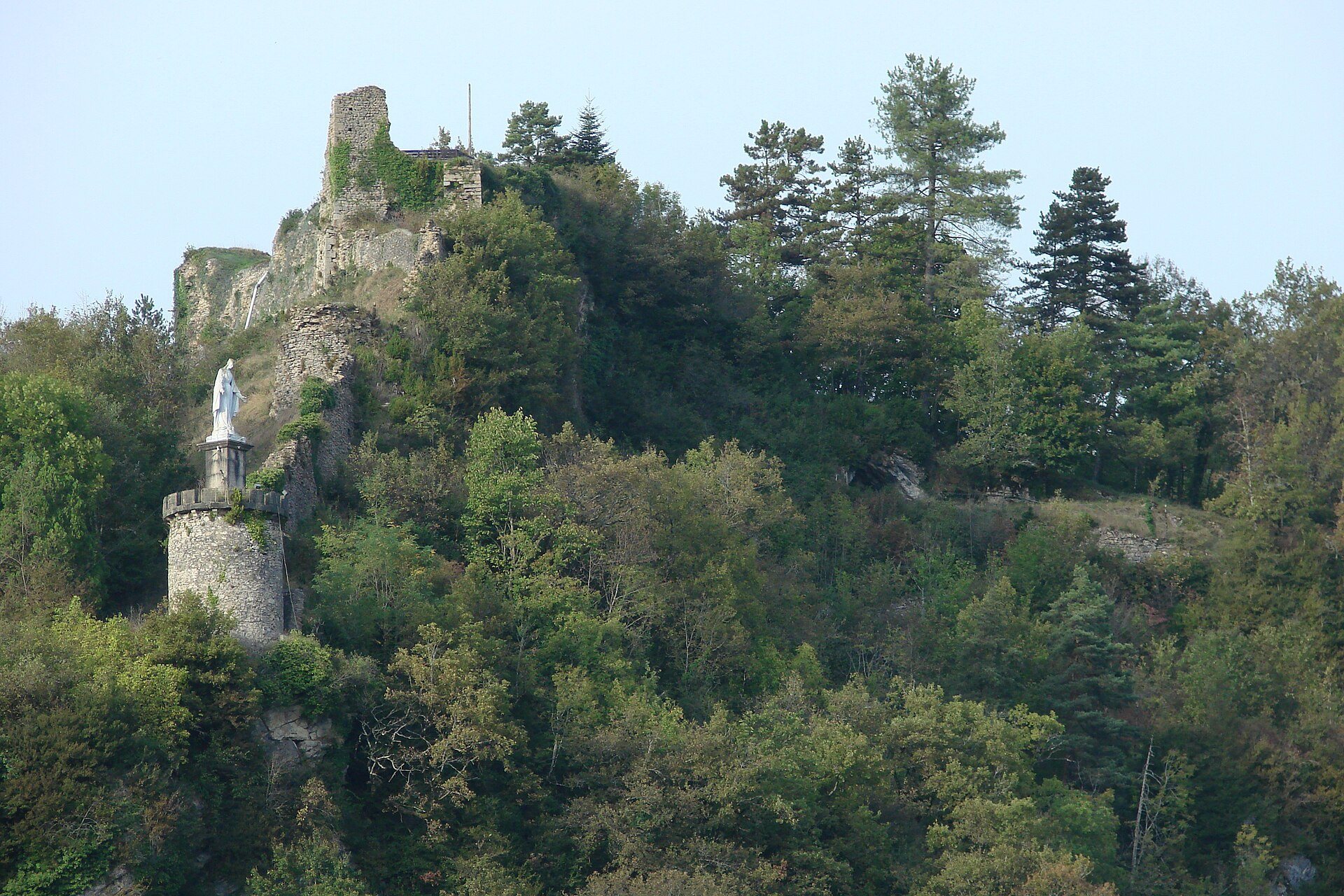
The remains occupy a rocky hill above Saint-Rambert-en-Bugey, overlooking the town and the abbey. Their surviving arrangement includes a restored tower, a keep at the summit, a statue of the Virgin at mid-height, and the ruins of other buildings. Ruined walls retain visible corner bonding masonry, while the restored elements and the surviving wall fragments express the castle’s fortified construction.
Upper fortifications
Restored tower
A restored tower forms one of the principal surviving features of the site. It stands among the ruined walls on the rocky hill and remains part of the castle’s visible defensive fabric.
Summit keep
The keep, the principal fortified tower of a medieval castle, occupies the summit. Its position forms the highest element of the surviving complex, above the restored tower and the other ruined buildings.
Walls and associated features
Ruined walls
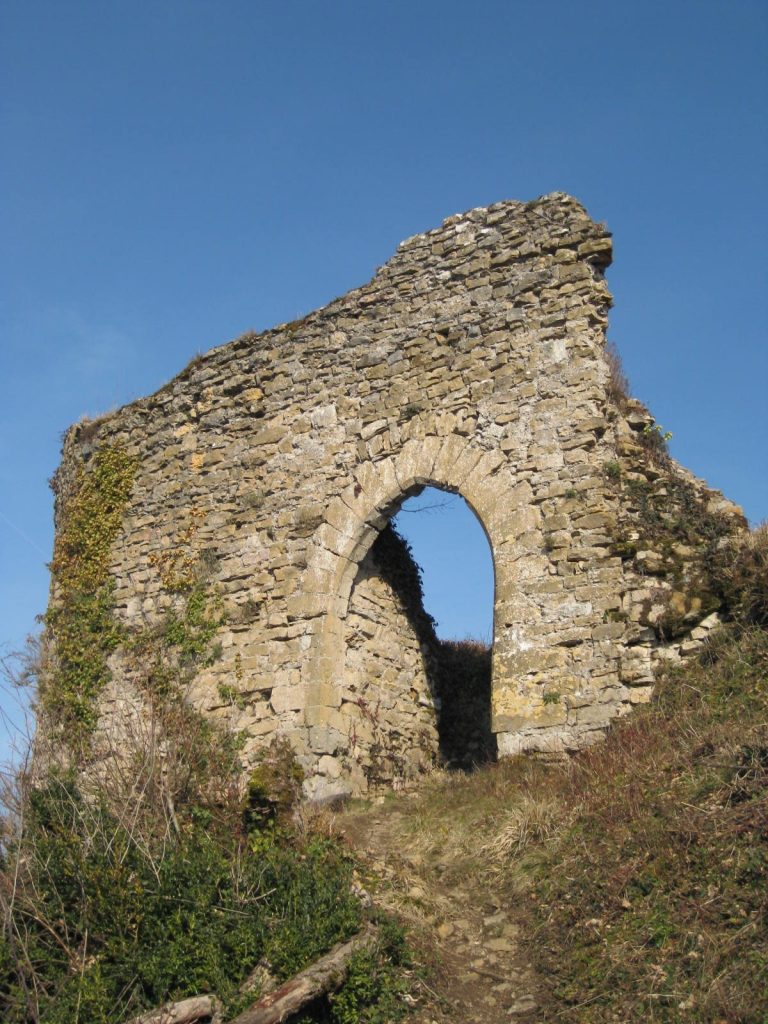
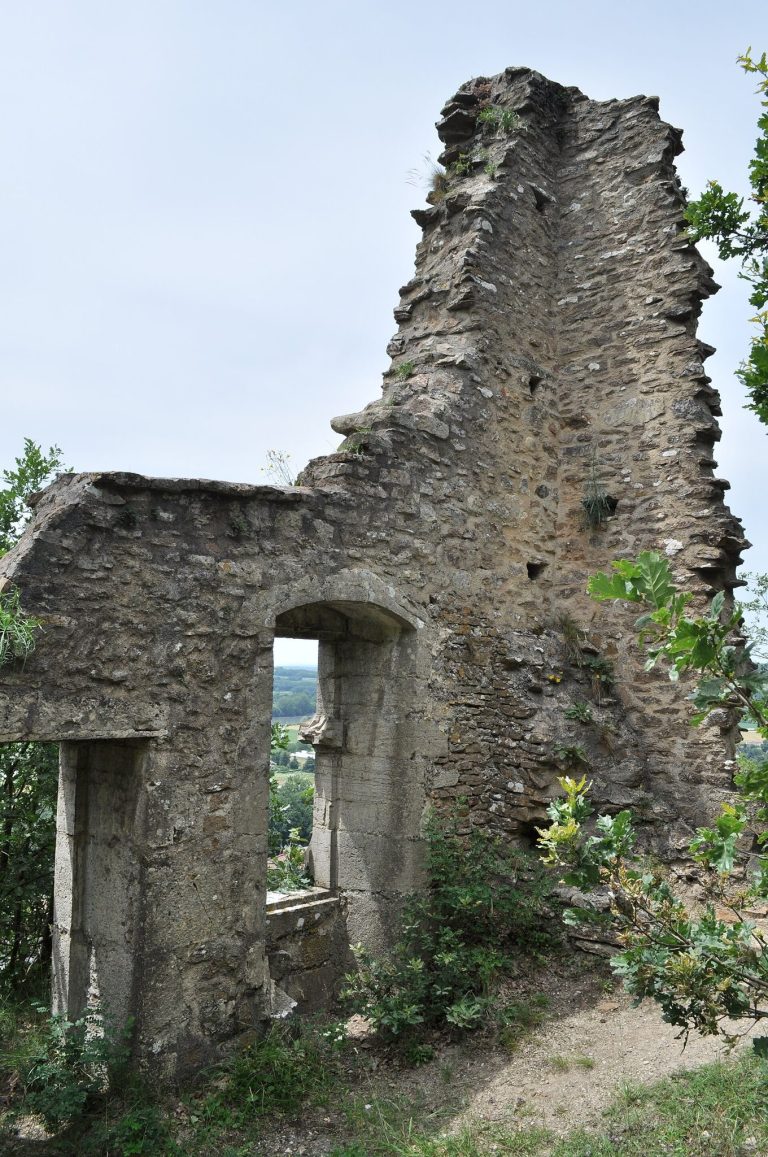
Fragments of the castle walls survive around the site, including clearly visible masonry reinforcing the corners. These remains belong to the stone fortification that replaced the earlier watchtower and later formed part of the fortified castle.
Virgin statue and former surroundings
A statue of the Virgin stands at mid-height on the hill. At the beginning of the twentieth century, the castle remained relatively open and clearly exposed, with vineyards extending along its edges. The present ruins therefore preserve both the fortified remains and traces of the landscape in which they stood.