Château de Châlucet: A Medieval Castle and Fortified Settlement
Site at a Glance
- Rating
- 4.5
- Popularity
- High
- Country
- France
- Primary era
- Medieval
- Eras represented
- Medieval
- Civilizations
- Unclassified
- Site type
- Military
- Remains
- Castle
On this page10 sections
History
Foundation and expansion
Château de Châlucet is a medieval fortress in France, originating as a fortified settlement established around 1130 by the Bernard de Jaunhac family for the head of Solignac Abbey. The first castrum, or fortified settlement, belonged to the abbey and became a focus of disputes over local power. The bishops and viscounts of Limoges repeatedly contested its control and use.
By about 1200, the settlement had a keep and was beginning to develop into a castle community. In the last third of the 13th century, Géraud de Maulmont enlarged the earlier fortress into a powerful castle. Work on Haut-Châlucet began around 1270, turning it into an imposing residence. Géraud advised the viscountesses Marguerite and Marie of Limoges, noblewomen who held a viscount’s title, and also served the king of France. Châlucet became a royal fortress and the largest fortified castle in the historic region of Limousin. In 1306, Henri de Sully ceded it to Philip IV, king of France.
Warfare and dismantling
During the Hundred Years’ War, English forces attacked Châlucet in 1369. In 1376, armed bands known as routiers, who operated and plundered during the medieval period, took the fortress through deception. One of them, Perrot le Béarnais, used it as a base for raids in the surrounding area until he was expelled in 1394. Poor upkeep and the modernization of other fortresses, including Les Cars, gradually reduced Châlucet’s military importance.
In the 16th century, Châlucet again served as a strongpoint, this time during the French Wars of Religion, and provided refuge for Huguenots, French Protestants associated with the Reformation. Limoges authorities later dismantled the fortress deliberately to reduce its military usefulness, leaving it largely in ruins.
Protection and archaeological work
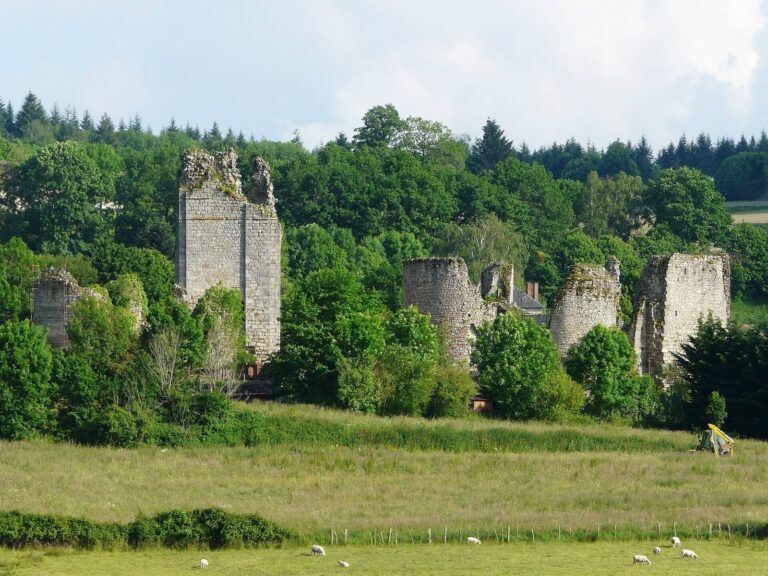
After its owners abandoned the site, its condition deteriorated. The association Châlucet en Limousin campaigned for its protection, and Haute-Vienne department acquired it in 1996. The ruins have been protected as a French historic monument since 1875. Conservation campaigns have taken place since 1990, and in the 2000s archaeologists excavated the lower settlement.
Remains
Setting and overall plan
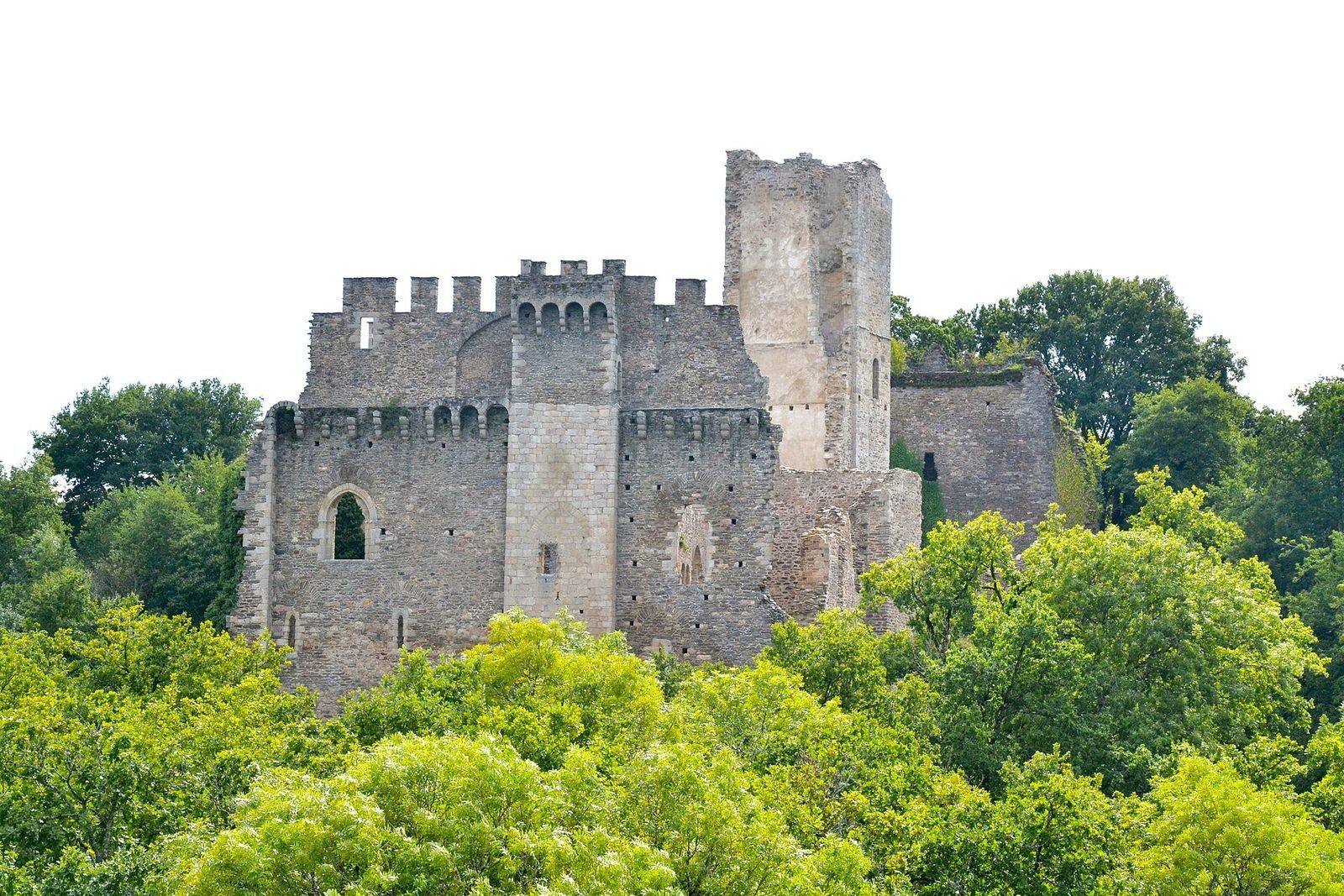
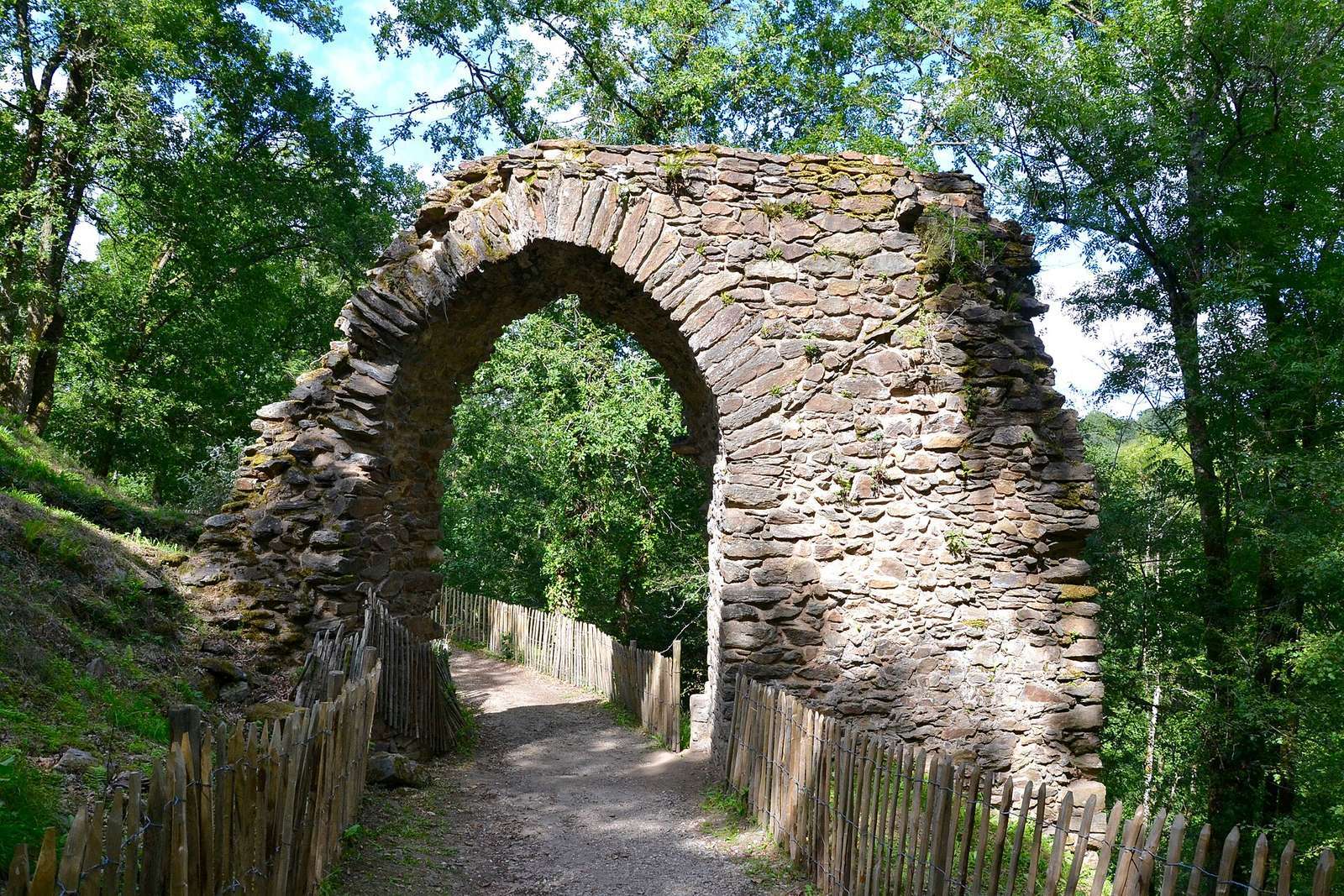
The fortress occupies a steep, wooded rocky spur about 400 metres long above the meeting of the Briance and Ligoure rivers. Its two main areas are Haut-Châlucet, the upper castle, and Bas-Châlucet, the lower settlement. The overall plan is trapezoidal, with residential buildings, courtyards and a keep. The residential buildings once had vaulted ceilings. Alternating raised sections and gaps along the parapets, together with projecting openings in the walls, were described as features intended chiefly to impress rather than to serve a practical defensive purpose. Laurent Bourdelas later collected glazed tiles found at the site and entrusted them to the regional archaeological service.
Bas-Châlucet
Tour Jeannette
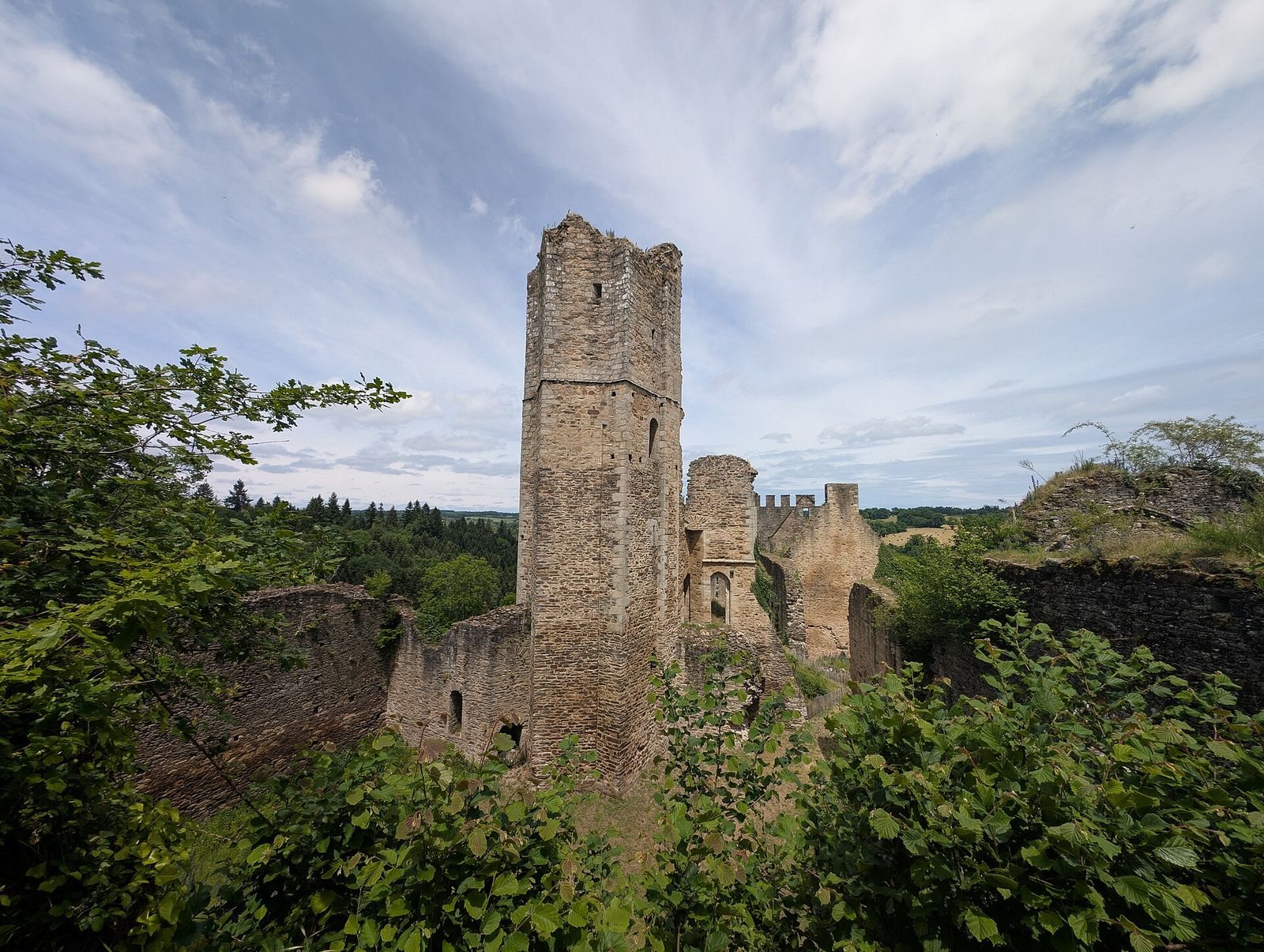
Tour Jeannette is a square defensive keep dating from the late 12th or early 13th century. It was reinforced, and a platform was added at its summit. A metal staircase now provides access to the platform.
Residential settlement
Excavations in the lower settlement revealed numerous houses and three cellars. This part of Châlucet developed during the second half of the 13th century and included homes for about 20 to 30 knights.
Haut-Châlucet
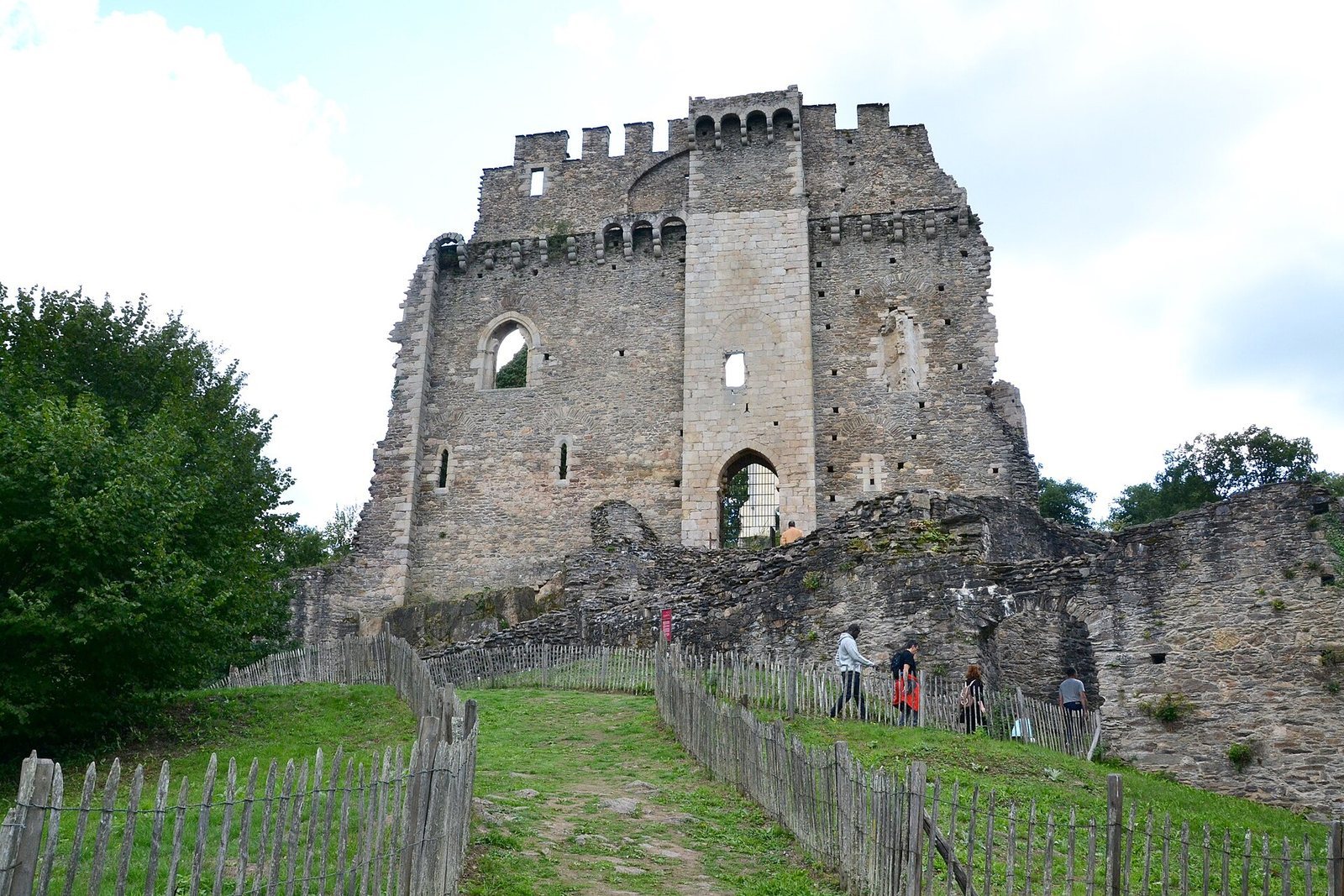
The upper castle includes a square main keep with a triangular spur. Its northern face has been consolidated and cleared of ivy. A wall of the chapel was considered at risk of collapse.