Château de Buisson-Rond: A Historic Residence and Civic Building in Chambéry
Site at a Glance
- Rating
- 4.2
- Popularity
- Very Low
- Country
- France
- Primary era
- Modern
- External website
- Open
- Eras represented
- Modern
- Civilizations
- French
- Site type
- Domestic
- Remains
- Elite Residence
On this page9 sections
History
Château de Buisson-Rond, also called Château de Boigne, is a historic château in Chambéry, France, whose present building was constructed after 1802 in the tradition of Piedmontese residences associated with the eighteenth and nineteenth centuries. It stands on an estate whose history reaches back to a fief recorded in 1341.
From medieval fief to aristocratic estate
A fief of Buisson-Rond was documented in 1341 at Barberaz-le-Pelloux, also known as Le Petit. The Grange family of Chambéry held it first, followed by the Luyrieu family and, through marriage, the Marcossay family. In 1587, Louis Milliet, Baron of Faverges and Grand Chancellor of Savoy, acquired the estate. The Grand Chancellor was a senior administrative office in the former Duchy of Savoy.
Louis Milliet’s grandson, François-Amédée Milliet de Challes, who became Archbishop of Tarentaise, built a second residence at Buisson-Rond. The estate later belonged to Marquis Joseph Frédéric Pantaléon Milliet d’Arvillars. In 1793, it was still in his possession, and after his death it was sold as national property in 1794 to M. Caseli. Doctor Bernard then acquired it and sold it to Count de Boigne in 1802.
Count de Boigne and the nineteenth-century château
Count de Boigne replaced the residence built by François-Amédée Milliet de Challes with the present château. A Savoyard military officer and aristocrat, he also had the interiors luxuriously decorated for his second wife, Adèle d’Osmond. The marriage was unhappy, and she visited only occasionally, but she held social receptions at Buisson-Rond after returning from Aix-les-Bains. Among those who accompanied her were Madame Récamier, Madame de Staël, Adrien de Montmorency, and Benjamin Constant.
The estate also played a part in the early history of aviation in Savoy. On 6 May 1784, before the construction of the present château, the first Savoyard hot-air-balloon expedition was prepared and launched at Buisson-Rond. A hot-air balloon is lifted by heated air contained in a large fabric envelope. The balloon was directed by engineer Louis Brun and Xavier de Maistre, an officer in the Real-Navi Regiment, and took off before a crowd of Chambéry residents before landing at Challes-les-Eaux.
Municipal ownership and protection
At the end of the twentieth century, the municipality of Chambéry acquired the Buisson-Rond estate and established a municipal annex there. The château’s civic destination is now a town hall. Part of the property has been listed as a French historic monument since 24 February 1982. This legal designation protects specified parts of a heritage property rather than necessarily the whole estate.
Remains
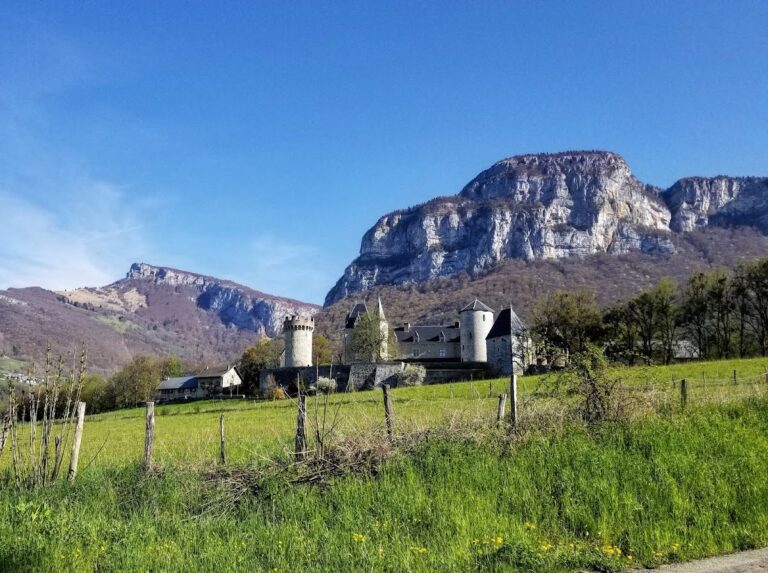
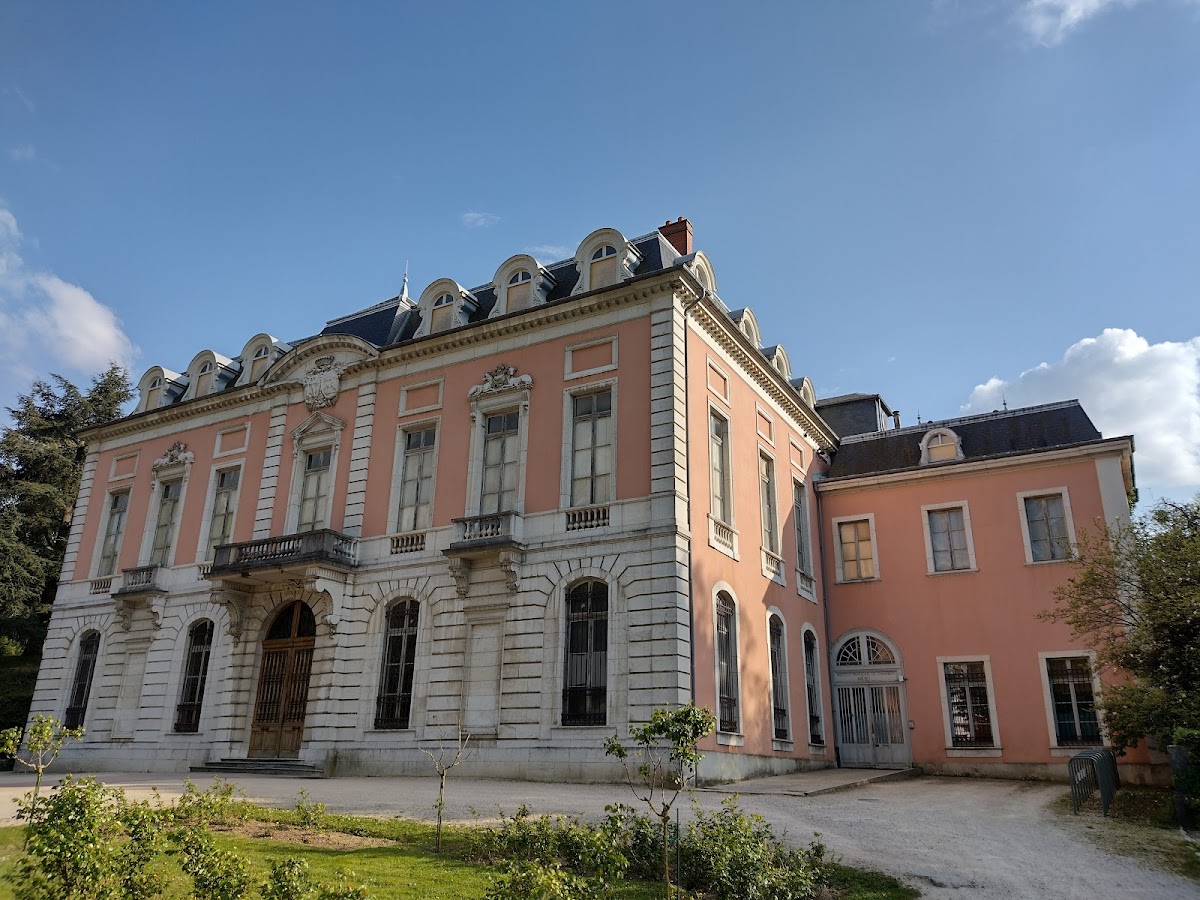
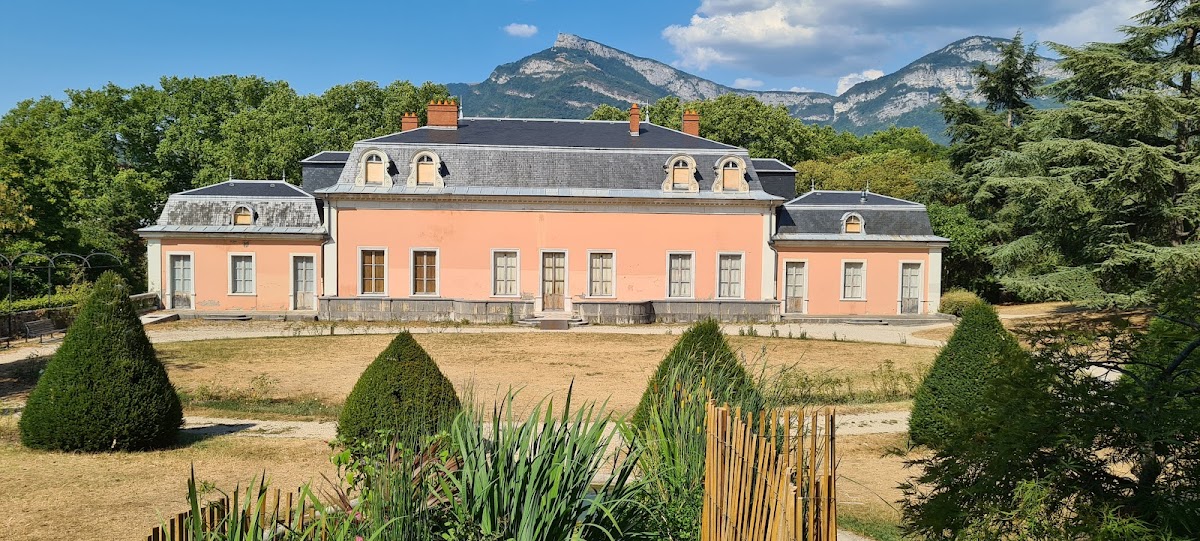
Château de Buisson-Rond stands at the southeastern edge of Chambéry, on the boundary with Barberaz, where it forms the entrance to Buisson-Rond Park. Its northeast façade faces the Albanne River, and a bridge extends from the forecourt across the river. To the southwest, the ground rises toward the northern foothills of the Chartreuse Massif, a mountain range in the French Prealps, and continues through and beyond the park toward Les Charmettes.
Château and associated buildings
Main residence
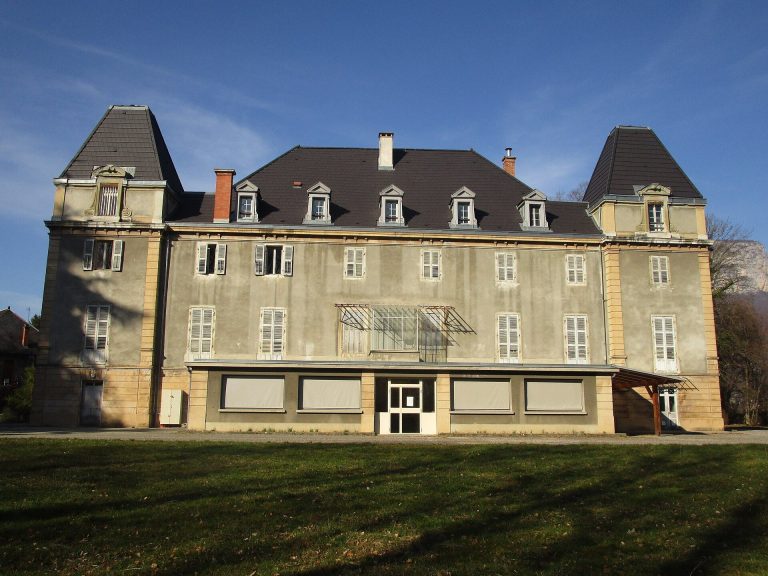
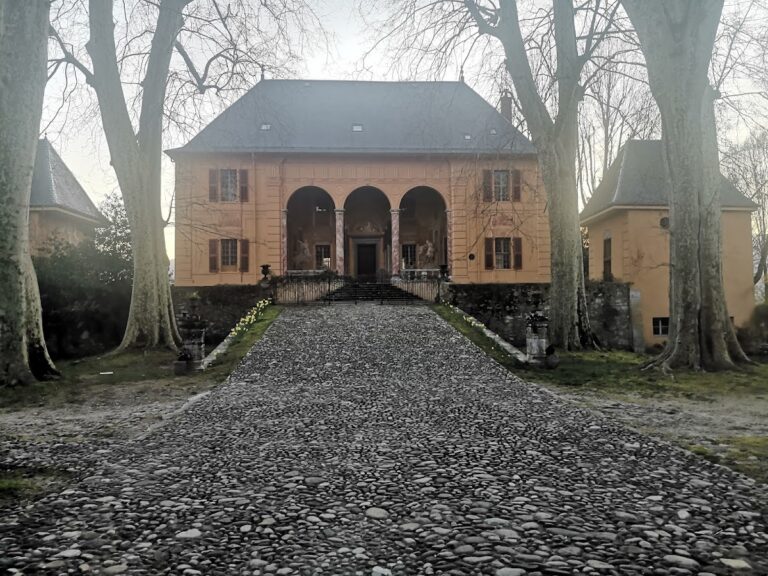
The present château was built after 1802 on the site of earlier buildings, including structures dating from the fourteenth and seventeenth centuries. Its form belongs to the tradition of Piedmontese residences, referring to the historic region of Piedmont in northwestern Italy. A large central salon forms the core of the building, surrounded by rooms whose height equals two stories. The complex also contains a chapel and two pavilions.
Park and rose garden
The estate’s landscaped park was laid out in 1810 by Count-General de Boigne. Its rose garden covers approximately 7,500 square metres and contains about 83 varieties and 6,000 rose plants.
Sports and leisure complex
A sports and leisure complex was established within the estate. It includes a swimming pool and a covered ice rink, adding later public-use facilities to the historic grounds.