Château de Becheville: A Nineteenth-Century Château and Cultural Centre in Les Mureaux


Site at a Glance
- Rating
- 3.9
- Popularity
- Very Low
- Country
- France
- Primary era
- Modern
- External website
- Open
- Eras represented
- Modern
- Civilizations
- French
- Site type
- Domestic
- Remains
- Elite Residence
On this page9 sections
History
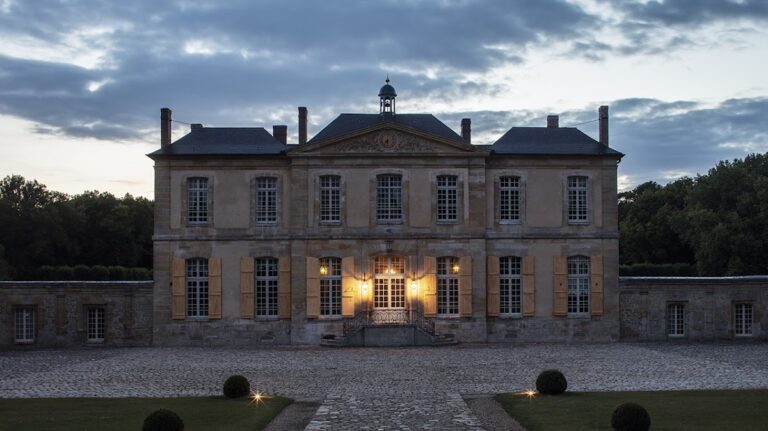
Château de Becheville is a nineteenth-century château in Les Mureaux, France, built between 1850 and 1860 in the taste of the Second Empire, the period of Napoleon III’s rule from 1852 to 1870. Its history reaches back more than two centuries through the de Vion family, whose successive ownership of the lordships of Les Mureaux and Becheville shaped the estate before the present building was constructed.
The de Vion lordship
The de Vion family, originally from Burgundy, held Les Mureaux and Becheville for more than two hundred years. The succession included Jean I de Vion, who died in 1537; his son Guillaume de Vion, who lived from 1506 to 1571; Guillaume’s son Jacques I de Vion, who lived from 1535 to 1610; Jacques’s son Mathieu de Vion, who died in 1645; Mathieu’s son Jacques de Vion; and Jean Paul de Vion, Mathieu’s grandson and the last lord of Les Mureaux and Becheville. The first Château de Becheville was built during this period.
From the Revolution to the Daru family
In 1776, Pierre Louis Randon de Lucenay, a chevalier, bought the Becheville estate. A chevalier was a French noble title broadly comparable to the rank of knight. During years of poor harvests, Randon de Lucenay gained local popularity by waiving the peasants’ crop taxes. During the French Revolution, he voluntarily surrendered his privileges, an act that saved both his life and the château.
Statesman and Count of the Empire Pierre Daru, who lived from 1767 to 1829, acquired the estate in 1811. That same year, the Daru family received their cousin Stendhal, the pen name of the novelist Henri Beyle, at the château for three weeks. Stendhal unsuccessfully courted Alexandrine Daru, the wife of his host. He later recounted the episode in The Red and the Black, presenting Alexandrine as Madame de B and the château under various pseudonyms. He acknowledged that he had “lost the battle of Becheville.”
The present château and twentieth-century changes
Between 1850 and 1860, Napoléon Daru, Pierre Daru’s son, commissioned the present château. After Napoléon Daru died in 1890, the property was acquired by Félix Hubin, a metal merchant from Paris who lived from 1838 to 1925. The estate then covered 600 hectares. Later owners and tenants followed, including the merchant Jules Fribourg, who rented the château during the interwar period. During the Second World War, Fribourg was dispossessed by the Nazi occupiers under antisemitic laws.
In 1953, the town bought the château and its park. The building became the Jules Ferry school complex, while part of the park was subdivided as the population grew. Since 1977, the château has housed the Centre des Arts, the municipal music conservatory.
Remains
Building and park
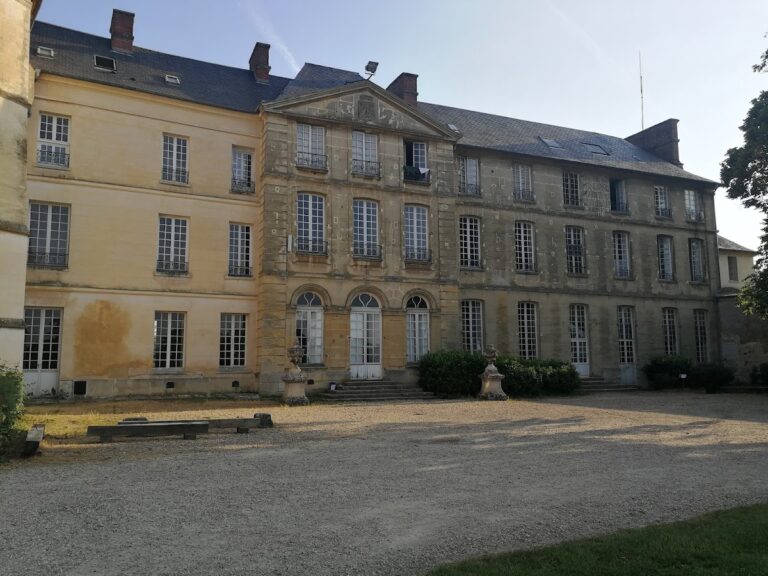
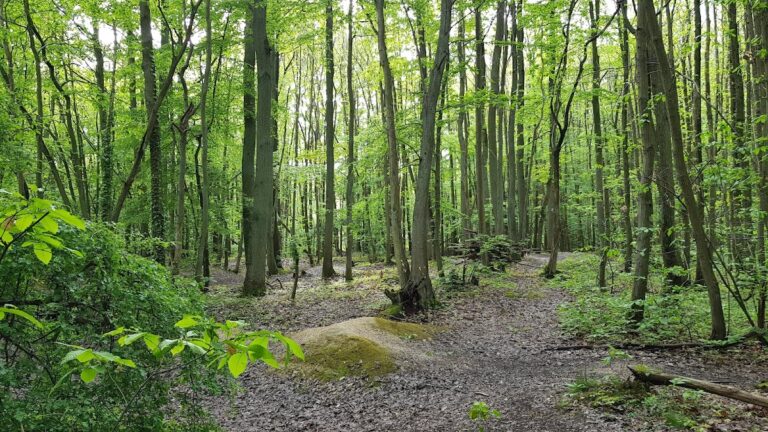
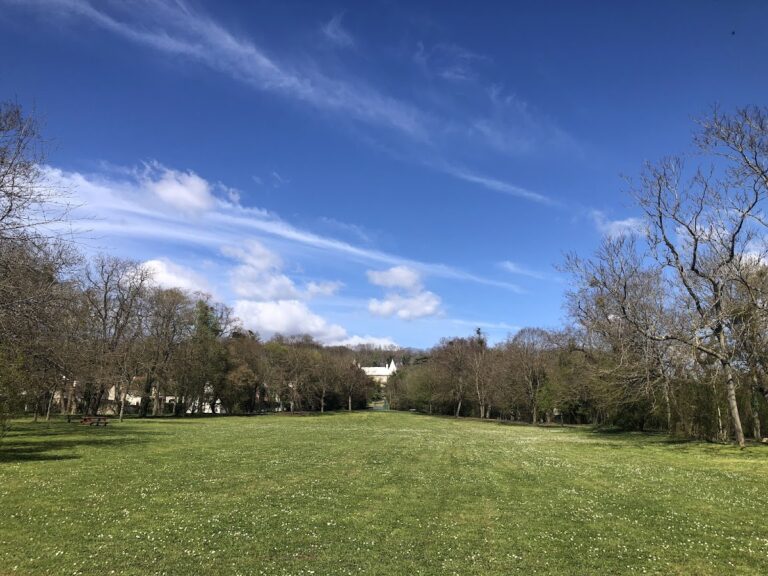
The present château is a symmetrical building with brick facing, stone window surrounds, and stone quoins at the corners. Its slate roof completes an exterior that combines several architectural styles, as was common in Second Empire design. A wooded park faces the building. The park originally covered 22 hectares, and an icehouse provided a means of preserving provisions for the estate.
Decorative interiors
Empire-style rooms
The high-ceilinged rooms retain features associated with Empire style, an early nineteenth-century neoclassical style linked to Napoleonic France. Dormer windows, bull’s-eye windows, tapestries, and mirrors contribute to the interiors. The wall paneling draws on Pompeian decoration and includes a Roman head set in a medallion, floral designs, and animal motifs such as a dove and a butterfly. A floral frieze encircles the room.
Hunting room and music room
The château contains a hunting room and a music room. One oil painting on canvas, Autumn, also known as Rest after the Hunt, was restored in the late twentieth century. It is an old copy of a 1734 work by François Boucher, an eighteenth-century French painter associated with the Rococo style, whose original painting is now lost. The same room contains a painting of a rider watering his horses at a fountain.
A row of small coat hooks remains as a reminder of the building’s conversion into a school during the twentieth century.
Nearby sites