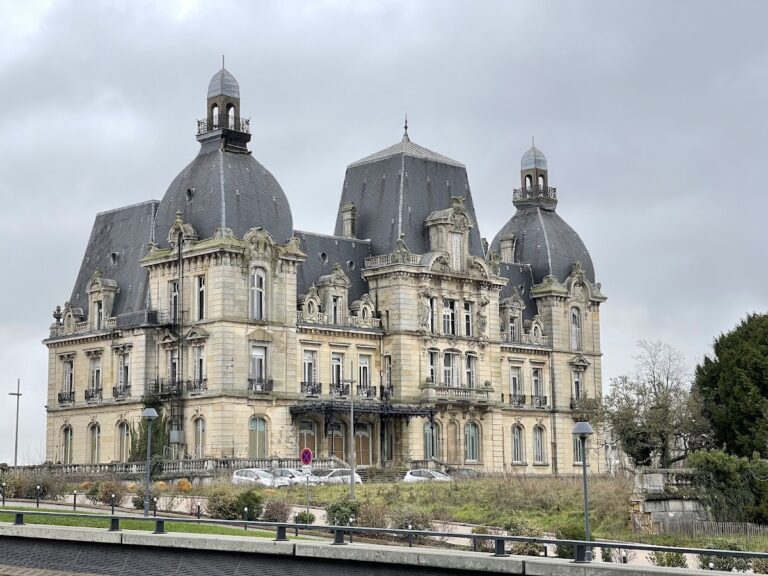
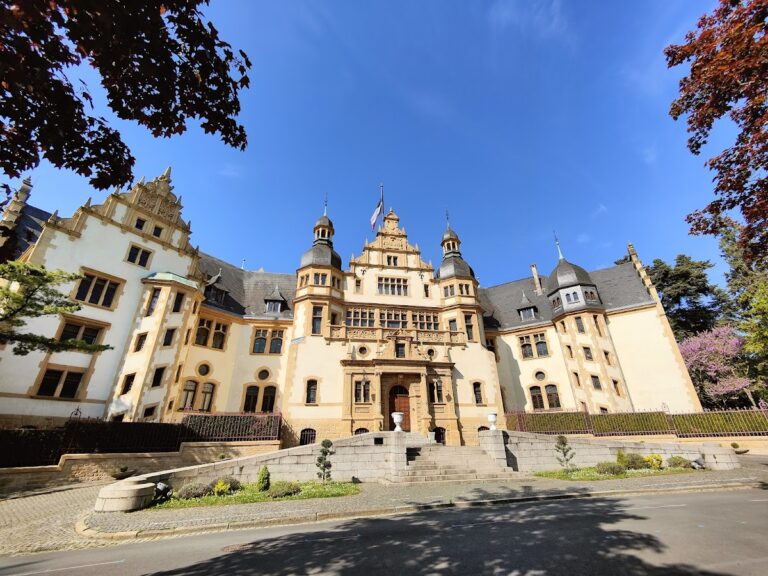
Château d’Urville: A Historic Estate and Agricultural Education Centre in France


Site at a Glance
- Rating
- 4.5
- Popularity
- Very Low
- Country
- France
- Primary era
- Early Modern
- Eras represented
- Medieval, Early Modern, Modern
- Civilizations
- French, German, Holy Roman Empire
- Site type
- Domestic
- Remains
- Palace
On this page20 sections
History
Château d’Urville is a historic château in France at Pont-à-Chaussy, within the commune of Courcelles-Chaussy, on the left bank of the French Nied. The site lies beside an ancient Roman road and the very old Mesnils farm. A castle was built here from the fifteenth century, continuing the site’s earlier role as a frontier position.
A Medieval Border Post
In the twelfth century, the site belonged to the County of Créhange and the Lords of Raville. It served as an advanced border post between the Metz region and Lorraine. The two noble families were connected by marriage to major European ruling houses, a relationship later recalled by coats of arms in a room on the second floor.
The castle’s position gave it a military importance that brought it into the conflict between France and the city of Metz. In 1444, while the French army was at war with Metz, a detachment raided the castle.
Destruction and Rebuilding
In 1588, troops commanded by Henri I de Guise, a leading French Catholic nobleman during the French Wars of Religion, destroyed the castle as they passed through the area. Nicolas Houillon, a citizen of Metz, later acquired the property and completely restored it as a château at the end of the sixteenth century. His family retained the estate until 1680, when the heirs sold it to Esther Domangin, widow of the Lord of Vigy.
The château changed hands several times during the eighteenth century. Guillaume Othon, a former cavalry colonel and chamberlain to the Duke of Lorraine, acquired it in 1754. In 1764 it passed to François-Louis Durant, major in the Old Marine Infantry Regiment at Metz, and later to François-Louis-Benoît-Charles-Pantaléon Durand, attorney general of the Parliament of Metz and mayor. The latter probably laid out the large château park.
From General Semellé to the Franco-Prussian War
Financial difficulties led François-Louis-Benoît-Charles-Pantaléon Durand to sell the château in 1808 to General Jean-Baptiste Semellé, Baron of the Empire. Semellé died there on 25 January 1839. During the coalition campaign against Napoleon in 1813, Prince William of Prussia established his headquarters at the château.
Baron Louis Sers substantially altered the property in 1847. During the Franco-Prussian War, Marshal François Achille Bazaine used Château d’Urville as his headquarters. He received Emperor Napoleon III, the last emperor of the French, there on 10 August 1870 while Pont-à-Chaussy was placed on a defensive footing. After the French army withdrew toward Borny, the German First Army occupied the château on 13 August. The Treaty of Frankfurt then transferred Urville to the German Empire.
The Imperial Residence
Romain Sendret, a leather-processing industrialist from Saint-Julien-lès-Metz and a supplier to the French army, bought the château in 1876. A committed supporter of France, he intended to sell only to a French purchaser. At the sale of 15 July 1890, however, the buyer acted as a front for Kaiser Wilhelm II, the last German emperor and King of Prussia, who ruled from 1888 until his abdication in 1918.
Wilhelm II acquired Urville as a residence in Lorraine and as a gesture intended to cultivate ties with the region. He also wanted a base for visits to the Reichsland of Alsace-Lorraine, the territory annexed by Germany after the Franco-Prussian War and returned to France after the First World War. He bought the neighboring Mesnils farm and incorporated it into the estate. Restoration by the Metz firms Heister and Becker began in 1891.
Wilhelm II owned the château from 1890 to 1918 and visited it fourteen times between 1893 and 1912, usually for short stays in summer or autumn. During his absences, the château opened to visitors for an admission charge from 1894, and a post office opened on the estate in 1900. Archduke Franz Ferdinand of Austria-Hungary visited in 1908 during military maneuvers that ended at Courcelles. In 1913, marking the twenty-fifth anniversary of Wilhelm II’s accession, pupils in Courcelles-Chaussy received Kaiser Wecken, commemorative imperial bread.
War, State Ownership, and Education
During the First World War, the estate remained German until the territory returned to France in 1918. More than 300 troops were housed in the building now used as the documentation centre. German troops withdrew on 15 November 1918, and the château remained under sequestration until 1927.
After the war, the château temporarily became a holiday colony for children from the war-damaged departments of Meuse, Marne, Oise, and Pas-de-Calais. A Paris property developer later converted it into apartments, but the venture ended in bankruptcy when many units remained unoccupied.
During the Second World War, the château stood behind the Maginot Line, France’s major system of fortified defences along its eastern frontier, and lay outside the evacuation zone during the period known as the Phoney War. It served as the headquarters of the future Marshal Jean de Lattre de Tassigny. Following the Armistice of Compiègne on 22 June 1940, it again became German property in practice, serving as a military hospital and housing groups of the Hitler Youth.
An American bombardment severely damaged the château in November 1944. It became French state property in 1945 and was assigned to the Ministry of Agriculture in 1948. About 225 hectares were then devoted to agriculture and education. The agricultural school established in the former imperial stables became a regional school and, in 1967, a national agricultural lycée. The château was remodelled in 1979 and now forms part of the Établissement Public Local d’Enseignement et de Formation Professionnelle Agricoles de Metz-Courcelles-Chaussy, a regional centre for landscape, agriculture, and environmental training.
The park was classified on 14 August 1926 among sites and natural monuments of artistic character. Former pupils and students later researched the estate’s history and helped conserve features associated with the imperial domain. In 2016, work included renovation of the château, uncovering the gardener’s building, and cleaning the icehouse. The estate is now used by a public agricultural education institution whose lycée, apprenticeship centre, and adult-training centre serve more than 900 learners and approximately 1,000 professionals in short courses.
Remains
The château estate occupies the left bank of the French Nied beside the ancient Roman road and the Mesnils farm. Its agricultural and educational holdings include the 200-hectare Mesnils farm and approximately 25 hectares of educational buildings and premises. The present complex brings together the château, the former imperial stables, educational buildings, the documentation centre, the former post office, the orangery, the amphitheatre, and historic park features.
Medieval and Early Château Features
Pigeon Tower
Two physical witnesses are associated with the fifteenth-century castle that preceded the later château. One is a pigeon tower, a building for keeping domestic pigeons, built on arcades and fitted with small gun loops. These narrow openings were used for firing weapons from defensive walls.
Raville Fireplace Plate
The second witness is a moulded fireplace plate bearing the arms of the Lords of Raville. It remains visible on a wall of the present amphitheatre, preserving a material link with the medieval occupants of the site.
Second-Floor Heraldry
A room on the second floor contains coats of arms recalling the marriage alliances that connected the former Lords of Créhange and Raville with major European ruling houses.
Nineteenth-Century Alterations
Baron Louis Sers’s 1847 work changed the château’s external form. It added a polygonal tower to the rear elevation and created a terrace with a balustrade on the front façade.
Imperial-Domain Buildings
Château and Services
The restoration begun in 1891 completely remodelled and refurnished the interior. Imperial arms decorated the exterior, while the buildings received a telephone, a telegraph, and electric lighting supplied by more than 250 lamps. The château now houses administrative offices and an apartment.
Former Post Office and Orangery
The post office opened in 1900 in the building now used as the infirmary, beside the orangery. Its present use retains the building within the educational complex while its earlier function remains part of the estate’s imperial history.
Former Imperial Stables
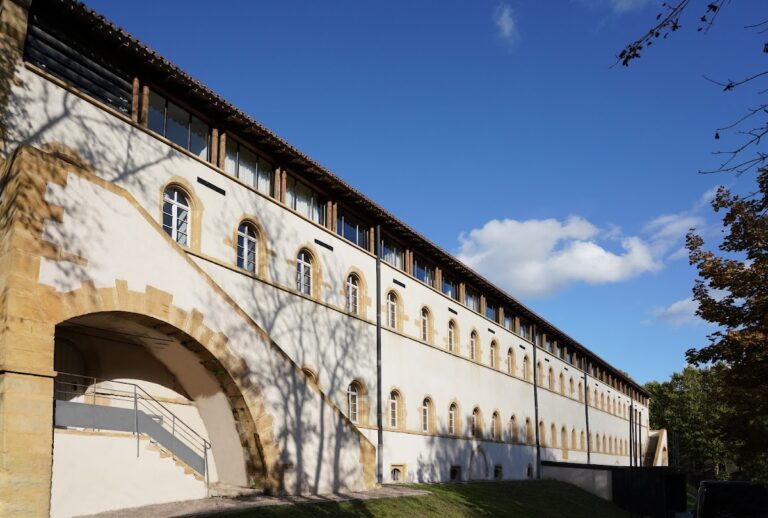
The former imperial stables now contain workshops for landscape and agricultural training. Their conversion connects a building created for the imperial estate with the institution’s present educational work.
Documentation Centre
The building now used as the documentation centre housed more than 300 military personnel during the First World War.
Park and Railway Structures
Historic Park
The large park was probably laid out by François-Louis-Benoît-Charles-Pantaléon Durand. It was classified for its artistic character in 1926. Features associated with the former imperial domain include the gardener’s building and an icehouse, both of which were the subject of clearing or conservation work in 2016.
Imperial Train Reception Buildings
At the nearby Courcelles-Chaussy station, a reception building for the imperial train was constructed together with a 130-metre hall for sheltering the train. These railway structures no longer survive.
Nearby sites