Auray Castle: A Medieval Fortress in France
Site at a Glance
- Popularity
- Medium
- Country
- France
- Primary era
- Medieval
- Eras represented
- Medieval, Early Modern
- Civilizations
- Duchy of Brittany, French
- Site type
- Military
- Remains
- Castle
On this page4 sections
History
Auray Castle is a medieval fortress in France, first recorded in 1096 and rebuilt from 1201 for Arthur I of Brittany. It protected a ford across the Loc’h and the port of Saint-Goustan.
Conflict and ducal residence
During the War of the Breton Succession, a conflict over control of the duchy, English and French factions successively captured the castle. On 29 September 1364, Jean IV de Montfort besieged it during the Battle of Auray. The battle ended the rival claim of Charles of Blois, who was killed.
Several dukes of Brittany later stayed at the castle. On 30 October 1442, Francis I, Duke of Brittany, married Isabelle of Scotland there.
Dismantling and reuse
After the castle fell into disrepair, its moats were auctioned after 1546. This followed King Francis I of France’s decision to grant unused lands held directly by the crown in Brittany. King Henry II ordered the ruins demolished, but a royal prosecutor secured the survival of the river-side wall. In 1558, the king gave castle stones to the religious community of Sainte-Croix Abbey at Quimperlé, which owned Belle-Île, for a fort at Le Palais intended to protect against English pirates. The remaining materials were auctioned in 1559, and the site was sold in 1560.
On 6 September 1560, a street was laid out over the northern moat. Houses soon lined it, and it became known as Rue du Château. Franciscan or Poor Clare nuns seeking to settle in Auray were first assigned the southern moat, which had not yet been built on. They objected that the site was too far from town and appealed to the Parlement de Bretagne, Brittany’s high court. The court directed Auray to find them a more suitable place. In 1635, the town granted them the western moat and the former castle grounds for a garden, along with 3,000 livres, a historical French unit of money.
Remains
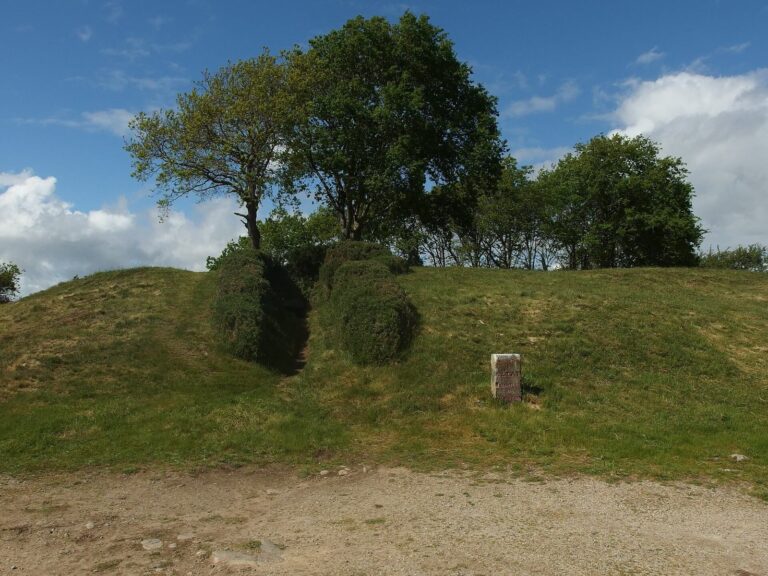
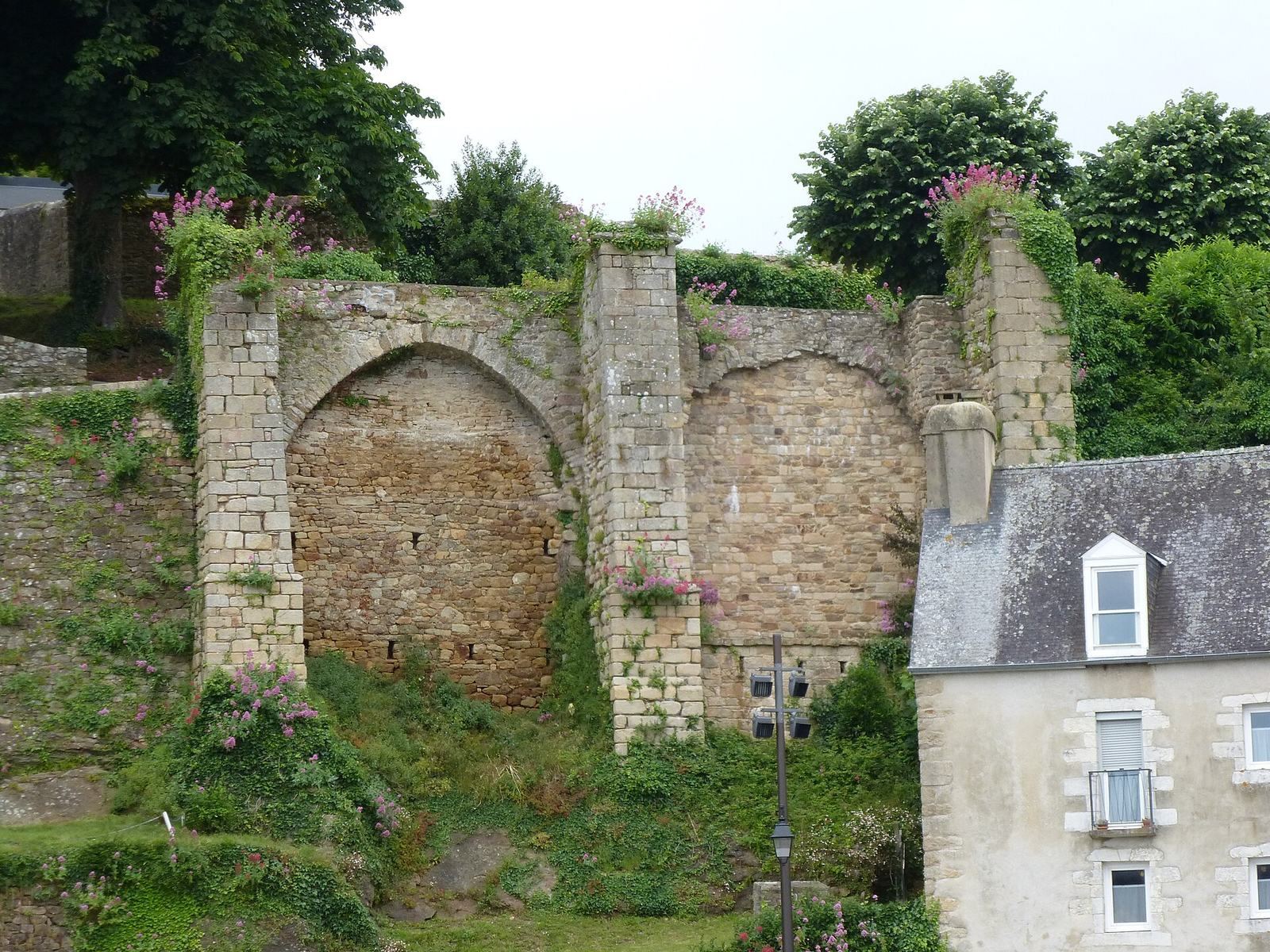
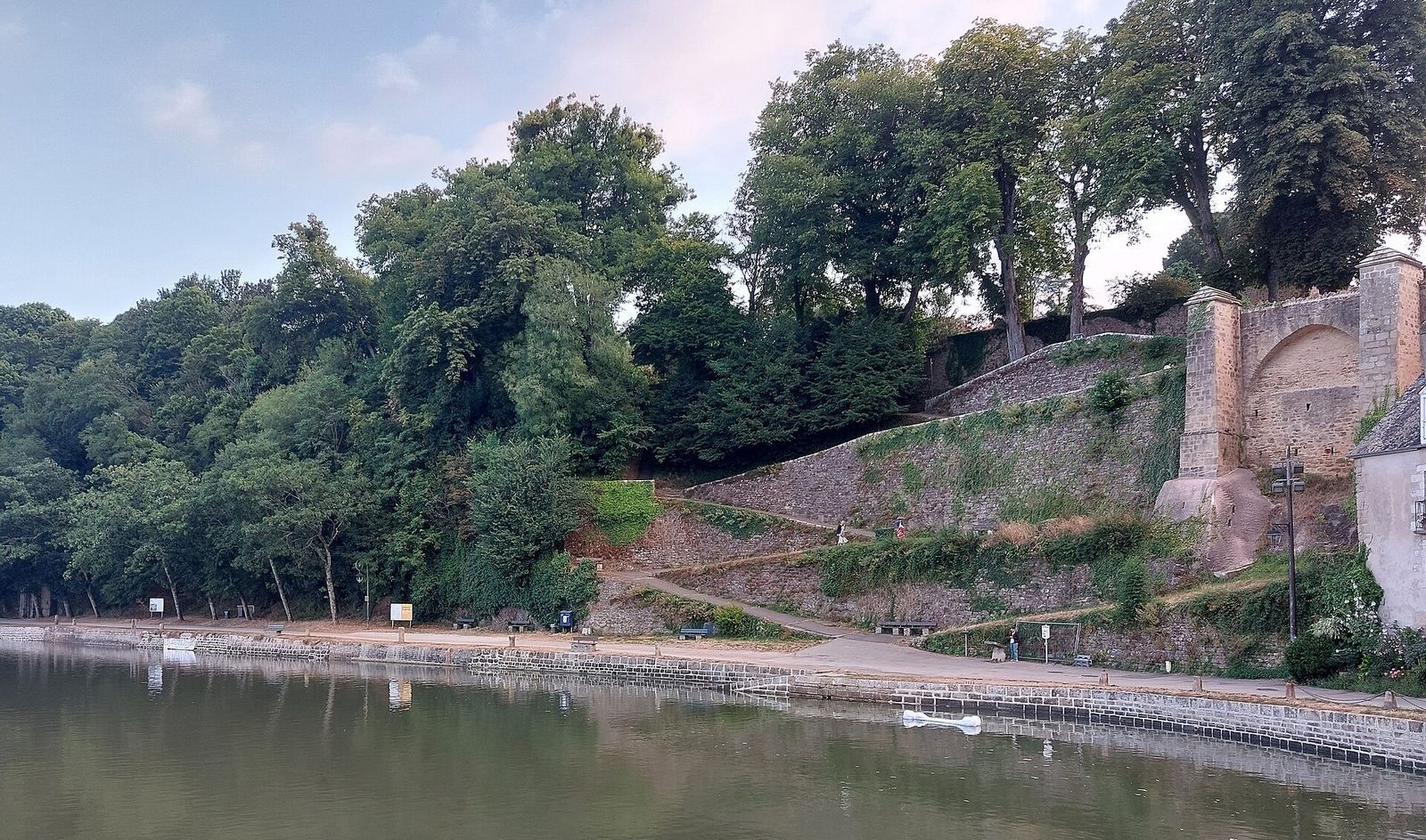
The surviving remains lie on the right bank of the Loc’h and include a round tower called the Tour du Talus, three projecting supports that once held up the castle’s main residential building, and two ramps descending toward the port of Saint-Goustan. A section of the castle wall stands beside the river. Rue du Château occupies the former northern moat. Its houses include timber-framed buildings and substantial limestone residences, a material fashionable in the seventeenth and eighteenth centuries.