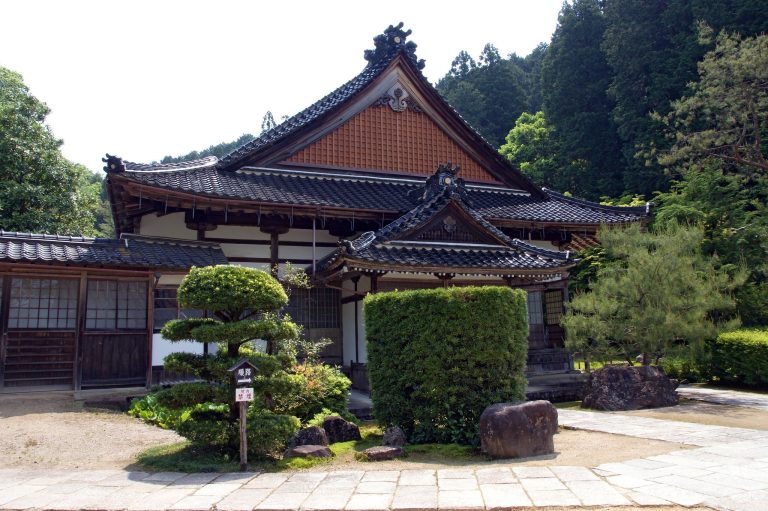
Akenobe Mine: A Historic Nonferrous-Metal Mine in Japan


Site at a Glance
- Rating
- 4.4
- Popularity
- Low
- Country
- Japan
- Primary era
- Modern
- External website
- Open
- Eras represented
- Modern
- Civilizations
- Japanese
- Site type
- Economic
- Remains
- Mine
On this page10 sections
History
Akenobe Mine is a historic nonferrous-metal mine in Japan, in the former Akenobe settlement of Oya, now within Yabu City. Its opening is dated to 809, and its veins yielded tin, copper, zinc, and tungsten. The quantity of tin ore was described as the largest in Japan. A tradition connects copper from Akenobe with the Great Buddha at Todai-ji in Nara, a monumental bronze Buddhist statue whose eye-opening ceremony in 752 marked its formal consecration. This tradition therefore predates the recorded opening of the mine.
Early Mining and the Silver Settlement
Copper production appears to have declined after the early ninth century, and renewed copper production is next noted during the Meiwa period, from 1764 to 1772. Silver veins were found during the Tensho period, from 1573 to 1592, and the discovery brought rapid growth to the settlement. It became known as “Senken Town,” meaning a town of a thousand houses. Toyotomi Hideyoshi, the sixteenth-century military ruler who completed Japan’s political unification, was traditionally said to have visited Akenobe and composed a poem about the settlement.
In 1596, a bell made from an alloy of silver and copper produced at the mine was dedicated at Myoken Hall, a Buddhist religious site. Its inscription identified the material as coming from Akenobe Silver Mine, rather than using the names Akenobe Mine or Akenobe Copper Mine. Although the mine is described as having declined during the Kan’ei period, from 1624 to 1644, a Genroku-period record presents Akenobe Silver Mine as highly prosperous. A register from 1699 described the settlement as about 400 metres long, with 67 households.
By 1776, the settlement was divided into Kannon Town, Main Town, Central Town, Katamachi, and Shinmachi. Silver production declined after the Hoei period, from 1704 to 1711, and Akenobe increasingly took on the character of a copper mine. The bell dedicated at Myoken Hall was later moved to Ryoshoji Temple and became a cultural property of Yabu City.
State Control and Industrial Transport
Following the Meiji Restoration, the nineteenth-century political transformation that returned governing authority to the imperial government and began Japan’s modern state-building period, Akenobe became part of Kumihama Prefecture in 1872. The Meiji government had acquired the mine in 1868, and the operation was placed under the Ikuno branch of the Imperial Estate Bureau. In 1896, it was transferred to Mitsubishi Partnership, associated with the industrialist Iwasaki Koyata.
The Meishin Electric Railway began operating in 1912 to carry ore over a 5.75-kilometre route to the Mikobata Concentration Plant. An ore-concentration plant separates valuable minerals from extracted rock before further processing. Passenger service began in 1952. Because the fare was one yen, the railway became known as the “One-Yen Train,” linking the mining settlement with its industrial transport system.
Postwar Expansion and Community Life
Akenobe regained activity after the Pacific War. Workers arrived from Sado Mine after its major downsizing in 1952, from Obira Mine in 1953, and from Makimine Mine in 1965. Between 1972 and 1979, further transfers came from Ikuno, Myoho, Matsuki, Osarizawa, and Shimokawa mines. The mine’s peak period extended from the Pacific War until about 1951. At that time, crude-ore production reached 35,000 tonnes per month, while the local population rose to 4,123 people in 963 households.
A rebuilt welfare and community hall opened in 1957 and hosted films, theatrical performances, and visiting singers. From 1967, rationalization measures led to repeated departures from the settlement, while developments at other Japanese mines continued to affect Akenobe’s fortunes. Akenobe Elementary School reached a peak enrollment of 784 pupils in 1959 and closed in 1988. Its renovated buildings were used the following year to establish Akenobe Nature School.
Corporate Change and Closure
In 1973, Akenobe became a mine operated by Mitsubishi Metal Corporation, now Mitsubishi Materials. After the oil crisis that year, Akenobe Mining Company was separated from Mitsubishi Metal as an independent subsidiary in 1976. The recorded sequence of ownership runs from government operation to Mitsubishi Partnership, Mitsubishi Mining Co., Ltd., Taihei Mining Co., Ltd., Mitsubishi Metal Mining Co., Ltd., Mitsubishi Metal Co., Ltd., and finally Akenobe Mining Company.
After the Plaza Accord of 1985, an international agreement that contributed to a sharp rise in the value of the Japanese yen, Akenobe Mining faced heavy losses as copper, zinc, and tin prices fell. Mineable veins remained, but the final blast was fired at 11:20 p.m. on January 31, 1987. The mine closed in March of that year, after producing 25,500 tonnes of crude ore containing copper, zinc, and tin per month immediately before closure.
In 2007, Japan’s Ministry of Economy, Trade and Industry recognized three Akenobe-related elements within the Heritage of Industrial Modernization Group associated with the history of mining modernization represented by Ikuno Mine. They were the Meishin Electric Railway and its battery locomotive, the Akenobe Mine Exploration Tunnel, formerly the Seya Main Adit, and the building of the First Bathhouse at the Meisei Communal Bath. After closure, Akenobe Nature School took responsibility for the exploration tunnel and railway vehicles formerly used at the mine.
Remains
The surviving elements of Akenobe Mine bring together underground workings, industrial buildings, railway infrastructure, and movable objects connected with extraction and transport. The hard bedrock around the historic workings helped preserve parts of the mine tunnel in their earlier condition. Buildings from the former ore-concentration plant also survive at the mine site, together with railway traces that connect the physical remains with the operation’s industrial history.
Exploration Tunnel and Concentration Plant
The Akenobe Mine Exploration Tunnel occupies the former Seya Main Adit, an adit meaning a horizontal mine passage driven into a hillside or underground deposit. Parts of the passage retain their historical condition because the surrounding bedrock is hard. The former ore-concentration plant survives in buildings at the mine, preserving the setting in which extracted rock was separated so that valuable minerals could proceed to further processing.
Railway Remains and Vehicles
Railway remnants at Akenobe include rails and a level-crossing warning device. The former mining railway equipment also includes Meishin Electric Railway cars, a battery locomotive, and freight cars. Akenobe Nature School manages railway vehicles together with the exploration tunnel, while some Meishin railway vehicles are statically preserved at Asago Roadside Station in Asago City. These surviving vehicles represent the railway’s role in carrying ore between Akenobe and the Mikobata Concentration Plant.
Sixteenth-Century Mining Bell
A bell cast in 1596 from silver and copper produced at Akenobe was first dedicated at Myoken Hall and later moved to Ryoshoji Temple. Its inscription names Akenobe Silver Mine as the source of its metal, preserving the connection between the settlement’s silver-producing phase and a surviving religious object. The bell is designated as a cultural property of Yabu City.
Mineral Veins
The mine’s mineral-bearing veins contained tin, copper, zinc, and tungsten. Tin was especially associated with Akenobe because its ore quantity was described as the largest in Japan. These minerals shaped the mine’s changing character, from an early copper and later silver-producing operation to a modern mine producing crude ore containing copper, zinc, and tin.