Charles Towne Landing: Historic Site of Carolina’s First Permanent English Settlement
Site at a Glance
- Rating
- 4.6
- Popularity
- Low
- Country
- United States
- Primary era
- Early Modern
- External website
- Open
- Eras represented
- Early Modern
- Civilizations
- English
- Site type
- City
On this page10 sections
History
Charles Towne Landing is a historic site in Charleston, South Carolina, United States, preserving the location of Carolina’s first permanent English settlement, founded beside the Ashley River in 1670. Established with the support of the eight Lords Proprietors, individuals granted governing authority over Carolina by the English Crown, the settlement was named Charles Towne in honor of Charles II, the English king whose reign followed the Restoration. It became the nucleus of the present city of Charleston.
Founding of Charles Towne
The settlers created Charles Towne within the English colonial project in Carolina. The settlement’s position beside the Ashley River shaped its early organization and defenses, while its name expressed allegiance to the Crown. The site preserves the beginnings of the community that later developed into Charleston.
Archaeology and preservation
Professional archaeological work began at Charles Towne Landing in 1967 and continues. Excavations have produced Native American, English, and African artifacts, providing evidence of the people and cultures connected with the settlement. The site entered the U.S. National Register of Historic Places on December 17, 1969, and opened as a state historic site in 1970 for South Carolina’s tricentennial, a 300th-anniversary commemoration. It is administered within the South Carolina state-park system.
Exhibition pavilion
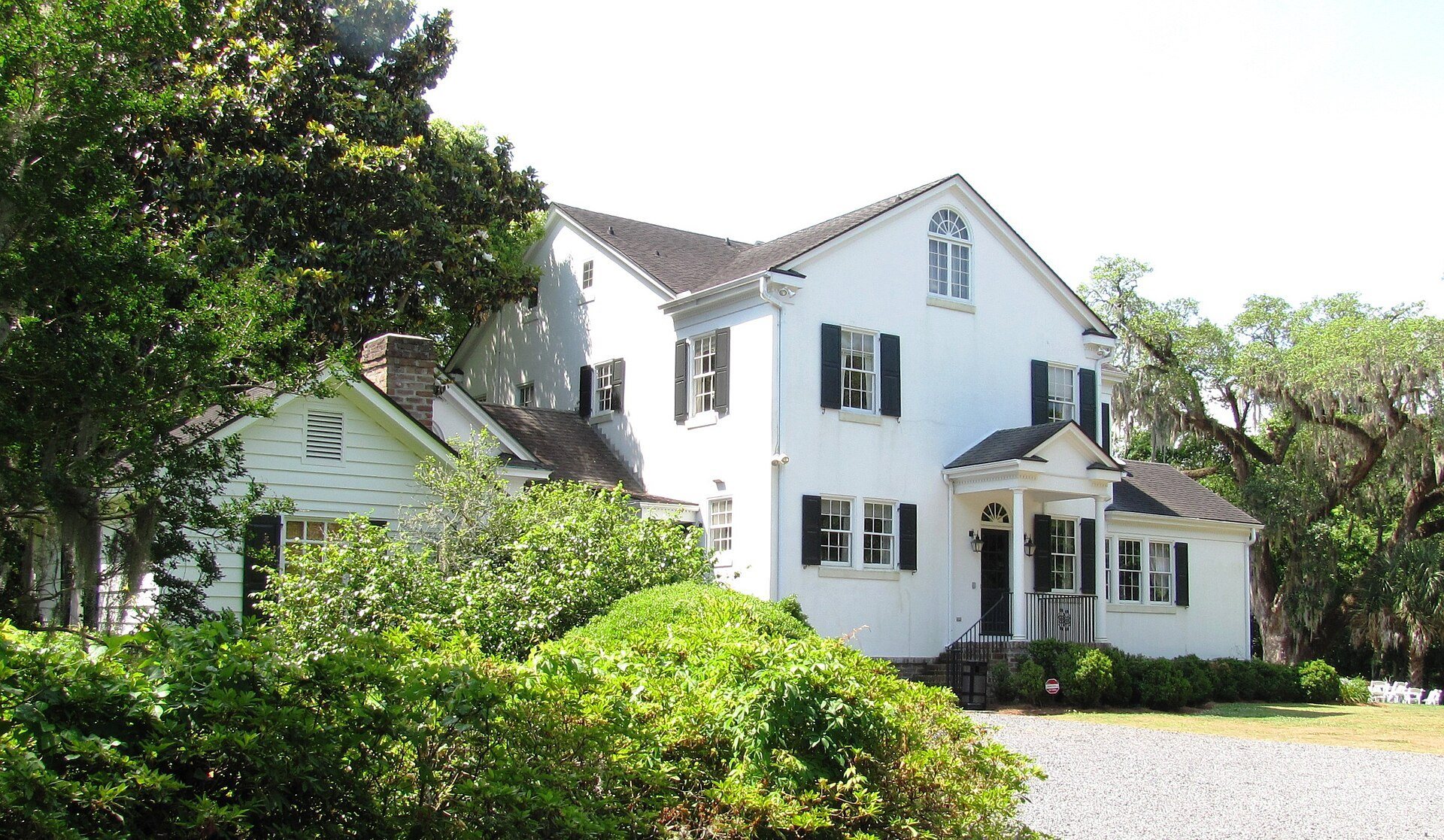
In 1968, the Tricentennial Commission selected Corkern and Wiggins of Hilton Head, South Carolina, to design an exhibition pavilion. Construction and roof problems delayed completion, and the building opened on July 16, 1970, after additional columns reinforced its roof. Hurricane Hugo later damaged the pavilion, which was never repaired. Permission to demolish it and other park buildings was granted in November 2002, and the site reopened after extensive renovation in 2006.
Remains
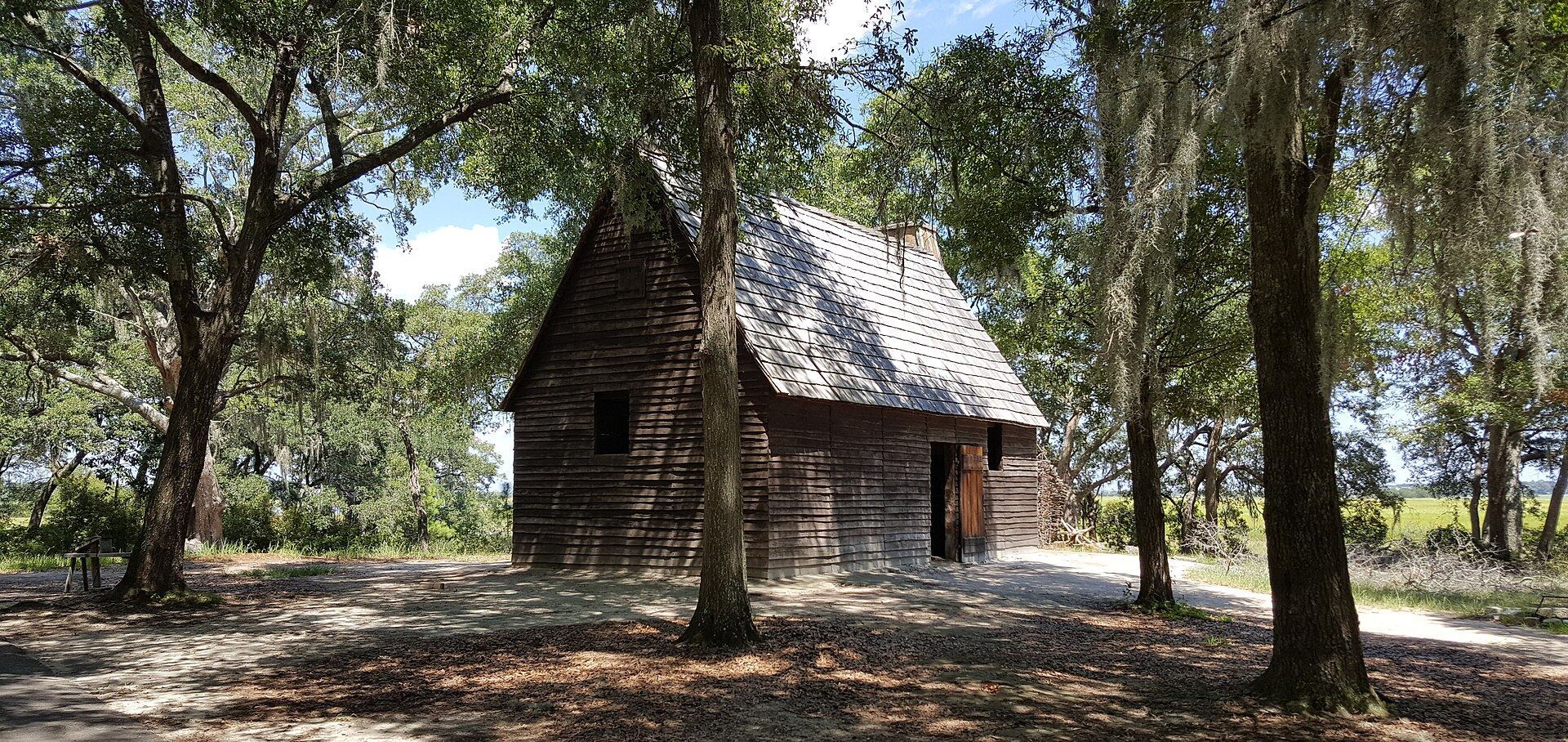
Charles Towne Landing covers the original settlement area and combines archaeological areas with reconstructed defenses, an exhibit hall, a replica sailing vessel, an experimental crop garden, a natural-habitat zoo, and miles of trails. Together, these features occupy and interpret parts of the historic settlement landscape.
Fortified Area
The Fortified Area is bounded by a partially reconstructed palisade, a defensive barrier made from upright wooden stakes. The original wall was intended to protect the settlement from a possible Spanish land attack. Within the enclosure, earthwork fortifications, defensive structures formed from excavated and piled soil, occupy their archaeological footprint. Six replica cannon represent the settlement’s artillery arrangements. The colonists mounted one battery toward the Ashley River and another to defend Towne Creek, now called Old Towne Creek.
Adventure
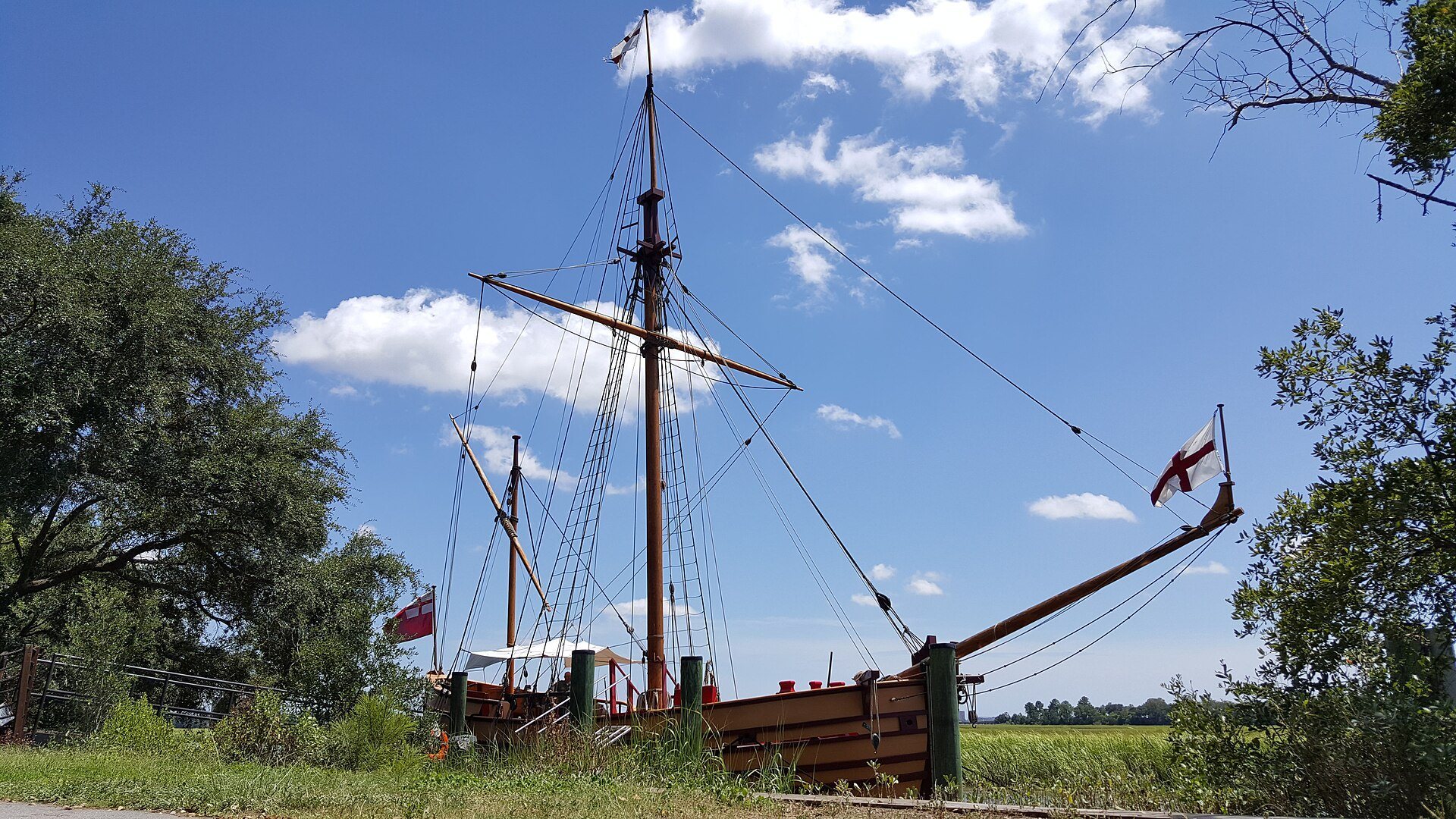
Adventure is a replica of a seventeenth-century ketch, a two-masted sailing vessel used for regional cargo transport. The ship represents the type of craft that carried commercial goods, food, and livestock. Naval architect and historian William Avery Baker designed the first Adventure in 1969, and it served the site from 1970 to 2004. Rockport Marine of Maine built a second vessel in 2008, and it sailed to Charles Towne Landing in October of that year.
Experimental Crop Garden
The Experimental Crop Garden presents plants cultivated by the early colonists for food and profit. Sugarcane and indigo, both attempted cash crops, are frequently visible in the garden.
Animal Forest
The Animal Forest is a natural-habitat zoo containing species indigenous to Carolina in the 1670s. Its animals include great blue herons, brown pelicans, great egrets, black-crowned night herons, white ibises, wild turkeys, turkey and black vultures, yellow-crowned night herons, red wolves, striped skunks, black bears, white-tailed deer, bobcats, and North American river otters. It also contains bison and pumas, which are no longer native to the South Carolina Low Country.
Archaeological Area
The archaeological area contains preserved excavation locations associated with Native American, English, and African finds. These areas form part of the physical remains through which the settlement’s early occupation and its cultural connections are interpreted.