Sugarloaf Mound: A Mississippian Platform Mound in St. Louis
Site at a Glance
- Rating
- 4.3
- Popularity
- Very Low
- Country
- United States
- Primary era
- Medieval
- Eras represented
- Medieval
- Civilizations
- Unclassified
- Site type
- Burial
- Remains
- Burial Mound
On this page7 sections
History
Sugarloaf Mound is a Mississippian platform mound in St. Louis, Missouri, United States. The Mississippian culture, a pre-Columbian North American tradition known for earthen mounds and settled hierarchical communities, occupied the St. Louis area from about AD 600 to 1300. Sugarloaf is the sole surviving mound of its kind within the modern city and the last of approximately 40 Native American mounds once built there.
A Mound City on the Mississippi
The many earthen structures formerly found in St. Louis led to its earlier description as “Mound City.” Sugarloaf Mound is regarded as the oldest human-made structure in the city. Its present name dates from the eighteenth century, when observers thought its shape resembled the conical loaves used to transport sugar.
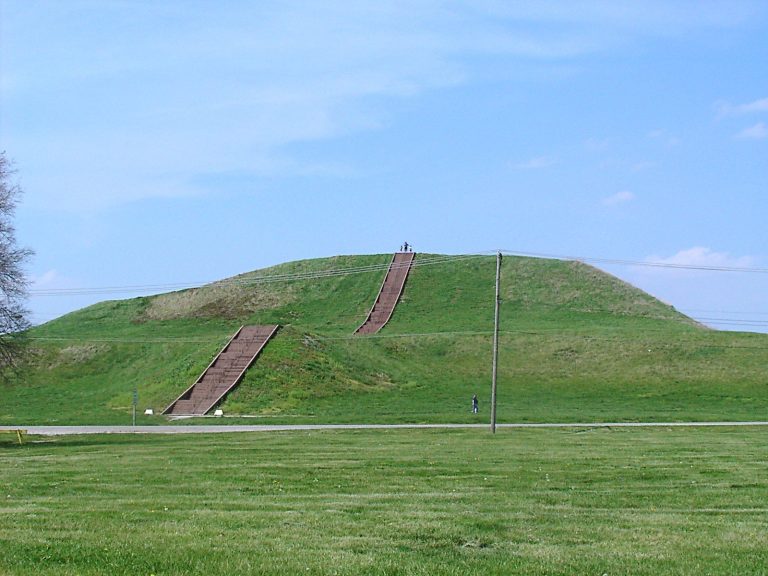
Most of the other St. Louis mounds were destroyed. Big Mound was leveled in the mid-nineteenth century after its land was sold to the North Missouri Railroad, while another 16 mounds were removed during preparations for the 1904 World’s Fair. Mounds in Forest Park were mapped and excavated, and human remains were associated with them. About 80 mounds survive across the Mississippi River at Cahokia Mounds State Historic Site.
Survey Landmark and Modern Stewardship
In 1809, Sugarloaf Mound served as a survey landmark when St. Louis was incorporated. It once stood on the boundary between St. Louis and the autonomous city of Carondelet, but it is now entirely within the incorporated City of St. Louis.
A residence was built against the mound’s upper level in 1928 by Frederick and Nellie Adams. After Frederick Adams died, Nellie continued to drive a horse and buggy around the area until her death in 1948. Oliver and Anna Schauenberg later owned the property, followed by Walter and Eileen Strosnider, who held it for nearly half a century.
The Strosniders sold the mound to the Osage Nation, returning it to Native American ownership. The Osage Nation purchased the house and land in 2009 to preserve the mound. It does not claim direct descent from the mound’s builders, but identifies a shared mound-building heritage in the American Midwest.
The house had stood vacant since 2009 and deteriorated before it was dismantled and removed in September 2017. In 2024, Joan Heckenberg agreed to return a residence on the mound’s second tier to the Osage Nation. A residence owned by the pharmaceutical fraternity Kappa Psi remained on the lower tier. The Osage Nation intends to remove the remaining structures, restore the mound toward its earlier form, and create an interpretive center on nearby property owned by the Missouri Department of Transportation. Sugarloaf Mound was added to the U.S. National Register of Historic Places, the federal inventory of places recognized for historical or archaeological importance, on February 17, 1984.
Remains
Form and Setting
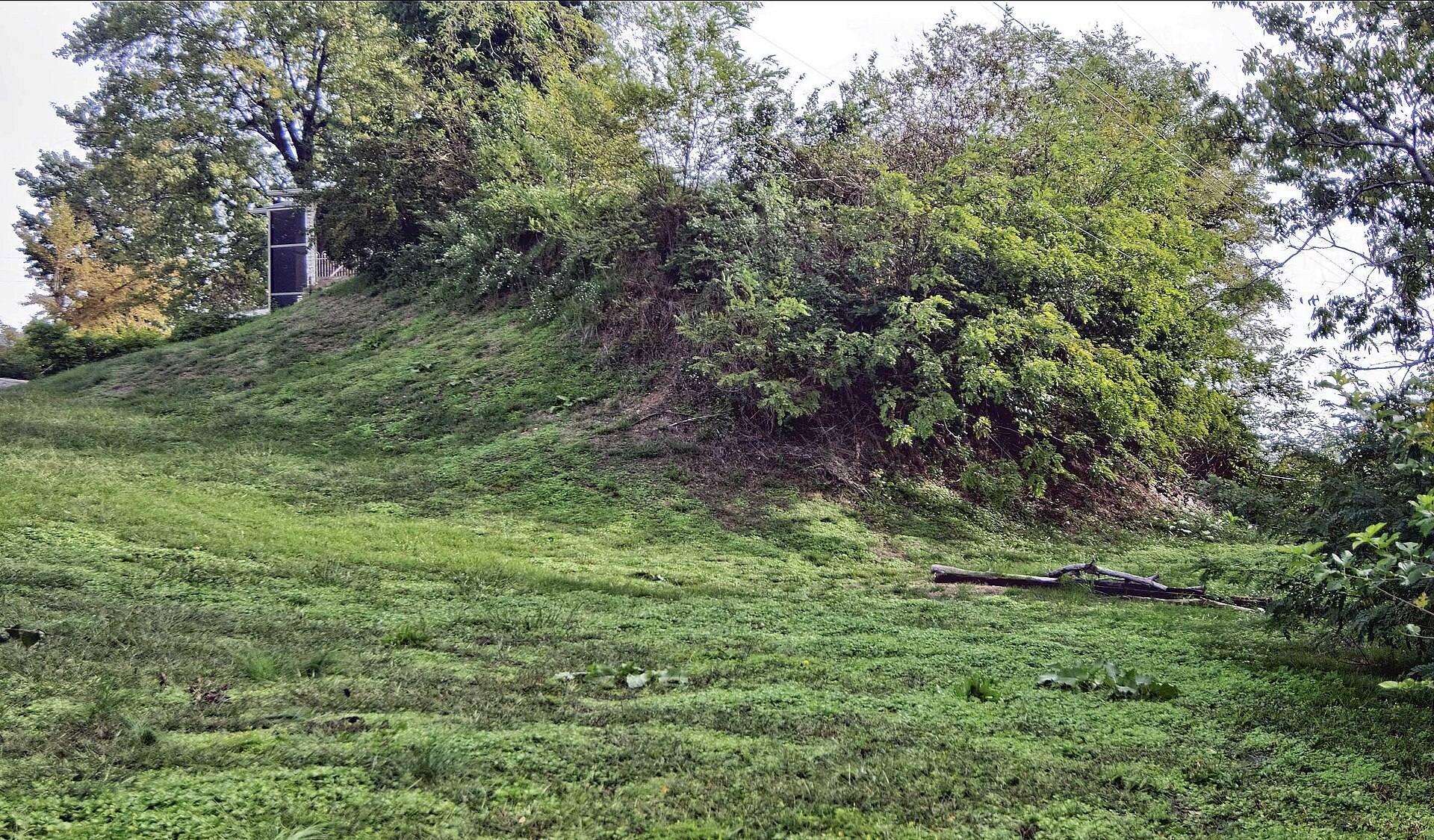
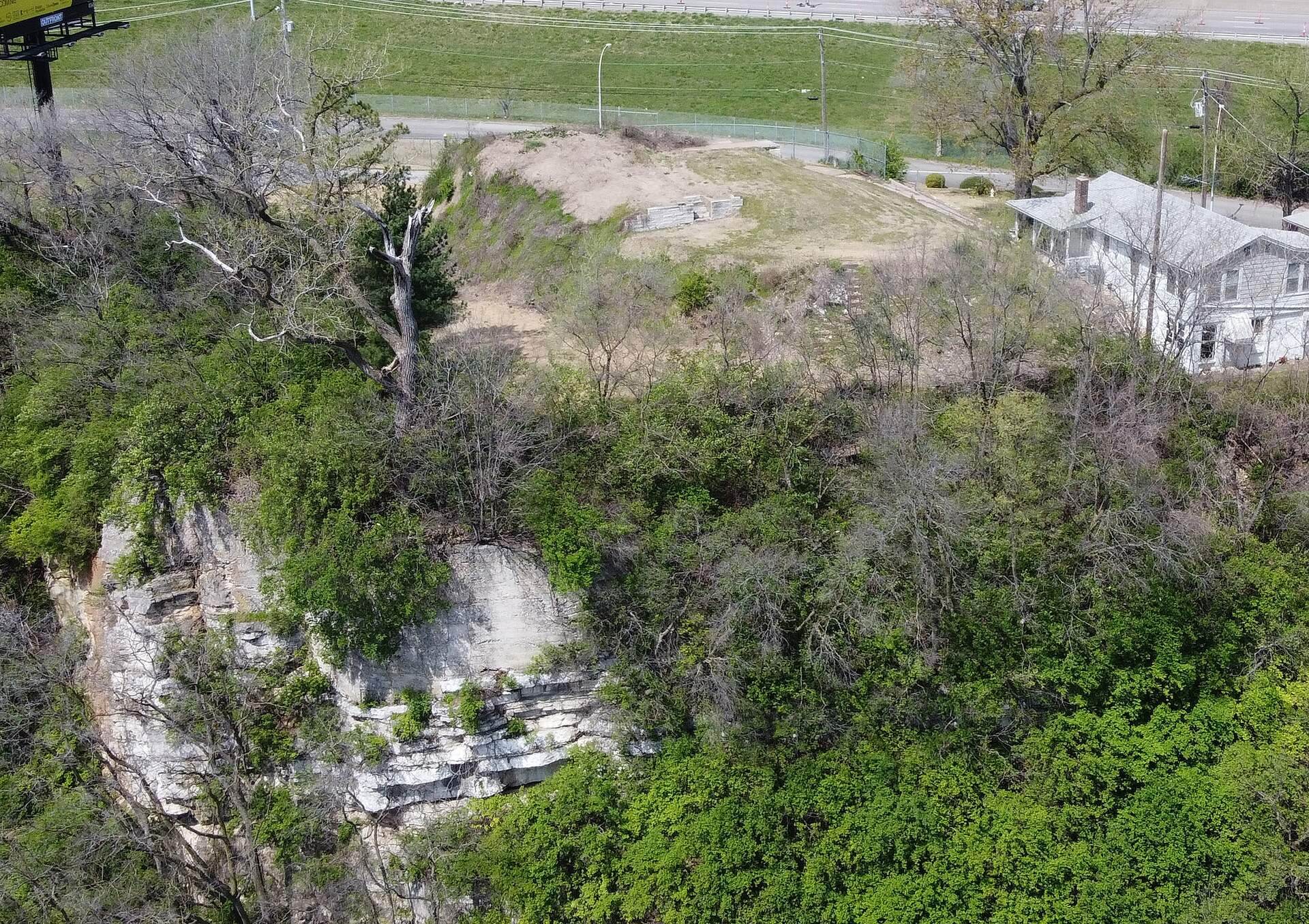
Sugarloaf Mound is an earthen platform mound approximately 40 feet (12 meters) high. It measures about 100 feet (30 meters) from north to south and 75 feet (23 meters) from east to west, and the listed site covers approximately 1 acre (0.40 hectares). The mound overlooks the Mississippi River at the meeting of Interstate 55 and South Broadway, with cliffs descending along the bluff below it.
Tiers and Altered Fabric
The mound has three tiers. A residence formerly abutted the upper level, while residences remained or had remained on the second and lower levels. A quarry and the construction of Interstate 55 affected portions of the mound, although earlier homeowners’ stewardship prevented major destruction. The upper residence has been removed, and the Osage Nation plans further clearance and restoration.
Uncertain Function
Sugarloaf Mound has not been excavated, so its original purpose remains uncertain. It is generally assumed to have been used for burials, but it may also have served as a ceremonial site or supported a chief’s residence. Its level summit and raised earthen construction are characteristic of a platform mound, a form that could support structures, ceremonies, burial-related activities, or elite residences.