Castle Pinckney: A Coastal Fort in Charleston Harbor
Site at a Glance
- Country
- United States
- Primary era
- Modern
- Eras represented
- Modern
- Civilizations
- Unclassified
- Site type
- Military
- Remains
- Fort
On this page12 sections
History
Construction and early service
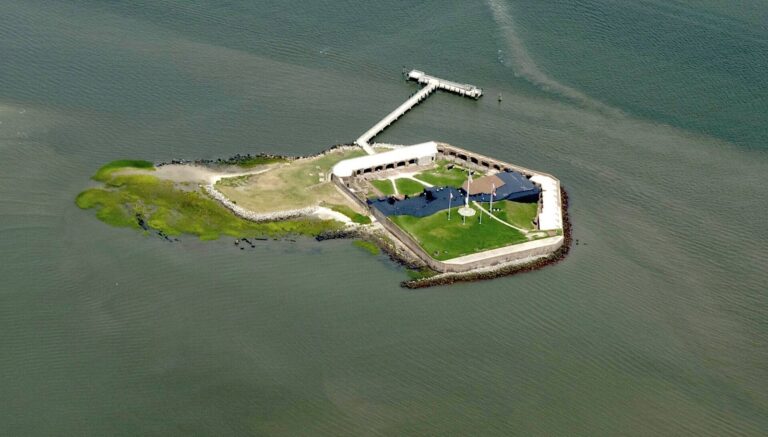
Castle Pinckney is a brick-and-masonry fort built in 1809–1810 on Shutes Folly, an island in Charleston Harbor about one mile from Charleston, United States. It formed part of the harbor’s defenses and later became the first Federal military installation seized by a Southern state government.
In 1794, a fort was ordered to protect Charleston Harbor against a possible French attack. Work on the first fort began in 1797 and was completed in 1804. Called Fort Pinckney, it was named for Charles Cotesworth Pinckney, an American soldier and statesman who served in the Revolutionary War. A severe hurricane in September 1804 almost destroyed the fort. Castle Pinckney was then built over its ruins.
The replacement fort held a garrison during the War of 1812, a conflict between the United States and Britain, but saw no fighting. It was abandoned afterward and fell into disrepair. In 1832, troops returned during the Nullification Crisis, a dispute over South Carolina’s rejection of a Federal tariff and the Federal government’s authority to enforce it. President Andrew Jackson prepared to use military force if necessary. When the crisis passed, the garrison left, and the fort was used mainly to store gunpowder and other military supplies.
By the late 1850s, Castle Pinckney formed part of Charleston Harbor’s defenses alongside Forts Sumter, Moultrie, and Johnson and other fieldworks.
Secession and the Civil War
On December 27, 1860, a week after South Carolina seceded from the Union, the fort’s small U.S. Army garrison surrendered to South Carolina militia. The soldiers withdrew to Fort Sumter to join Major Robert Anderson. Castle Pinckney was the first Federal military installation seized by a Southern state government. South Carolina forces took the Charleston Arsenal three days later. After the attack on Fort Sumter, the Charleston Zouave Cadets garrisoned Castle Pinckney.
In 1861, 154 Union prisoners captured at the First Battle of Bull Run, an early major battle of the American Civil War, were brought to Charleston. They arrived on September 10 after being held at Ligon’s Prison and were first kept in the Charleston City Jail. On September 18, prisoners from the 11th New York Fire Zouaves, 69th New York, 79th New York, and 8th Michigan Infantry were transferred to Castle Pinckney. Richmond officials had chosen them chiefly because they considered the men insolent and insubordinate. The prisoners could move around during the day but were confined to cells at night.
The fort proved too small for long-term confinement, and the prisoners returned to the city jail on October 31, after about six weeks. A fire later damaged the jail and destroyed a large part of Charleston, prompting another transfer to the island on December 12. The prisoners stayed just over a week. Many slept on the inner parade ground before they were moved again.
Later use and preservation
Castle Pinckney was modernized in preparation for possible use during the Spanish-American War, but it was not needed. It may never have fired a hostile shot during its existence.
President Calvin Coolidge proclaimed the fort a National Monument in 1924. Congress abolished the monument in 1951 and returned responsibility for the site to the U.S. Army Corps of Engineers. In 1956, the island became Federal surplus property available for sale. The South Carolina State Ports Commission acquired it in 1958 for use as a deposit area for dredged material, but the plan proved impractical. A proposed historic development also did not proceed.
In the late 1960s, a local Sons of Confederate Veterans post took responsibility for the fort, hoping to preserve it and establish a museum. The group could not raise enough money and relinquished its role, after which the fort reverted to state ownership. Castle Pinckney was listed on the National Register of Historic Places in 1970.
Remains
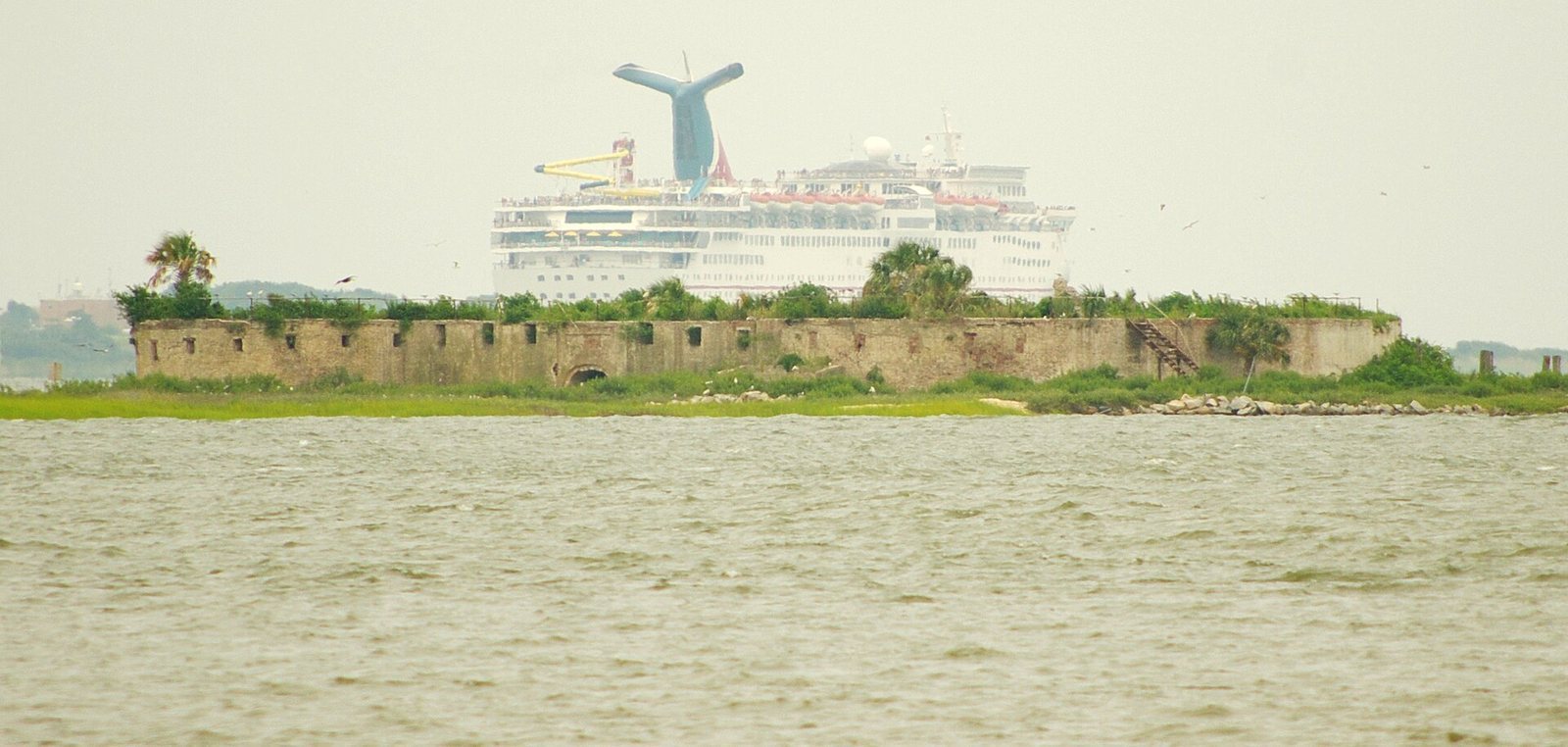
The surviving fort is a two-storey brick-and-masonry artillery work with a curved plan. Its position on Shutes Folly and its eastward orientation toward the channel near Fort Sumter shaped its defensive layout.
Fort plan and armament
Plan and construction
The fort’s plan extends slightly beyond a semicircle. A hollow traverse, a protective barrier within a fort, closes the rear and served as defensive barracks. The curved battery block wraps around this area to form two semicircular casemates, fortified chambers for guns or troops, that protect the entrance. The design was compared with Fort Massachusetts and the Battery in Manhattan.
Artillery and firing positions
Guns could be placed under cover on the upper level of the casemates. The curved plan allowed fire from south to north, while the fort faced east toward the channel. Its defenses focused on artillery, with infantry protection concentrated at the entrance. Rifle openings provided long-range fire, but the ground immediately in front lay beyond their effective reach at close range.
In 1860, the fort’s armament comprised fourteen 24-pounder guns, four 42-pounder guns, four 8-inch howitzers, one 10-inch mortar, one 8-inch mortar, and four light field pieces intended to protect the flanks. After the prisoners’ first removal in 1861, additional mortars and Columbiads, large-caliber American artillery pieces, were installed on the barbette tier, an elevated gun position from which artillery could fire over a protective wall. Some cannon loaded through the muzzle remain in the fort; they were left because they were considered obsolete and their recovery was not worthwhile.
Condition and preservation
Limited restoration has been carried out. The fort’s isolated position on a shoal makes access difficult and maintenance nearly impossible, and the site is gradually being reclaimed by nature.
Lighthouse and island buildings
Harbor lighthouse
In 1890, sections of the fort’s brick walls and casemates were dismantled to make room for a harbor lighthouse. Built on the island, the lighthouse operated into the twentieth century.
House and warehouse
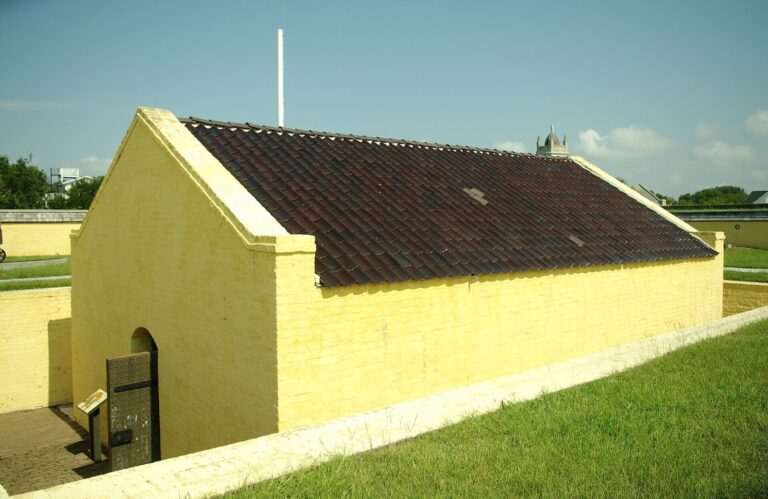
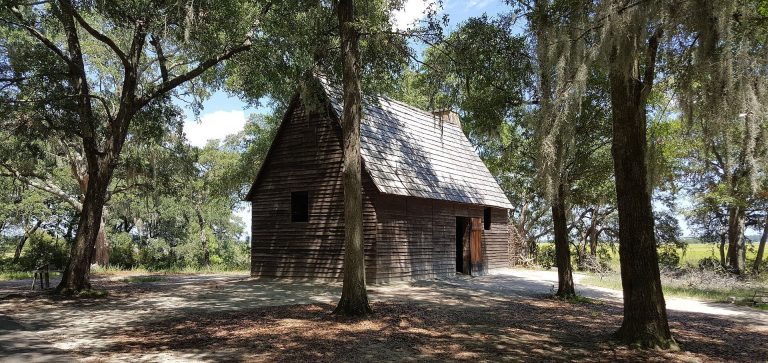
An abandoned house on the island was destroyed by fire on December 22, 1967. The fire spared a warehouse.