El Caño Archaeological Park: A Gran Coclé Funerary and Ceremonial Center in Panama
Site at a Glance
- Rating
- 4.6
- Popularity
- Low
- Country
- Panama
- Primary era
- Medieval
- Eras represented
- Medieval
- Civilizations
- Unclassified
- Site type
- Burial
- Remains
- Necropolis
On this page10 sections
History
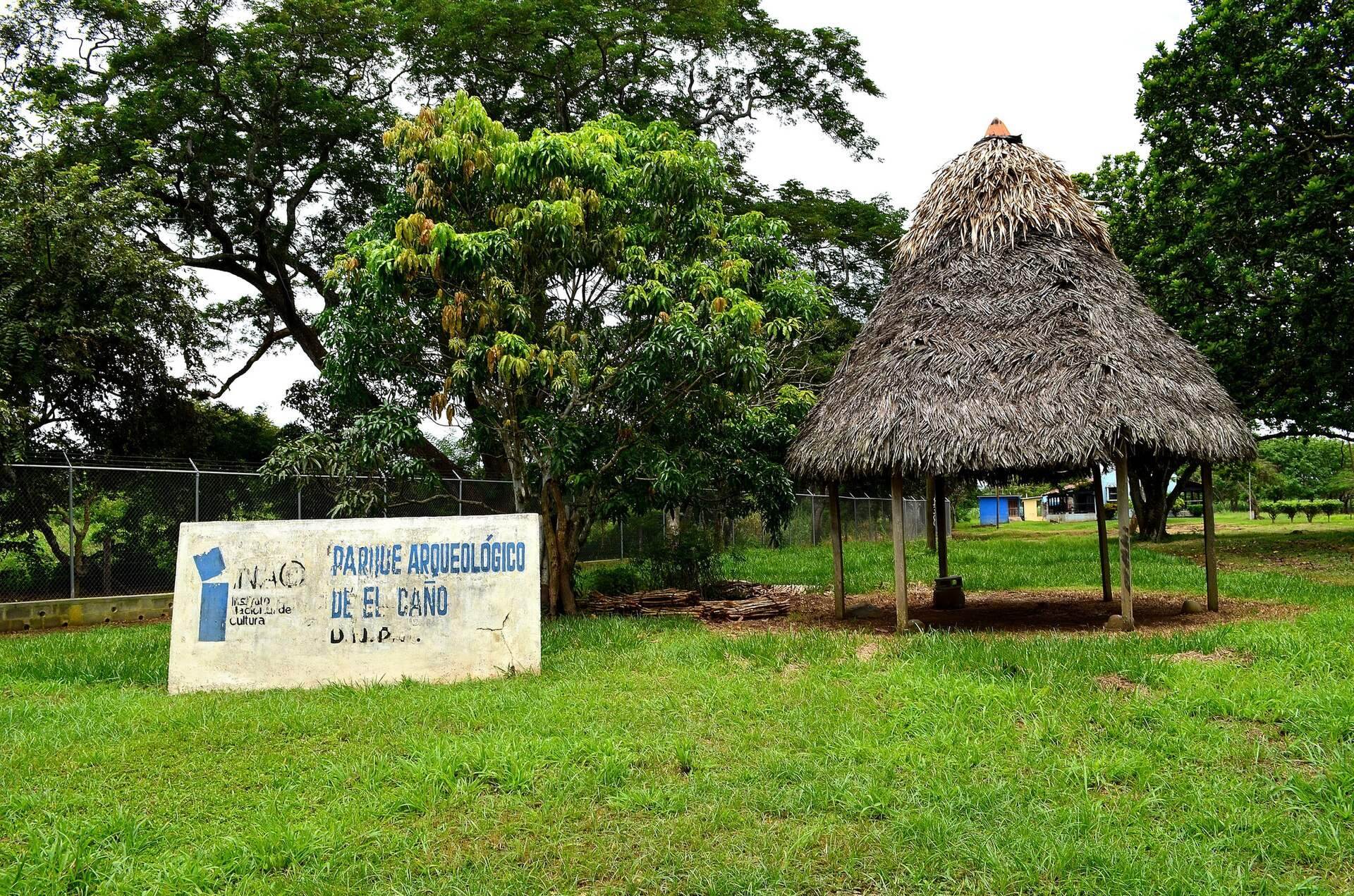
El Caño Archaeological Park is a pre-Columbian funerary complex and ceremonial center in El Caño, Coclé Province, Panama. It belongs to the Gran Coclé tradition, a cultural tradition of central Panama known for polychrome ceramics, goldworking, monumental stone features, and socially differentiated burials. The earliest known occupation dates from roughly 100 to 400 BC, while the principal funerary activity represented by the excavated tombs took place approximately between AD 700 and 1000, possibly continuing as late as AD 1100.
From communities to chiefdoms
El Caño reflects a period when relatively egalitarian communities developed into more hierarchical societies ruled by chiefs. In this setting, high-status leaders, sometimes described as caciques, were associated with gold and copper production and received elaborate burials accompanied by valuables and other individuals. The cemetery therefore provides evidence for complex political and social organization among the pre-Columbian communities of the Coclé region.
The site lies near the Río Grande in a landscape that supported ceremonial and funerary activity. Its tombs and offerings indicate that burial practices were used to express rank and authority. The later occupation history of El Caño remains uncertain, but the principal cemetery phase demonstrates the power held by elite individuals within Coclé society.
Early investigations and renewed research
Initial investigations began in the 1920s. In 1925, the American adventurer Alpheus Hyatt Verrill noticed unusual stones beside the Río Grande, exposed several of them, and excavated three human skeletons. Archaeological work continued in 1926 and resumed in broader phases during the 1960s through 1980. Systematic investigations expanded during the 1970s, when archaeologists recovered the remains of sixteen people.
Work declined sharply by 1979 amid political changes in Panama and then entered a long interruption. Investigations resumed in the mid-1990s, followed by a formal research program led by Julia Mayo in the early 2000s. In 2005, Mayo began geophysical surveys, which use measurements of underground physical properties to locate buried structures without immediate excavation. Electrical-prospecting and transient-electromagnetic methods detected circular magnetic anomalies beneath several earthen mounds and indicated a probable burial area about 80 meters in diameter.
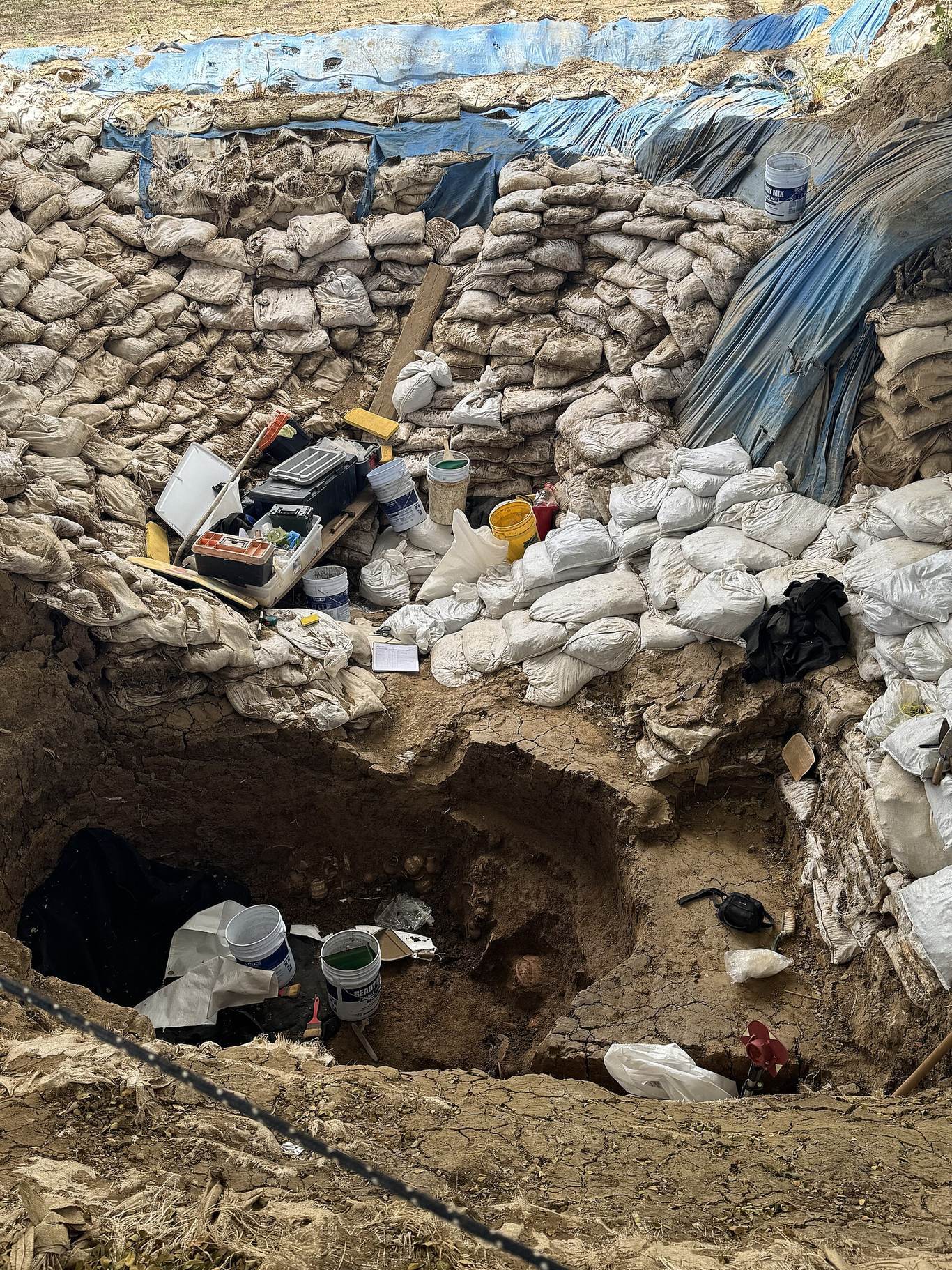
Excavations restarted in 2008 and revealed elaborate burials dating approximately from AD 700 to 1000. The discoveries established El Caño as a necropolis, or organized cemetery with associated ceremonial features, for high-status Coclé individuals. Research continued with teams from the Smithsonian Tropical Research Institute into the 2020s. The 2008 campaign uncovered an elite warrior wearing gold armor and jewelry made from gold beads. A major excavation in 2011 exposed the burial of a warrior chief accompanied by numerous people placed there at the same time, probably sacrificed captives or attendants.
Recent discoveries and interpretation
Later work showed that the cemetery complex was considerably more extensive than earlier investigations had indicated, with approximately twenty additional tombs estimated to remain for study. In early 2024, archaeologists announced an approximately AD 800 tomb containing a high-status Coclé individual, several associated bodies presumed to have been sacrificed, and a substantial group of funerary objects. In February 2026, they announced the completed excavation of another elite multiple burial approximately 1,200 years old. It contained a principal lord and several other individuals buried simultaneously.
Archaeobotanical research published in 2007 examined charcoal from the site to investigate the use of forest resources in funerary practices. The results were compared with Spanish historical descriptions and ethnobotanical research from nearby areas, adding evidence about the materials used in ceremonies. El Caño is administered as an archaeological park. The 2011 excavation area is protected within a building, while artifacts from the site are housed in Panama City’s Anthropology Museum.
Remains
Burial landscape
Surveyed burial area
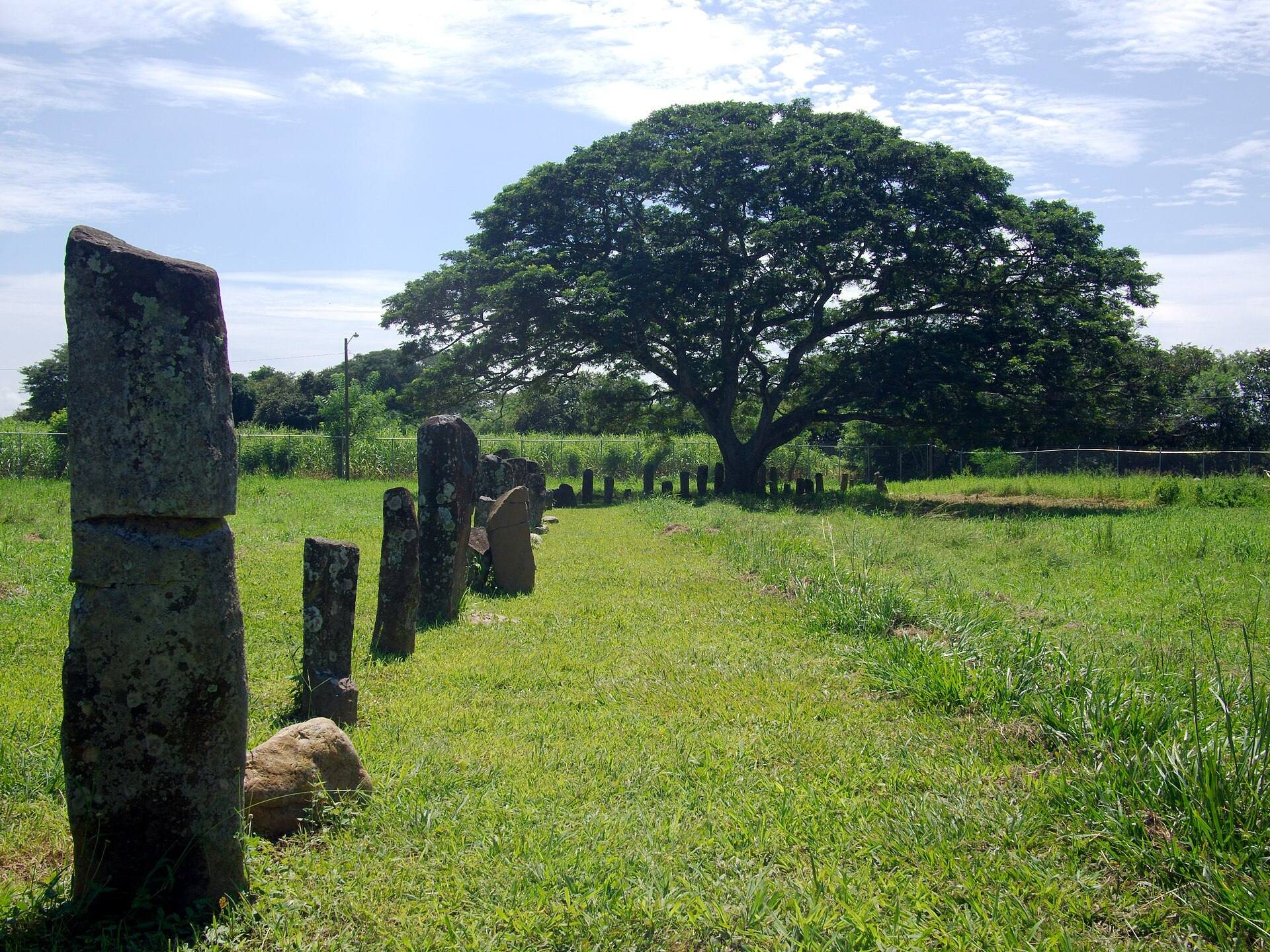
El Caño covers approximately 3.4 to 8 hectares on fertile alluvial plains near an ancient volcano. Its physical remains include earthen mounds, canals, burial areas, stone monuments, and carved columns made from basalt and tuff. Geophysical survey identified a circular burial area approximately 80 meters across beneath the mounds. Monoliths and stone sculptures surround this area, linking the burial ground with a visible ceremonial setting.
Elite tombs
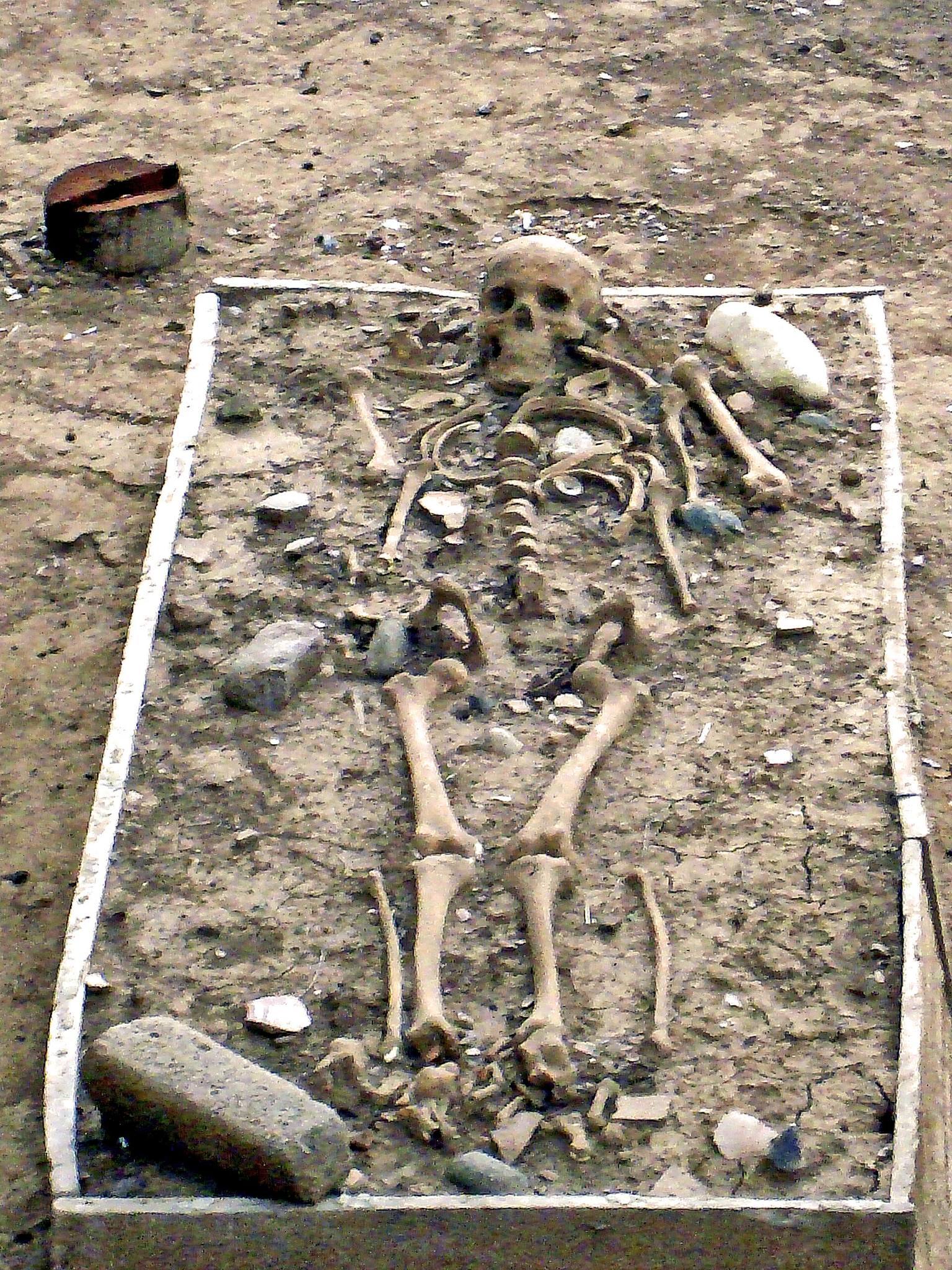
The funerary complex contains burial mounds and tombs associated with elite individuals. Excavated graves have produced human remains, abundant offerings, gold objects, polychrome ceramics, stone materials, and other evidence of ceremonial activity. One major tomb contained a male leader placed face down over a woman, with as many as thirty-one additional individuals buried with them. The arrangement indicates a simultaneous multiple burial involving people interpreted as sacrificial victims or attendants.
A tomb associated with a Coclé chief and dated to approximately AD 900 contained gold breastplates, bracelets, belts, pendants shaped as animals and humans, crocodile-shaped earrings, whale-tooth earrings, and bone flutes. The range of objects reflects both the authority of the buried individual and the skill of local metalworkers. Gold ornaments from the tomb also indicate local mining and highly developed metalworking.
Stone monuments and columns
The stone features include monolithic basalt columns and carved elements made from basalt and tuff. Some columns project partly from the ground, creating the unusual forms that drew Verrill’s attention in 1925. The monuments stand around the circular burial area and form part of the site’s funerary and ceremonial landscape. Earthen mounds and canals extend the physical complex beyond the stone features.
Objects and protected excavations
The excavated burials contain materials that connect individual rank with ceremonial display. An elite warrior was buried wearing gold armor and ornaments made from gold beads. The approximately AD 800 burial announced in 2024 included gold bracelets, belts made with gold beads, gold plaques, gold earrings, and two bone flutes, together with the remains of several associated individuals.
The elite multiple burial completed in 2026 contained a principal individual identified as a lord, lying in an extended position, with several other people placed in the grave at the same time. Some excavated skeletons have been returned to the protected 2011 excavation pit to show the arrangement seen during excavation. Other recovered artifacts are housed or displayed in the Anthropology Museum in Panama City.