Chapel of St. Sylvester at Santi Quattro Coronati: A 13th-Century Private Chapel in Rome
Site at a Glance
- Popularity
- Medium
- Country
- Italy
- Primary era
- Medieval
- Eras represented
- Medieval, Early Modern
- Civilizations
- Papal States
- Site type
- Religious
- Remains
- Chapel
On this page12 sections
History
The Chapel of St. Sylvester at Santi Quattro Coronati is a Catholic chapel in Rome, Italy, built in 1246 by Cardinal Stefano Conti as a private chapel in his palace. Dedicated to Pope Sylvester I, it preserves a medieval painted program shaped by the 13th-century contest between papal and imperial authority.
Cardinal Conti and the thirteenth-century chapel
A memorial inscription credits Rinaldo dei Conti di Segni, bishop of Ostia, with consecrating the chapel. The inscription gives the year as 1246, although the date may correspond to 1247 because the medieval year began in spring.
Conti commissioned paintings based on the legendary meeting of Sylvester and the Roman emperor Constantine I. Their story drew on the Actus Silvestri, a medieval legend rather than a contemporary account. The scene in which Constantine grants imperial authority to Sylvester also invoked the Donation of Constantine, a forged medieval document that claimed the emperor had granted privileges and authority to the papacy. This imagery supported papal claims during the conflict between Pope Innocent IV and Holy Roman Emperor Frederick II. While Innocent was in Lyon, Conti served as his vicar in Rome. In 1245, the First Council of Lyon, a church council, declared Frederick deposed.
The sculptors’ guild and later restoration
Augustinian nuns took over the complex in 1564 and established an orphanage. The chapel was no longer needed for their purposes. In 1570 it passed to the Università dei Marmorari, Rome’s guild of sculptors and stonecutters, which had been founded in 1406 and remains its owner. The guild venerated the Four Crowned Martyrs as patrons because tradition identified them as stoneworkers.
During the 16th century, the guild rebuilt the presbytery and commissioned its painted decoration. It also installed choir stalls along the nave walls. The chapel was restored in 1728, when a new altar was consecrated, and again in 1794.
Remains
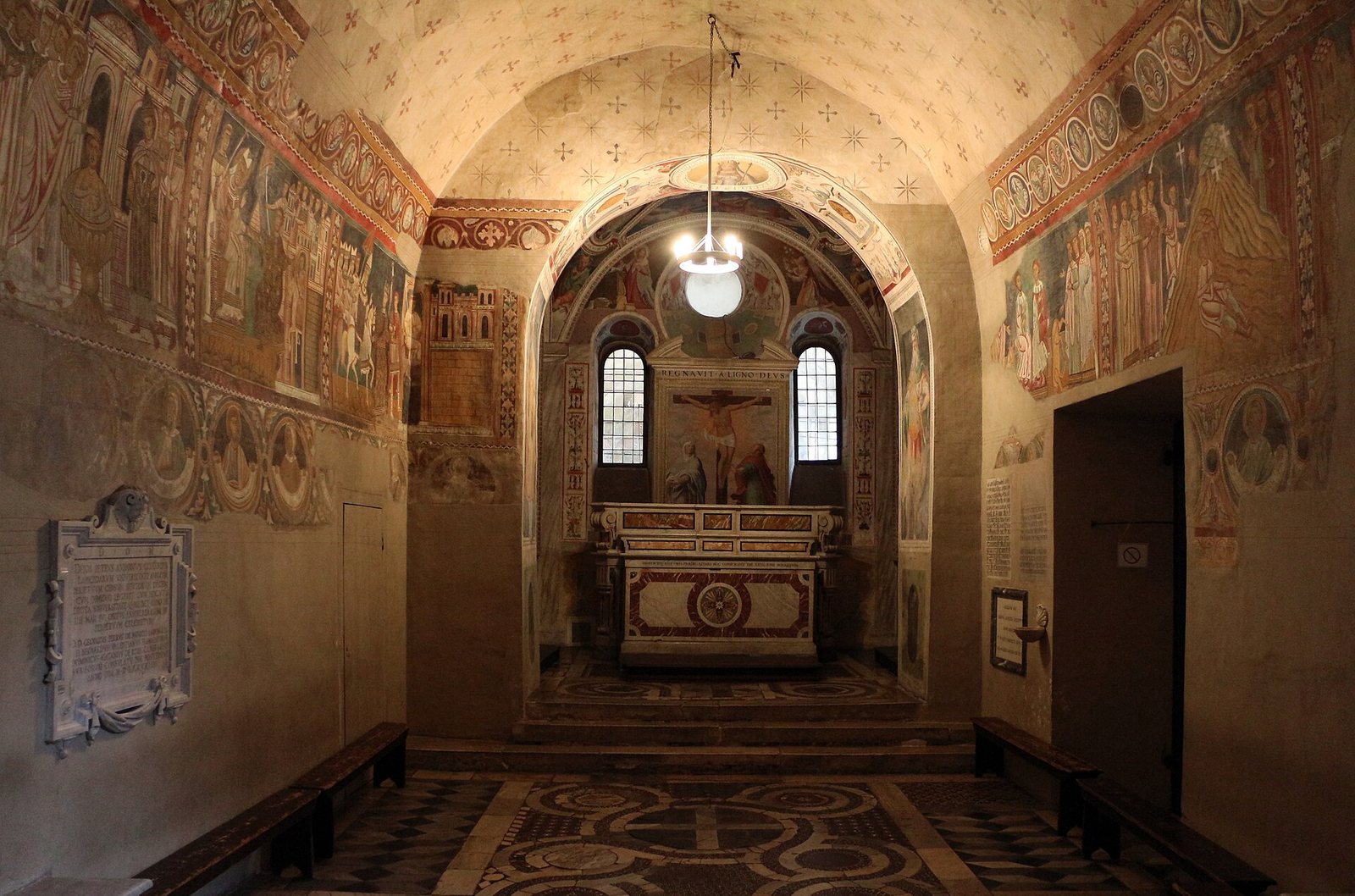
The chapel has a small nave and a raised presbytery, the area around the altar used by clergy. A semicircular arch separates the two, set to the right of the nave’s central line. The nave’s barrel vault and the presbytery’s original cross-vaulted ceiling give the two parts distinct forms, while painted decoration covers much of the interior.
Nave and medieval paintings
Structure, floor and vault
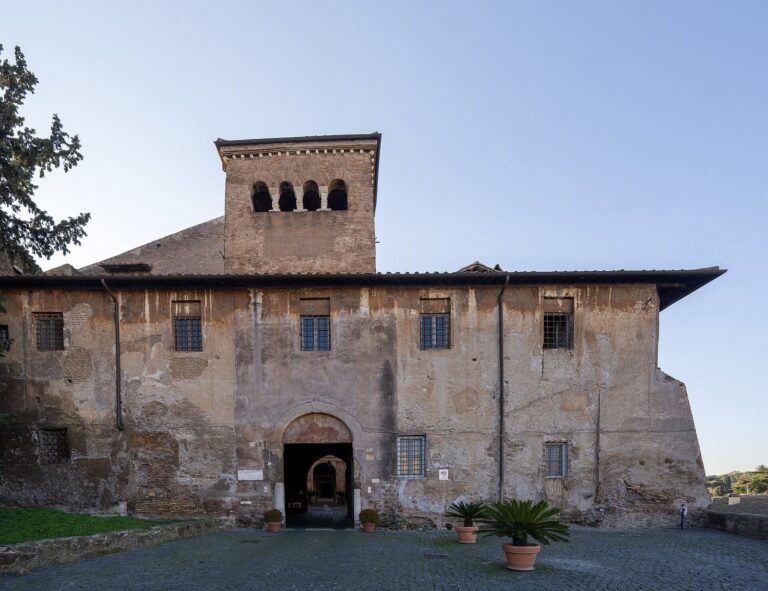
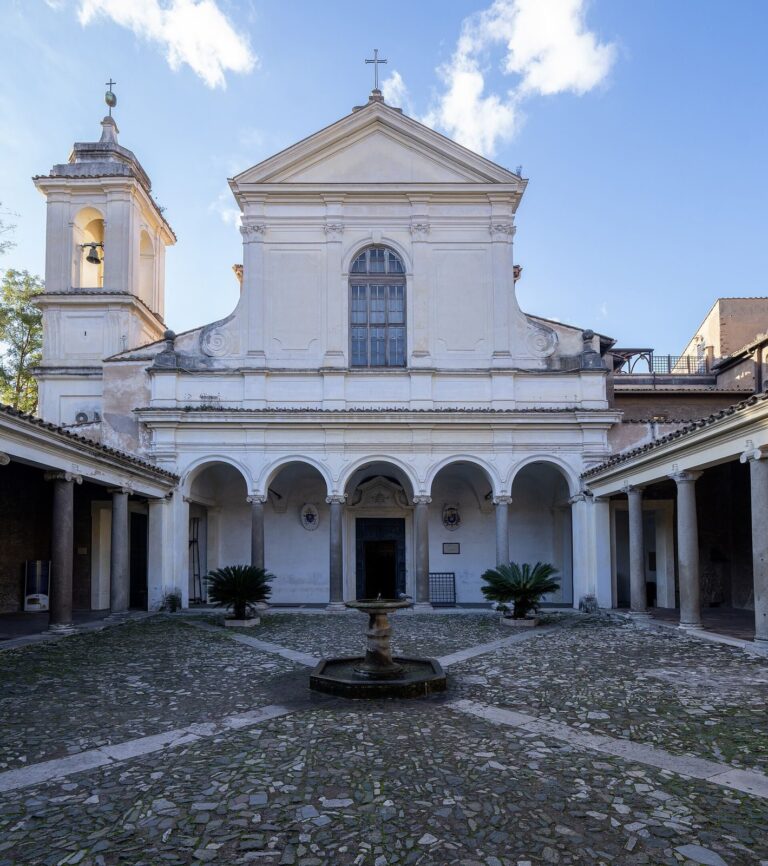
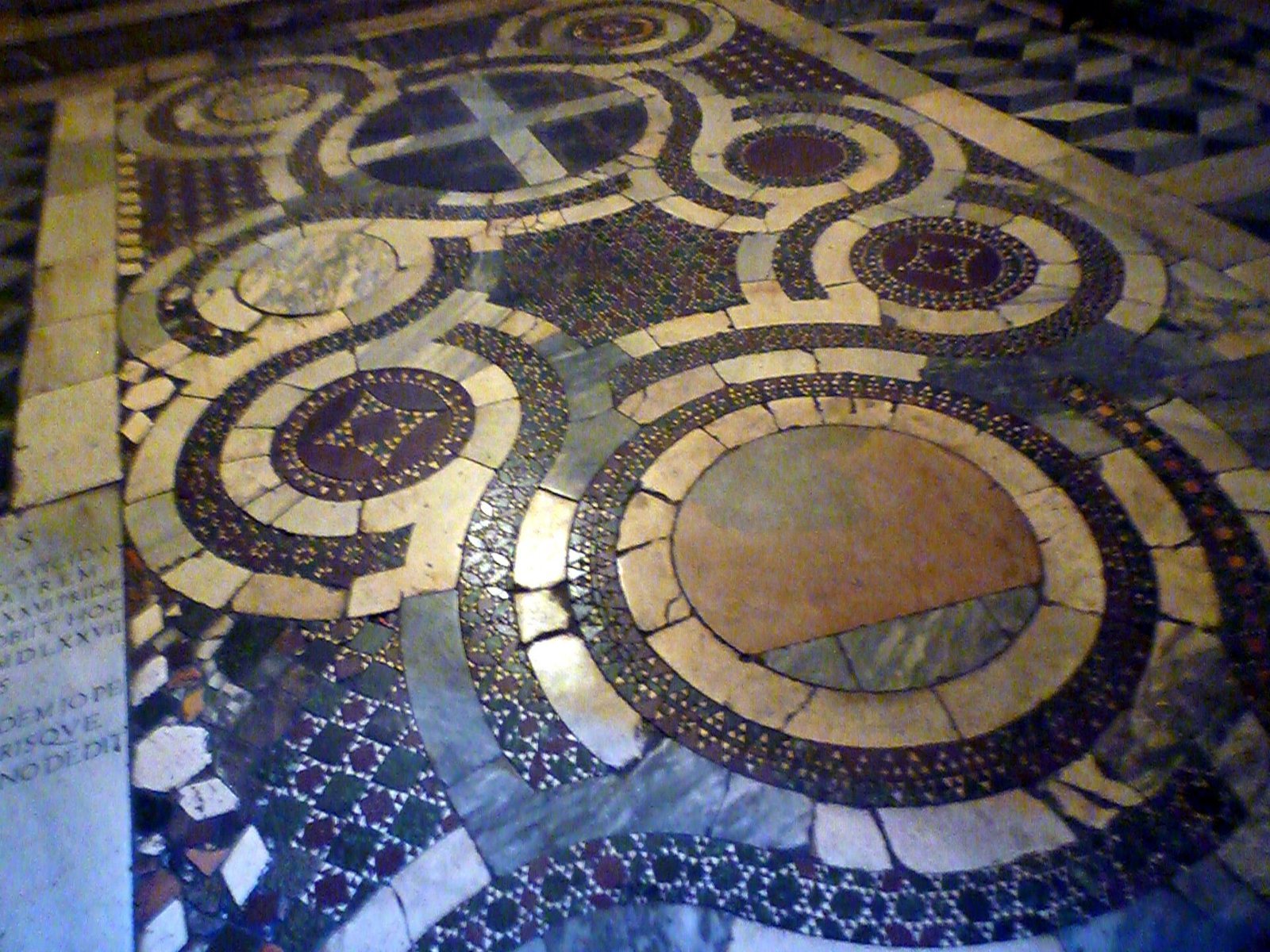
The chapel occupies the eastern end of the north, or right, aisle of the former Basilica of Leo IV. It is on the ground floor of the Great Tower, beneath the Gothic Hall. Its entrance opens from the Calendar Hall, and access is also described through the portico of the basilica’s first outer courtyard. The nave has a barrel vault, a continuous rounded ceiling. Its central floor retains its original Cosmatesque pavement, a medieval Roman style of geometric marble inlay. Narrower strips added along the sides, probably in the 18th century, form geometric patterns in white, black and grey marble.
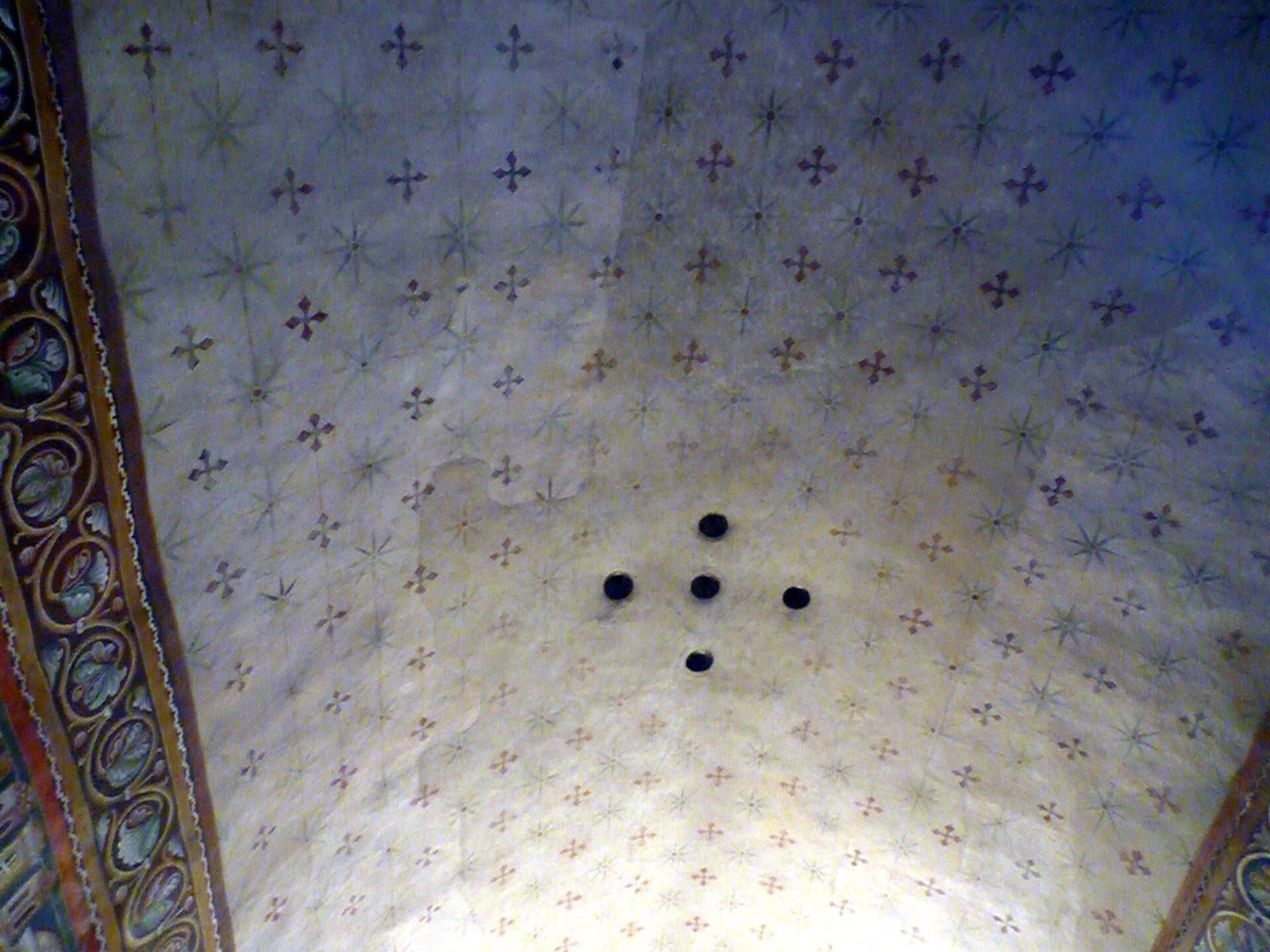
The vault is painted on a white ground with red crosses and grey, eight-pointed stars. Five bowls of Islamic origin, described as original, are set into its centre to form a Greek cross, with four arms of equal length. A frieze of leaves runs along the base of the vault.
The Sylvester cycle
The nave walls carry two rows of paintings. The lower row consists of medallions of prophets and patriarchs, damaged by the choir stalls. Above it, a better-preserved cycle of eleven scenes follows Sylvester’s legendary life. It begins on the entrance wall, continues along the left wall, and ends on the right. Paintings in the chapel and the neighboring Gothic and Calendar Halls form a connected decorative program. The chapel’s main frescoes are usually dated to around 1246–48; an inscription that has since disappeared gave the date 1248. The related paintings in the two halls are dated to 1235–47.
On the entrance wall, Constantine suffers from leprosy and rejects advice to bathe in children’s blood after their mothers plead with him. Peter and Paul then appear to him in a dream and direct him to Sylvester. The next scene shows the emperor’s messengers setting out to find the pope, who had fled to Mount Soracte, north of Rome. On the left wall, Sylvester receives the messengers, returns with them to Constantine, identifies images of Peter and Paul, and baptizes the emperor, who is healed.
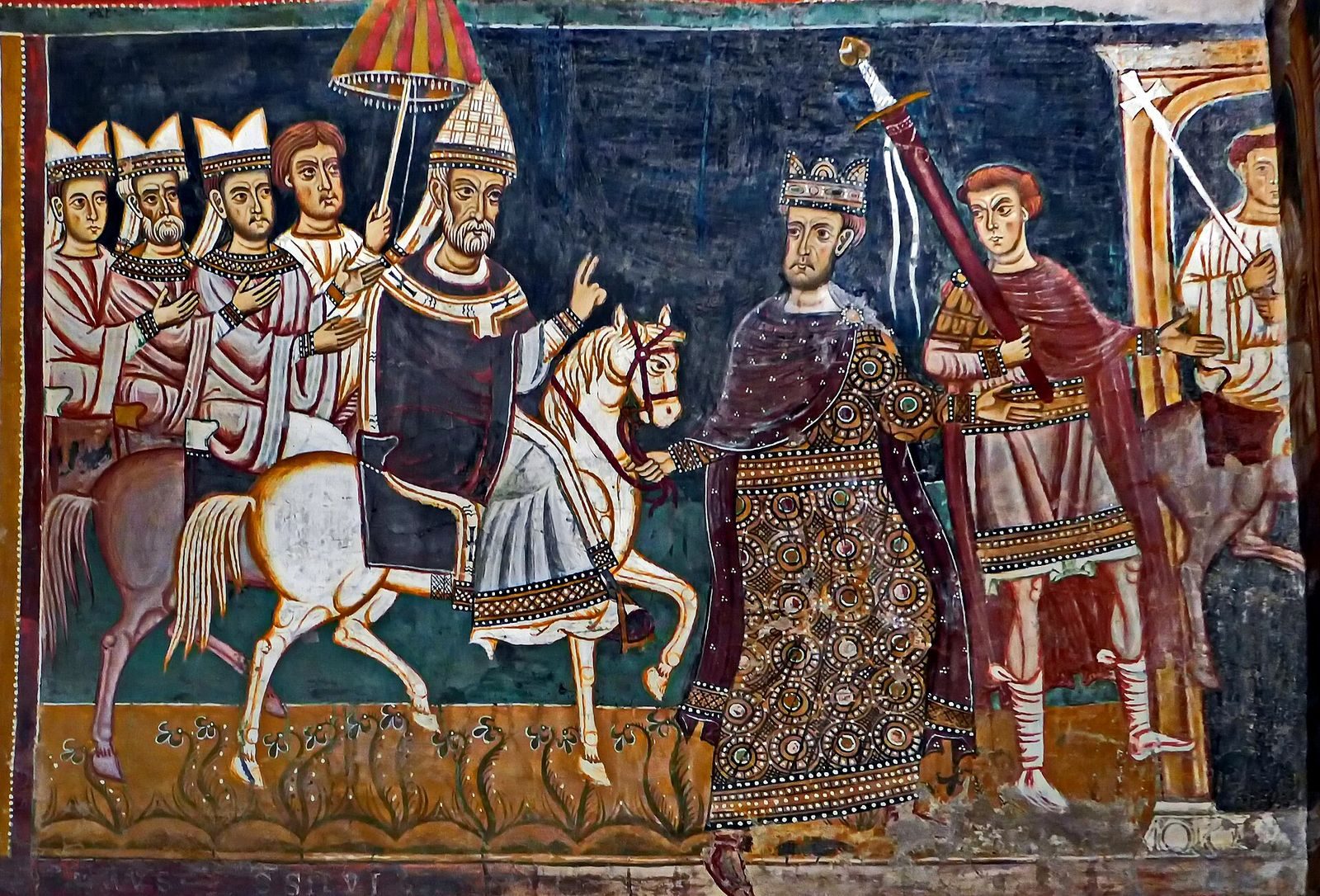
Other scenes show Constantine giving Sylvester imperial emblems, including a tiara, a ceremonial umbrella, a white horse and a red mantle. In a procession as the pope enters Rome, Constantine leads his horse by the bridle. Five figures on the city wall hold books and imperial crowns; they have been interpreted as Roman citizens mediating between pope and emperor. A military commander carrying a sword also appears in the procession.
The three scenes on the right wall show Sylvester reviving a bull, Helena finding the True Cross in Jerusalem, and the pope freeing Rome from a dragon. In the bull episode, a Jewish priest kills the animal with a spoken word, and Sylvester revives it through prayer. Helena, identified in the legend as Constantine’s mother, appears among the priest’s followers as a believer in one God who has not yet become Christian. The True Cross is the cross believed in Christian tradition to have been used for Jesus’s crucifixion.
The entrance lunette
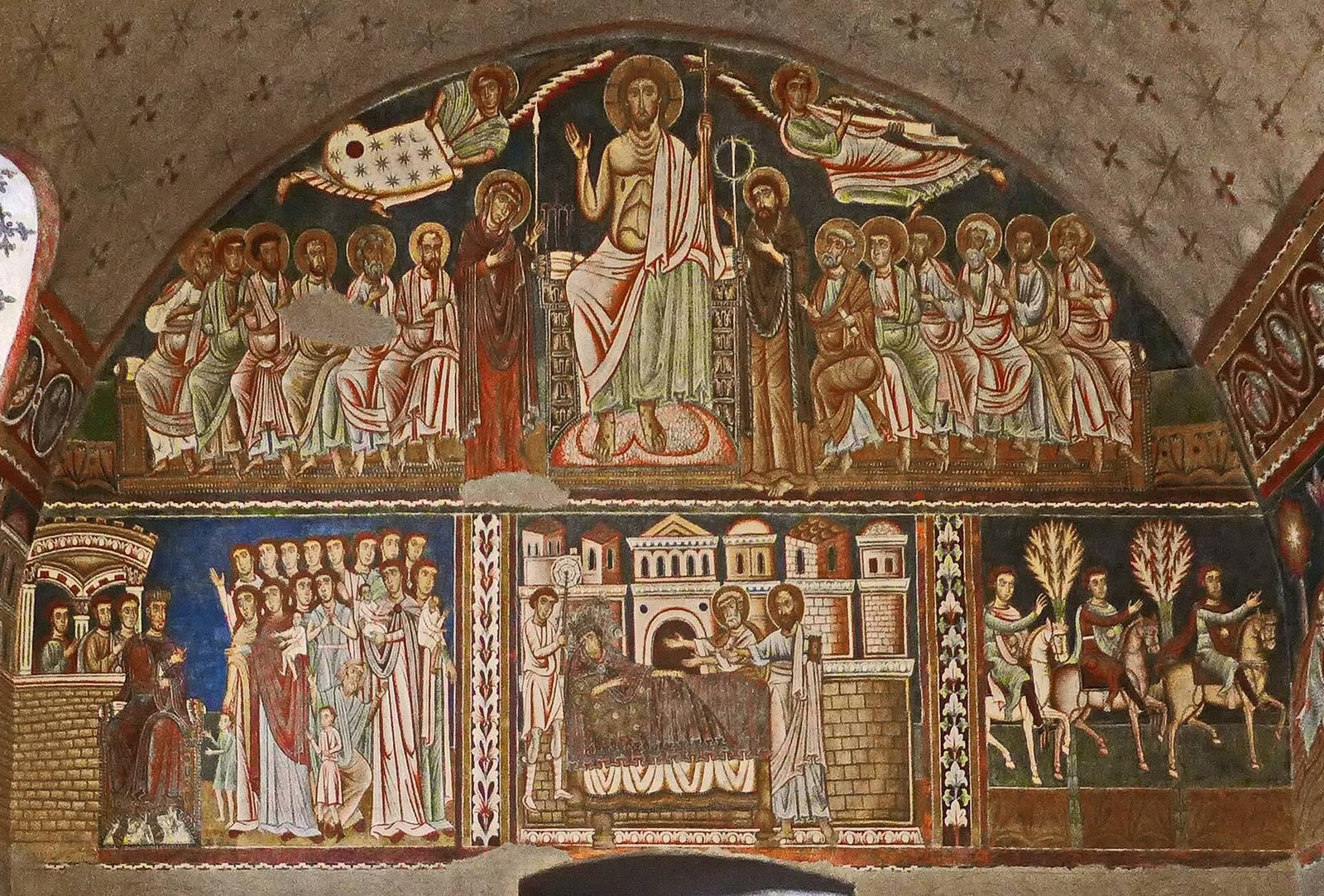
Above the entrance, a lunette, or curved wall space, shows Christ as judge enthroned with Mary, John the Baptist and the apostles, including Peter and Paul. Above them, one angel folds the firmament while another sounds a trumpet. The scene also includes objects associated with Christ’s suffering and crucifixion. A scroll held by an angel shows the sun darkened and the stars.
The painters of the main cycle are unidentified. Their work has been associated with artists in Rome and possibly with painters who worked in the crypt of Anagni Cathedral. It has also been described as Byzantine, referring to the artistic tradition of Byzantium.
Raised presbytery
Structure
The presbytery stands three steps above the nave. Its original arrangement included a cross-vaulted ceiling, formed by intersecting curved sections, two windows and a circular opening above them. The arch between the presbytery and nave is semicircular and offset to the right of the nave’s axis.
Sixteenth-century frescoes
The presbytery’s paintings are usually attributed to the Italian artist Raffaellino da Reggio, also known as Raffaellino Motta. They are generally dated to 1570–78, with some dating them specifically to 1574. The side walls depict the Four Crowned Martyrs’ condemnation and scourging, followed by their confinement in lead boxes intended to be thrown into a river. Behind the altar is a painted Crucifixion, with an Annunciation on either side of the circular opening above it.
Paired raised bands divide the painted vault into narrow fields. Angels appear in the fields, Christ blesses from the centre, and the four Evangelists occupy the side sections. Curved sections joining the vault to its supports, called pendentives, show the Four Crowned Martyrs, each identified by an inscription. Constantine and Sylvester appear on the sides of the entrance arch. Its inner medallion shows the Virgin as Queen of Heaven, surrounded by decorative grotesque motifs and single-color medallions depicting stonecutters’ tools.
Altar
The multicolored marble altar was built in 1728, the date given by its inscription. Above it hangs an anonymous canvas of Golgotha, painted around 1700.