Chain Gate, Wells: A Medieval Passage Linking Cathedral and Vicars’ Close
Site at a Glance
- Popularity
- Medium
- Country
- United Kingdom
- Primary era
- Medieval
- Eras represented
- Medieval
- Civilizations
- English
- Site type
- Military
- Remains
- Gate
History
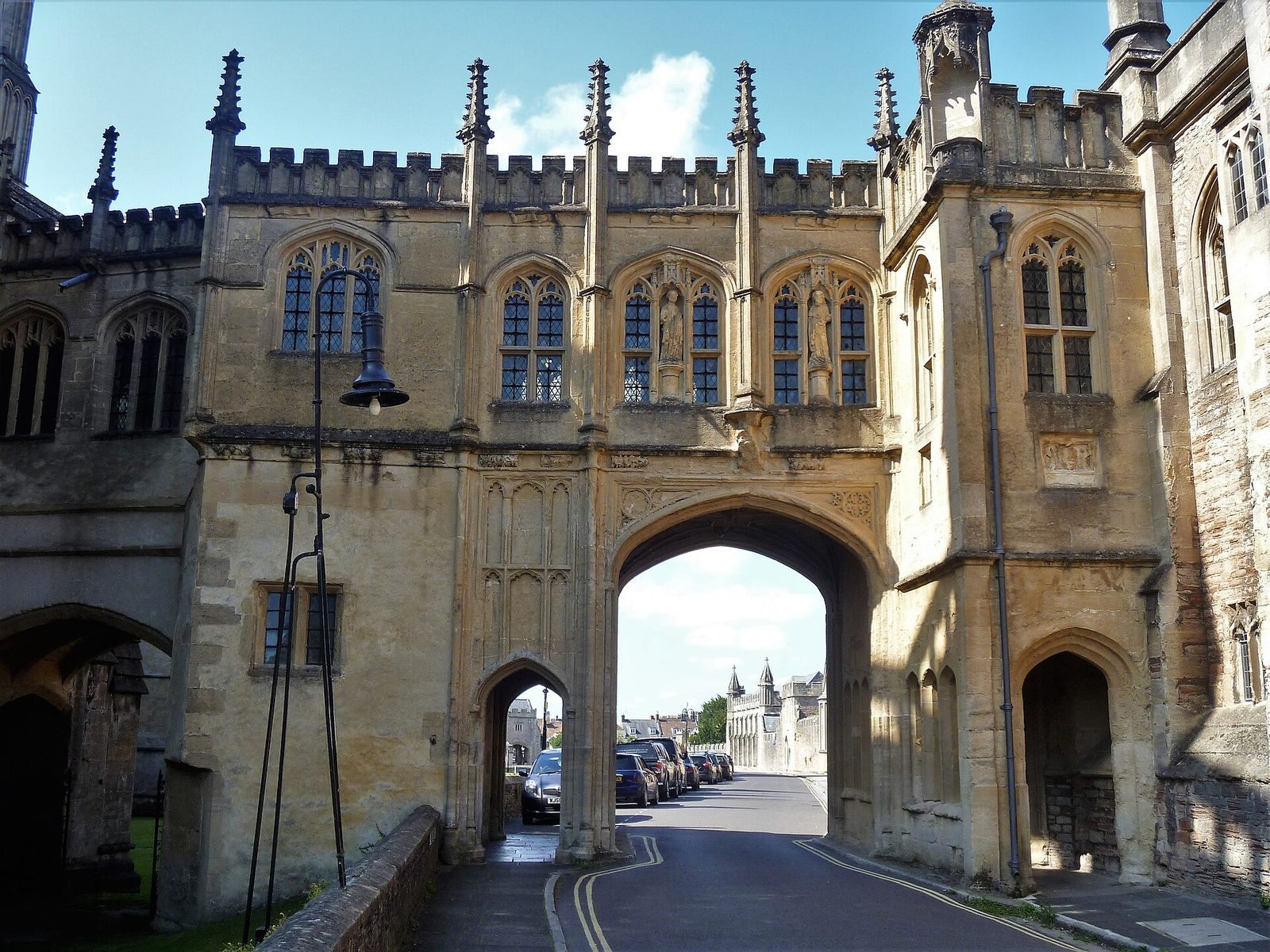
Chain Gate is a fifteenth-century passage beside Wells Cathedral in the United Kingdom, built around 1460 for Bishop Thomas Beckington. It linked the cathedral with Vicars’ Close, which had been built for the Vicars Choral, the clergy who served the cathedral choir. The gate let the vicars reach services and meetings in the chapter house, the clergy’s meeting room, without crossing public space or walking outside in bad weather.
Chain Gate is a Grade I listed building.
Remains
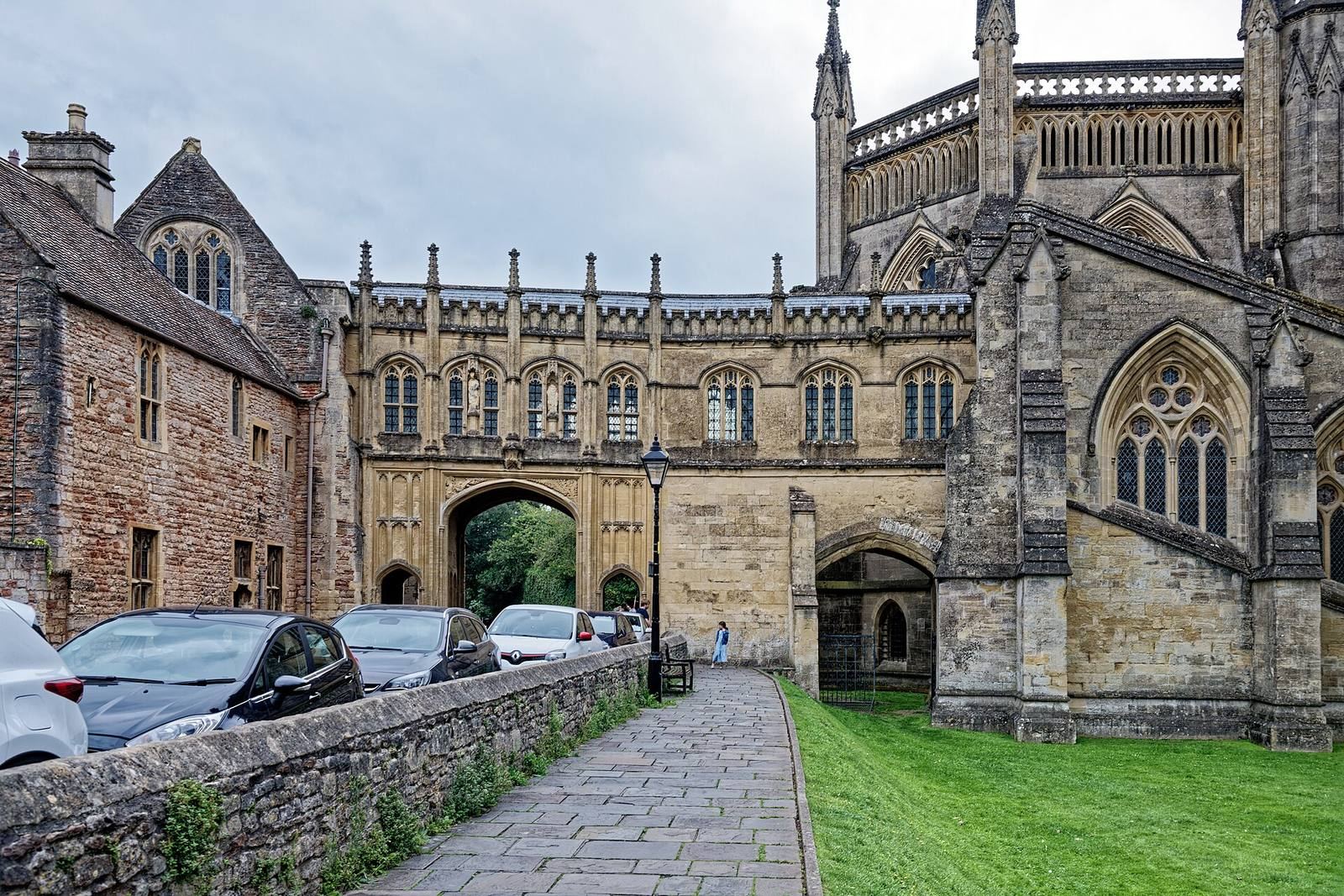
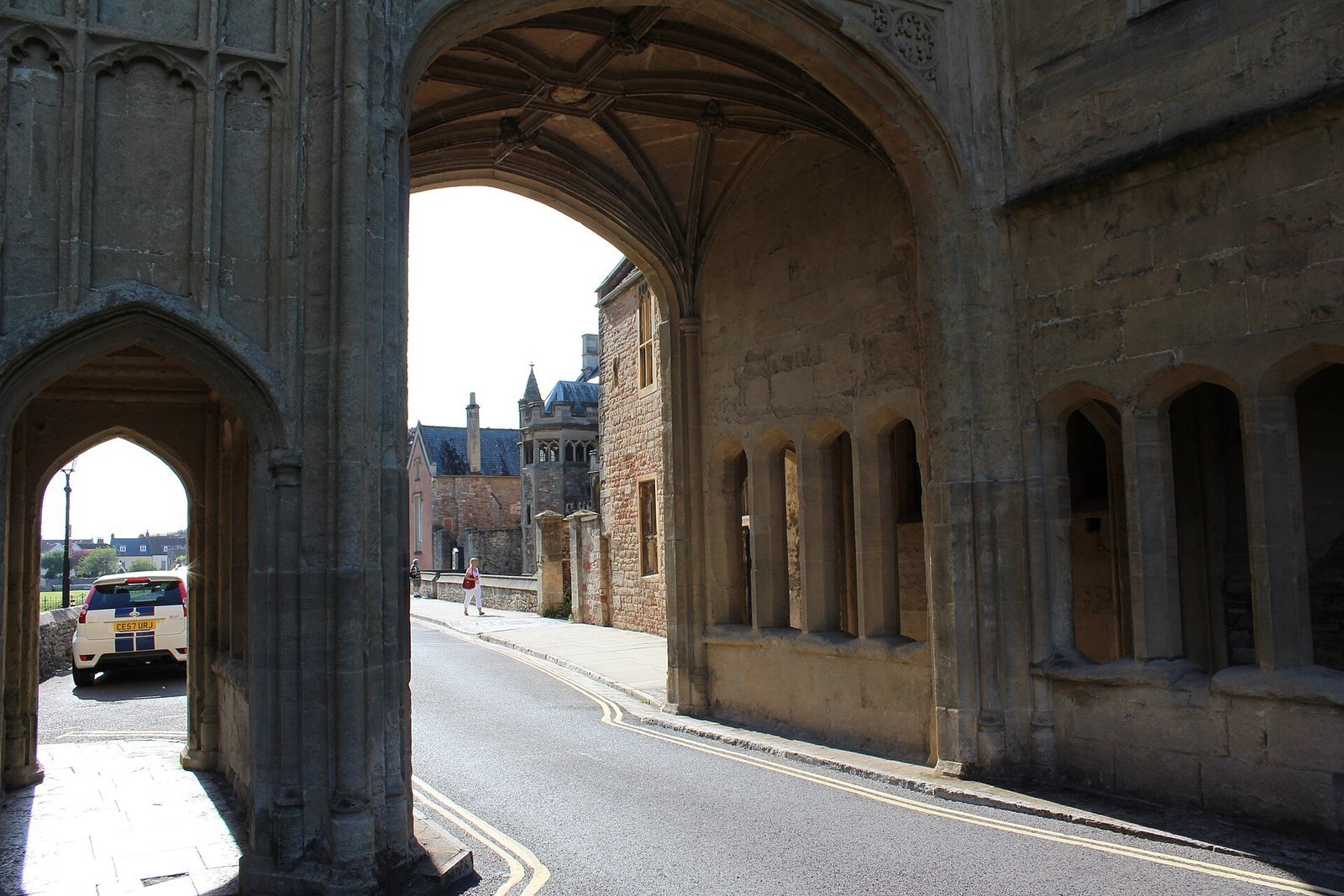
The two-storey gate stands on the north side of Wells Cathedral, on the route between St Andrew Street and Cathedral Green. It lies within the Liberty of St Andrew, a district with distinct jurisdictional privileges. Built of Doulting stone ashlar, or carefully squared blocks, the structure has a Welsh slate roof. At ground level, a wagon gate is flanked by two pedestrian gates. Three arches support the upper storey: one for carts, now used by cars, and two for pedestrians.
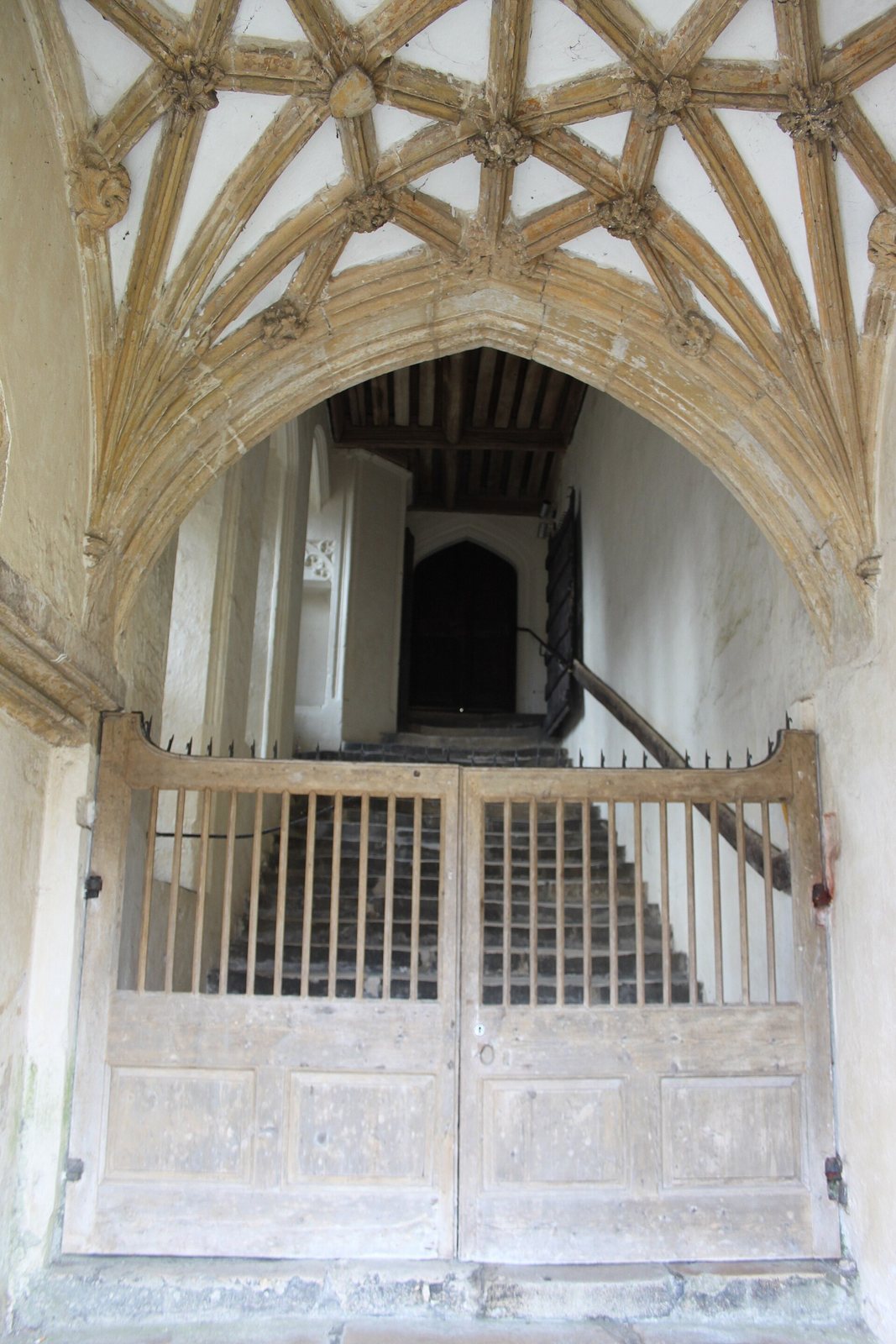
The upper passage joins the cathedral’s Chapter House to Vicars’ Close. It bends slightly because its entrance from the cathedral, reached by a staircase past the Chapter House, does not face the entrance in Vicars’ Hall directly. A parapet, a low wall with a notched top, crowns the gate. Niches in its walls hold statues of saints, and a shield displays Beckington’s arms.
An undated sketch by English draughtsman Henry Edridge depicts the gate in the late eighteenth or early nineteenth century. It shows a wall beside the approach road that stood higher than the wall there today.