Fenny Castle: A Medieval Motte-and-Bailey Castle in Wookey Parish
Site at a Glance
- Rating
- 5
- Popularity
- Very Low
- Country
- United Kingdom
- Primary era
- Medieval
- Eras represented
- Medieval
- Civilizations
- English
- Site type
- Military
- Remains
- Castle
On this page4 sections
History
Medieval castle
Fenny Castle is a motte-and-bailey castle in Wookey parish, United Kingdom, built around 1140. This form paired a raised mound with an enclosed courtyard. Its builder is unknown, and its construction may have been connected with the Anarchy, the succession conflict of 1135–1153 during King Stephen’s reign, fought between his supporters and those of his cousin, Empress Matilda.
William atte Castle owned the castle in 1327. By about 1480, it had become a ruin. The English chronicler and historian William Worcester recorded that he could still make out the plan of its houses and service buildings.
Ruin and later history
The remains were extensively quarried for stone. In the nineteenth century, quarrymen found 20 skeletons that may have been buried before the castle was built, though their date is uncertain. The castle gave its name to the hamlet of Castle in Wookey parish, about a mile southwest of the main village. A stone cross in the hamlet, regarded as a marker of its importance, was still visible in 1839. Fenny Castle is a Scheduled Monument, a historic site protected under England’s heritage legislation.
Remains
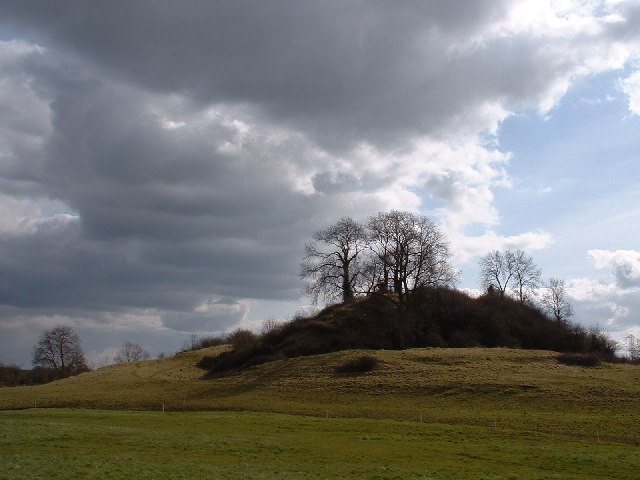
The castle stands on a natural Lias hillock, formed of sedimentary rock layers chiefly comprising limestone and mudstone, about 20 metres above the surrounding flat land at the edge of the Somerset Levels. Its earthworks follow the motte-and-bailey form, with a raised mound and an enclosed courtyard. Little masonry survives, and extensive quarrying has affected the site. Grass and scrub cover the mound, with a few trees. In 1982, the earthworks were considered prominent and of interest.