Bourne Abbey: A Medieval Canonry and Parish Church in England
Site at a Glance
- Rating
- 4.5
- Popularity
- Very Low
- Country
- United Kingdom
- Primary era
- Medieval
- External website
- Open
- Eras represented
- Medieval
- Civilizations
- English
- Site type
- Religious
- Remains
- Church
On this page5 sections
History
Bourne Abbey is a former medieval canonry and present parish church in Bourne, United Kingdom, founded in 1138 during the Norman and medieval period. It was established by Baldwin FitzGilbert de Clare with the consent of his son Roger and his wife, Adelina. The community followed the Arrouaisian reform of the Rule of St. Augustine, a set of religious guidelines for Augustinian communities, and housed up to 14 canons.
Foundation and medieval development
The foundation formed part of Baldwin’s reorganisation of his estate. Bourne’s present town centre was created as a new settlement at the entrance to his castle, with the abbey and castle connected by a principal road. The choice of an Arrouaisian community may have been influenced by the abbey’s position near this route, since the reform movement was associated with religious service to travellers.
A church already existed at Bourne in 1066, according to the Domesday Book, the survey of landholding and resources commissioned by William the Conqueror and completed in 1086. An earlier Anglo-Saxon abbey has also been proposed, but its existence remains unconfirmed. In the late thirteenth century, the estate linked to Bourne Castle was reorganised. The main road was then moved onto part of the former castle site and placed slightly farther from the abbey.
Bourne Abbey had connections with medieval religious and literary life. The Ormulum, a religious text written in phonetically spelled English verse, was probably composed there around 1175 by Orrm, an Augustinian canon. Robert Mannyng, also known as Robert de Brunne, is often described as a monk of Bourne Abbey, but he belonged to the Gilbertines, a separate English religious order founded by Gilbert of Sempringham. His association with Bourne probably arose from his origin in the town. Because the nave served as the parish church, he likely knew it as a boy before leaving for Sempringham in 1288.
Simon Watton, one of the abbots, was excommunicated, meaning that he was formally excluded from participation in the church’s sacraments and communion. The offence is unknown. Thomas Holland, 2nd Earl of Kent, and Edmund Holland, 4th Earl of Kent, were buried at Bourne Abbey.
Dissolution and continuing parish use
The abbey was dissolved in 1536 during the first phase of Henry VIII’s Dissolution of the Monasteries, the Tudor programme that suppressed England’s monasteries and transferred or confiscated their institutional property. Its nave nevertheless remained in parochial use, probably from the foundation onwards, allowing the building to continue as a parish church after the religious community ended.
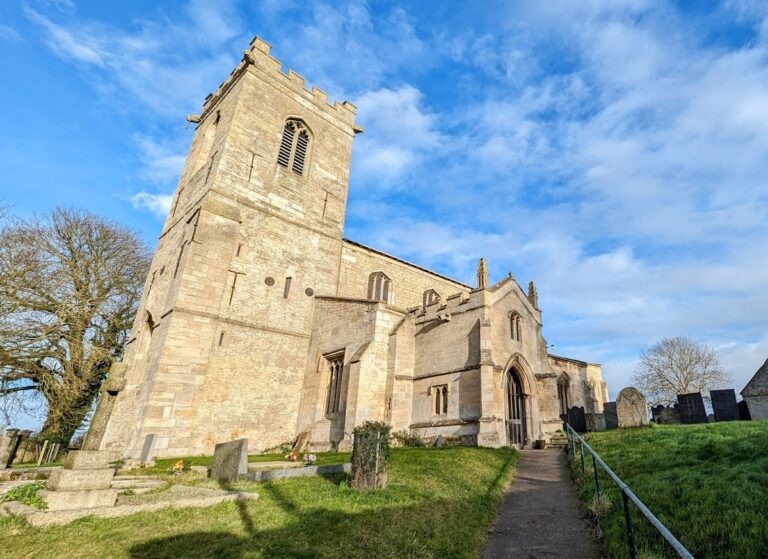
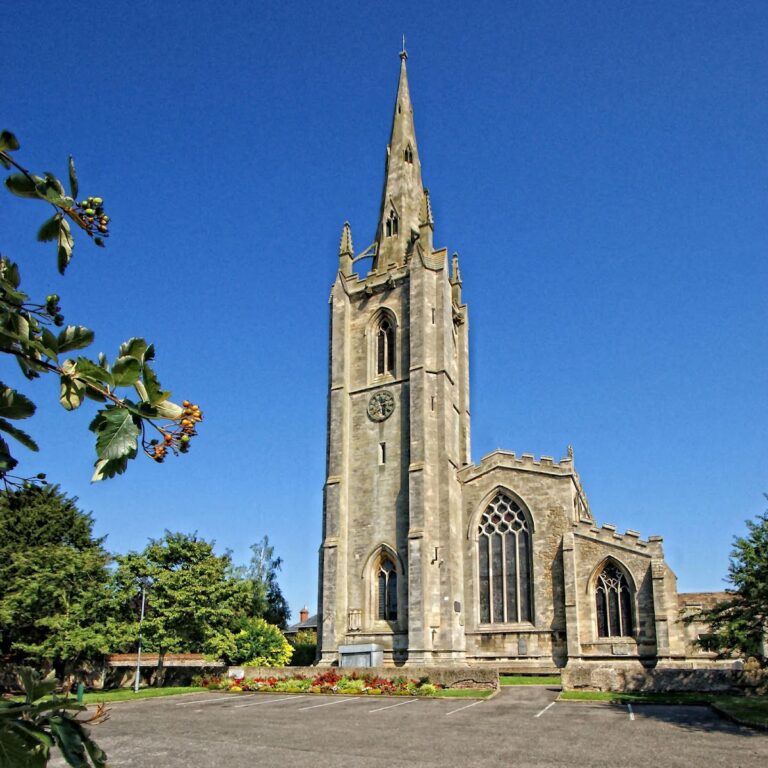
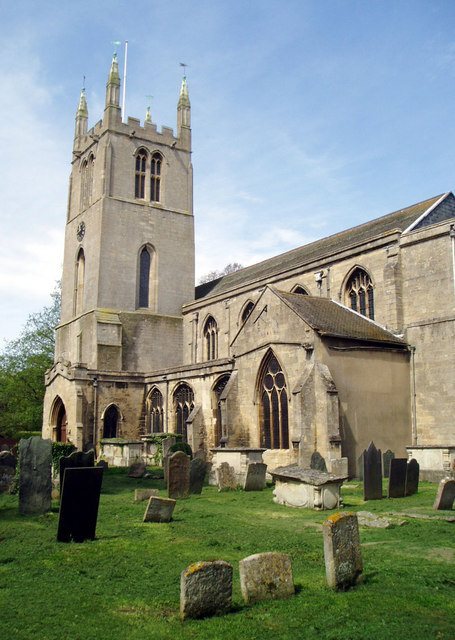
Bourne Abbey remains an active Church of England parish church in the Diocese of Lincoln and is dedicated as the Parish Church of St. Peter and St. Paul. Its Grade I listed status, recorded in 1949, places it in England’s highest category of statutory protection for buildings of exceptional architectural or historic interest.
Remains
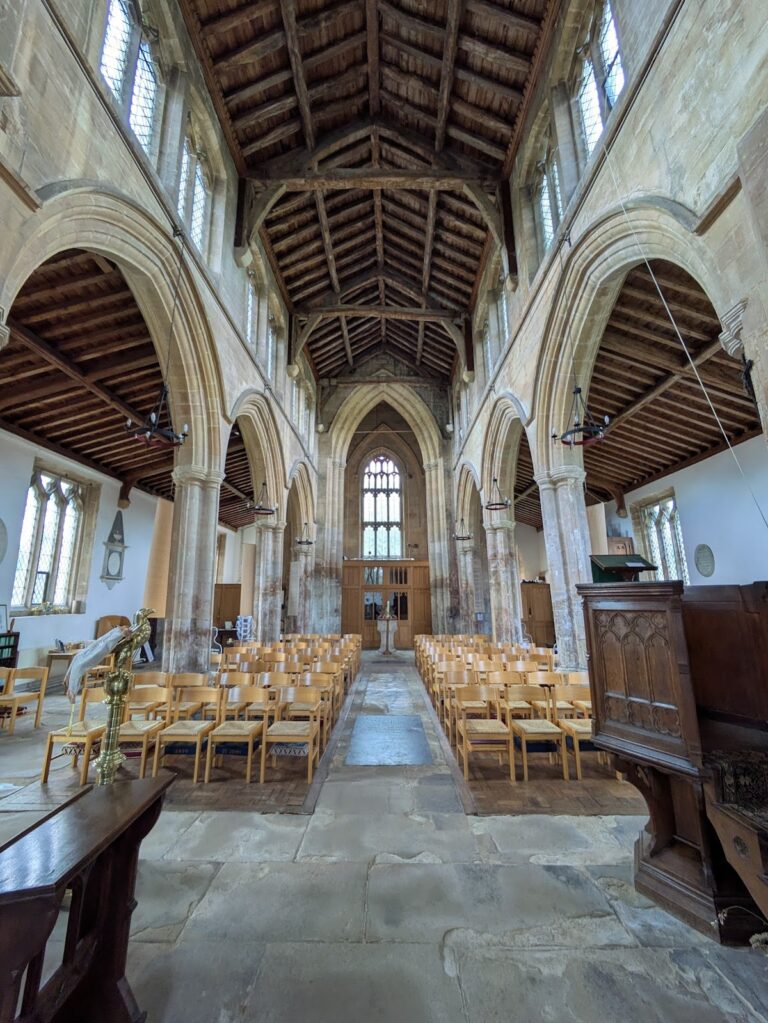
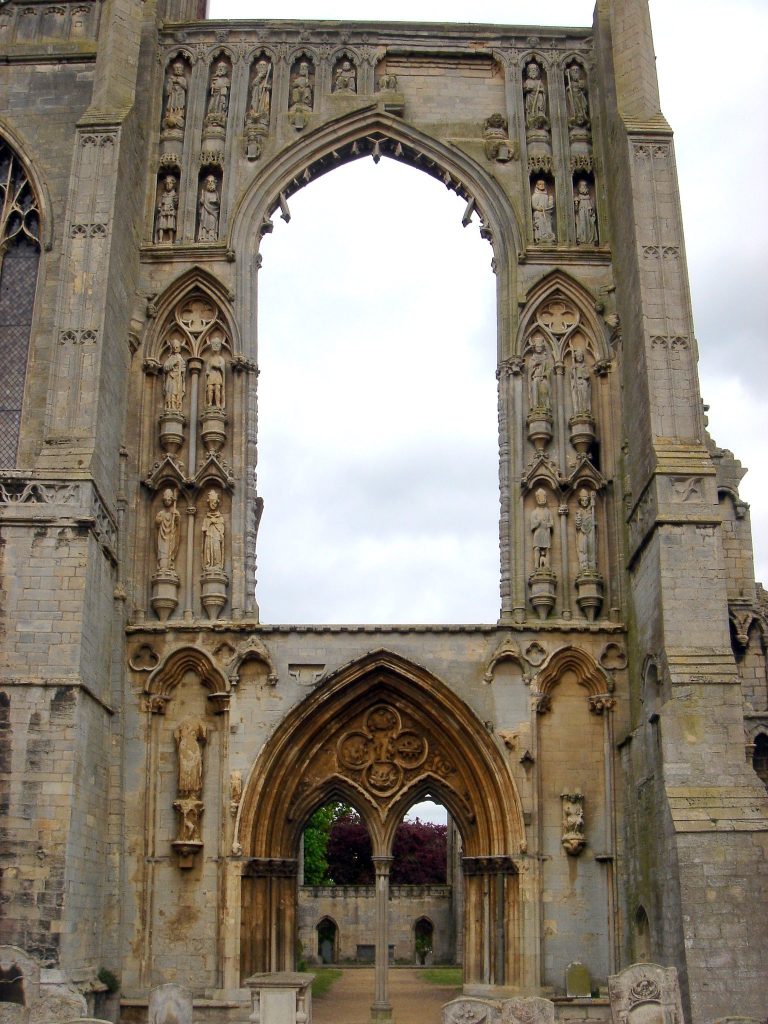
The surviving church is organised around a nave, the main central space for the congregation, and a chancel, the eastern part surrounding the principal altar and traditionally reserved for clergy. The building continues in parochial use as a functioning church, preserving the part of the medieval foundation that remained active after the abbey was dissolved.
Church and historic roadways
A pre-Norman road lies beneath the junction between the nave and chancel, placing an earlier route directly within the surviving plan of the church. The medieval main road associated with the reorganisation of Bourne passed between Baldwin’s castle and the abbey before being moved slightly away from the church in the late thirteenth century.