Cerne Abbas Giant: A Chalk Hill Figure in Dorset
Site at a Glance
- Popularity
- Very High
- Country
- United Kingdom
- Primary era
- Medieval
- Eras represented
- Medieval, Modern
- Civilizations
- Anglo-Saxon, British
- Site type
- Civic
- Remains
- Monument
On this page8 sections
History
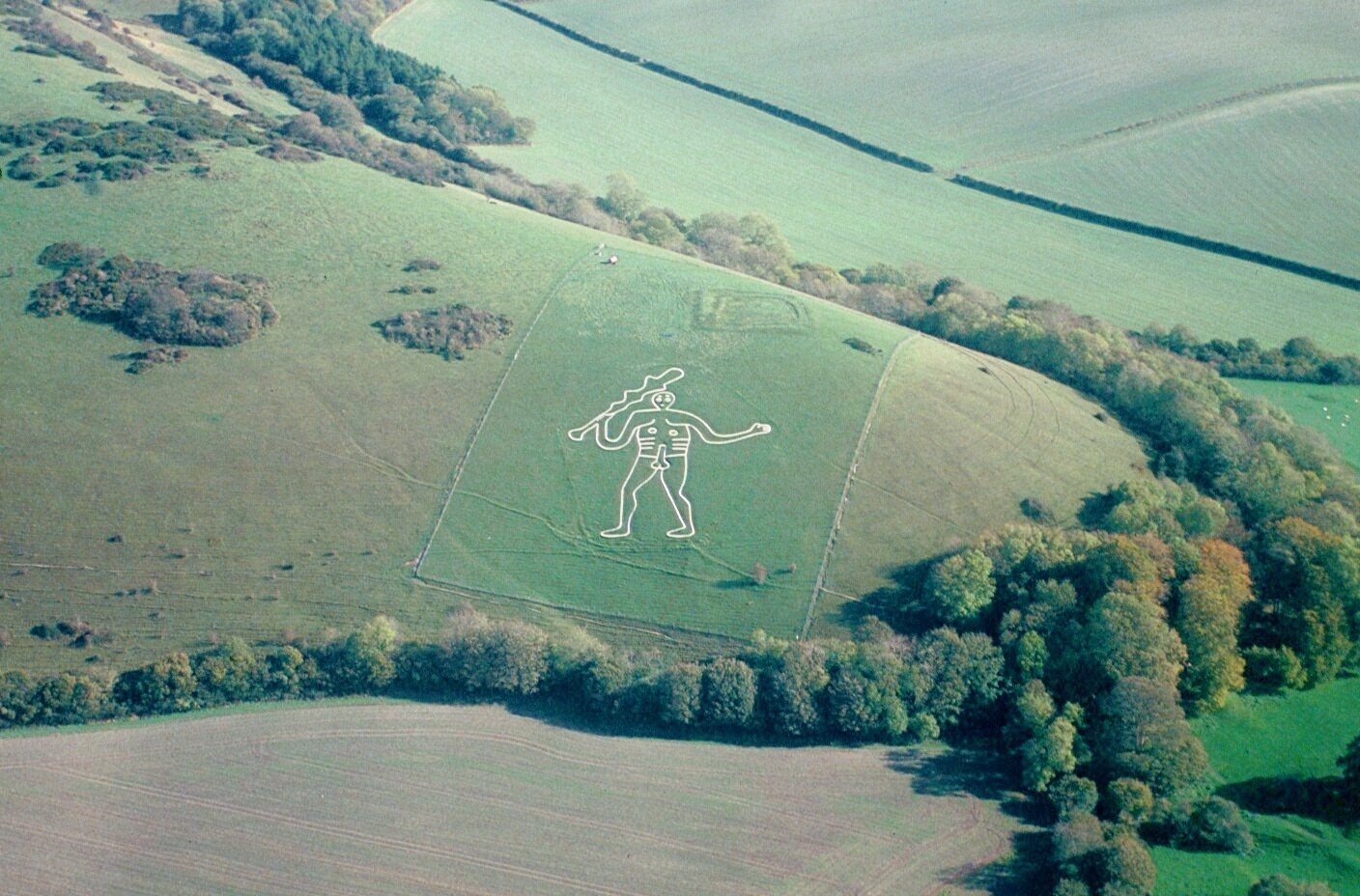
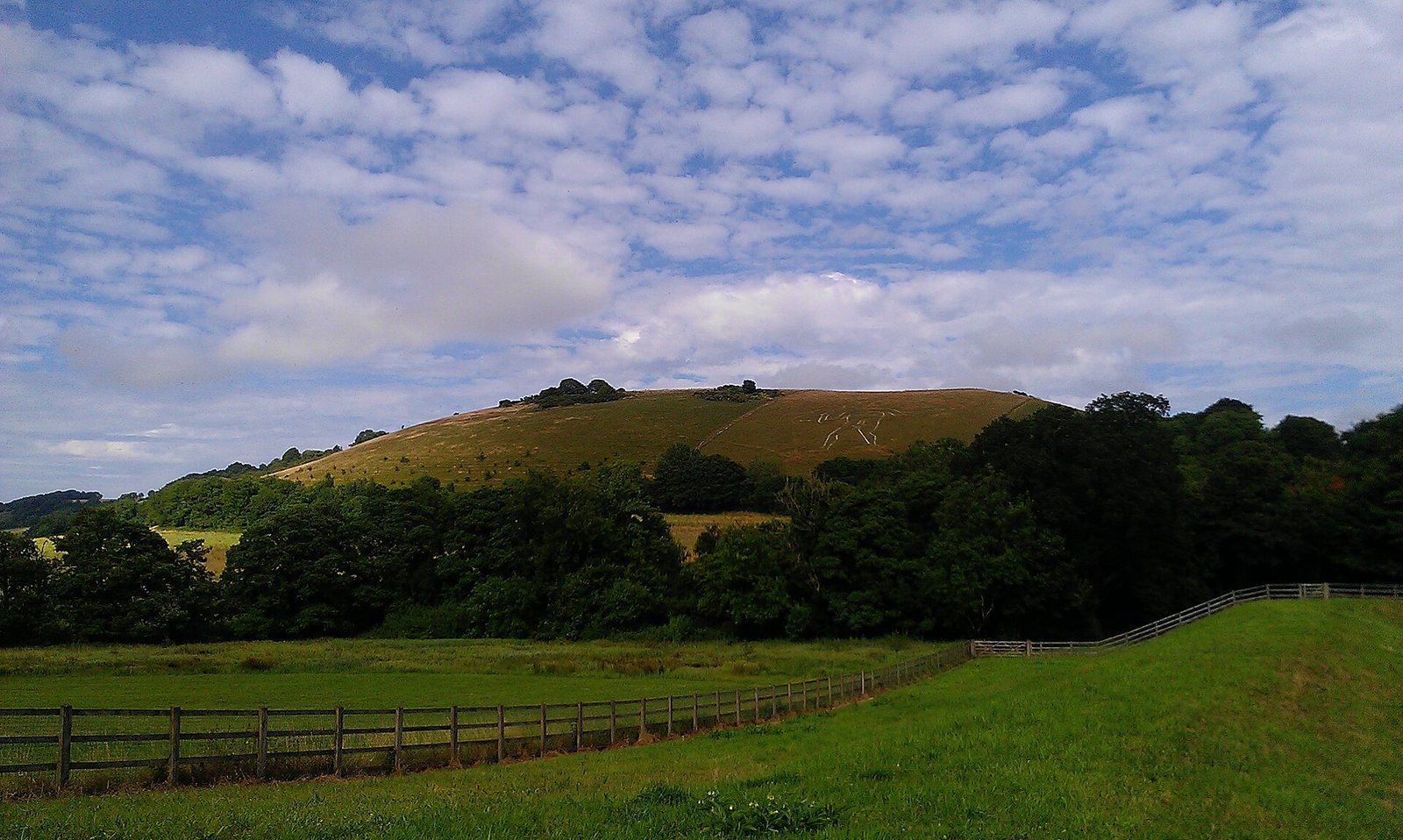
The Cerne Abbas Giant is a chalk hill figure, a large image cut into a hillside, on the steep, west-facing slope of Giant Hill just outside Cerne Abbas in Dorset, England, United Kingdom. Its origins and original identity remain uncertain. Dating evidence supports an initial carving between 700 and 1110 CE, during the late Anglo-Saxon period, while other studies and traditions have proposed different dates and explanations.
Origins and interpretations
The earliest known written reference to the Giant is an entry in St Mary’s Church accounts dated 4 November 1694, recording payment for repairs. It was noted during a visit by the Bishop of Bristol in 1734 and discussed in a letter by antiquarian Francis Wise in 1738. Magazine descriptions appeared from 1763, followed by the first known measured drawing in 1764. In 1774, historian John Hutchins recorded a local tradition that the figure had been cut during the previous century.
Antiquarians proposed several identities, including an ancient British or Saxon deity, Hercules, and a deity from Roman-period Britain identified with Hercules. One Roman-period theory connects the figure with Emperor Commodus, who promoted the worship of Hercules. Another interpretation places it in an earlier Celtic setting, based on a resemblance to an image of Nodens, a deity known from Romano-British evidence, on a skillet handle found at Hod Hill and dated to 10–51 CE.
A possible 17th-century origin has also been linked to the English Civil War, the mid-17th-century conflict between Parliament and the Crown. Under this interpretation, servants of Denzil Holles, lord of the manor, may have made or recut the figure as a parody of Oliver Cromwell, a Parliamentary military and political leader. A local version instead makes it a satire on Holles, who may also have ordered the alteration of an older figure. In 1751, Hutchins recorded a manor steward’s claim that the Giant had recently been created in Holles’s time. Another interpretation identifies Holles as his son Francis and reads marks once seen between the figure’s feet as possibly bearing the date 1680, though this reading has little supporting evidence.
Other traditions connect the figure to the 1539 dissolution of the monasteries, the closure of religious houses in England under Henry VIII. In this account, it mocked Thomas Corton, the final abbot of nearby Cerne Abbey, who was accused of fathering children with his mistress. Later scientific studies have offered further possibilities without resolving the debate. Optically stimulated luminescence testing, which estimates when mineral grains were last exposed to light, supports an initial carving date between 700 and 1110 CE. This interval overlaps the 10th-century founding of Cerne Abbey. A 2020 analysis of snail shells from the site suggested a medieval or later date.
Archaeologist Alison Sheridan suggested that an early figure might have challenged the new Christian religion on behalf of local pagans; other scholars have considered whether monks at Cerne Abbey made it. A 2024 interpretation proposes that the Giant depicts Hercules and was carved around 900 CE as a place for West Saxon armies to assemble. It further suggests that monks reinterpreted the figure as Saint Eadwold in the 11th century.
Folklore, care, and protection
Victorian-era stories associated the Giant with fertility. Some held that sleeping on the figure could help a woman conceive, while intercourse on it, especially on its phallus, was said to cure infertility. Other tales described the outline as the body of a real giant, including a story of a Danish invader beheaded while asleep on the hillside. Dorset poet William Holloway’s 1808 poem, “The Giant of Trendle Hill,” tells of a giant killed by a blow through the heart.
The figure became neglected and overgrown during the 19th century. In 1868, its owner, Lord Rivers, arranged for it to be restored as closely as possible to its earlier condition. In 1920, landowners Alexander and George Pitt-Rivers gave the Giant and its 4,000-square-metre site to the National Trust, a British conservation organization. The figure became a scheduled monument in 1924, a designation that gives historic sites legal protection in England. During the Second World War, the Home Guard covered it with brushwood to stop enemy aircraft using it as a landmark.
The grass is cut regularly, and the figure is fully re-chalked about every 25 years. Sheep from nearby farms have traditionally grazed the hillside. A shortage of sheep and a wet spring led to a major re-chalking in 2008, when workers tamped 17 tonnes of chalk into the outline by hand. Volunteers re-chalked it again in 2019.
Remains
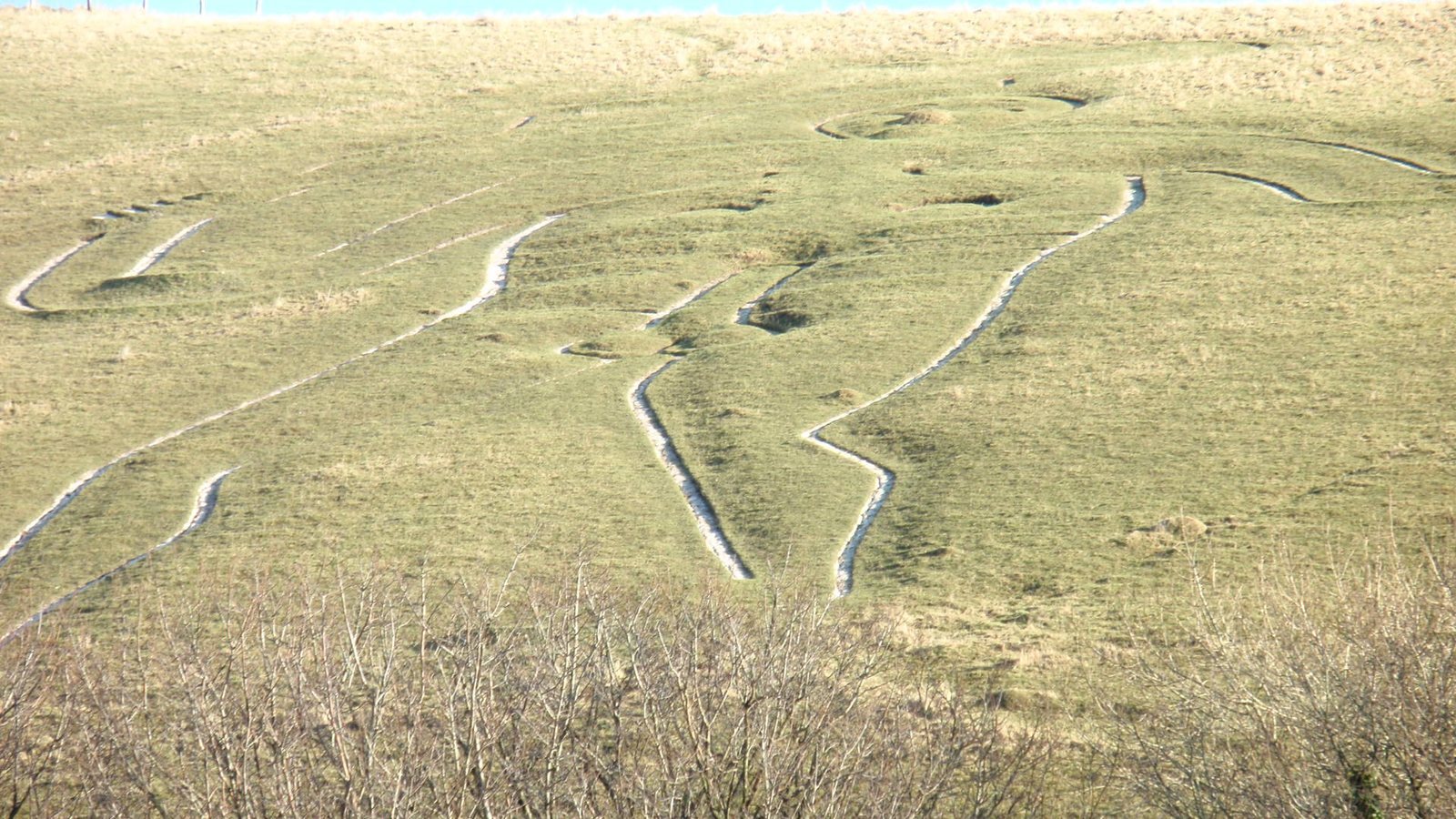
The Giant lies on the steep west-facing slope of Giant Hill. Its outline is formed by trenches about 0.6 metres deep, cut through the turf and filled with crushed chalk. The figure measures about 55 metres long and 51 metres across, with a long club extending from its right hand.
The chalk figure
Shape and dimensions
The figure shows a bald, naked man with his left arm stretched outward and a knotted club in his right hand. The club is about 37 metres long and adds 11 metres to the figure’s overall length. A line across the waist may represent a belt. The figure’s prominent phallus measures about 11 metres. The present form may reflect a recutting in 1908, when a circle representing the navel merged with a smaller penis; a postcard from the late 1890s still showed the navel. LiDAR, which uses laser measurements to map surface features, indicated in 2020 that the phallus was added considerably later than the main figure, which may originally have been clothed.
Cloak and surface traces
A 1996 study concluded that the figure once had a cloak over its extended left arm and an object beneath the hand, possibly a severed head. Archaeological work in 2008 supported the former presence of a cloak, perhaps representing an animal skin. A 1979 ground-resistance survey and drill samples confirmed a lion-skin feature. Another survey in 1995 found evidence of a cloak and changes to the phallus’s length.
An archaeological survey by Flinders Petrie, probably carried out during the First World War and published in 1926, recorded 220 measurements. Petrie also noted shallow grooves across the neck and from the shoulders toward the armpits, as well as a line of pits that he thought might indicate the spine. He considered that repeated cleaning might have made some of the smaller grooves. Erosion had worn away the Giant’s nose before the National Trust restored it in 1993.
The Trendle earthworks
The Trendle, also called the Frying Pan, is a distinct complex of earthworks on the hilltop above the Giant, northeast of its head. It includes circular and other earthworks, defensive ramparts, an avenue, or linear route marked by earthworks, shallow excavations, and features interpreted as traces of settlement. A rectangular earthwork is also associated with the complex. Its purpose remains uncertain. Interpretations include Roman remains and an Iron Age burial mound, while a suggestion that the area was used for maypole dancing was disputed by villagers who placed their maypole elsewhere. A 2006 wildlife survey recorded green-winged orchid, clustered bellflower, and autumn gentian at the site, flowers uncommon in England.