Palazzo Cecchini: A Former Dominican Convent in Cordovado, Italy
Site at a Glance
- Popularity
- Very Low
- Country
- Italy
- Primary era
- Early Modern
- Eras represented
- Early Modern, Modern
- Civilizations
- Venetian
- Site type
- Religious
- Remains
- Monastery
On this page11 sections
History
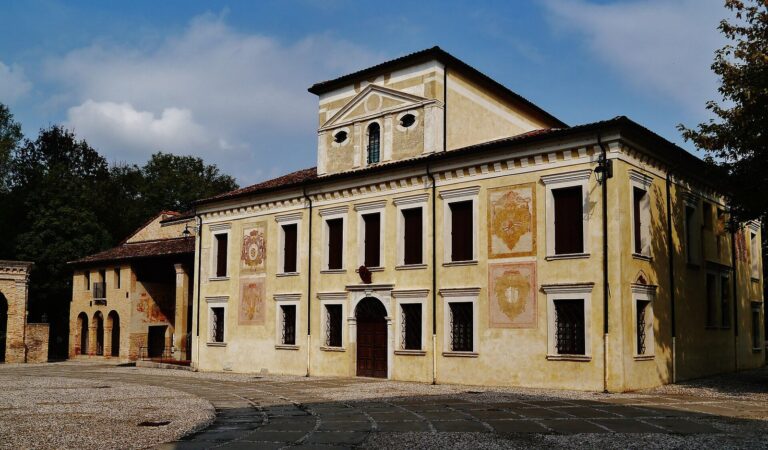
Palazzo Cecchini is a former Dominican convent in Cordovado, Italy, established in the first decades of the eighteenth century by adapting existing buildings. Its origins reflect the growth of a Dominican religious community in the town.
Foundation and Dominican life
In 1710, Bishop Vallaresso decided to found a convent for friars from the congregation of Blessed Giacomo Salomonico of the Zattere in Venice. The Dominicans, members of the Catholic Order of Preachers, adapted houses belonging to chaplains for their use. Blessed is a Catholic title for a person formally beatified, and Giacomo Salomonico was a medieval Dominican friar. By 1723, the community had grown and assembled a substantial library.
Suppression and private ownership
The convent’s fortunes declined after French forces under commander Jean-Baptiste Bernadotte arrived in May 1797, as municipal government was also beginning. Troops were housed in the convent, and a military hospital operated there. Soldiers looted valuable furnishings, including church furniture, while municipal authorities took documents. Napoleon Bonaparte’s policies led to the convent’s suppression, and the friars left Cordovado for good on 6 October 1806.
Vincenzo Marzin acquired the buildings between 1809 and 1811. His descendants later sold the part of the palace beside the sanctuary to railway engineer and philanthropist Francesco Cecchini in 1865. Cecchini renovated the facade and, by 1887, had added an internal wing and a series of rooms.
Cecchini’s bequest and cultural history
Cecchini’s will left the Municipality of Cordovado his movable and immovable property. He directed the municipality, when it had the resources, to establish a home where boys and girls could live, receive education and training, and be given a daily meal. He also called for clothing for the poorest children and an agricultural institute or practical farming school to train farmers.
The convent complex, especially Piazzale della Madonna, inspired Ippolito Nievo’s novel Confessions of an Italian, published in 1867. In a deathbed delirium in the novel, the character Bruto Provedoni recalls the piazza while in a military hospital. He and Colonel Giorgi have been wounded by a bomb on a bridge and are too badly injured to be moved. These events belong to the novel’s story.
Municipal and cultural uses
The municipal library opened on the palace’s first floor in 1970 and was named for Gino Bozza. A scientist working in engineering, physics, and chemistry, Bozza was rector of Milan Polytechnic, served on the Higher Council of Public Education, and spent 12 years on Cordovado’s municipal executive board.
The complex now serves cultural purposes and is managed by the municipality and the Gino Bozza Cultural Circle. An annual historical reenactment and Palio dei Rioni, a district contest for a prize, celebrates local history and traditions within the wider context of Friuli. Its four participating districts are Borgo, Saccudello, Suzzolins, and Villa-Belvedere. Palace activities include a camp of the Company of Arms of the Knights of St John, archery, arms games, children’s activities introducing medieval weapons, district competitions, fire displays, and the presentation of the prize to the winning district.
Remains
Convent complex and setting
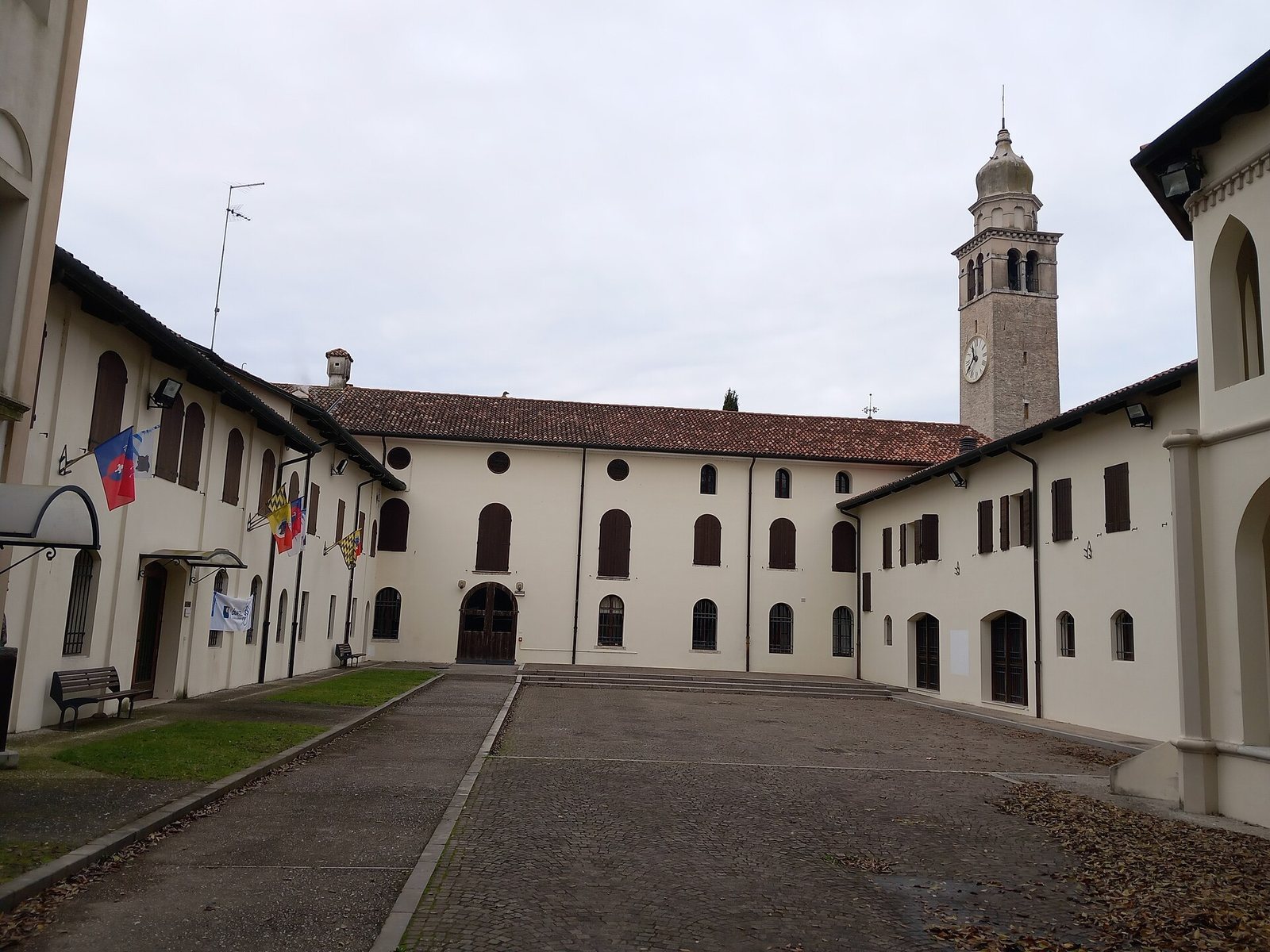
Palazzo Cecchini stands between the Sanctuary of Madonna delle Grazie and Palazzo Mainardi, amid greenery. Mainardi was the convent’s former novitiate, where candidates underwent religious training; it is now diocesan property used as an oratory. The chaplains’ houses adapted for the convent contained sleeping quarters, a communal dining room, a meeting room, guest accommodation, spaces for washing and storing clothing, kitchens, and a pantry. The convent’s layout included one cloister, a covered walk around a courtyard, and a later cloister in the novices’ area. Alterations and extensions also included a wall that enclosed the garden.
Facade, portico, and gardens
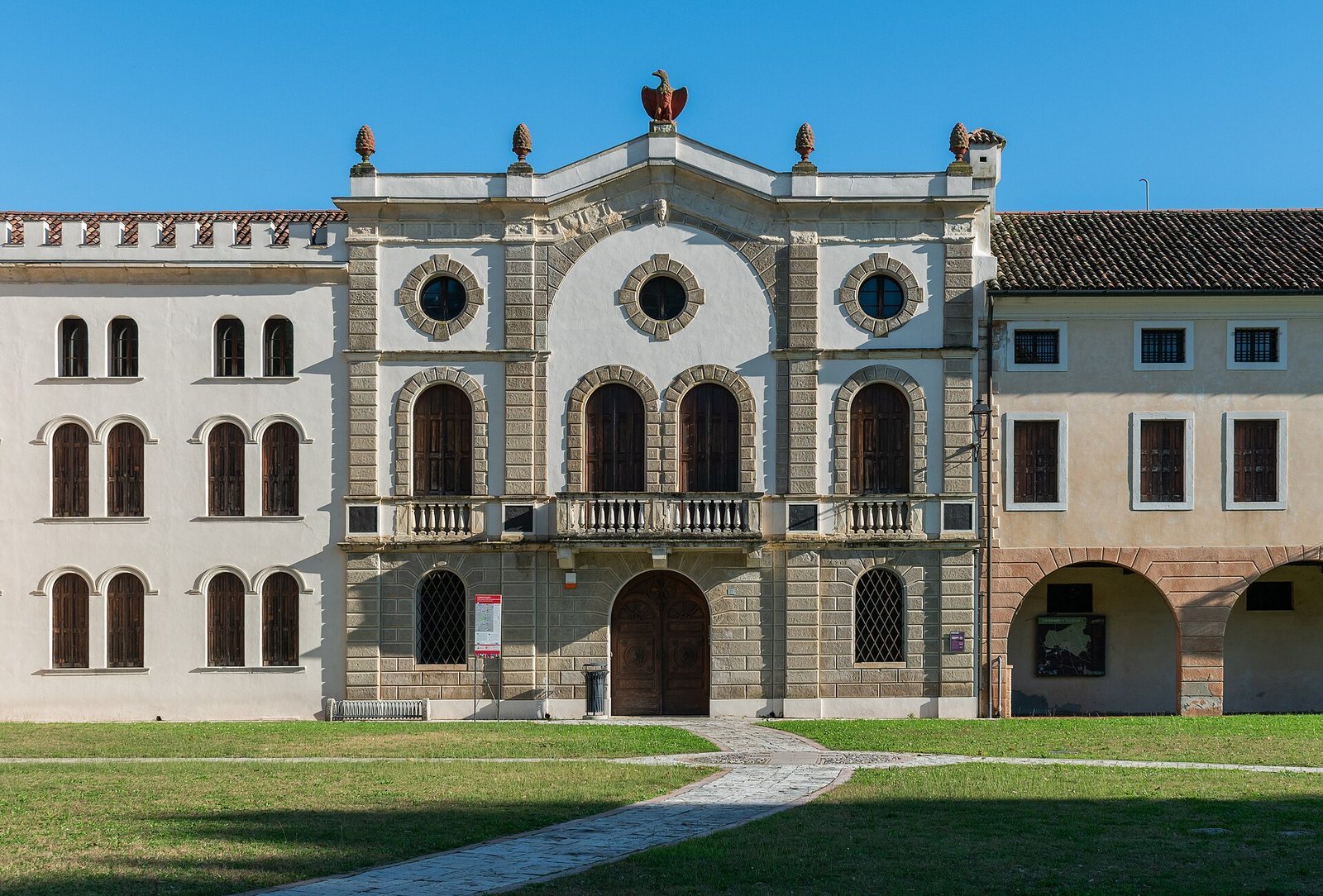
The palace has a medievalizing facade. A later restoration concentrated on preserving its plaster and roof covering. Two frescoes decorate the exterior portico: Madonna and Child in Glory by Baldassar d’Anna, and Saint Nicholas by an anonymous eighteenth-century Friulian artist. The courtyards of Palazzo Cecchini and Palazzo Mainardi contain the Dominican parks. Cecchini’s park has a pendulous sophora described as two centuries old, along with two Japanese sophoras; Mainardi’s park is marked by a European hackberry (Celtis australis).
Piazzale della Madonna and fountain
In front of the palace entrance, Piazzale della Madonna has a stone depiction of an old hopscotch game. Installed in 1992–93 to a design by architect Mario Liut, it uses rough local stones, including Giglio del Cugnan, Rosso della Secca, and Torreano stone. The work won first prize for urban furnishings at the international Marble Architectural Award in Carrara in 1994. Opposite Palazzo Mainardi’s right wing stands a small fountain designed by architect Paolo de Rocco in 1922. It supplied water to households in Cordovado.
Interior decoration
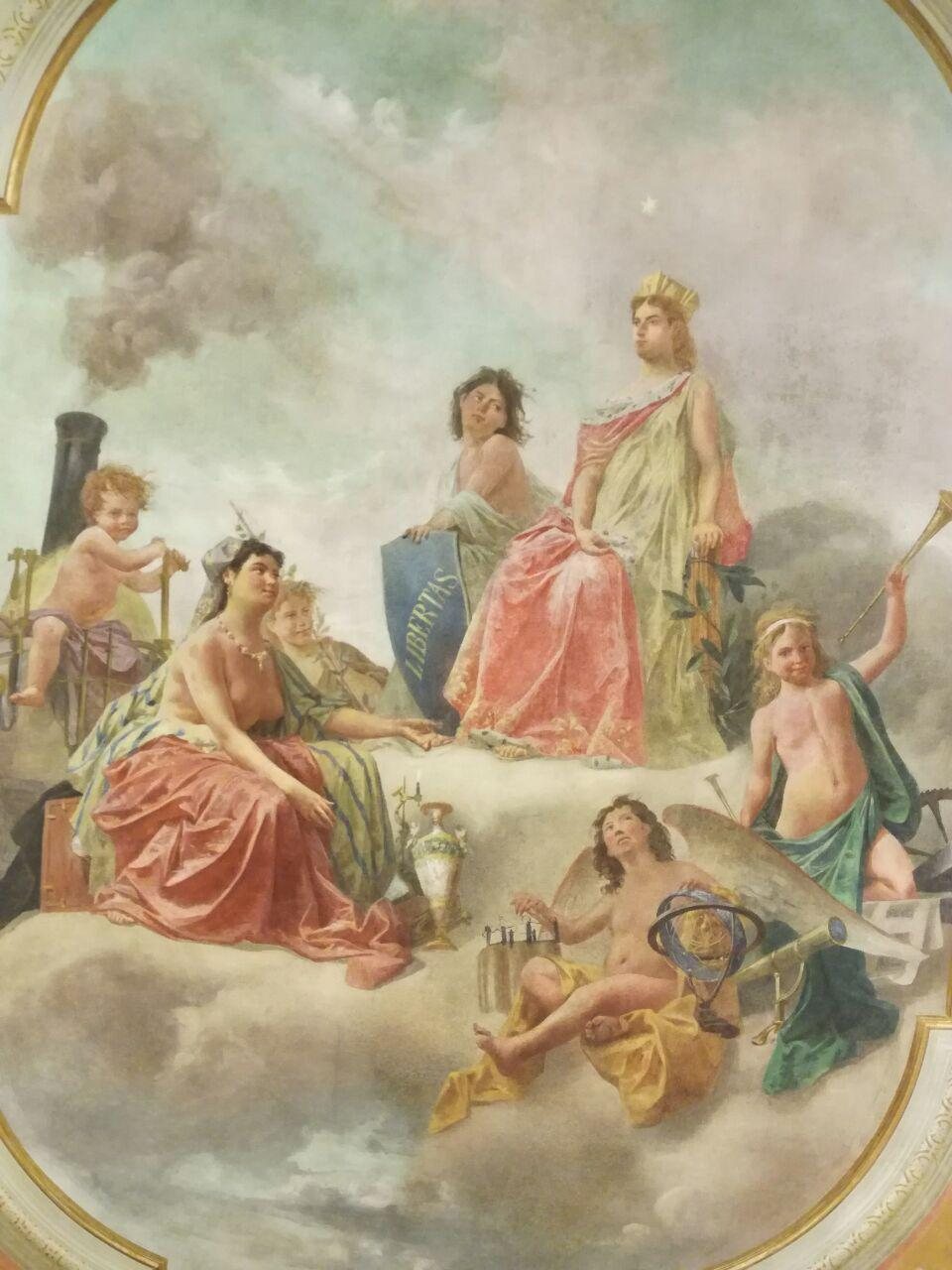
The entrance atrium has ceiling friezes in the Pompeian style, inspired by ancient Roman wall painting, with imagined and natural animal and plant motifs. Niches painted to resemble marble contain female figures. In the central salon, a patriotic allegory shows a woman representing the Fatherland surrounded by pagan deities associated with economic and cultural activities. An adjoining room has a blue, tapestry-like ceiling and two framed tempera night scenes, painted with pigment and a binding medium. Both depict Venice. One shows gondolas on canals and buildings reflected in the water, with a possible celebration; the other includes a ruined arch, lights, a festive scene, and a crowd. Their handling of light and color recalls the work of Ippolito Caffi, although the painter’s identity and any direct connection to him remain uncertain.
Rooms and performance spaces
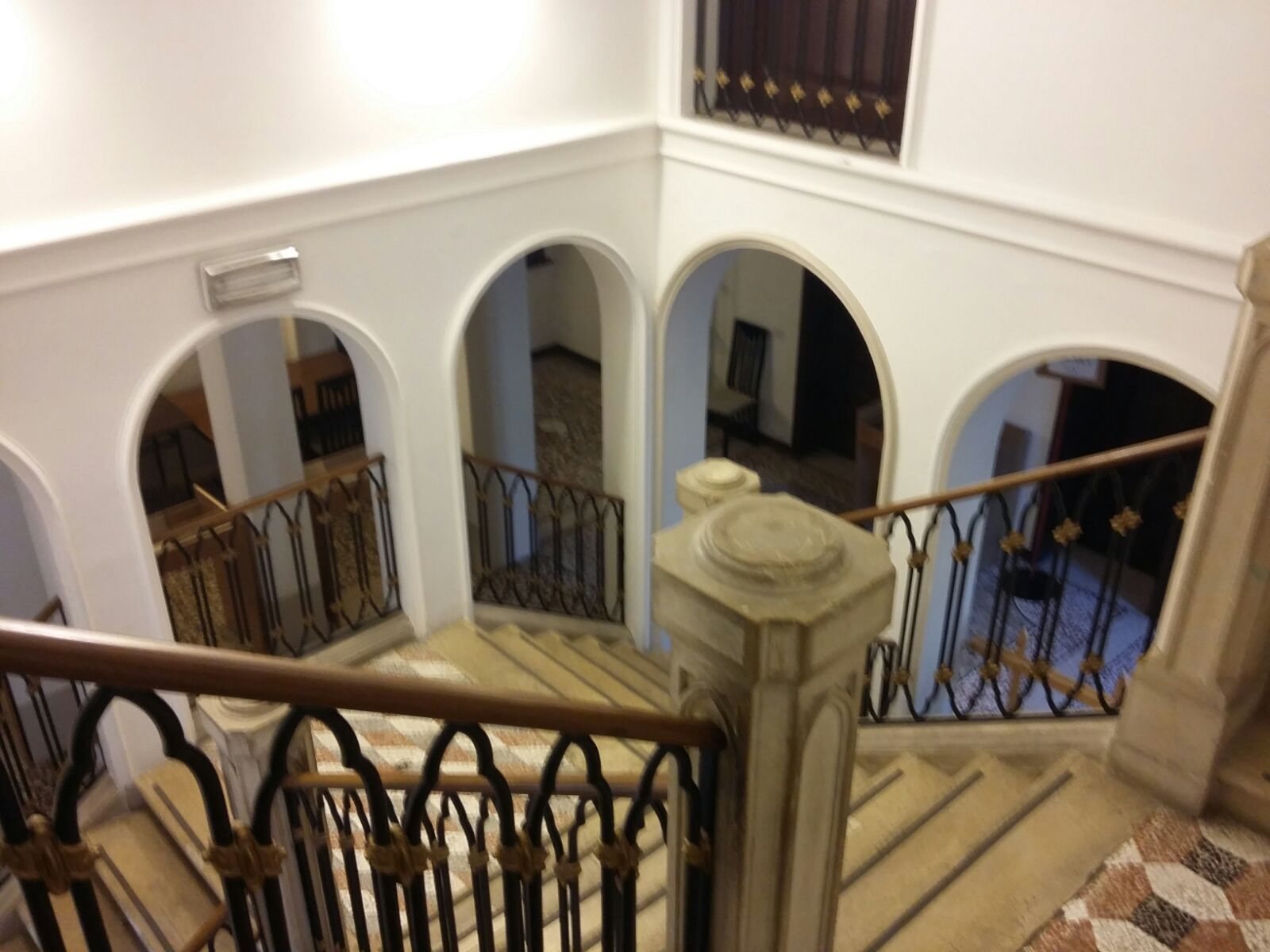
The ground floor contains the Pro Cordovado office, another hall, service rooms, and three rooms used for exhibitions, courses, and meetings. On the first floor, the municipal library has a reception atrium, an office, and reading rooms for children and for Friuli-Venezia Giulia, as well as a room arranged in partnership with UNICEF, the United Nations Children’s Fund. The library holds 28,000 volumes. The palace also has a 100-seat auditorium. Behind the building, an open-air arena is used for performances and medieval reenactments.