Caves of Apollo, Zeus and Pan: Ancient Greek Sanctuaries on the Acropolis
Site at a Glance
- Popularity
- Medium
- Country
- Greece
- Primary era
- Classical
- Eras represented
- Classical
- Civilizations
- Ancient Greek
- Site type
- Religious
- Remains
- Sanctuary
On this page12 sections
History
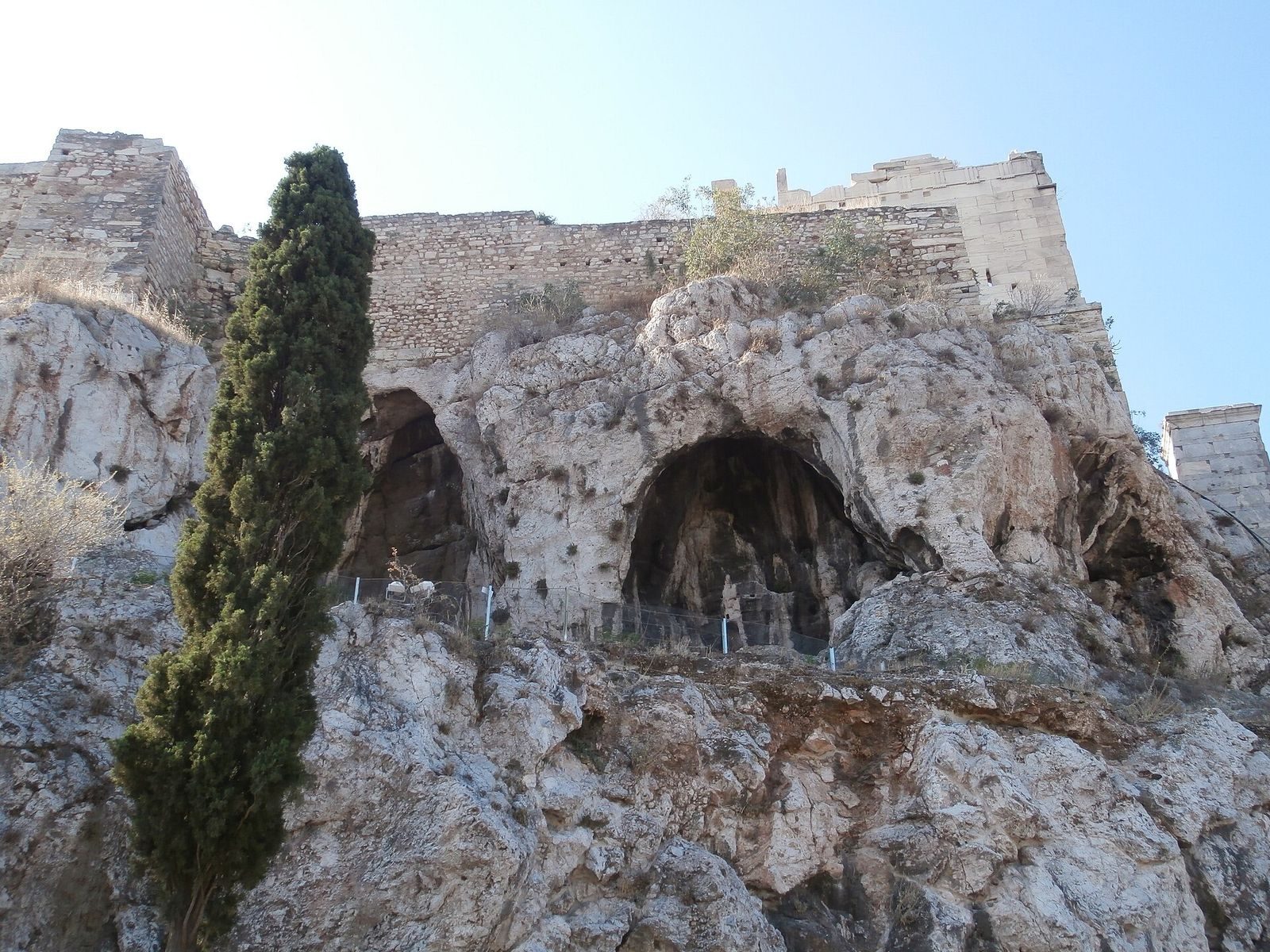
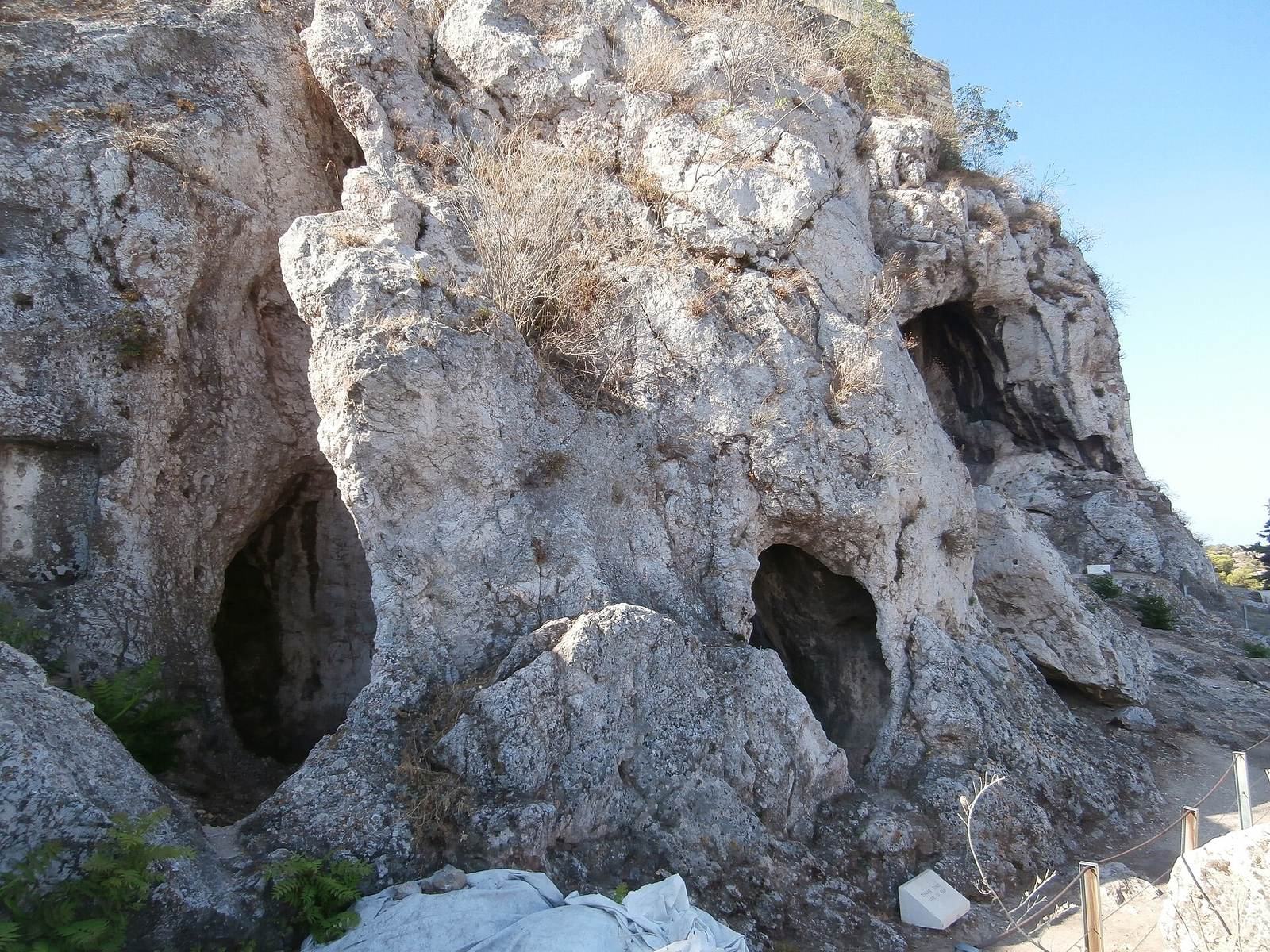
The Caves of Apollo, Zeus and Pan are natural fissures adapted as ancient Greek sanctuaries on the Acropolis’s northwestern slope in Greece. The middle cave dates to the fifth century BCE. Worship in the caves was distinguished from the state religion practiced on the summit and has also been interpreted as an expression of individual religious experience.
Greek worship and traditions
Apollo, a major Greek god associated with prophecy and music, was linked in tradition with the cave sanctuary. Stories connected him with Creusa, daughter of Erechtheus, a legendary Athenian king, and with the birth of Ion, a hero in Athenian foundation traditions.
Tradition also credited Pan, a god associated with wild and pastoral life, with helping the Greeks defeat the Persians at Marathon in 490 BCE. He was said to have caused panic among the Persian forces, after which Athenians established his worship in the city in gratitude. References to Pan in Euripides’ Ion, Aristophanes’ Lysistrata and Pausanias’ Description of Greece, together with reliefs found at the site, support the identification of his sanctuary.
Excavation and Christian reuse
Excavations led by the Greek archaeologist Panayiótis Kavvadías in 1896–1897 uncovered a cave system identified as D-D 1. Cave D 2 was identified later. During the Christian period, the easternmost part of Pan’s sanctuary, D 2, became a chapel dedicated to Saint Athanasius, an early Christian bishop and theologian.
Remains
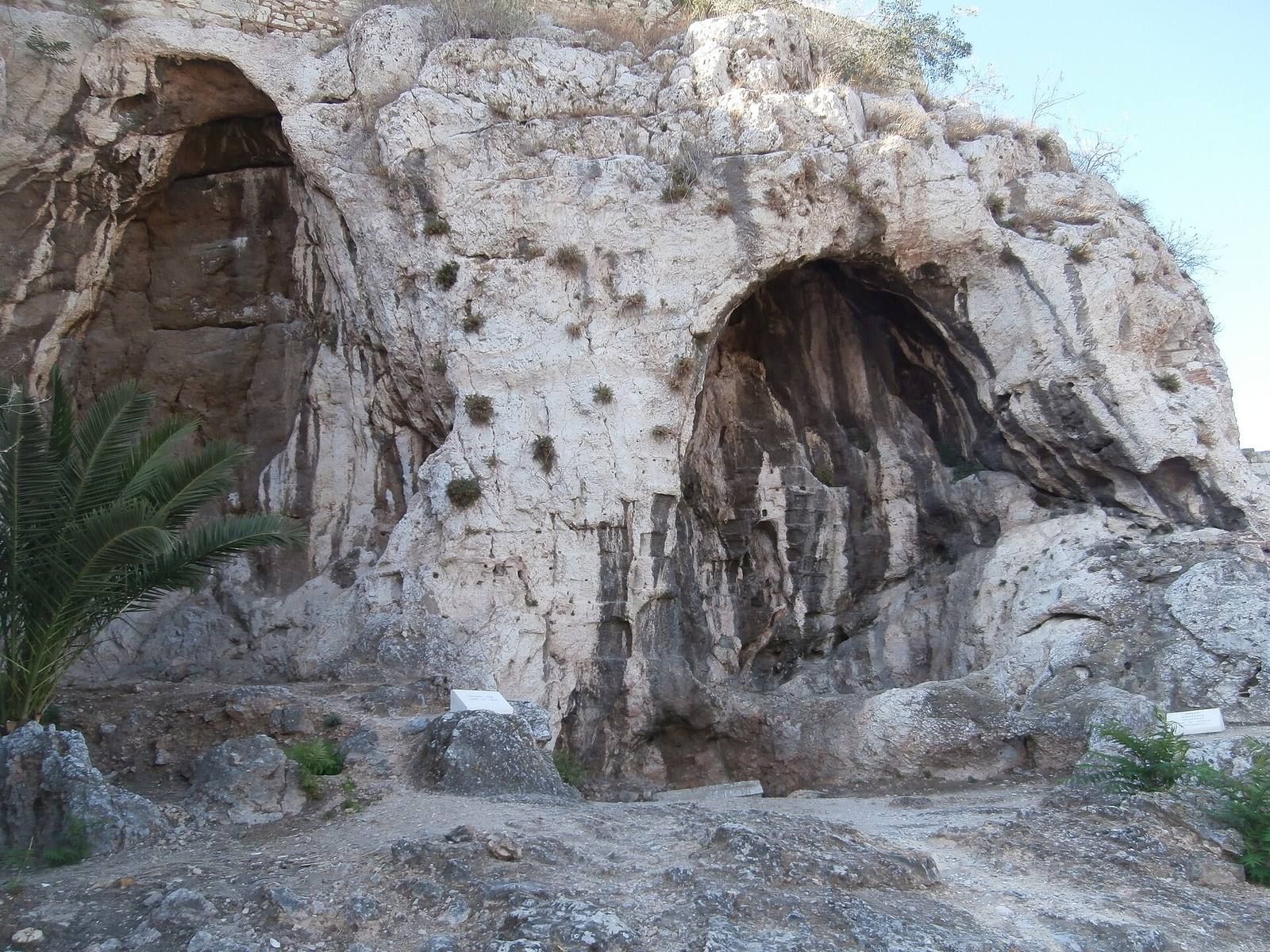
The caves are natural fissures adapted for worship along the Acropolis’s northwestern slope. Moving eastward, the sequence begins with a sculpted cavity known as cave A, followed by caves B, C and D. The arrangement combines natural rock openings with carved surfaces and niches.
Western caves
Cave A
Cave A was not a sanctuary. Its carved rock surface formed a podium used as a place to watch the Panathenaic procession, part of the festival honoring Athena.
Cave B
Cave B is associated with Apollo Hypoakraios, also called Hypo Makrois, names meaning Apollo under the High Rocks or under the Long Rocks. Apollo was also worshipped there as Pythios, another title of the god. Nearby marble plaques bearing a crown carry an inscription identifying them as a dedication to Apollo by Athens’ nine archons, the city’s principal civic magistrates.
Cave C
The middle cave, C, is dated to the fifth century BCE and identified with either Zeus Olympios or Zeus Keraunios. Zeus was the leading Olympian god, while Keraunios refers to the thunderbolt. Interpretations of the writings of the historian Thucydides and the geographer Strabo have informed these possible identifications.
Eastern cave system
Pan’s sanctuary
The eastern caves include the systems identified as D-D 1 and D 2. Pan’s sanctuary had a plan divided into three parts, with niches cut into the rock for offerings.
Cave D 2
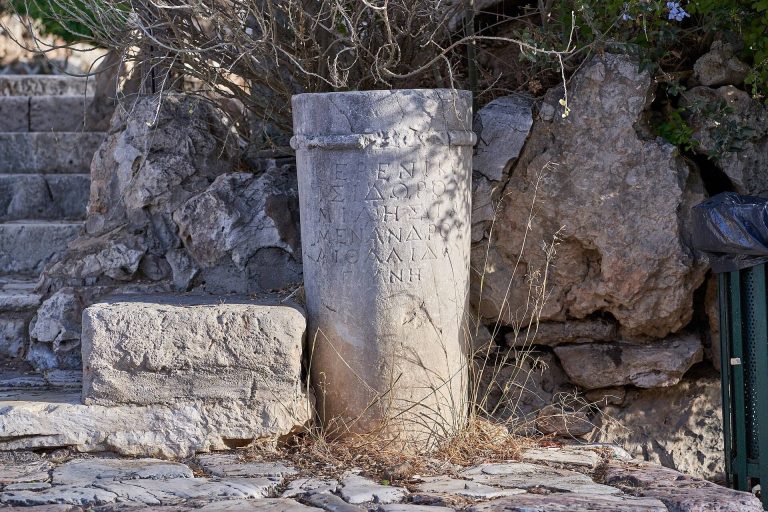
A narrow stairway beside D 2 leads up to the Acropolis. Niches in the cave preserve traces of wall paintings from its later Christian period.
Reliefs and offerings
Reliefs found at the site include one showing Pan seated on a rock playing pipes, with a nymph standing before him, and another depicting Pan among other deities. Two fragments dated to the first century CE are identified as Akr 1345 and Akr 6464. A relief of Pan and nymphs, attributed to a dedication by Neoptolemus of Melite around 330 BCE, is held in the Agora Museum.